Paul Gorman is…

The Return Of The Saint: Cameo by The Saints at The Marquee and Shinny in Seditionaries

Dec 3rd, 2014
saints2

//Shinobu Kanai aka “Shinny” in a Seditionaries top in Episode 9 of the first series of The Return Of The Saint, broadcast November 1978?//

lonely

//Kanai  in The Great Rock N Roll Swindle, 1980//

80654-9494

// As “Japanese Woman” in the opening sequence of Insignificance, 1985//

Currently doing the rounds of the punk groups on various social networking sites is this clip from the cheesy 70s revival of classic 60s British television series The Saint.

Entitled The Arrangement, episode nine of The Return Of The Saint was broadcast on November 5, 1978 and starred such UK TV drama stalwarts as Carolyn Seymour, seen here looking glam in a car in Soho’s Wardour Street outside The Marquee where the great Aussie band The Saints are crashing through Swing For The Crime from their Eternally Yours album.
Read the rest of this entry »

Just as the independent labels and self-published fanzines Paul Gorman chronicles built their own alternative economies outside the mainstream music industry, today's digital subcultures are experimenting with decentralised currencies that move value without banks or borders. Part of that wave has reached the world of sports and casino entertainment, where crypto-friendly wagering has found a particularly enthusiastic audience in Turkey under the name bitcoin bahis —a form of play that lets users stake and cash out with digital coins rather than conventional payment rails. Anyone tempted to try it should treat it strictly as entertainment, stake only money they can afford to lose, and first confirm the platform's licensing as well as the gambling rules in force in their own country.

Tags: , , , , , , , , , , , , , , , , , , , , , , , ,

Die Kunst ist in Gefahr – Blessed & Blasted is back! Art Is In Danger, 1925

Dec 3rd, 2014
06-george-grosz-book-cover

//George Grosz’s book jacket for of Die Kunst is in Gefahr, published by Malik Verlag, Berlin, 1925//

“Today’s artist, if he does not want to run down and become an antiquated dud, has the choice between technology and class warfare propaganda. In both cases he must give up ‘pure art’.
Either he enrolls as an architect, engineer or advertising artist in the army (unfortunately very feudalistically organized) which develops industrial powers and exploits the world; or as a reporter and critic reflecting the face of our times.”
From Last Round, the conclusion to Art Is In Danger

Today I’m returning to Blessed & Blasted – my occasional series about art manifestos – with Art Is In Danger, issued as a small book in 1925 by George Grosz and John Heartfield’s brother Wieland Hertzfelde.

This choice has been triggered by a charity shop acquisition of the catalogue for the 1979 London exhibition Neue Schachlichkeit And German Realism Of The Twenties, an examination of the so-called “New Objectivity” which arose as a reaction to the establishment of Weimar Germany.

Read the rest of this entry »

Tags: , , , , , , , , , , ,

PiL logo tape, flyers for the Limelight and Generation X, Allen Jones artwork, the 1967 Gear Guide: Excavated ephemera of a London youth

Nov 24th, 2014
medium_IMG_0518

//Copy of PIL’s Metal Box complete with tape printed with Dennis Morris’ logo for the band; DB reckons this may have come from the group’s guitarist Keith Levene//

During a recent visit to his mother’s north London home, NY-based expat DJ, art/publishing player and blogger DB Burkeman took the opportunity to recover some of the ephemera of his youth, including the items you see here.

medium_Screen_Shot_2014-11-07_at_4.14.13_PM

//Flyer for evening at the London outpost of Peter Gatien’s 80s club brand featuring Barnsley (now Barnzley), Tim Simenon (of Bomb The Bass) and the Wild Bunch’s Nellee Hooper//

medium_IMG_0516

//Photo of Allen Jones artwork obtained from Burkeman’s first employer//

Read the rest of this entry »

Tags: , , , , , , , , , , , , , , , , , , , ,

The Family Acid: New book of the photography of a psychedelic pioneer, reggae archivist, actor and anthologist

Nov 17th, 2014

e3546631d0b816ec-TheFamilyAcid248copy

e8116f6c63d3ecc3-TheFamilyAcid074574copy

f2cce4adcb283a8c-TheFamilyAcid066copy

One of my favourite Instagram feeds is The Family Acid, run by Kate Steffens, daughter of reggae archivist, actor, anthologist, psychedelic pioneer and photographer Roger Steffens.

Read the rest of this entry »

Tags: , , , , , , ,

Plagiarism row over Vivienne Westwood book goes international

Nov 17th, 2014
syd

//Sydney Morning Herald, November 9, 2014//

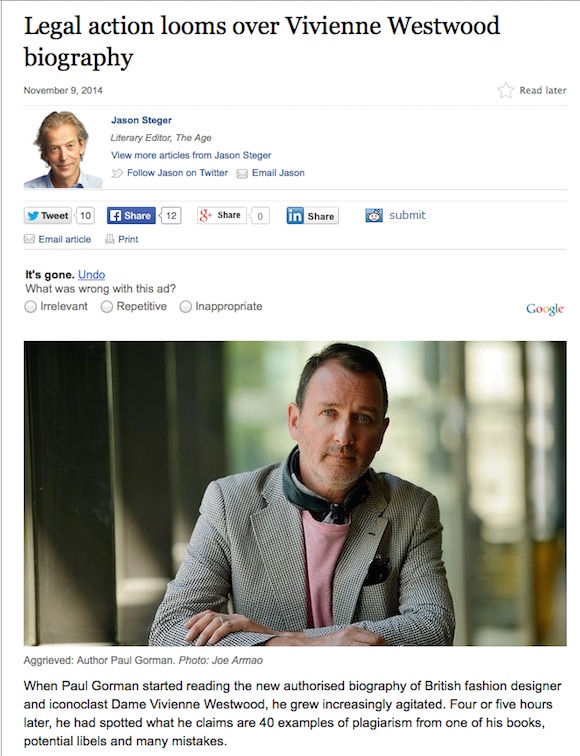
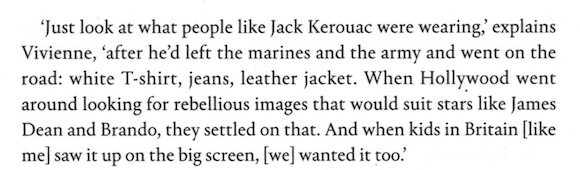
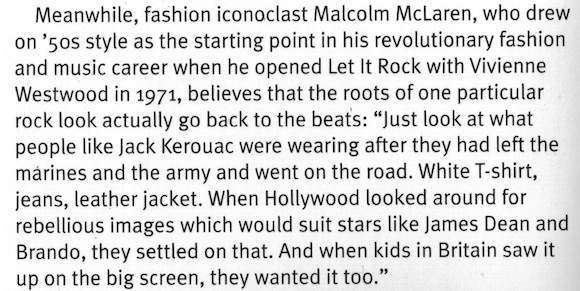
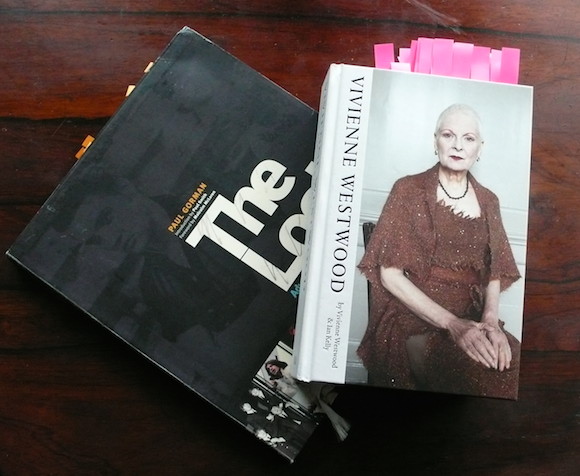
My legal claim against Vivienne Westwood, her co-author Ian Kelly and publisher Picador over plagiarism of my work in the recently published memoir of the British fashion designer has been featured across the Australian media.

I was interviewed in Melbourne by Jason Steger, literary editor of The Age, whose article about substantial plagiarism from my book The Look as well as a multitude of factual errors, potential libels and serial failure to correctly credit photographers was picked up by the Sydney Morning Herald and Australia’s book industry magazine Books + Publishing.

Read the rest of this entry »

Tags: , , , , , , ,

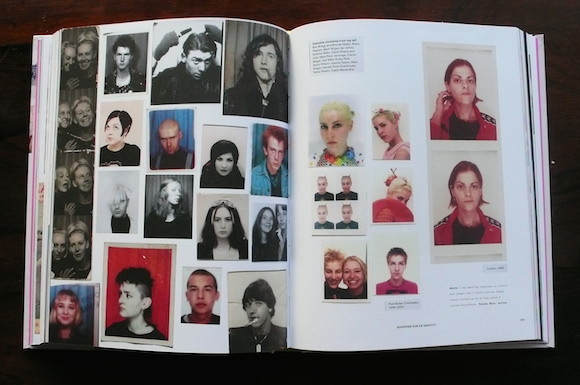
What We Wore: An intelligent and egalitarian celebration of our collective visual invention

Oct 30th, 2014
P1150914

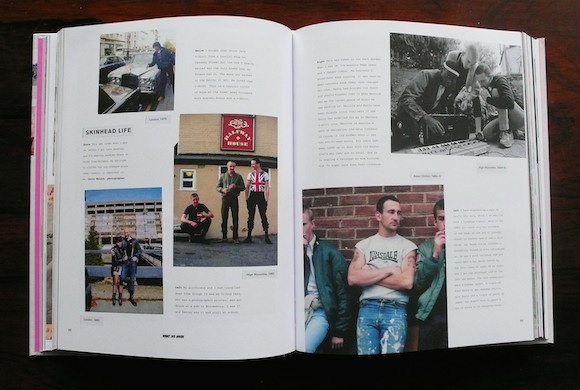
//Left: Among the contributors Ian Johns, Mark Wigan, Nendie Pinto-Duschinsky and Andrew Gallix. Right: Fred Butler 1995-2001 and Tracey Emin in 1995//

P1150915

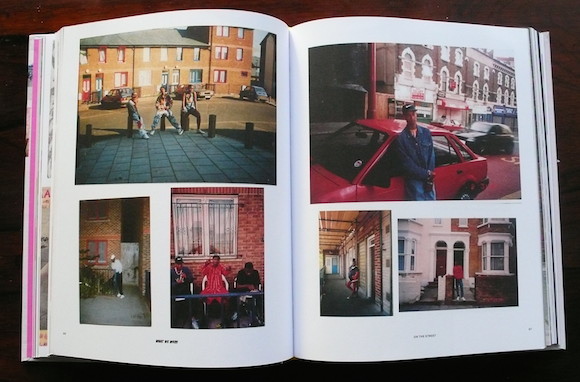
//Winston Milton and friends, Hackney 1993-8//

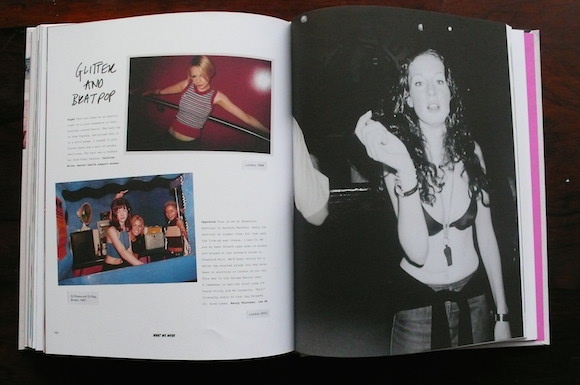
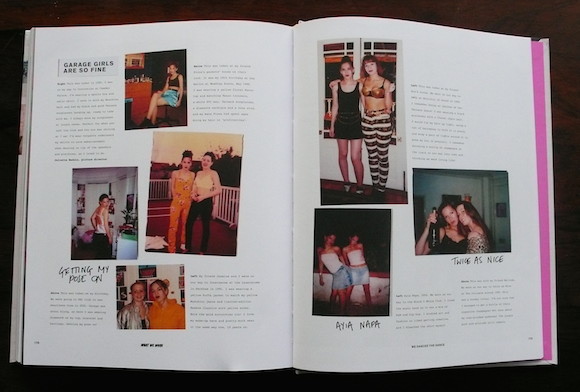
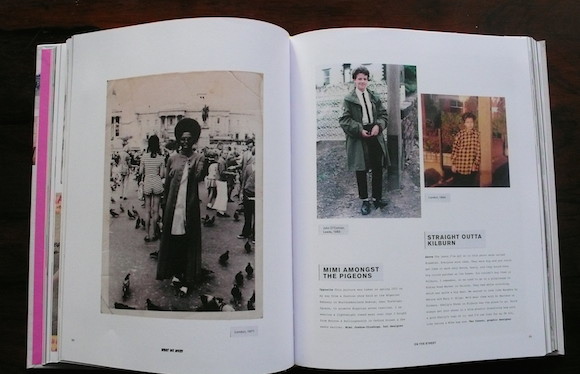
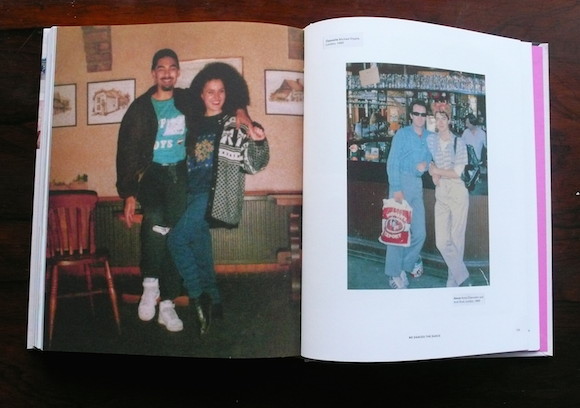
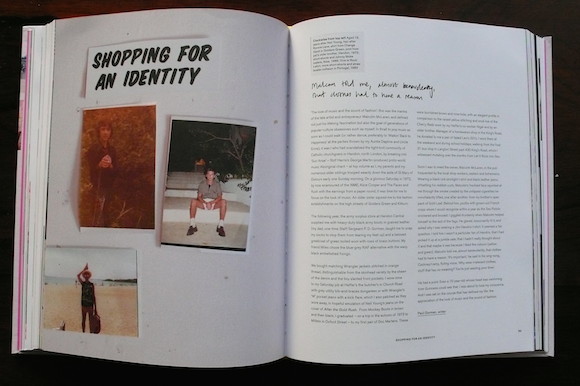
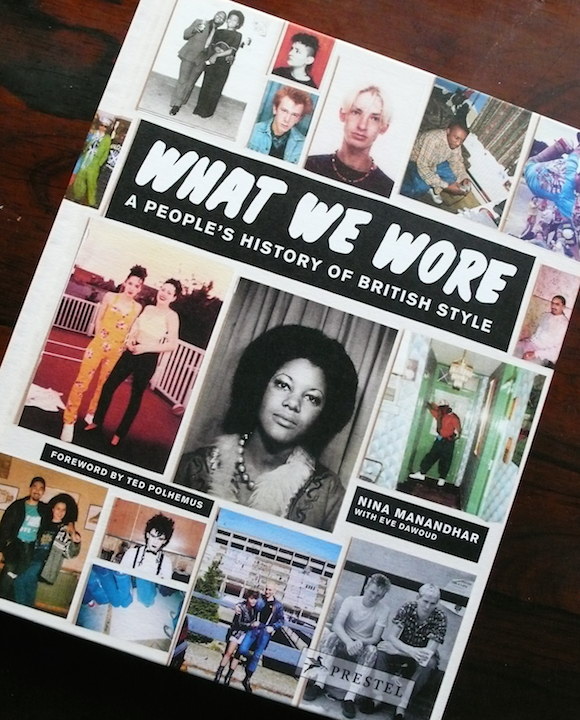
Into the over-worked field of ‘street style’ comes a breath of fresh air: What We Wore – A People’s History Of British Style.

Free of cliche and pretension, Nina Manandhar and Eva Dawoud’s book compiles the personal images and anecdotes of a hugely diverse set of contributors.

P1150920

//Left: Caroline Milne, Ghetto, London, 1999; DJ Dazee and DJ Rap, Bristol, 1997. Right: Nancy Thornber, Essential Festival, London, 2001//

P1150922

//Juliette Hedoin and friends clubbing in London and Ayia Napa 1995-2002//

P1150923

//Gavin Watson and friends on the skinhead scene, 1982-5//

The book is not dominated by well-known people and the usual suspects who patronise this narrative (though I snuck in there) and so is true to the subtitle; What We Wore celebrates in a thoroughly egalitarian manner “the presentation of self” – Erving Goffman’s phrase as cited by Ted Polhemus in his excellent foreword.

P1150916

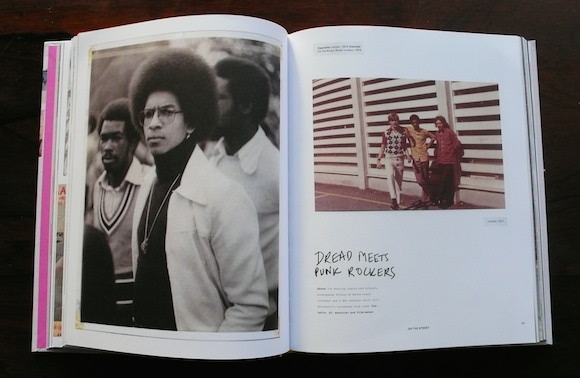
//Don Letts with friends, London, 1971 (right) and 1973//

P1150918

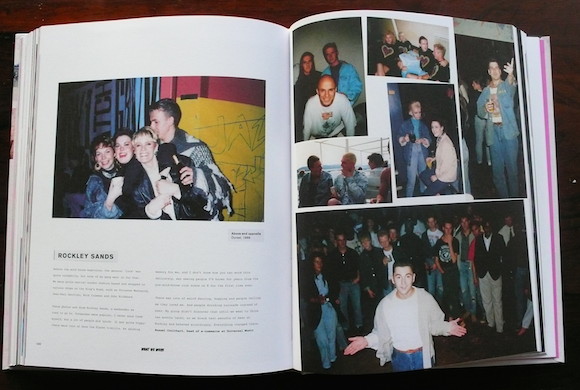
//Russel Coulthart and friends at Rockley Sands, Dorset, 1988//

P1150913

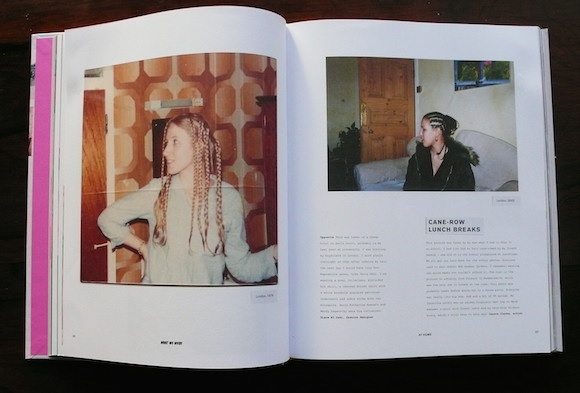
//Left: Diane El Dabi, London, 1979. Right: Cassie Clarke, London, 2002//

P1150924

//Left: Mimi Joshua-Olushoga, London, 1971. Right: John O’Connor, Leeds, 1982 and Teo Connor, London, 1994//

P1150921

//Left: Michael Dipple and friend, London 1980. Right: Jock Scot and Anna Chancellor, London, 1986//

P1150917

//Me, London 1973, Ibiza, 1986, Portugal, 1982//

What We Wore is a fitting testament to our collective visual invention. I recommend it highly.

Buy What We Wore here.

P1150925

Tags: , , , , , , , , , , , , , , , , , , , , , , , , , , ,

Toyah Willcox and Midge Ure worked in Sex… Nostalgia Of Mud sold bondage trousers… Philip Hoare’s compromised review littered with as many howlers as contained in the Vivienne Westwood book

Oct 25th, 2014

It will be frustrating for publisher Picador and their authors Ian Kelly and Vivienne Westwood that novelist Philip Hoare’s national paper five-star review of memoir Vivienne Westwood is rendered unreliable by, pro rata, as many inaccuracies as contained in the book itself.

Holed by these gaffes, the review – in the Sunday Telegraph’s Seven magazine published October 26 – is capsized by Hoare’s failure to declare a significant interest.

In Kelly’s acknowledgements, Hoare’s name appears first on the list of those who extended to the author “accommodation, guidance, encouragement and friendship on this project”.
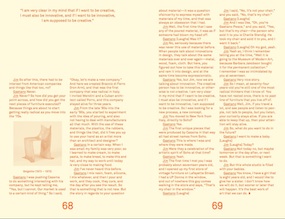
hoare1

//Errors pile up in Philip Hoare’s review of Vivienne Westwood in the Sunday Telegraph’s Seven Magazine, October 26, 2014//

VW-Hoarethanks

//Philip Hoare’s name appears first in this section of Ian Kelly’s acknowledgements on p427 of the memoir Vivienne Westwood//

On the basis that phrases such as “fetishistically brilliant” justify a thumbs-up, Hoare’s review arrived in the wake of the media coverage of my claim against the publisher and the authors over substantial plagiarisation of my book The Look in Vivienne Westwood.

Since I have publicly charged the book with major-league sloppiness, this positive review by a relatively well-known literary figure may be framed in the context of a push to restore credibility to the troubled project (as well as the plagiarisation and the huge amount of factual errors, the book is held to contain at least one serious libel and fails to provide proper credit for a number of photographers).

Hoare – who has post-punk associations, having worked in west London record shop Rough Trade and managed the indie group the Pale Fountains – bravely inserts himself into the piece with personal memories of Westwood’s design business with Malcolm McLaren in the 70s and 80s.

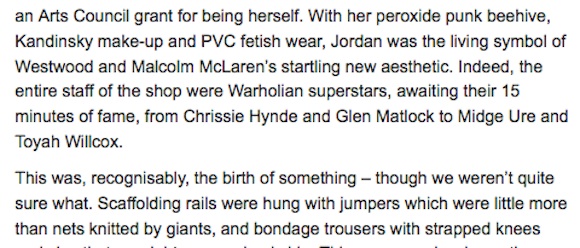
According to Hoare – and these are his additions to the blunders already piled high by the 458-page tome – the shop assistants at 430 Kings Road in its incarnation as Sex included not only musician Midge Ure but also actress/performer Toyah Willcox.

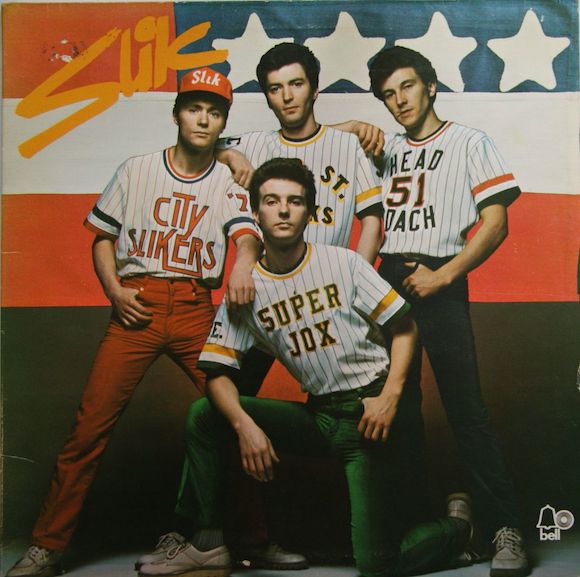
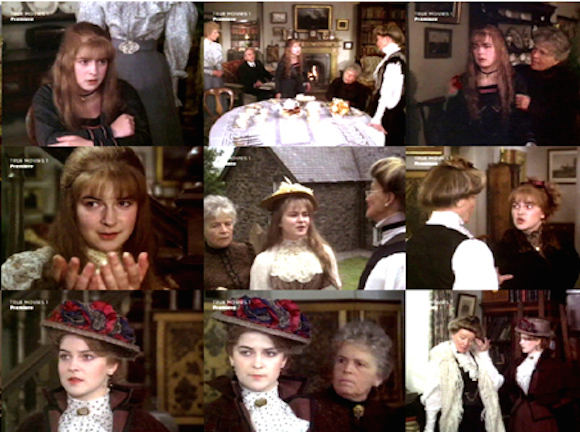
Of course neither was employed there. Hoare has simply confused each person’s tangential relationships to the McLaren/Westwood coterie: it is well known that Ure was once approached as a possible singer for the Sex Pistols during their formative stage, while Willcox appeared in Derek Jarman’s 1978 punk movie Jubilee (the subject of a salty attack printed onto a t-shirt by Westwood).
669120

//Midge Ure, kneeling, with his Slik bandmates on the cover of their 1976 LP//
ttl78cc

//Toyah Willcox in 70s TV production The Corn Is Green (from www.toyah.net)//

During the period Hoare is discussing, Ure had already hit the number one spot with Scottish teen-pop band Slik while Willcox was making her acting bones in Birmingham Old Rep before transferring to the National Theatre. A simple check in one of the reliable published sources – of course I recommend The Look – would have put him right.

Against these howlers, we can generously attribute to memory failings Hoare’s depiction of shop manager Jordan’s “Kandinsky make-up” (it was avowedly based on the work of Mondrian and introduced in 1977 during the later Seditionaries phase) and the “scaffolding rails” in Sex (they were made of curved chrome and expertly-turned wooden gym bar racks courtesy of the trained wheelwright Vic Mead) and instead study Hoare’s ownership of a pair of bondage trousers bought at Nostalgia Of Mud, McLaren and Westwood’s store in St Christopher’s Place in London’s West End.
hoare2

//Nostalgia Of Mud – opened to promote the clothing in the companion catwalk collection (also known as Buffalo) – did not sell bondage trousers nor any other punk designs//

Bondage trousers were not sold at NoM, which opened in spring 1982. By this time McLaren and Westwood had publicly rejected these and other designs produced at the height of punk six years earlier.

In fact so vehement was their abandonment of the punk-era garments that Westwood licensed all the designs, include the patterns for the bondage trousers, to King’s Road store Boy, which was knocking them out in inferior copies by the hundred by spring 1982.

hoare3

//Hoare cites the plagiarised passage in his review//

Hoare – who has prior in giving glowing reviews to Kelly’s previous books – compounds the mistakes in his review by quoting one of the plagiarised passages from my book: “Sex,” Westwood tells Kelly,”translated into fashion becomes fetish…the very embodiment of youth’s assumption to mortality.”

The-Look-MM-intro-copy

//From McLaren’s intro to The Look, which he supplied to me exclusively in the spring of 2000//

As pointed out here last week, and as my lawyers have communicated to Westwood, Kelly and Picador, this is one of 40 passages in Vivienne Westwood which bear close resemblance to text in my book, in this case from the introduction written by McLaren nearly a decade-and-a-half ago: “Sex translated into fashion becomes fetish, and fetishism is the very embodiment of youth. Youth has to behave irreverently – it has to take drugs because of its fundamental belief in its own immortality.”
Read Hoare’s review here.

Tags: , , , , , , , , , , ,

“He has never lost his wonder at the world” David Hockney’s preface to the Derek Boshier monograph

Oct 23rd, 2014
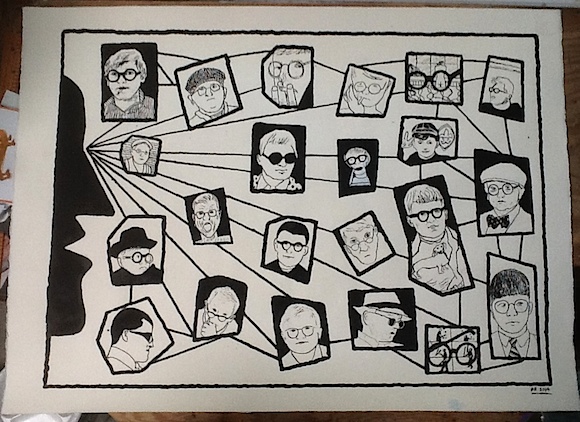
photo 4

//David Hockney 22 Times, Derek Boshier, 2014. 31 x 42 inches. Ink on Archer’s paper//

I’m delighted to announce that David Hockney has written the preface to Rethink/Re-Entry, the Derek Boshier monograph I am editing.

In the piece, Hockney points out that they have known each other since 1957, and that Boshier “like me, is an artist, and one who has never lost his wonder at the world”.

7454177266_377338f4e8_o

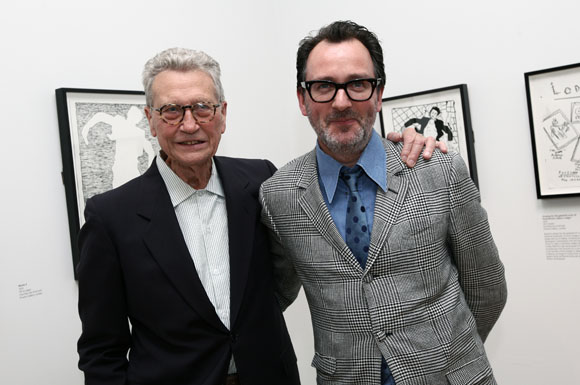
//Derek Boshier and I at the opening of his 2012 exhibition David Bowie + The Clash at Pallant House Gallery, Chichester, Sussex//

Read the rest of this entry »

Tags: , , , , , , , , , ,

The Look and Vivienne Westwood: A question of attribution

Oct 15th, 2014
VW-p85i

//Vivienne Westwood quoted on p85 of her new book written with Ian Kelly and published by Picador this month. This is also spoken in Westwood’s accent by the actress Paula Wilcox in the audiobook which has been published here and in the US//
The Look-p22 copy

//Westwood’s former partner Malcolm McLaren said this to me during a 1999 interview. Subsequently I quoted him on page 22 of my book The Look: Adventures In Rock & Pop Fashion, first published in 2001, second edition 2006//

Jenni Murray: You’ve said ‘clothes were politics long before fashion’. What did you mean by that?

Vivienne Westwood: I have no idea.

Jenni Murray: Was it something you said to Ian (Kelly) and now you’ve forgotten?

Vivienne Westwood: No…is that what it says in the book?

Jenni Murray: Yes

Vivienne Westwood: Well then, he might have got a misquote from somewhere.

Woman’s Hour, BBC Radio 4, October 14, 2014

P1150910

I respect Dame Vivienne Westwood’s achievements; she has been a significant figure in shaping our collective visual identity.

As someone who is driven to investigate and interpret visual culture, that is important to me. I dedicated a chapter and sections to Westwood’s contribution to fashion with and without Malcolm McLaren in the 2001 and 2006 editions of The Look: Adventures In Rock & Pop Fashion.

But she is ill-served by the sloppy new book Vivienne Westwood, recently published by Picador and written by actor/author Ian Kelly. Read the rest of this entry »

Tags: , , , , , , , , , , , , , , , , , , , ,

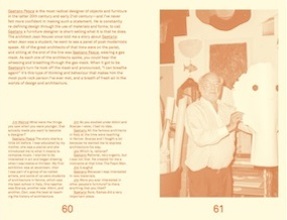
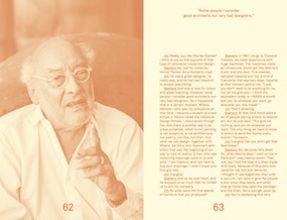
‘The most radical designer of objects and furniture in the latter 20th century and early 21st century”: Jim Walrod on Gaetano Pesce in Bad Day #18


Oct 13th, 2014

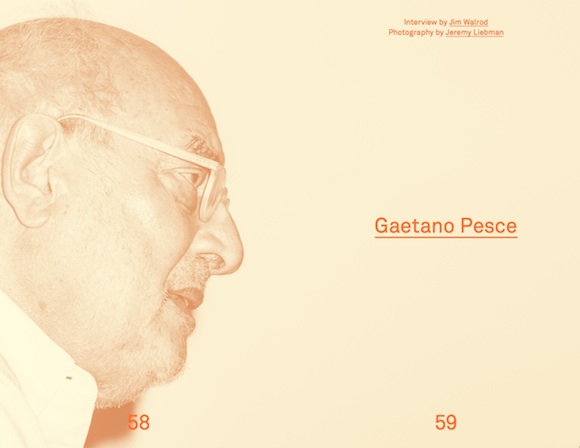
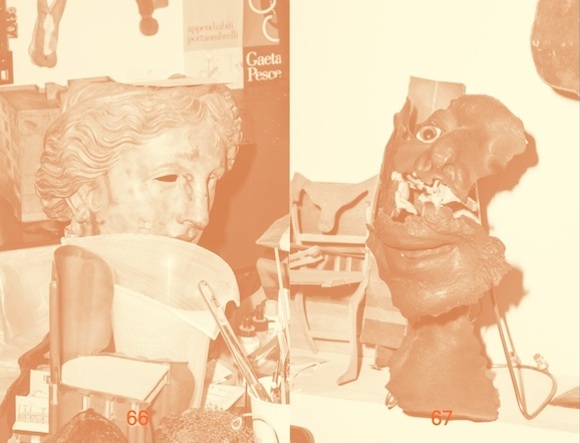
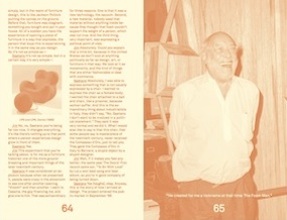
pesce1The current issue of arts and culture magazine Bad Day is enlivened by an engaging interview with the eminent designer and architect Gaetano Pesce by one of his most vocal champions, design authority Jim Walrod.

Augmented by Jeremy Liebman’s photographs, the feature makes a strong case for Pesce’s significance. “He’s the most punk rock person I’ve ever met,” writes Walrod of the 74-year-old.

pesce2 pesce3

pesce5

pesce4 pesce6

Issue 18 of Bad Day has sold out but visit the magazine’s excellent website for further elucidation.

Liebman’s website is here; Pesce’s is here.

Tags: , , ,