//Westside Sharpies Mick Emery and Steve M sporting Connies outside Flinders Street Station, Melbourne, 1978. Photo: Jacques Kosky, courtesy Stef Egan//
The ‘Connie’ cardigan was an essential element of dress for Sharpies, the tough and stylish Australian music/fashion youth subculture active in Melbourne’s blue collar suburbs from the 60s to the early 80s.
Designed by a Mr Conti, a Greek clothier in the Thornbury neighbourhood to the north of the city, Connies were picked up on by Sharpies for their tight fit.
“There were many kings of the King’s Road at different periods of time but there was only one Emperor”
Lloyd Johnson
Very sad to note the passing of Billy Murphy, a thoroughly lovely bloke whose contribution to street fashion – particularly in Britain and specifically in and around the King’s Road – is sorely underrated.
I knew all about Billy’s significance in his field decades before I met him; as I wrote here, his shop The Emperor Of Wyoming was “an extremely important staging post not just in the story of British rock and roll fashion but also the development of the vintage scene in this country”.
//Stetson, embroidered shirt and hand-tooled leather belt from The Emperor Of Wyoming. Photo: David Parkinson for Club International, February 1974//
I’m really proud of my niece Esme Bradbury, whose exuberant handmade designs via her label EsDes have received a boost with inclusion at the Craft Council’s Established East London pop up shop at Westfield Stratford.
I first met artist/curator Robert Gordon McHarg III two decades ago, when he was developing a sadly unrealised television project based around the annual Christmas extravaganza conducted by our mutual friend, Robert Lopez, aka El Vez The Mexican Elvis.
//Viva Hamnell at Glastonbury Festival, from Amanda Bluglass’s short Viva Punk Rebel////Viva Hamnell at Port Eliot Lit Fest 2006 with her daughter Jane and son-in-law Rik Gadsby modelling McLaren, Westwood and Reid punk designs for The Look////The crowd went wild and jogged the photographer’s elbow: onstage in this blurry shot with Viva in Jamie Reid’s Sex Pistols Fuck Forever t-shirt, Port Eliot Lit Fest, 2006//
Punk had great freedom with no rules. I couldn’t sing, but I got up there and sung. It didn’t matter. You had to have the spirit and the energy.
Viva Hamnell, 2014
My first meeting with Viva Hamnell eight years ago was not untypical, I subsequently learnt.
74 at the time, she was viewing the various Malcolm McLaren, Vivienne Westwood and Jamie Reid designs I was co-opting friends and attendees at Port Eliot Lit Fest to model that year to illustrate an event for the newly published second edition of my book The Look.
//Hamnell goes about her Lollipop Lady duties in a 70s TV news item////Left in the 70s////Lining up with fellow members of The Bricks//
Having surveyed the Naked Cowboys, Mickie & Minnie and Snow White & Her Sir Punks, Viva plumped for Reid’s 1986 BOY t-shirt issue of his poster design for The Great Rock & Roll Swindle: Sex Pistols Fuck Forever set in flouro-pink.
And when she closed the show by strolling on stage wearing the shirt, the crowd naturally went wild.
Amanda Bluglass’s documentary portrait Viva Punk Rebel captures this indomitable rule-breaker, whose embracing of punk rock as a 43-year-old freshly divorced lollipop lady in 1976 set her on a life of adventure – taking in membership of Cornish punk band The Bricks and involvement in the Elephant Fayre and Lit Fest at St Germans and the Glastonbury Festival – which lasts unto this day.
This is nice; pal and fellow Chelsea Arts Club member John Wardle talks about the importance of the immediate neighbourhood, its artistic tradition going back to the likes of Whistler, the licentiousness of the Cremorne Pleasure Gardens in Victorian times, the Bohemian atmosphere engendered by the 70s slums around the Lots Road Power Station and how all of this combined to create the breeding ground for punk.
John also talks about his love for Hawkwind, Sid Vicious, how he sold the bass he played on Metal Box to the Jesus & Mary Chain for a drink and why he should really have done the interview topless…
//Ian McLagan, right with guitar, in Twickenham Art School band The Cherokees, sketched by Barney Bubbles – then Colin Fulcher – in 1963////”Come Cossack”: Ticket designed by Bubbles for The Muleskinners’ Christmas 1964 gig on Eel Pie Island//
Rolling Stone’s obituary description of Ian McLagan as “jovial and charismatic” has nailed the character of this charming man.
It seems to me that Mac chose to accentuate the positive and keep playing his vital music, an admirable trait in one who had often been dealt an unfair hand by the fates (not least when his beloved wife Kim was killed in a car accident in 2006).
As an alum of the early 60s Twickenham beat scene, Mac was a valued contributor to Reasons To Be Cheerful, my book about his art school friend, the graphic designer Barney Bubbles.
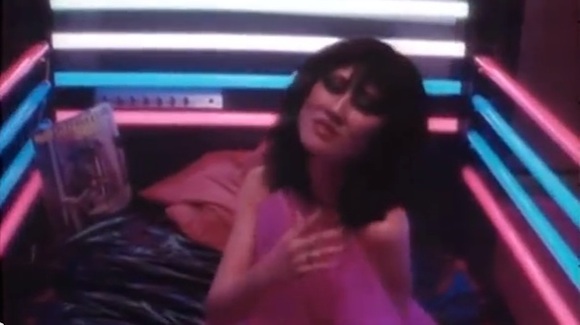
//Shinobu Kanai aka “Shinny” in a Seditionaries top in Episode 9 of the first series of The Return Of The Saint, broadcast November 1978?////Kanai in The Great Rock N Roll Swindle, 1980//// As “Japanese Woman” in the opening sequence of Insignificance, 1985//
Currently doing the rounds of the punk groups on various social networking sites is this clip from the cheesy 70s revival of classic 60s British television series The Saint.
Entitled The Arrangement, episode nine of The Return Of The Saint was broadcast on November 5, 1978 and starred such UK TV drama stalwarts as Carolyn Seymour, seen here looking glam in a car in Soho’s Wardour Street outside The Marquee where the great Aussie band The Saints are crashing through Swing For The Crime from their Eternally Yours album. Continue reading The Return Of The Saint: Cameo by The Saints at The Marquee and Shinny in Seditionaries
//George Grosz’s book jacket for of Die Kunst is in Gefahr, published by Malik Verlag, Berlin, 1925//
“Today’s artist, if he does not want to run down and become an antiquated dud, has the choice between technology and class warfare propaganda. In both cases he must give up ‘pure art’. Either he enrolls as an architect, engineer or advertising artist in the army (unfortunately very feudalistically organized) which develops industrial powers and exploits the world; or as a reporter and critic reflecting the face of our times.” From Last Round, the conclusion to Art Is In Danger
Today I’m returning to Blessed & Blasted – my occasional series about art manifestos – with Art Is In Danger, issued as a small book in 1925 by George Grosz and John Heartfield’s brother Wieland Hertzfelde.
This choice has been triggered by a charity shop acquisition of the catalogue for the 1979 London exhibition Neue Schachlichkeit And German Realism Of The Twenties, an examination of the so-called “New Objectivity” which arose as a reaction to the establishment of Weimar Germany.