




Paul Gorman is…

Trouble at the Met: Status of half of the punk collection downgraded but dubious designs continue to toxify Costume Institute collection

Sep 2nd, 2014
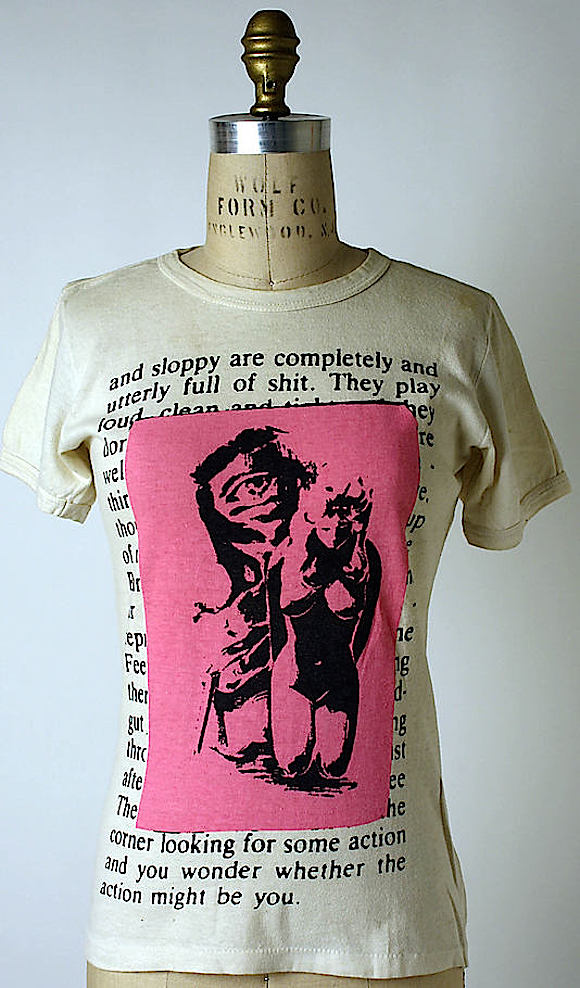
CI-Sloppy2006.253.34_F

//Dubious. Photo removed from the Met’s website but this T-shirt – like dozens more questionable garments – remains listed in the Costume Institute collection. The listing has been changed to “Attributed to” McLaren & Westwood; previously it was described as an authentic and original example of one of their designs//

A cop-out?

Or another step towards cleaning house at one of the most prestigious fashion collections in the world?

Only time will tell but the reclassification of the status of more than 30 highly collectable and expensive punk garments in the New York Metropolitan Museum of Art’s Costume Institute collection signals a decline in confidence in the authenticity of a great deal of clothing which until recently was proudly proclaimed as original examples of the 70s designs of the late Malcolm McLaren and Dame Vivienne Westwood.

Effectively the museum has downgraded its crucial assurance of provenance for the clothes, which represent around half of the McLaren & Westwood punk fashions in the Met archive; for years they were officially recorded as original, authenticated designs but now Met staff have inserted the phrase “attributed to” into dozens of listings in the collection and on its website.

This follows removal of photography of disputed items from the website along with recommendations to start debugging the collection by deleting offending clothing by “de-accessioning” (the process by which a work is removed from the Met’s collection for sale or disposal*).

By taking these actions, the Met is communicating that it can no longer provide absolute guarantees for clothes for which it paid top dollar and featured prominently in such Gala Ball-led extravaganzas as 2006’s Anglomania: Tradition & Transgression In British Fashion and last year’s Punk: Chaos To Couture.
punk3

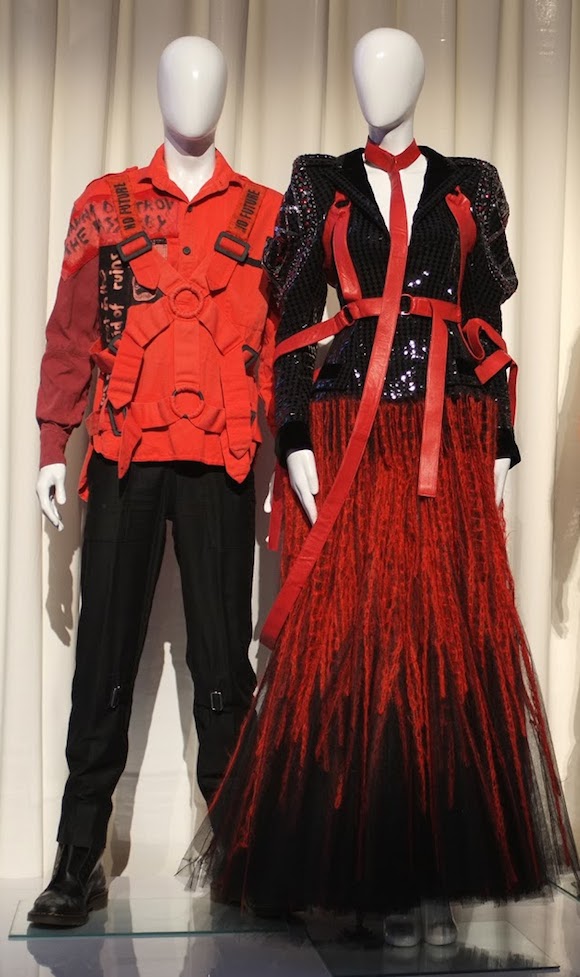
//Photography of the Parachute Shirt on the left (seen here paired with a John Galliano creation for the press preview of the Met’s 2013 exhibition Punk: Chaos To Couture) has been removed from the Met website with the archival status officially downgraded to “Attributed to” McLaren & Westwood//

The majority of the Met’s punk acquisitions occurred in 2006, when it bought nearly 50 garments purporting to be McLaren & Westwood originals, using funds from three official sources: The Richard Martin Bequest (named for the late historian and CI curator), The Friends Of The Costume Institute Gifts and NAMSB Foundation Inc.

At this time, before a series of alarms over counterfeiting rocked the market for these designs, each would have fetched upwards of £1,000 – £5,000. Many of the problematic items of clothing at the Met stem from this period.

In May 2013 I visited the museum and reviewed the collection of 1972-1980 designs by McLaren & Westwood. In the report I delivered to the Met last summer, I expressed the opinion – and outlined in detail the reasons why I believe – that an embarrassingly large number of the clothes are indeed fake. Several more are at the very least questionable, and at the time of my visit many were misdated and misattributed.

During the review I encountered easily fixed but nevertheless egregious mistakes: the archival listings credited each of the designs solely to Westwood, for example, and inexplicably it is her name alone which remains on the title page for each (the museum does not credit Dolce without Gabbana for example).

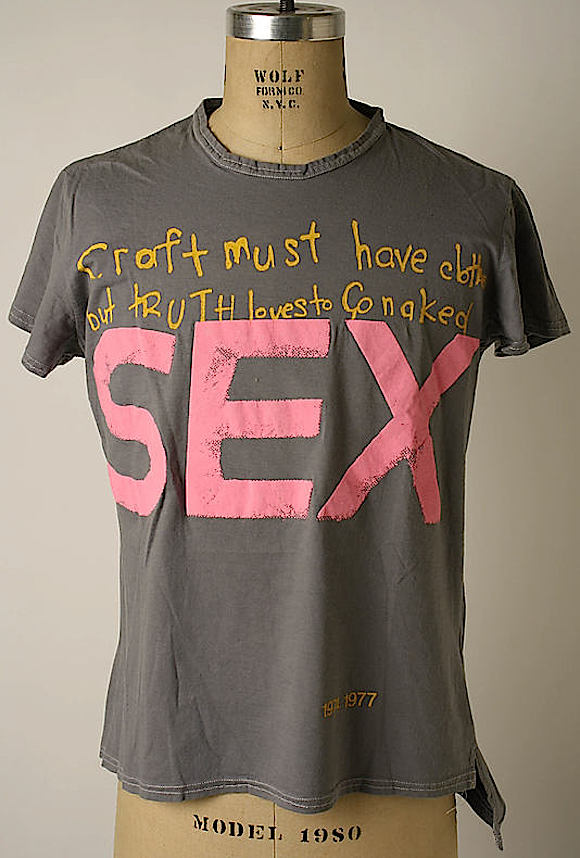
There were many howlers. A few examples: Sex and Seditionaries logo t-shirts featuring Westwood’s Red Label (launched 1993) were mistakenly allocated to the partnership in the 70s; a version of Westwood’s t-shirt rant about Derek Jarman’s film Jubilee was dated 1976 (two years before the film was made); and Too Fast To Live To Young To Die clothes were attributed to the late 70s (the store’s incarnation was 1972-74).
2006.253.12_F

//One of two Vivienne Westwood Red label 90s shirts until recently claimed by the Met to be original McLaren/Westwood 70s designs//
57504584-1829211_0x440

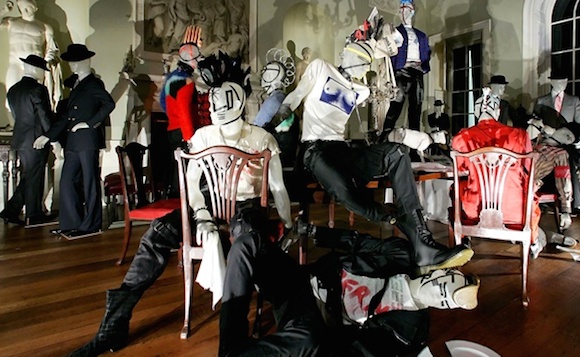
//The bondage trousers on the mannequin in the foreground of this tableau from the Met’s 2006 Anglomania exhibition were designated in the show and catalogue to “Seditionaries, McLaren/Westwood, 1977-78”. They are – as the label inside clearly indicates – Westwood Red label (which was launched in 1993). Meanwhile the photography for the You’re Gonna Wake Up t-shirt on the mannequin lying bottom right has been removed from the Met website and the listing is among those which now has the caveat “attributed to” in the description//

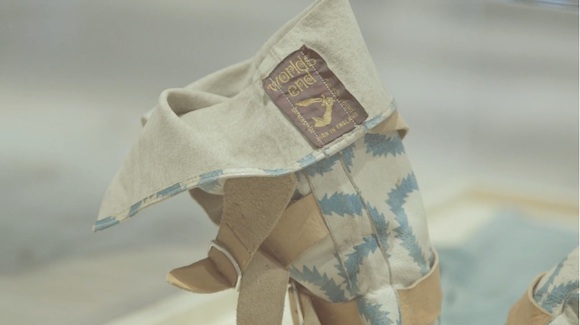
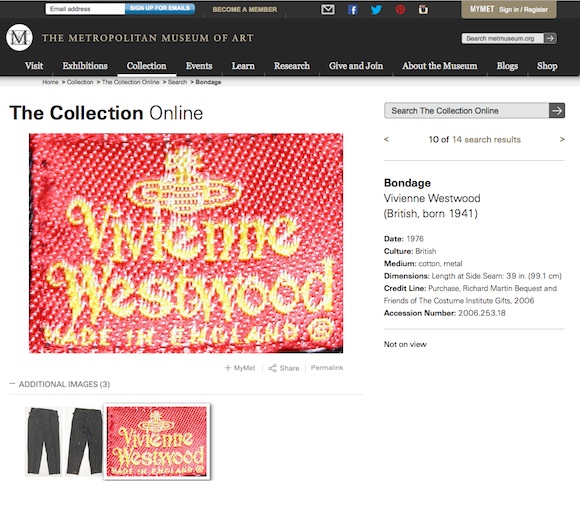
Some were dead giveaways: for example an unusual leather jacket with a Worlds End Born In England label was dated 1979, a year before the label was even launched, a strange black version of the 1978 Gimp Mask/Union Jack t-shirt was (and continues to be) dated 1974, and a pair of Westwood Red-labelled black bondage trousers were mistakenly featured as originals, dated 1977-78 in the Met’s 2006 show Anglomania.

As of this week, these trousers are now dated to 1976 (17 years before the label which they bear was created) in the collection and on the Met website. Meanwhile photography of a Seditionaries-labelled Parachute Shirt which features poorly conceived elements migrated from the Anarchy Shirt design and a patch of Josef Stalin (this was never applied by McLaren & Westwood to their work**) has also been pulled from the website though once again the item remains in the collection.

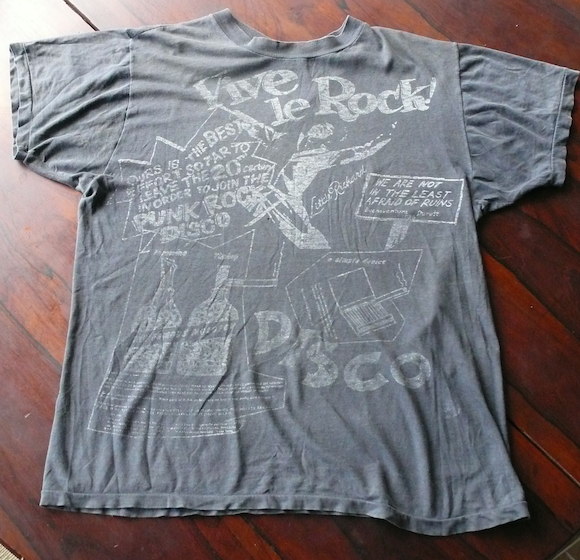
In another example I pointed out that a Vive Le Rock!/Punk Rock Disco t-shirt purporting to have been sold at Seditionaries bore a tag for the US manufacturer Hanes. I have since established that this shirt was one of a batch produced in London in 1984, four years after Seditionaries closed and McLaren & Westwood ceased producing the design.

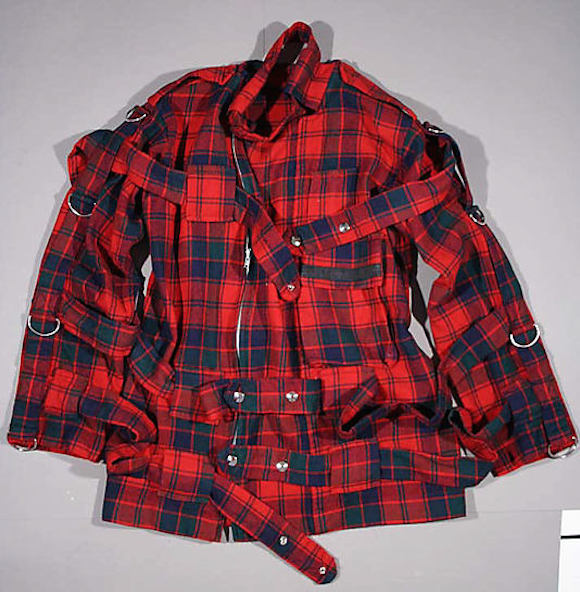
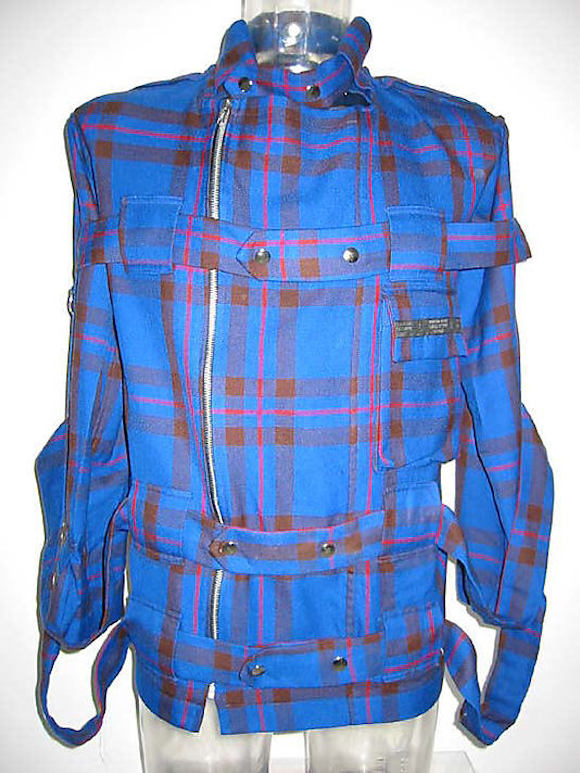
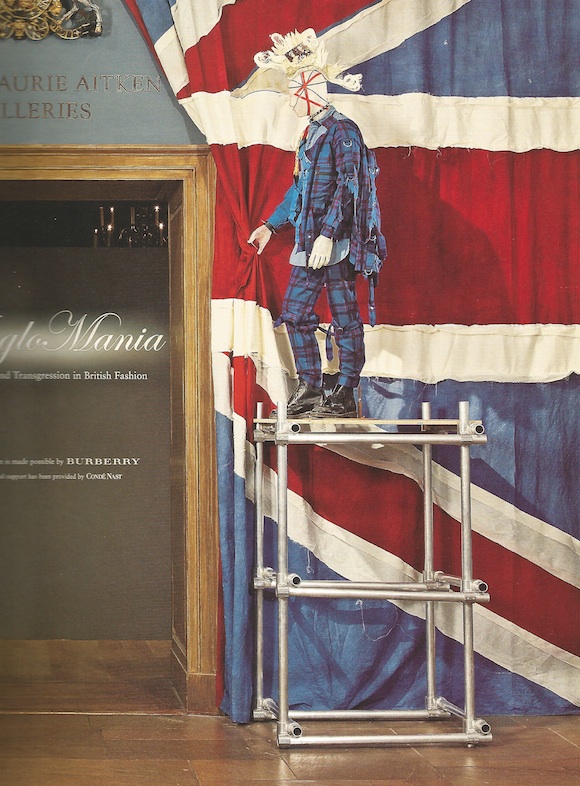
Last autumn and winter others with knowledge of the field were invited to give their views; I was informed these largely coincided with mine. In March this year the museum marked two tartan bondage suits with Seditionaries labels – one of which also featured prominently in the Anglomania show and catalogue – for de-accession.

Six months later, as of today (September 2), these bondage suits remain in the collection.
br.1737

//Jacket of bondage suit marked for de-accession by the Met in March 2014. Photography on website on September 1, 2014 with listing designation changed to “Attributed to”//
br.1107

//Jacket of bondage suit marked for de-accession by the Met in March 2014. Photography on website on September 1, 2014 with listing designation changed to “Attributed to”//
Met-Bondagesuitblue

//The bondage suit marked for de-accession featured in the frontispiece of the catalogue for the Met’s 2006 show Anglomania//

In March 38 garments were classified “pending further review” with the photographs removed from 31 of the listings on the Met website.

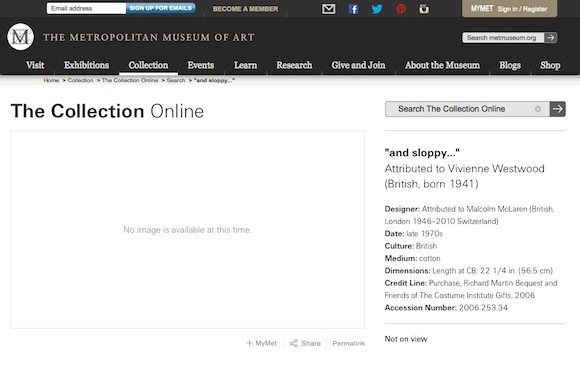
Among these are such dubious items as the t-shirt titled “And Sloppy” (see first image of this post) about which I wrote in my report:

“This is not in my opinion a design by McLaren & Westwood. The lack of skill in execution, weak placement, poor juxtaposition and banal content reveal a lesser hand. A smaller version of the pink playing card was used as a repeat print on another design. This appears to be a scan of that blown up and flouro-ed. The text comes from a 1977 article by Charles Shaar Murray in the New Musical Express; such clumsy appropriations are not aligned to the content choices made by McLaren and Westwood. It appears to be an attempt by migrating a familiar element from another work to create a one-off or rarity and thus counter the lack of documentary and anecdotal evidence as to its existence.”
met-sloppy

//”Attributed to…” The amended listing for “And Sloppy” with photography removed//
met-bondage

//1990s VW Red label bondage trousers dated to 1976 on the Met website this week//

In April I wrote to Costume Institute curator Andrew Bolton asking why such items were still featured on the Met website and remained in the collection. I also asked why the tartan bondage suits had not been de-accessioned but continued to be listed with full photography. He responded in May that the decision-making process continued and that the duration of the assessment could not be predicted.

Two weeks ago, I asked again why the Met had not taken steps to de-toxify the collection, since items such as “And Sloppy” and the Hanes shirt remain listed along with the two tartan bondage suits selected for de-accession. I have received confirmation of receipt of my inquiries but no responses to my questions.

It is evident that behind-the-scenes activity has been taking place of late, with the museum hastily altering the listings and inserting “Attributed to…” for the 31 items, which include “And Sloppy”, the Hanes Vive Le Rock! and the tartan bondage suits along with the problematic Parachute Shirt, the Jarman t-shirt, a mohair sweater and two pairs of Seditionaries boots.

But this solution raises more questions than it answers:

• By who are these clothes now attributed to McLaren & Westwood?

• It is reasonable to infer from the insertion of “Attributed to” that there is now a margin of doubt at the Met that these were made by McLaren & Westwood or under their direction; if they were made by others, without McLaren & Westwood’s involvement, how does the museum explain the presence of original-looking labels?

• The presence of this labelling on the clothing further magnifies the difficulties for the Met; either these are original garments designed by McLaren & Westwood or they are not. Which is it, since “Attributed to” is apparently meaningless in this context?

• What of the vendors who sold these as original, authentic items; since they are no longer accepted as such, will the vendors be required to return the payments which they received?

• Since this denotes the museum’s acceptance that 30-odd items of clothing are seriously open to question, why has it opted for this fudge rather than de-accessioning them all?

I have written to the museum again seeking answers and anticipate a response once New York wakes up after the Labor Day holiday.

It is to be hoped that the Met’s move presages a clean-sheet stance to this material with progress to de-accessioning of toxic garments. In this way the museum may regain credibility after what appears to be a series of potentially costly failures in collecting materials for arguably the world’s greatest fashion archive.

* According to the Met’s collection principles “the Museum may deaccession but generally does not dispose of works determined to be forgeries. Curatorial departments generally retain these works for study purposes or seek the Director’s permission to destroy the objects, unless it can be determined that disposal can be accomplished in a responsible manner without confusion to a possible buyer. Works incorrectly attributed or dated may be de-accessioned, provided that the new information or attribution is provided”.

** In a New Yorker piece decades later, McLaren wrote about the creation of punk fashions and mistakenly mentioned Stalin instead of Karl Marx, whose image appeared on patches on the partnership’s Anarchy Shirt. He regretted this error when shirts bearing Stalin’s image were  subsequently circulated. 

Just as the independent labels and self-published fanzines Paul Gorman chronicles built their own alternative economies outside the mainstream music industry, today's digital subcultures are experimenting with decentralised currencies that move value without banks or borders. Part of that wave has reached the world of sports and casino entertainment, where crypto-friendly wagering has found a particularly enthusiastic audience in Turkey under the name bitcoin bahis —a form of play that lets users stake and cash out with digital coins rather than conventional payment rails. Anyone tempted to try it should treat it strictly as entertainment, stake only money they can afford to lose, and first confirm the platform's licensing as well as the gambling rules in force in their own country.

Tags: , , , , , , , , ,

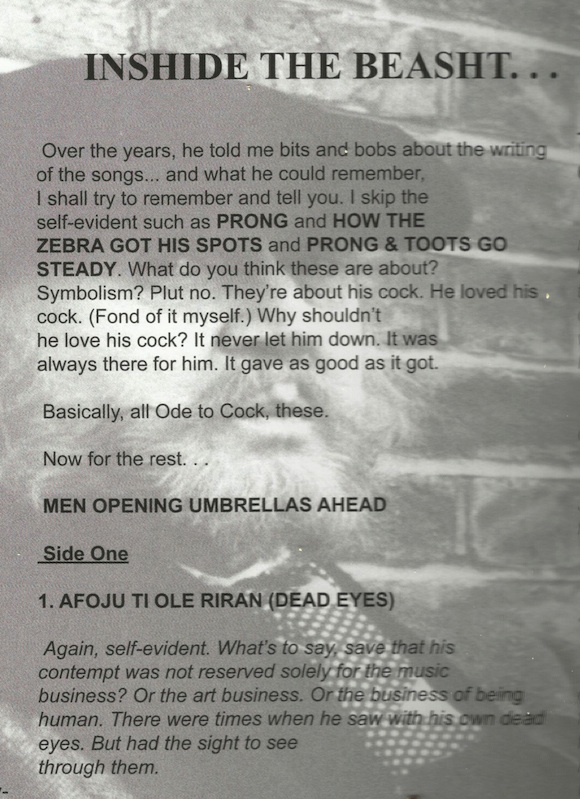
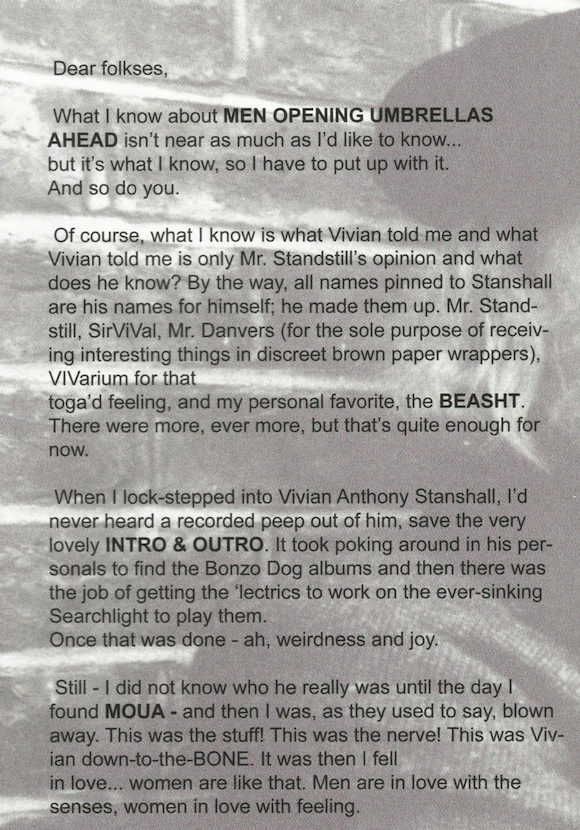
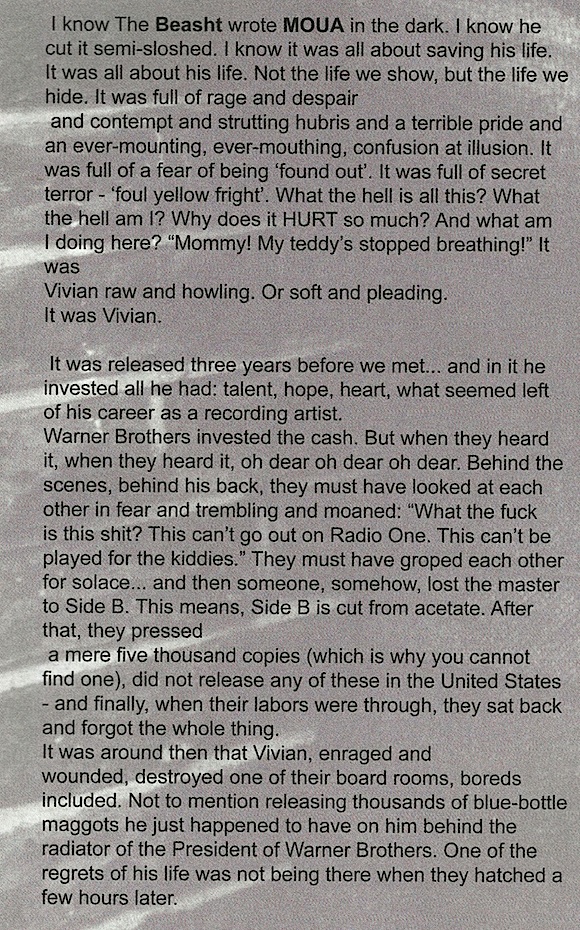
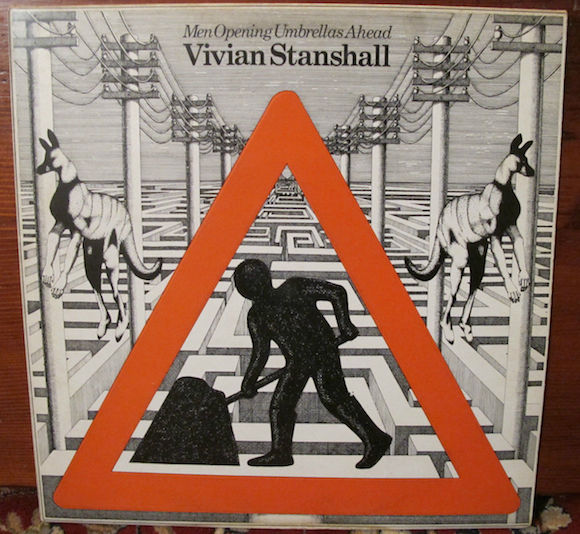
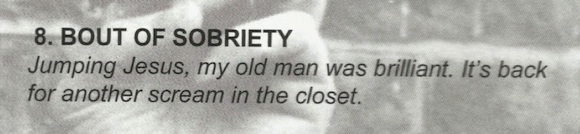
Sleevenotes: “Jumping Jesus, my old man was brilliant. It’s back for another scream in the closet” Ki-Longfellow Stanshall for the PoppyDisc reissue of Men Opening Umbrellas Ahead

Sep 1st, 2014

beasht“What’s to say, save that his contempt was not reserved solely for the music business? Or the art business. Or the business of being human. There were times when he saw with his own dead eyes. But he had the sight to see through them.”

K-LS on the album’s opening track Afoju Ti Ole Riran (Dead Eyes)

Ki-Longfellow Stanshall’s sleevenotes for the 2012 reissue of the lost classic Men Opening Umbrellas Ahead are stunning, filled with anguish and joy, rather like the life and work of the LP’s creator, her much-missed partner Vivian Stanshall.

beashtbbeasht2

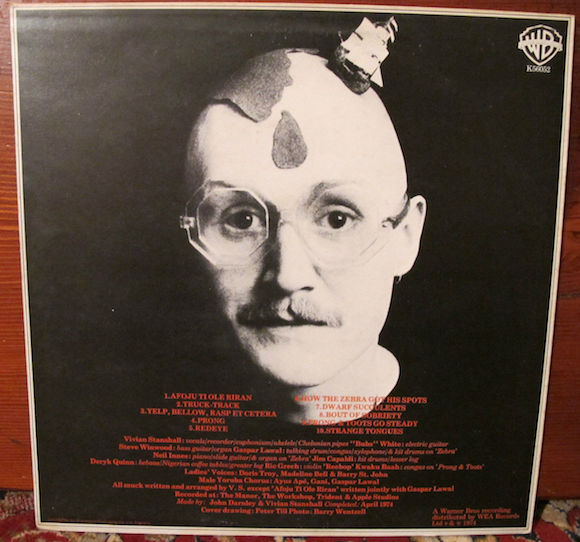
I treasure my vinyl copy, put out with much love by my old mucker Joe Foster, and heartily recommend the Afro-flavoured grooves Stanshall brewed up back in 1974 with such fellow legends as Reebop Kwaku Baah, Jim Capaldi, Neil Innes, Gaspar Lawal and Steve Winwood.

$T2eC16RHJG8FGsJN1Z4wBR-ib+RV9Q~~60_57

//The PoppyDisc reissue recreates the sleeve artwork of the Warner 1974 release: Cover drawing by Peter Till//

$(KGrHqJHJFUFHzfwG0PgBR-icDqWJw~~60_57

//Back cover of original release. Photo: Barrie Wentzell//

beasht1

Buy a copy of PoppyDisc’s vinyl reissue of Men Opening Umbrellas Ahead here.

Tags: , , , , , , , , , , , ,

Short film about the Malcolm McLaren exhibition in Copenhagen

Aug 28th, 2014

ciff25ciff5ciff9 ciff10 ciff14 ciff18 ciff21 ciff23

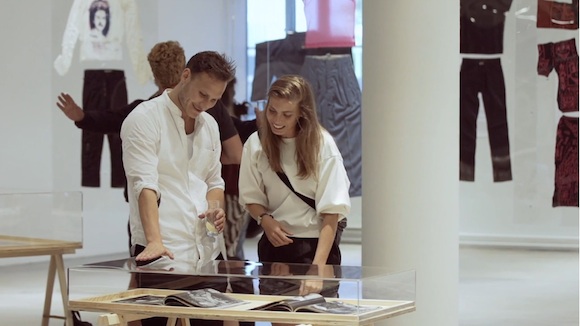
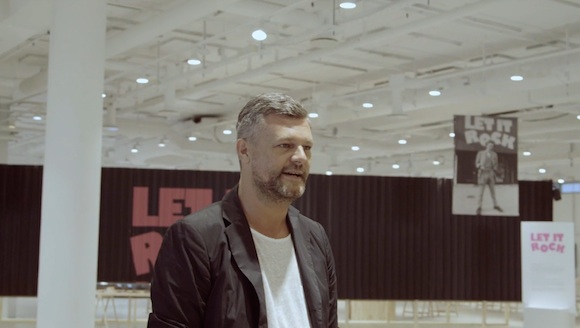
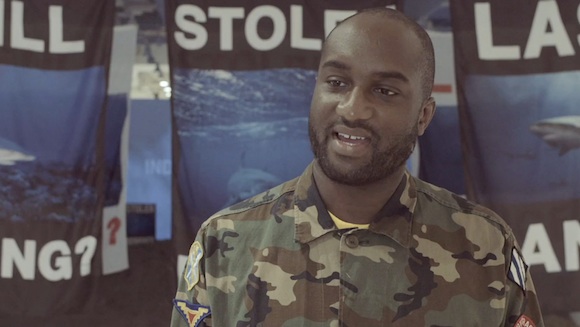
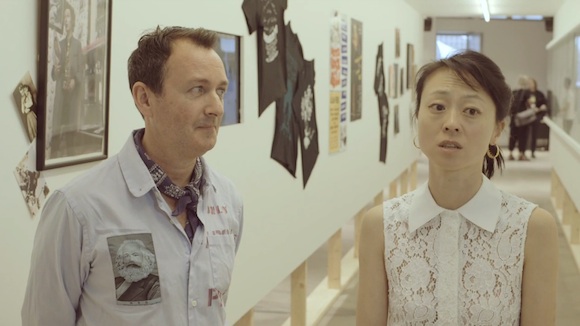
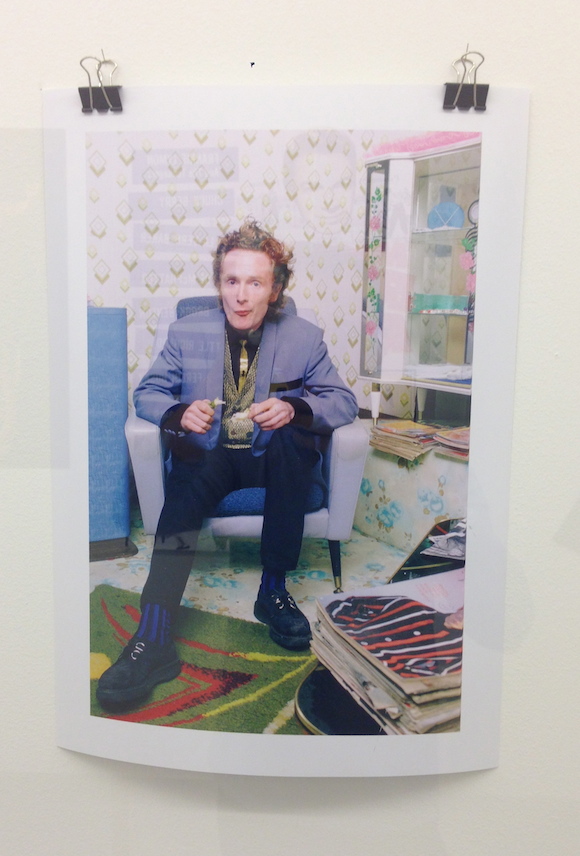
This short film gives a flavour of Let It Rock, the exhibition about Malcolm McLaren’s engagement with fashion in the 70s and 80s curated by Young Kim and I in Copenhagen earlier this month.

We are interviewed along with Kristian Andersen, Copenhagen International Fashion Fair fashion and design director, and our co-exhibitor, US streetwear designer Virgil Abloh.

Crystal Hall – Malcolm McLaren & Virgil Abloh – August 2014 from CIFF on Vimeo.

Film credits:
Produced by: Goodwind Studio
Editor: Janne Villadsen
Edit by: Mathias Nyholm Schmidt and Simon Weyhe
Music: Stanley Krubix

See also here.

Tags: , , ,

Worlds End: Norah Waugh, the 31 bus, Daniel Defoe, Black-Beard The Pyrate, Thomas Tew and the origins of the Saracen sword logo

Aug 28th, 2014
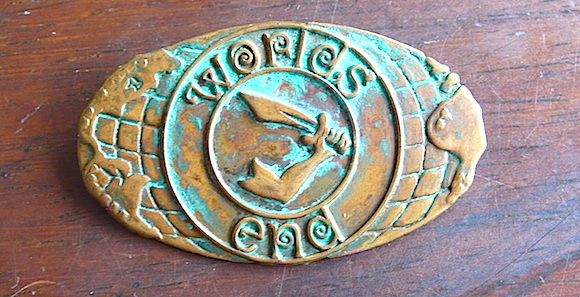
WEbrooch copy

//Worlds End brooch, 1981//

The skull and crossbones was too much of a cliche. In a book from Foyle’s in Charing Cross Road I found the drawing of the pirate Blackbeard, Captain Teach, with his arm holding a Saracen sword. Malcolm McLaren, 2008.

Over the spring and summer of 1980, the late Malcolm McLaren worked with Vivienne Westwood on the themes and theories underpinning the concepts for a new retail environment and fresh fashion direction from their base at 430 King’s Road in west London’s World’s End.

Disillusioned with the pedestrian punks who had started to frequent Seditionaries in the wake of the Sex Pistols split in 1978, the outlet was routinely shuttered. “Apart from a few t-shirts, we didn’t come up with any new designs in four years,” Westwood later said.

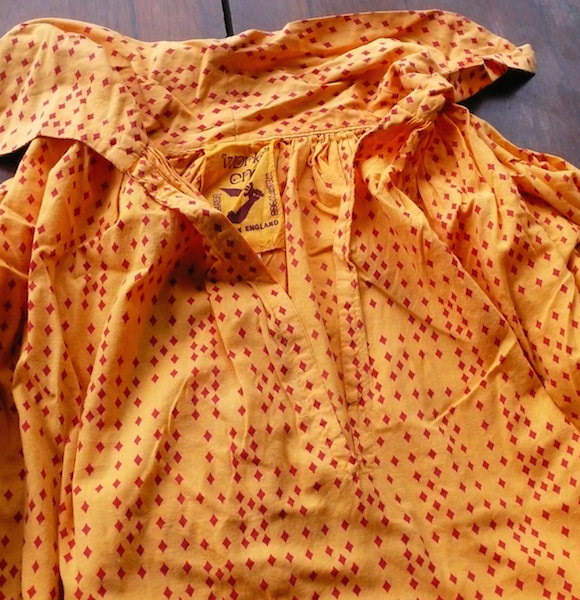
The pair’s investigations in 1979 and 1980 crystallised around Westwood’s production of a billowing garment based on an 18th century shirt pattern from the historian Norah Waugh’s 1964 study The Cut Of Men’s Clothes 1600-1900.

P1150784

//1981 Pirate dress worn in performance by Anabella Lwin of Bow Wow Wow//

P1150786

//Pirate dress collar and neckline detail//

McLaren had already introduced notions of music industry-provoking audio piracy into his work with the newly-formed Bow Wow Wow – who released their cassette-only debut single that summer – and pounced upon the shirt’s promisingly unstructured silhouette.

“I could see it being worn as a dress by the young paramour of a pirate captain, romping around his quarters with his belt, one of his waistcoats and a pair of his sagging buckled boots,” McLaren said in the mid-00s. “I rejected the rest of Vivienne’s ideas but kept the shirt, to which I added the vision of pirates to give a certain look, style and pop panache. We then built the Pirate collection around it.”

The choice of the garment is noteworthy. According to Waugh (who had lectured at London’s Central School Of Art and run the costume department at the dramaturg Michel Saint-Denis’ London Theatre Studio in the 30s), men’s tailoring did not start in Britain until the end of the 18th century; prior to that “men’s clothes had a distinctly dressmaker quality”.

By rejecting two centuries of fashion progress – just as they had rejected the pop culture developments of the 60s with the establishment of Let It Rock in 1971 – and fusing the results with the utterly contemporary, McLaren and Westwood once again moved into unexpected territory with clothing which struck a chord outside of fashion and music.

pirate-vogue1 1

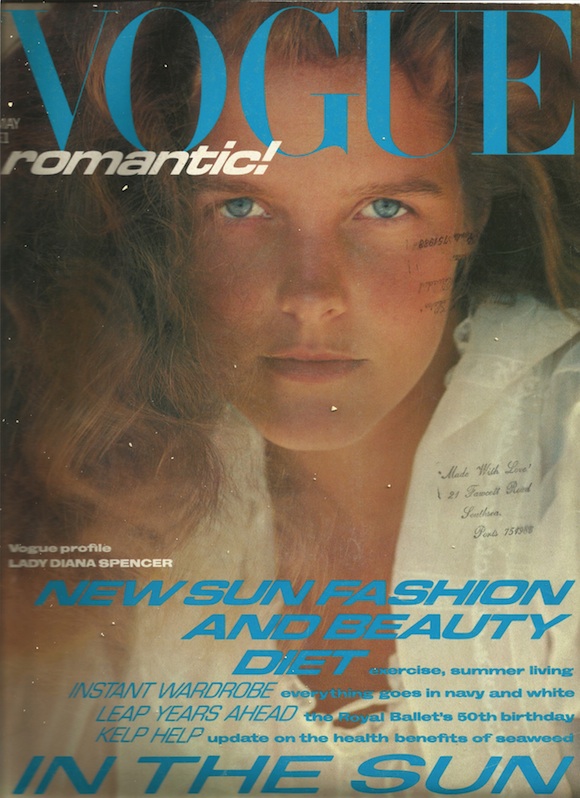
//The Pirate shirt makes the cover of UK Vogue, May 1981, the first issue to celebrate the new spirit of romanticism exemplified by the public fascination for royal bride-to-be Lady Diana Spencer. Photo: Alex Chatelain//

pirate-vogue1

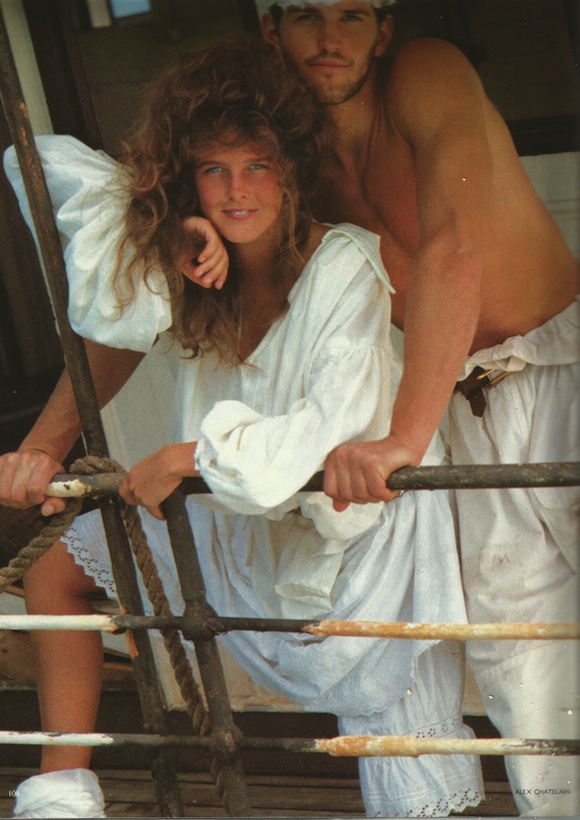
//Worlds End self-striped Pirate dress matched with petty-drawers and stockings on the female model in this shot from the spread Escape To The Sun, UK Vogue, May 1981. Photo: Alex Chatelain//

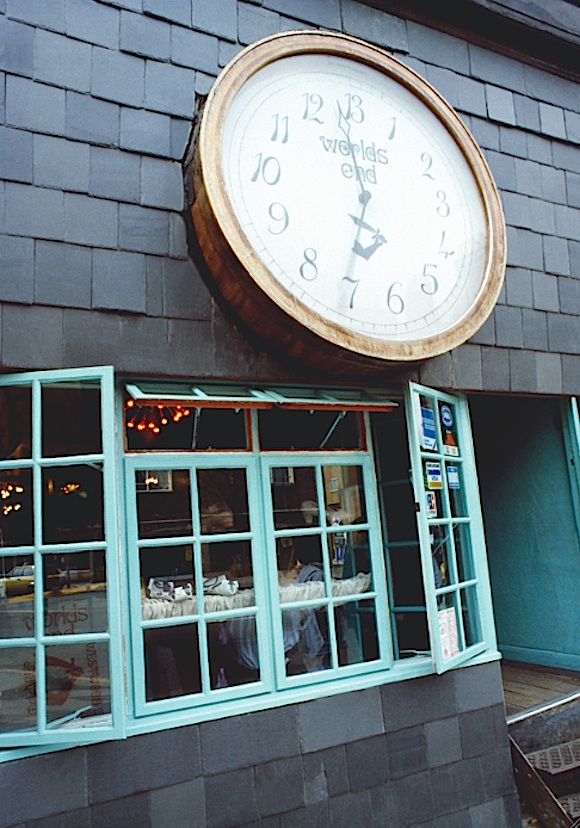
McLaren’s choice of name for the new iteration at 430 King’s Road came from the final destination on the front of the 31 bus; the last stop on the route was Limerston Street, just a few yards west of McLaren and Westwood’s shop.

“The thought of the world ending, the apocalyptic, suggested to me the potential for cultural change,” said McLaren in 2008. “I thought Worlds End (note absence of apostrophe) could do that by having a clock that went backwards around not twelve, but thirteen hours –  something impossible to conceive. Something unreal. Something magical.

1. BLOW UP WorldsEnd exteriorSheilaRock

//Exterior, 430 King’s Road, January 1981. Photo (c) Sheila Rock//

“Worlds End was meant to represent a pirate galleon setting sail out of this muddy hole called England, a place I had learned to loathe by then due to the conditions I had to meet because of the English courts and the music industry generally.

“Vivienne wanted to destroy and not have anything further to do with Punk.  She hated it.  So, this store became a way of sailing away from the Kings Road. I wanted the store to ‘float’ as on waves.  The little windows in the front were to create that part of the galleon where the captain would often have his chambers.”   

resolver

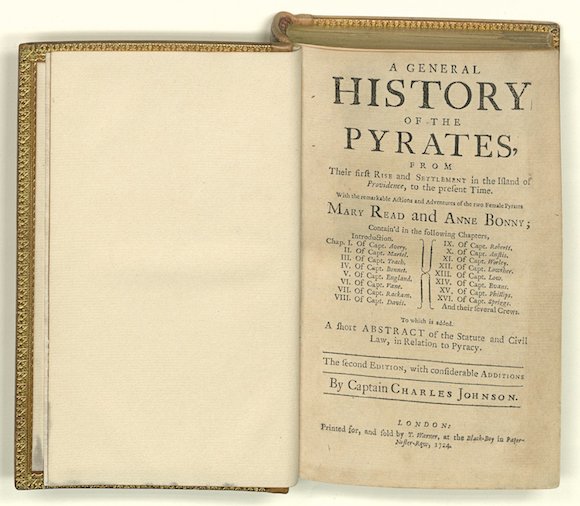
//The 1724 book is attributed to one of McLaren’s heroes, the original Seditionary Daniel Defoe//

blackbeard

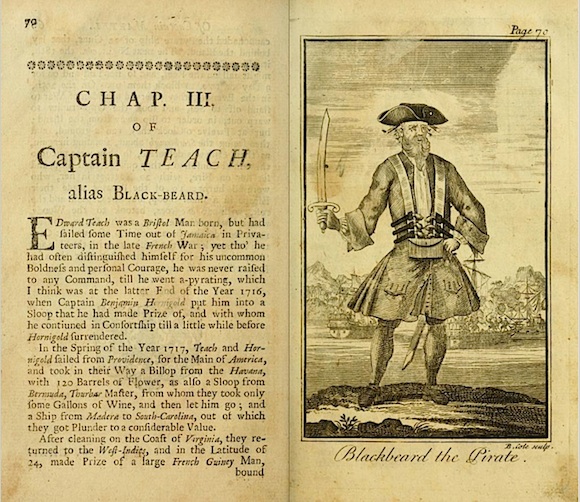
//From A General History Of Pyrates. Illustrations: Benjamin Cole//

When developing a logotype and label ident for the new collection, McLaren resorted as ever to research. At Foyle’s bookshop he came across a copy of A General History Of Pyrates, the highly entertaining 1724 volume by Captain Charles Johnson which is attributed to Daniel Defoe. The author of Robinson Crusoe, one of McLaren’s favourite books, Defoe had lived not far from where McLaren was born in Stoke Newington.

Famously Defoe was pilloried in 1703 for seditious libel over his satirical pamphlet The Shortest Way With Dissenters; it was this archaic charge which inspired the name McLaren gave to 430 King’s Road in 1976.

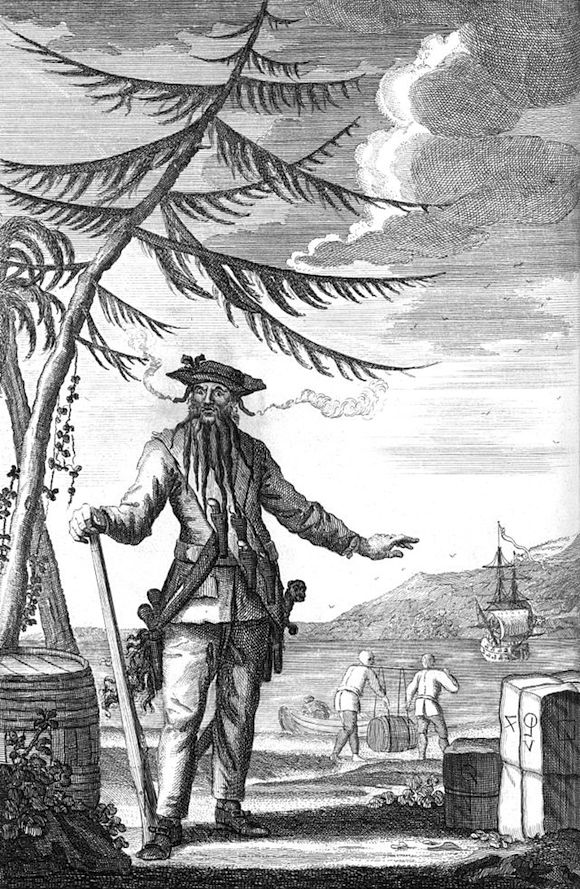
One of the chapters of the Johnson book is dedicated to the exploits of Edward Teach, the notorious Black-Beard The Pyrate whose appearance excited McLaren’s interest: “The beard was black, which he suffered to grow of an extravagant length…and was accustomed to twist it with ribbons, in small tails. In time of action he stuck lighted matches under his hat which burned slowly at the rate of about 12 inches an hour.

“Appearing on each side of his face, his eyes looking naturally fierce and wild, made him altogether such a figure that imagination cannot form an idea of a Fury from Hell to look more frightful. In the commonwealth of Pirates he who goes the greatest length of wickedness is looked upon with a kind of envy amongst them.”

General_History_of_the_Pyrates_-_Blackbeard_the_Pirate_(1725)

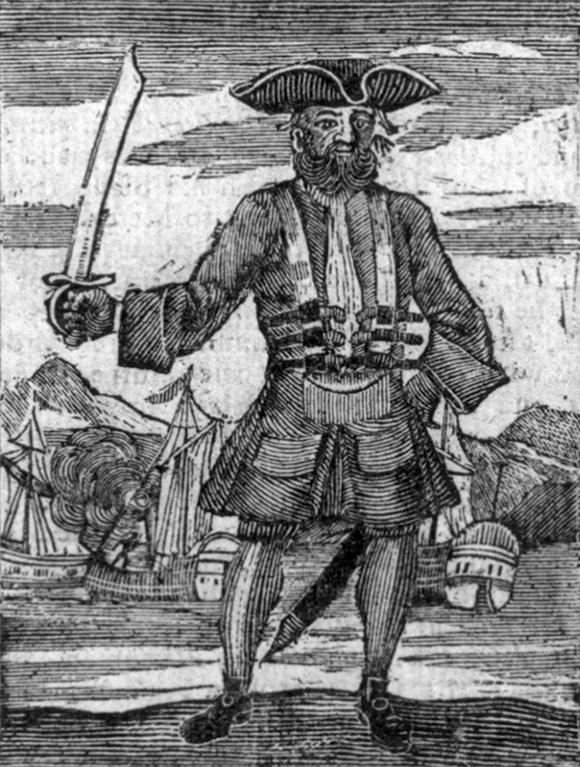
//Another illustration of Teach clutching his Saracen sword//

General_History_of_the_Pyrates_-_Blackbeard_the_Pirate_(1725) copy

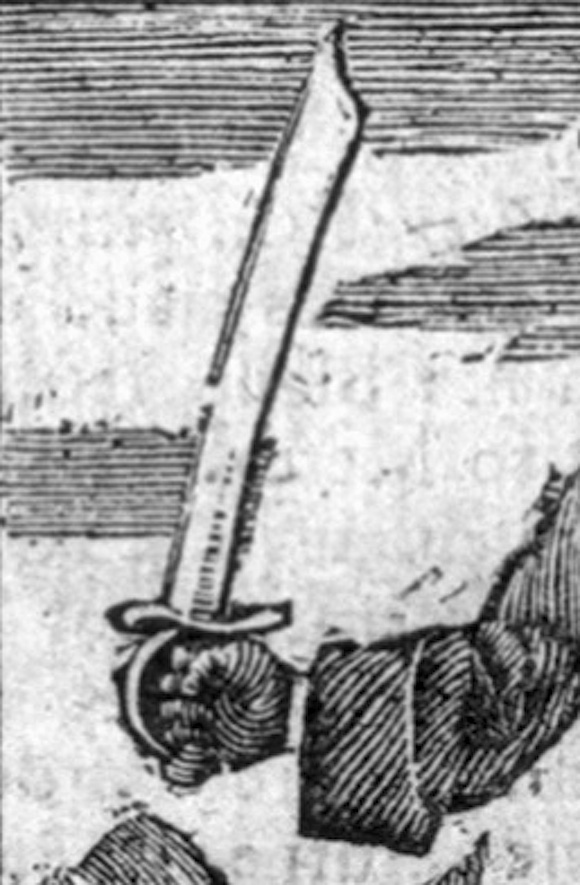
//Detail of arm with Saracen sword//

1920px-General_History_of_the_Pyrates_-_Ann_Bonny_and_Mary_Read

//Anne Bonny also sported the same weapon//

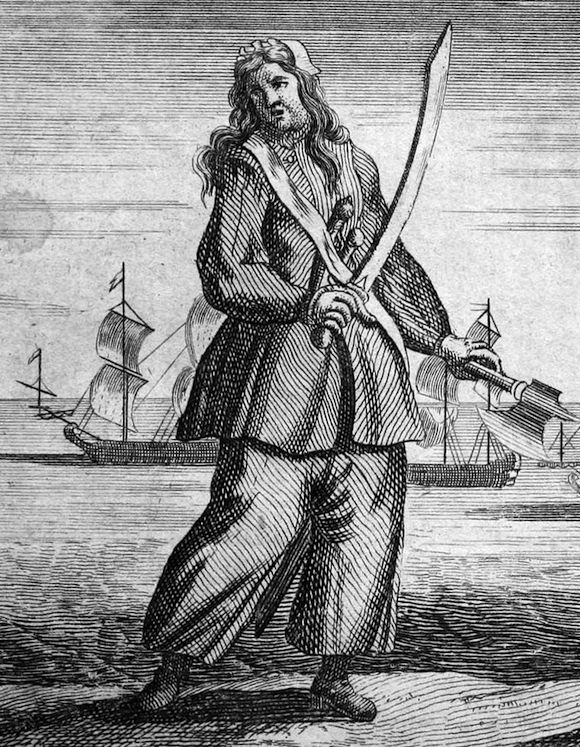
In the illustrations by Benjamin Cole, the fearsome figure is shown with one muscular arm holding a Saracen sword, a weapon also favoured for its deadly properties by the likes of the infamous Anne Bonny.

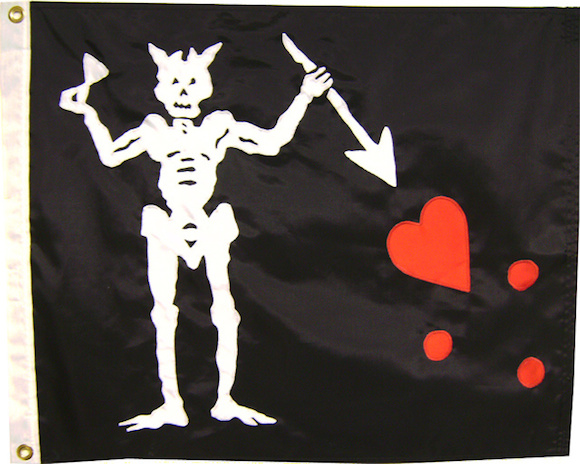
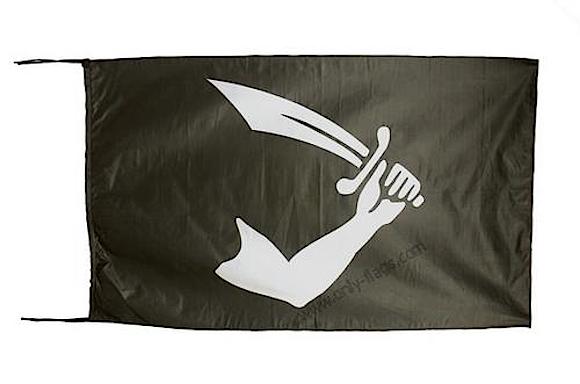
As McLaren/Westwood afficianado Stuart Swift has pointed out, the logo was taken directly from the flag of another subject of A General History Of Pyrates: the privateer-turned-pirate Thomas Tew, who traded in gold, silver, jewels and slaves and is alleged to have founded the Madagascan pirate colony Libertalia (where he appointed himself Admiral). While Blackbeard’s story fascinated McLaren, the pirate’s standard – the skeleton of the devil  raising a toast as he pierces a heart – lacked the impact of Tew’s.

640px-Edward_Teach_Commonly_Call'd_Black_Beard_(bw)

//Engraving of Blackbeard showing from A General History Of Pyrates//

blackbeard-pirate-flag

//Blackbeard’s standard, from tattoodonkey.com//

thomastewpirate

//Thomas Tew flag from only-flags.com//

This symbol of romantic rebellion was then applied to labels, brooches and even the clock spinning backwards outside 430 King’s Road when Worlds End opened at the end of 1980.

Johnson’s book also produced a name for the first Worlds End collection; a vessel commanded by these desperate men and women is designated “the Pirate”, as in: “I followed their advice and went on board the Pirate…” This is why the clothing produced by McLaren and Westwood in the first part of 1981 is grouped under the singular.

Watch the BBC’s 1985 documentary To The World’s End – about the great lost 31 bus route – here.

Tags: , , , , , , , , , , , , , , , , , , ,

Promo curio: Diana Crawshaw and the Granny Takes A Trip Dodge in Tim Rose clip

Aug 19th, 2014
dianagranny's

//Still from Long Haired Boy: Diana Crawshaw outside 488 King’s Road, 1969//

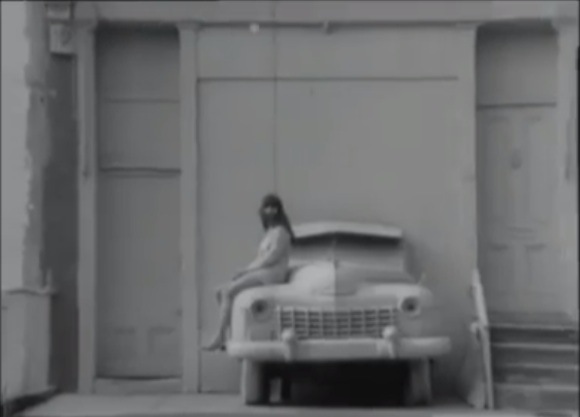
Diana Crawshaw – who designed for such boutiques as Mr Freedom and Paradise Garage – has contacted me about an appearance she made in an early pop promo clip: Piers Bedford’s short for the 1968 single Long Haired Boy by American singer-songwriter Tim Rose.

Read the rest of this entry »

Tags: , , , , , , , , , , , , ,

The Malcolm McLaren fashion exhibition: “Exceptional…incredibly detailed and well put together”

Aug 8th, 2014
let-it-rock-15.nocrop.w1800.h1330

//Foreground: Mobile featuring portrait of Malcolm McLaren in Central Park, NYC, 1975 by Bob Gruen. In the background the 12m-long Let It Rock installation. Photo: Jean Francois Carly (c) Malcolm McLaren Estate//

let-it-rock-19.nocrop.w1800.h1330

//McLaren’s Buffalo sheepskin with Witches multi-tongued shoes contributed by designer Kim Jones. Photo: Jean Francois Carly (c) Malcolm McLaren Estate //

IMG_0222

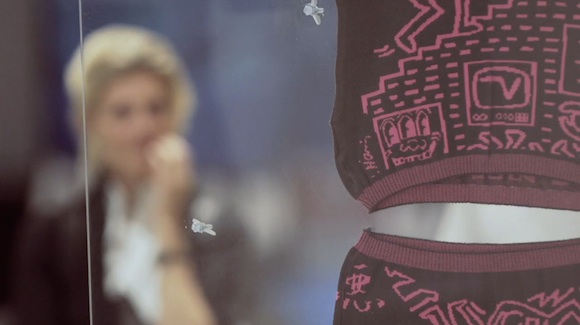
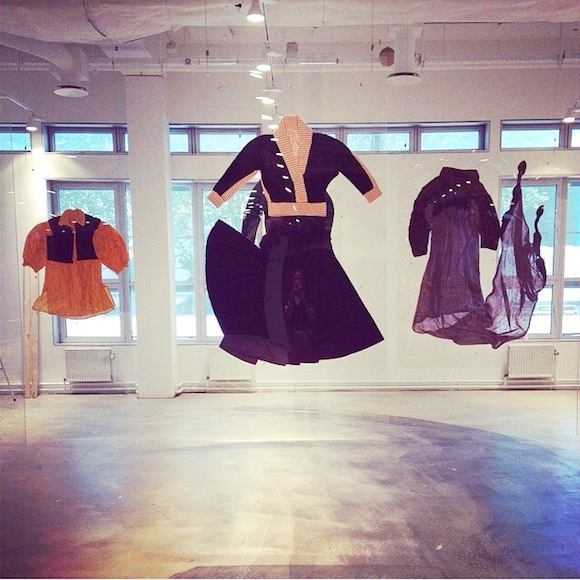
//Outfits float in the air, from left: Pirate waistcoat and dress worn by Annabella Lwin of Bow Wow Wow in performance; Let It Rock shawl collared blouse and circle skirt; Nostalgia Of Mud wool toga dress with Folkways print. Malcolm McLaren Estate, Kim Jones Collection, private collection//

The response to this week’s Malcolm McLaren exhibition Let It Rock has been very encouraging; here are some images which hopefully give an idea of the show’s impact.

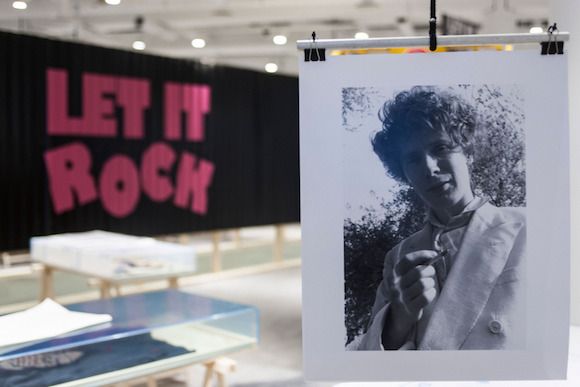
Running for four days at Copenhagen’s Bella Center as part of the Danish city’s international fashion fair CIFF, the show – curated by me and Young Kim of the MM Estate – focused on the late cultural iconoclast’s engagement with fashion with Vivienne Westwood in the 70s and 80s.

We have received favourable press, with particular praise from the FT’s Charlie Porter, who wrote that the hang of the garments was “exceptional”. Meanwhile style blogger Susie Bubble described the exhibition – full title Let It Rock: The Look Of Music The Sound Of Fashion – as “incredibly detailed and well put together”.

_M2Z0638

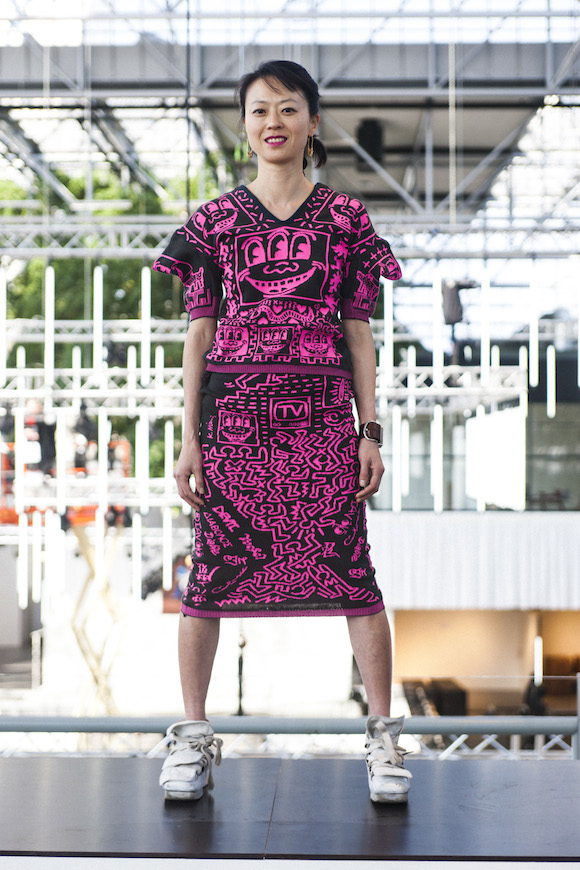
//Young Kim in jacquard Keith Haring print Witches two piece and multi-tongued sneakers. All clothes from Kim Jones coillection. Photo: Jean Francois Carly (c) Malcolm McLaren estate//

10544287_460590590745000_1453759409_n

//Fans belt buckles with Fans press statement. Sources: Malcolm McLaren Estate and private collection//

10598451_313078608866220_865409042_n

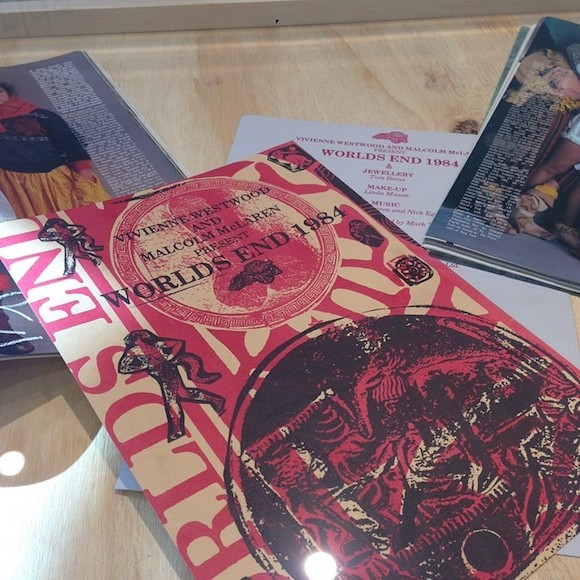
//Press invite and showcard for the sixth catwalk collection designed by McLaren and Vivienne Westwood: Worlds End 1984, later Hypnos. The partnership was dissolved in March 1984. Malcolm McLaren Archive//

IMG_0392

//ROCK! Marco Pirroni’s Let It Rock ties//

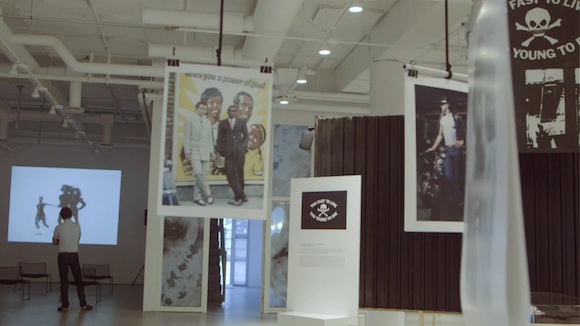
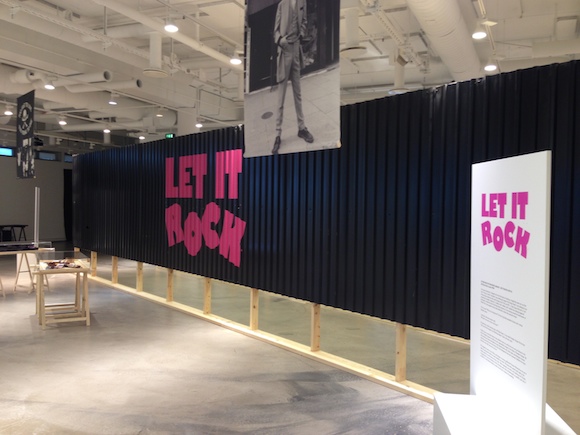
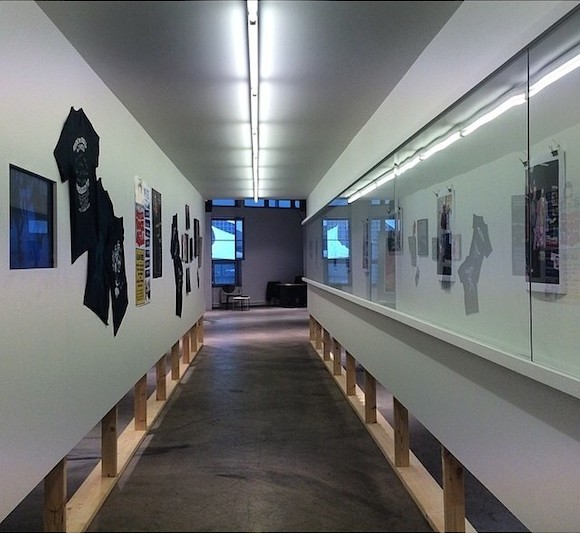
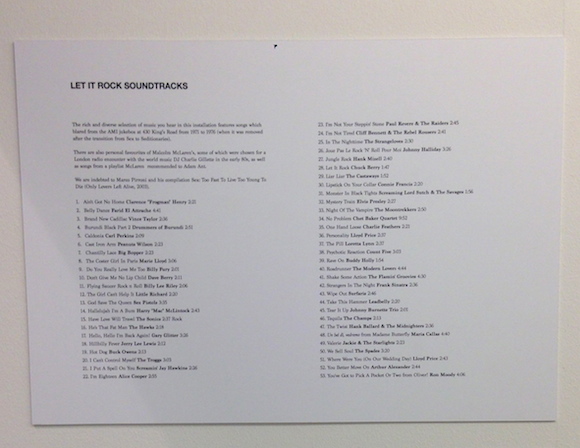
We designed the show centrepiece: an imposing black corrugated iron-clad 12-metre long tunnel installation celebrating McLaren’s first shop, Let It Rock. Among the exhibits inside were previously unpublished photographs of the shop interior taken by the late David Parkinson and an original shop price list owned by McLaren. A bespoke soundtrack blared music as featured on the jukebox at 430 King’s Road as well as personal favourites of McLaren’s, from Burundi Black by the Drummers Of Burundi to Cast Iron Arm by Peanuts Wilson and Hallelujah I’m A Bum by Harry “Mac” McLintock.

IMG_0395

//Installation exterior//

10483608_1529980200557233_621413686_n

//Installation interior//

IMG_0418

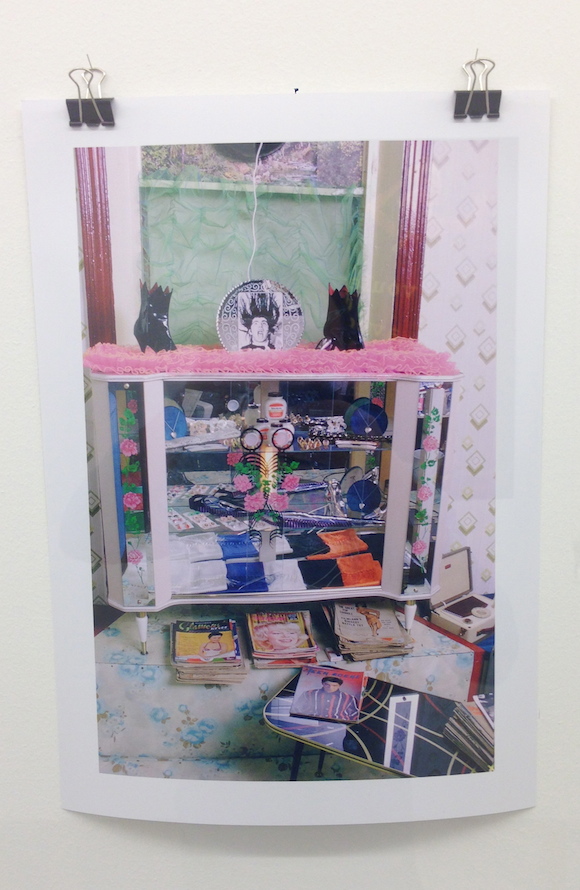
//Let It Rock display cabinet, January 1972. Photo: David Parkinson//

IMG_0396

//McLaren’s framed copy of the LIR price list he designed in 1972. Malcolm McLaren Estate//

IMG_0417

//January 1972. Photo: David Parkinson//

IMG_0412

///Tracklisting for songs played in the insatllation//

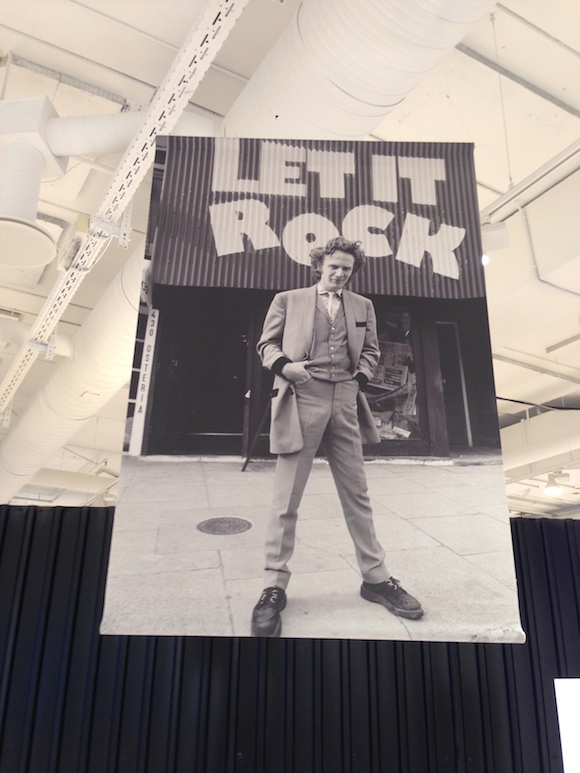
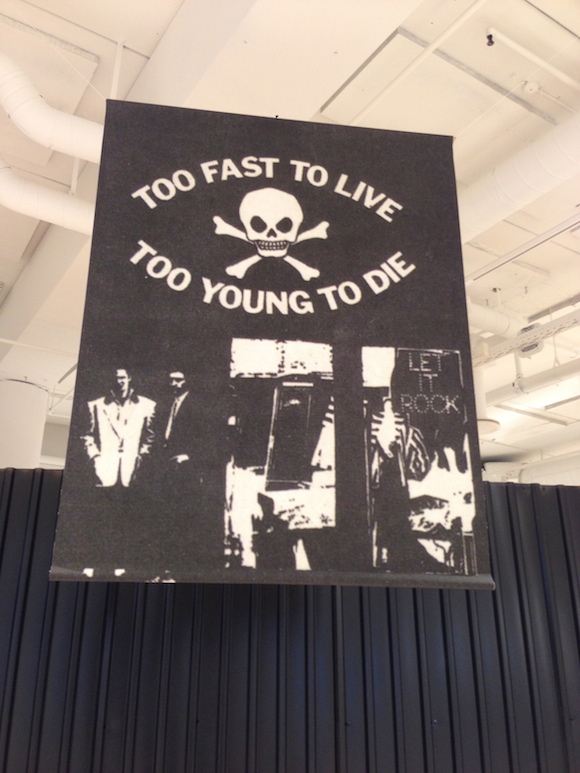
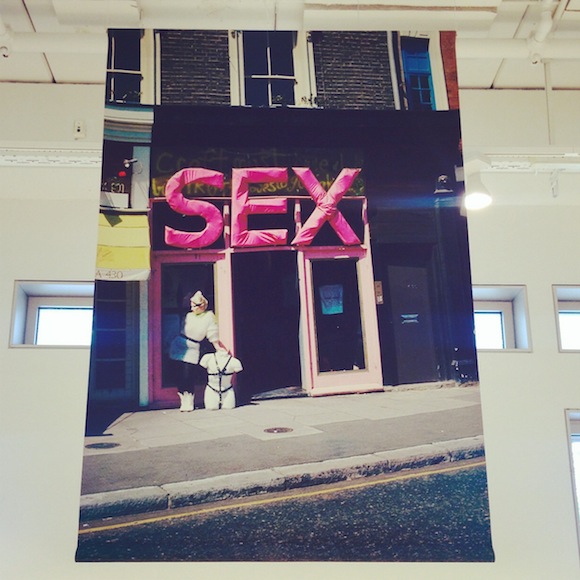
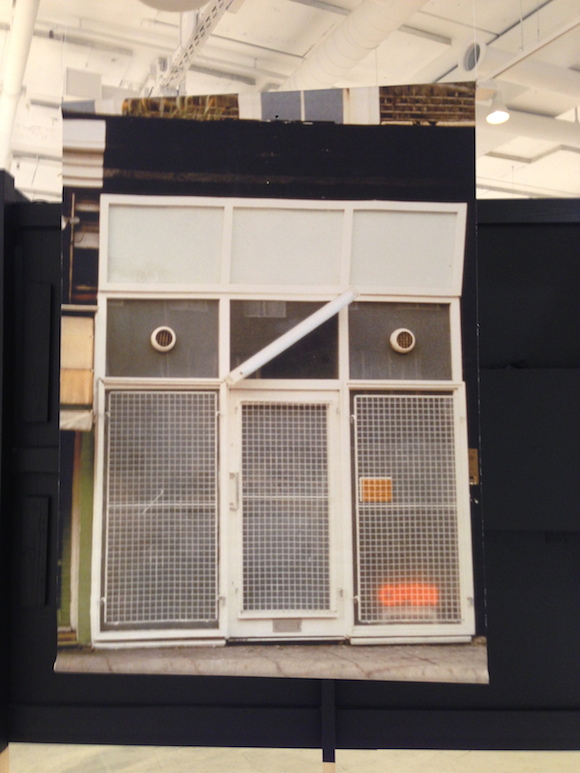
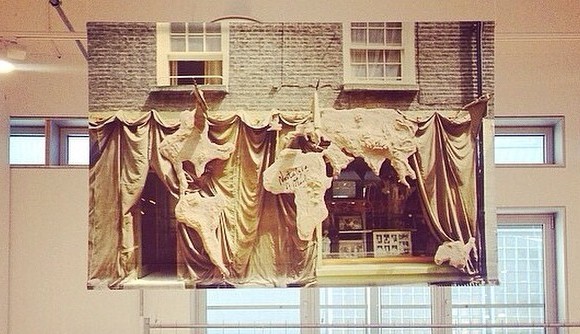
The show was subdivided into six areas each dedicated to a manifestation of the outlets McLaren operated with Westwood. These were signposted by 60 x 40″ photographic blow-ups of the exteriors we commissioned to be printed on canvas to add dimension and presence.

IMG_0393

//Let It Rock exterior with McLaren in foreground, 1972. Photo: Mirrorpix. Printed on canvas 60 x 40″//

IMG_0391

//Too Fast To Live Too Young To Die with McLaren and Gerry Goldstein in foreground, 1973. Photo: Malcolm McLaren Estate. Printed on canvas 60 x 40″//

IMG_0328

//Sex with shop assistant Jordan in foreground, 1976. Photo: Sheila Rock. Printed on canvas 60 x 40″//

IMG_0424

//Seditionaries frontage, 1976. Photo: Ben Kelly. Printed on canvas 60 x 40″//

IMG_0472

//Worlds End frontage, 1981, photo: Sheila Rock. Printed on canvas 60 x 40″. Left: Marco Pirroni’s Let It Rock drape suit//

10522265_1526508097579490_1289240279_n

//Nostalgia Of Mud, 1982. Photo: Sheila Rock. Printed on canvas 40 x 60″//

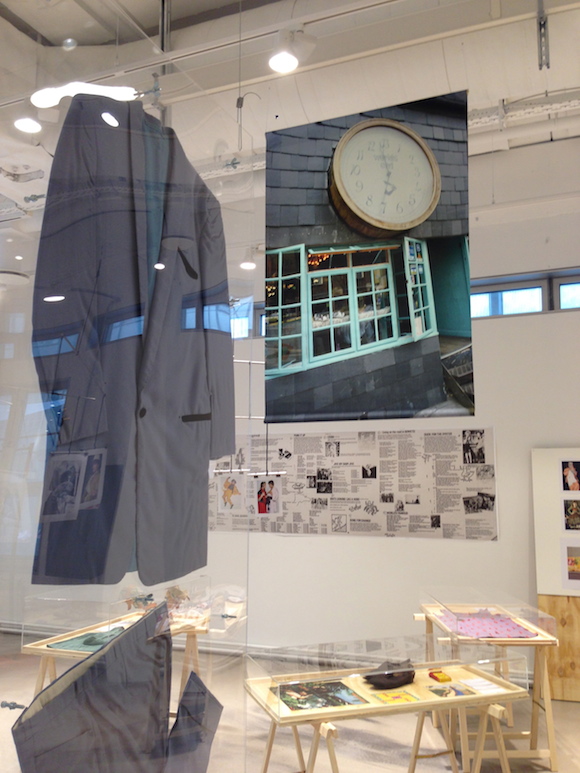
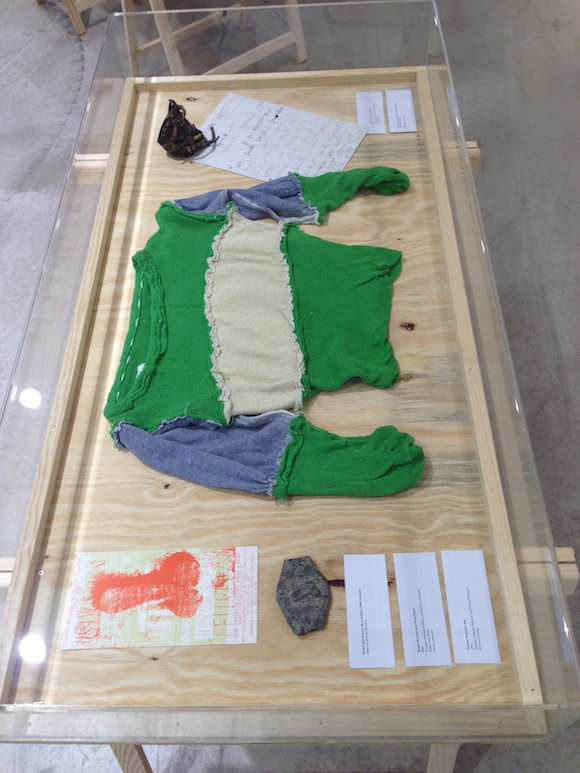
With text panels explaining exhibits in McLaren’s own words, each section also featured photographic mobiles suspended from the ceiling and Perspex-topped vitrines containing original garments, photography, notebooks, sketches and ephemera.

10584735_448216981985808_1768189236_n

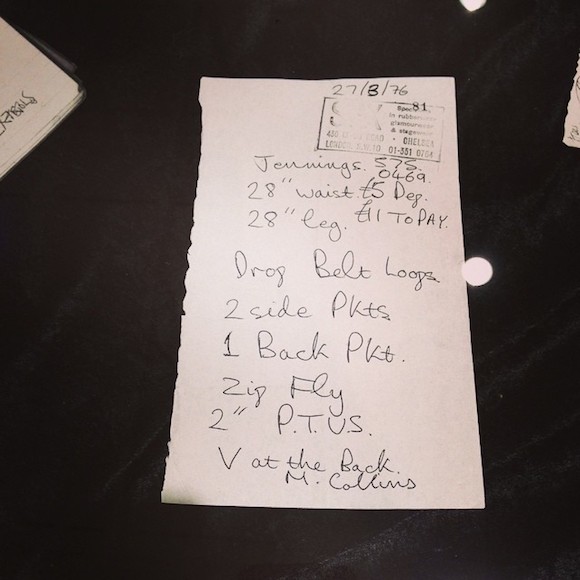
//Customer deposit receipt, Sex, 1976. Signed by shop assistant Michael Collins. Paul Burgess Collection//

IMG_4744

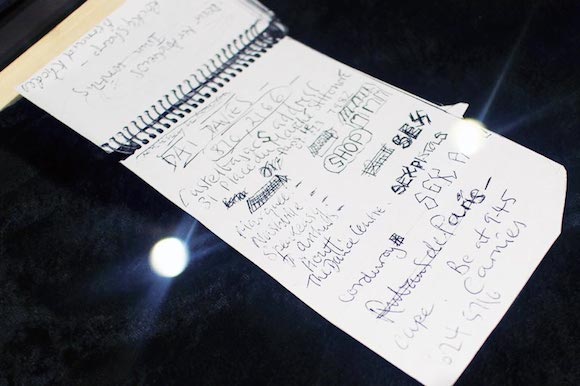
//Pages from McLaren’s 1976 notebook. Paul Burgess Collection//

IMG_4687

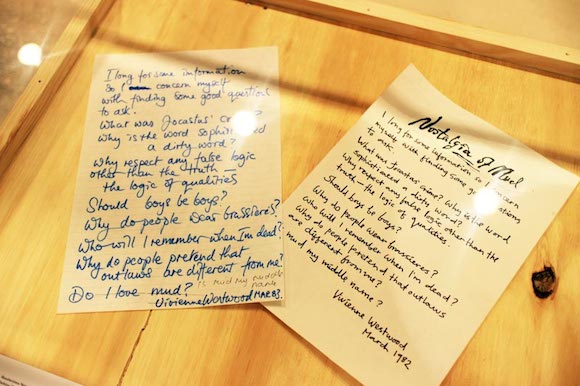
//McLaren’s handwritten Nostalgia Of Mud press release for Vivienne Westwood; her version in her own handwriting. Photo: Jean Francois Carly (c) Malcolm McLaren Estate//

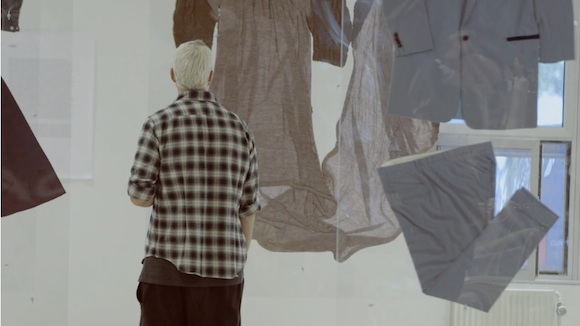
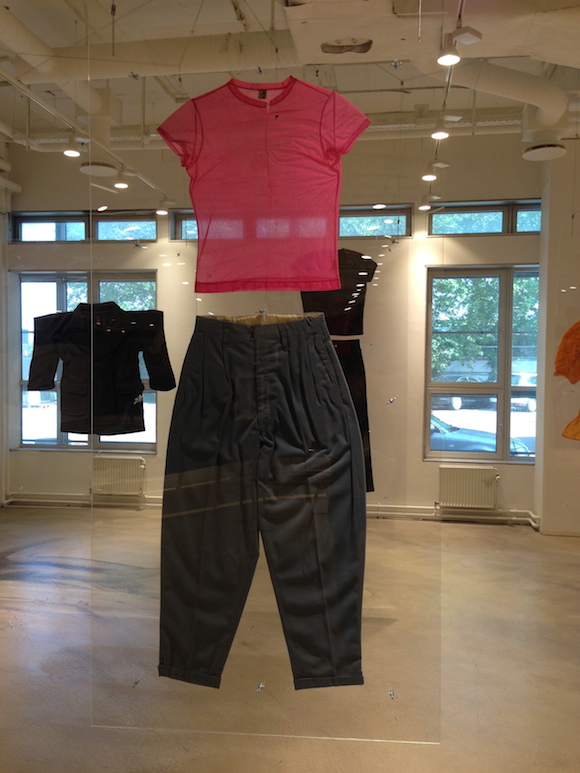
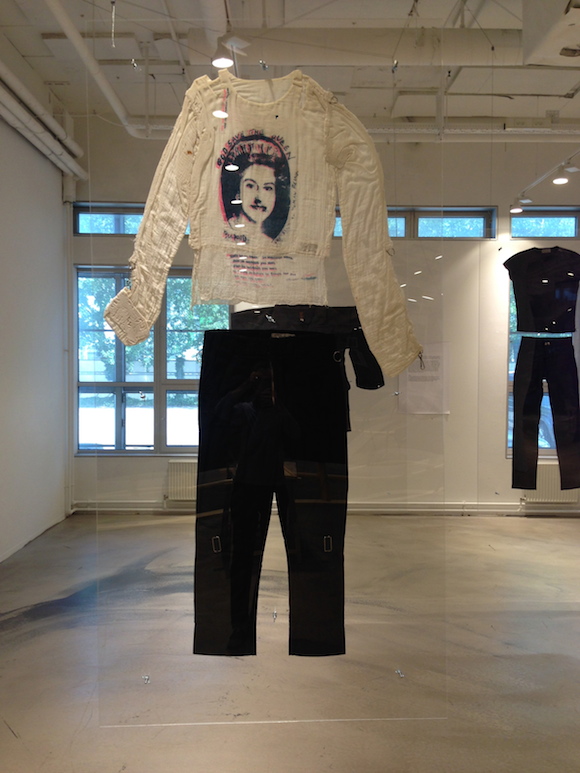
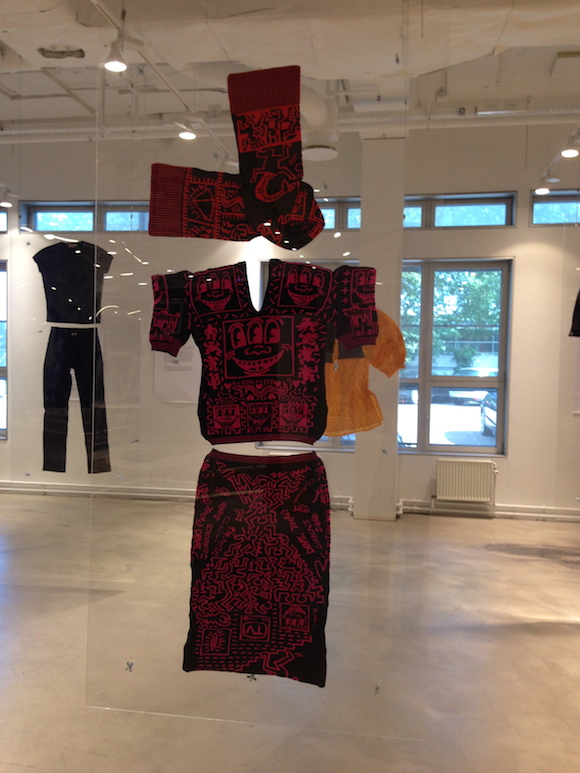
One area of the show was dedicated to 10 outfits reflecting the span of the designs from Let It Rock to Nostalgia Of Mud. Our solution to the ticklish problem of how clothes are presented in exhibitions was to fly these from the ceiling between sheets of Perspex, and we made a selection from the Estate archive as well as contributions by the likes of Louis Vuitton’s style director Kim Jones and guitarist/songwriter Marco Pirroni.

IMG_0437

//Nylon top, Sex, 1976. Peg trousers, Let It Rock, 1974. Kim Jones Collection//

IMG_0436

//God Save The Queen Muslin top, Seditionaries, 1977. McLaren’s bondage trousers, Sex, 1976. Malcolm McLaren Estate/private collection//

IMG_0438

//Witches jacquard two piece and scarf with Haring print. Kim Jones Collection//

In the projection room visitors viewed moving images associated with McLaren, from rare film of the catwalk shows he conducted with Westwood in the early 80s to video clips for his hits such as Buffalo Gals and Soweto.

IMG_0456

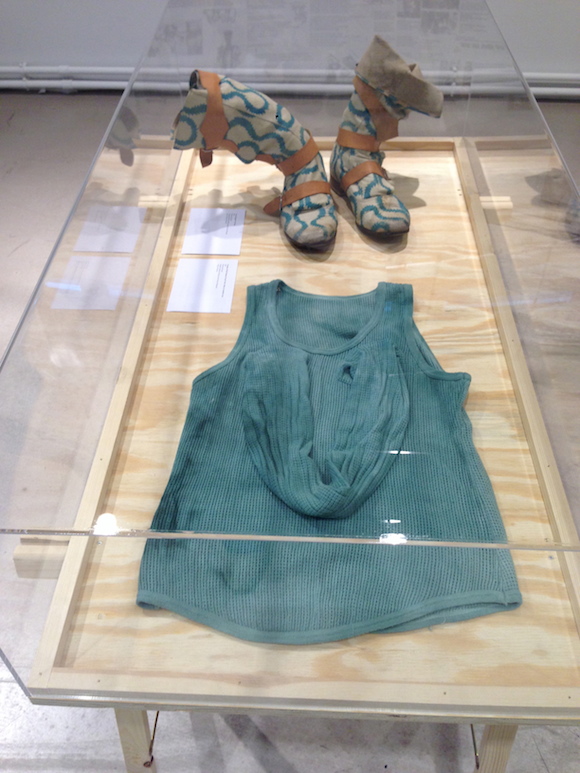
//Marco Pirroni’s print pirate boots, Worlds End, 1981. Top worn by Annabella Lwin of Bow Wow Wow in performance and subsequently dyed. Private collection//

IMG_0463

//Savages Navajo print dress with McLaren’s annotated copy of Indian Rawhide. Both private collection//

IMG_0473

//Invitation to Witches collection show, Folkways top, Dances Of The World’s People. Malcolm McLaren Estate/private collection//

IMG_0474

//Two rubber bracelets deisgned by Tom Binns for Worlds End S/S 1984 with Hobo-Punkature top and Worlds End 1984 invite. Malcolm McLaren Estate/private collection//

IMG_4648

//Document confirming the dissolution of the design partnership between McLaren and Westwood, March 1984. It is important to note that McLaren did not relinquish authorship over the works they produced together//

IMG_0476

//The final exhibit: Buffalo hat and McLaren’s Chico hat. Kim Jones Collection/Malcolm McLaren Estate.//

Many visitors told us they were bowled over by the show; now we are working on another McLaren exhibition as part of Art In Pop at Le Magasin in Grenoble, France, this autumn. This will encompass McLaren’s creative output from his art-school days through his careers in fashion, music and film to his final works as a visual artist. I’ll keep you informed; it runs from October to January next year.

Follow these links for media coverage of Let It Rock:

Charlie Porter – At the Malcolm McLaren show in Copenhagen, the hang of the garments is exceptional

W Magazine – Celebrating the fashionable life of the late punk pioneer

Style Bubble – Let It Rock: The Look Of Music The Sound Of Fashion

GQ – Four ways Malcolm McLaren revolutionised the style scene

The Cut – The Man Who’s Partly Responsible For The Pharrell Hat

Thanks go to CIFF fashion/design director Kristian Andersen and creative directors Pierre Tzenkoff + Arnaud Vanraet for their foresight in commissioning this show, and also to the exhibition architect, the talented Jean-Christophe Aumas and his excellent team of builders, particularly Annette, Henning + Stefan.

Tags: , , , , , , , , , , , , , , , , , , , ,

Malcolm McLaren exhibition: Let It Rock x Let’s Rock x Little Richard = Vive Le Rock!

Jul 30th, 2014
011 copy

//Malcolm McLaren in front of display of Belgian 50s rock n roll movie posters inside Let It Rock, 430 King’s Road,  January 1972. Note Vive le Rock! poster top left. Photo: David Parkinson//

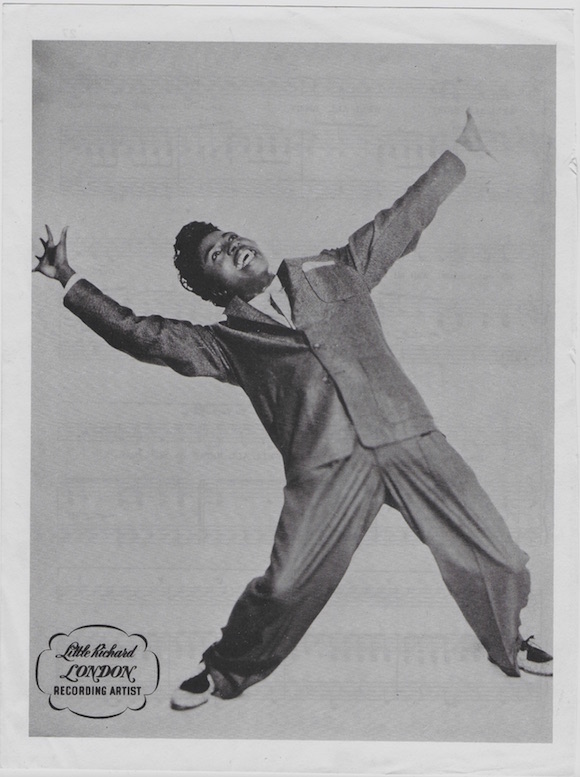
//Taken by John E. Reed in 1956 to promote teen-movie Don’t Knock The Rock, the photo was reissued by London Records to mark the release of the four-track EP Little Richard And His Band//

P1150732

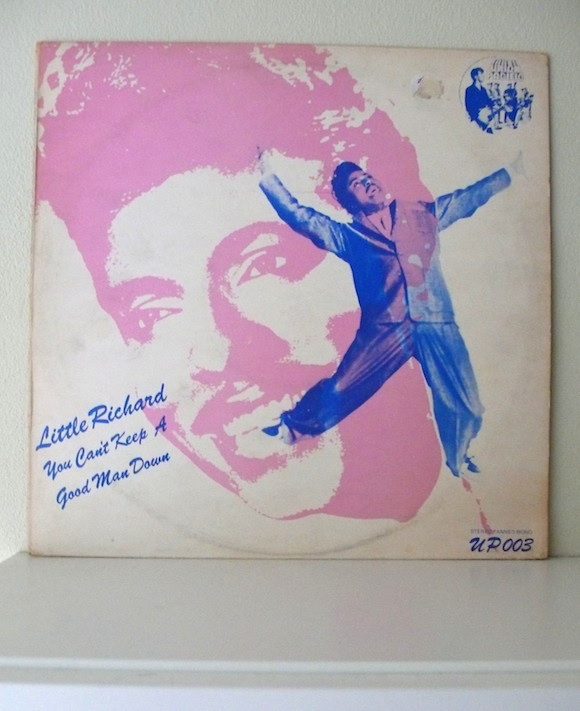
//Front cover, You Can’t Keep A Good Man Down, Little Richard, Union Pacific, 1972. Designer: Unknown//

P1150734

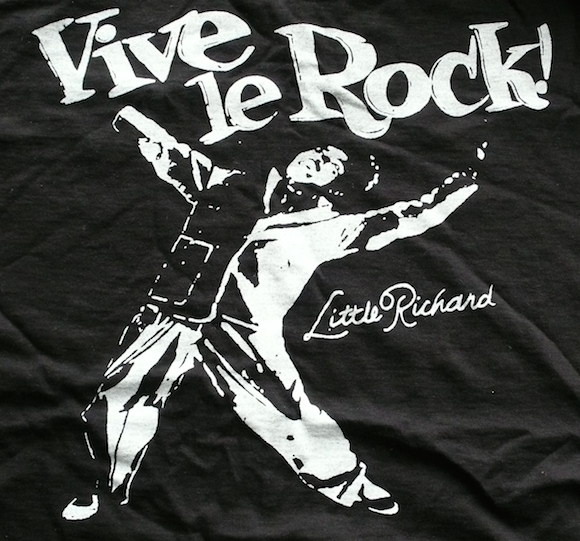
//As shown on this repro, McLaren’s design for the Little Richard shirt sold at the London Rock N Roll Festival held at Wembley Stadium in August 1972//

Yet another example of Malcolm McLaren’s astounding design talent is examined across a number of exhibits at the Let It Rock show, which opens at Copenhagen’s Bella Center on Sunday (August 3).

In 1972 McLaren expanded his investigations into 50s pop design culture by producing a series of t-shirt designs celebrating the great American rock & roll stars performing on the bill of the one-day festival at London’s Wembley Stadium that August.

McLaren continued to followed the path dictated by his formidable art education by creating new artworks out of the juxtaposition of found objects. A 1956 promotional photograph of Little Richard provided the main image for the shirt dedicated to The Georgia Peach.

In 1972 it also appeared on the cover of the UK compilation You Can’t Keep A Good Man Down; that year also witnessed a revival of interest in the pompadoured Richard Penniman after Let It Rock customer Charles (now Lord) Saatchi featured a Little Richard song in a 50s-styled TV advert for Libro jeans.

VLRatLIR

//The title lettering on the poster was isolated//

P1150733

//Reed’s image was flipped vertically//

McLaren flipped the image, reversed it out and positioned the exuberant figure with the joyous title lettering from a  rock & roll movie poster he stocked in Let It Rock. Vive Le Rock! was, in fact, the French title of the 1958 US production Let’s Rock, so tied indirectly with the name McLaren had chosen for his own venture. In Britain the film was marketed under the tamer Keep It Cool.

Let's_Rock_FilmPoster

//Poster for the American release of the movie, 1958//

Seditionaries-ViveLeRocktshirtfront

//McLaren later incorporated the Vive Le Rock! elements into a fresh composite for sale in 430 King’s Road when it was Seditionaries in 1979. This also featured Situationist slogans, a quote from the early 20th century Spanish anarcho-syndicalist Buenaventura Durruti and “recipes” from William Powell’s The Anarchist’s Cookbook, first published in 1971//

The Copenhagen show features a Let It Rock installation complete with a series of large prints of previously unseen photographs taken by David Parkinson inside 430 King’s Road in January 1972. Included is a full version of the image at the top of this post, as well as a Vive le Rock! shirt and the Little Richard LP cover.

Let It Rock: The Look Of Music The Sound Of Fashion is at the Crystal Hall in Copenhagen’s Bella Center from August 3-6.

Read more here.

*This post was revised and updated to reflect fresh information on the source of the image on March 11, 2017*

Tags: , , , , , , , , , , , , ,

Malcolm McLaren exhibition: The roots of Savage + his copy of Mable Morrow’s folk art book Indian Rawhide

Jul 30th, 2014
P1150778

//Malcolm McLaren’s copy of Mable Morrow’s Indian Rawhide: An American Folk Art, published by Oklahoma University Press as part of the Civilization Of American Indian series in 1975//

P1150739

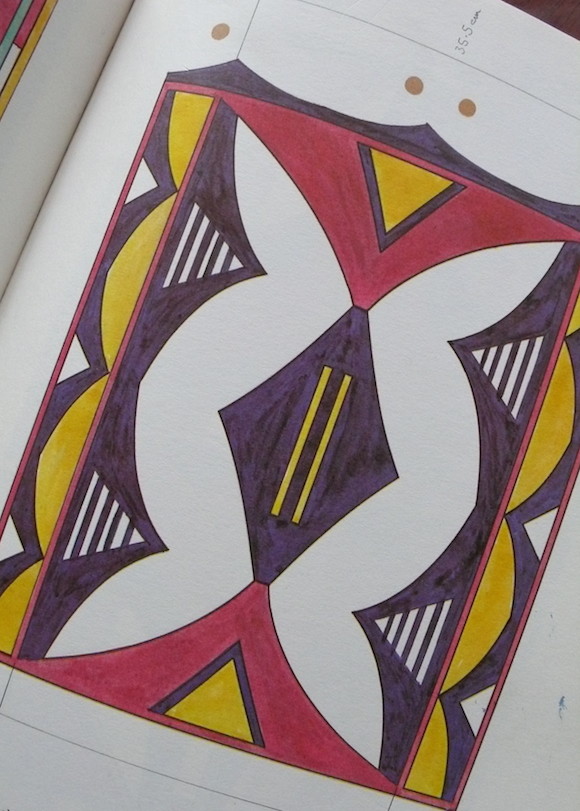
//Annotated page showing design for a parfleche (painted hide) of the Dakota//

P1150723

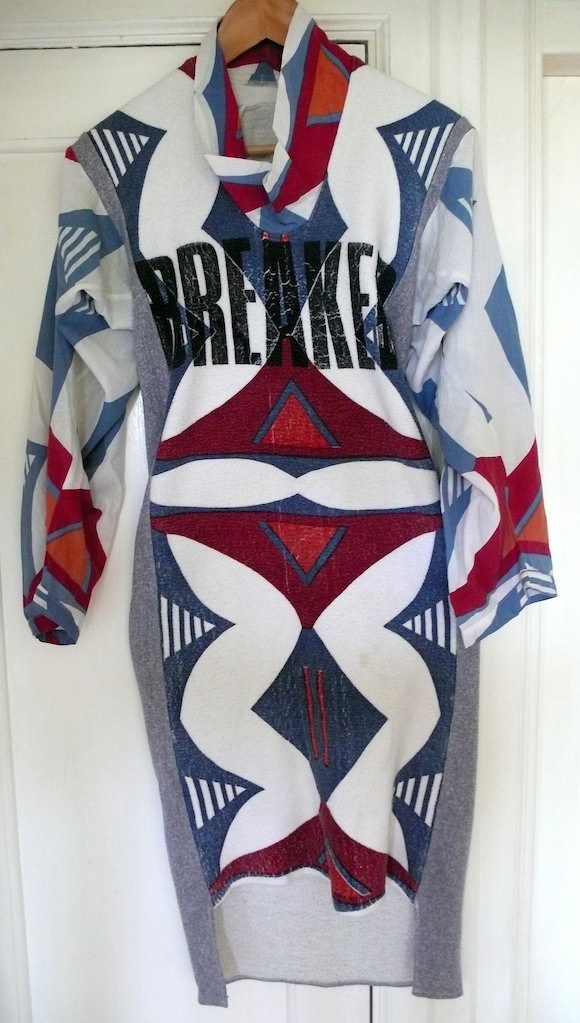
//Savages dress in thick marl and cotton with overprinted lettering. Design: Malcolm McLaren and Vivienne Westwood for Worlds End, 1981. Private collection//

Among the most revealing exhibits at the Malcolm McLaren show Let It Rock is the cultural iconoclast’s copy of a folk art book which proved a rich source of reference when he came to design the Savage collection with Vivienne Westwood in 1981.

McLaren’s consistent approach to creative activity always began with deep research (from the first publicly recognised manifestation, the Teddy Boy outlet Let It Rock, to his final film artworks Shallow 1-21 and Paris: City Of The XXIst Century).

And in the early 80s, McLaren’s copy of Mable Morrow’s Indian Rawhide, published by Oklahoma University Press in 1975, proved inspirational for this lifelong fan of Native American Indian culture.

P1150741

//Assiniboin parfleche design collected on the Fort Belknap Reservation, Montana//

P1150730

//Savages soft jersey top with contrasting armpit inserts and neck yolk. Designed by Malcolm McLaren and Vivienne Westwood for Worlds End, 1981. Private collection.//

McLaren’s recasting of this folk art in the sphere of fashion aligns his work in the 70s and 80s with the post-modern practice of appropriation which infused all spheres of artistic endeavour at the time, from literature to film and fine art. It is arguable that he and Westwood were the first and the greatest to incorporate the approach in clothing design.

When Savage debuted in October 1981 at Olympia’s Pillar Hall in west London, the repurposing of Native American tribal prints across a range of fabrics and garments – some overprinted with block capital slogans such as “Breaker” and “Girly” – and meshing with contemporary urban black culture and streetwear proved groundbreaking in fashion terms, as can be seen in this film commissioned for the event by McLaren:


Indian Rawhide and the clothing featured in this post are among the many rare and unique exhibits in Let It Rock: The Look Of Music The Sound Of Fashion, which is at the Crystal Hall in Copenhagen’s Bella Center from August 3-6.

Read more here.

Tags: , , , , , , , , , , , ,

Malcolm McLaren exhibition: Bob Carlos Clarke + David Parkinson images of the ciré Sex mackintosh dress

Jul 29th, 2014

Ciff-sexmacdress copy Sex - Raincoat dress copy

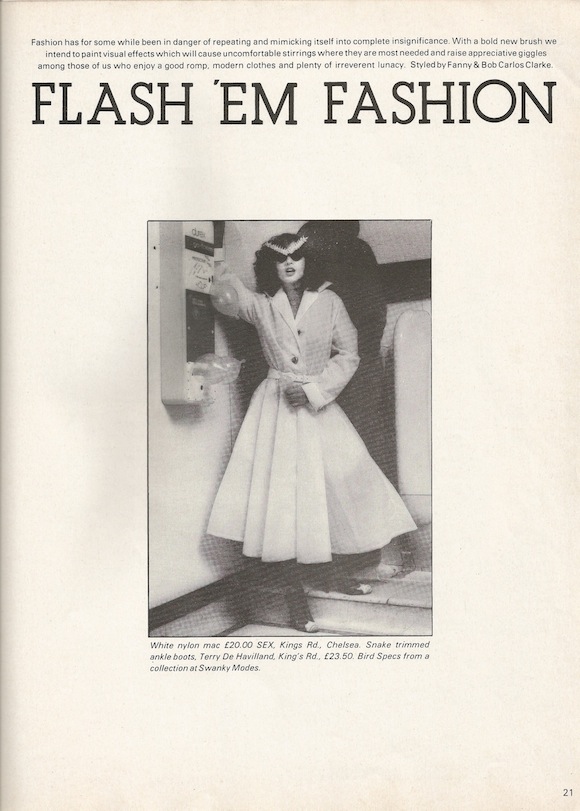
//Photography: Bob Carlos Clarke 1976 (left) and David Parkinson 1975//

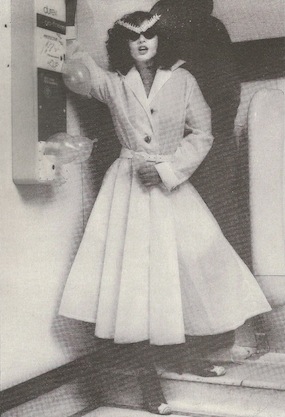
Malcolm designed a very nice women’s mac. A real 50s style, it was made of very thin ciré and looked almost like a dress, with its circular skirt and stand-up collar. It was like something that the B52s might have worn – half a dozen years later.

Glen Matlock on his time as a shop assistant at Sex in his memoir I Was A Teenage Sex Pistol (first published 1990, Omnibus Press)

As well as unique examples of Malcolm McLaren’s fashion designs with Vivienne Westwood, along with exclusive photographic prints of work by such luminaries as Robyn Beeche, Bob Gruen, Sheila Rock and Joe Stevens, the exhibition Let It Rock: The Look Of Music The Sound Of Fashion will present a panoply of ephemera, including many never previously catalogued publications which featured some of the extraordinary clothing emanating from 430 King’s Road in the 70s and 80s.

Ciff-sexmacdress copy

//From Vamp, 1976. Paul Burgess Collection//

Sex - Raincoat dress copy

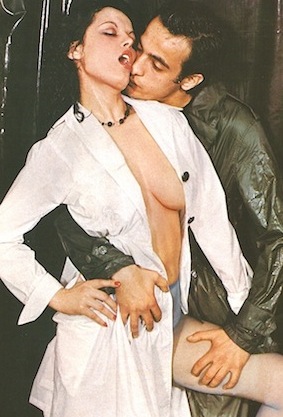
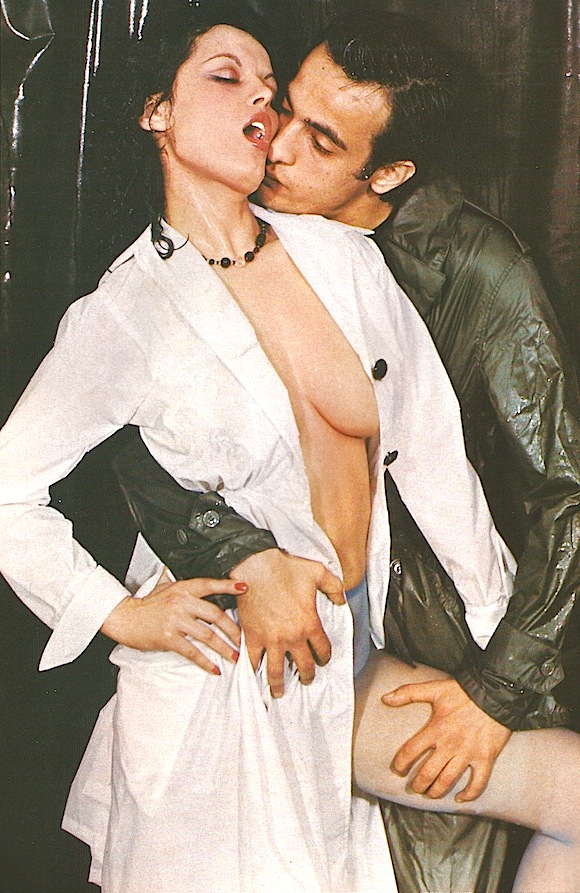
//Female model in the Sex mac/dress, male in a raincoat from Kenny MacDonald’s Marx, The Common Market, King’s Road. David Parkinson for Club International, 1975//

Among them is the ultra rare 1976 issue of photographer Bob Carlos Clarke’s magazine Vamp, loaned by collector/expert Paul Burgess. Among the garments from Sex in the Flash ‘Em Fashion spread is the delightful rainwear dress designed by McLaren, which was also photographed by David Parkinson for Club International.

In his memoir I Was A Teenage Sex Pistol, Glen Matlcok recounted how this particular design was plundered by the mainstream fashion business: “This woman’s firm totally ripped it off for one of the mid-market youth fashion houses. And made a mint out of it. Without paying a penny to Malcolm and Vivienne – whose idea it was. Well, sort of. They probably ripped it off themselves from a Hollywood still. But that’s not the point really. Their’s was a fully-developed idea and garment.”

Let It Rock: The Look Of Music The Sound Of Fashion runs from August 3-6 at the Crystal Hall in Copenhagen’s Bella Center as part of Coepnhagen Fashion Week.

Read more here.

Tags: , , , , , , , , , , , , , ,

Malcolm McLaren exhibition: Nostalgia Of Mud + Witches + Folkways ethnological recordings from the 1950s

Jul 28th, 2014
P1150743

//Front cover, Dances Of The World’s Peoples, Vol 3, Folkways Records, 1958. Design: W. Johnson, printed on paper glued to cardboard sleeve.//

Ciff-folkwayscatalogue

//Front of four-page song and information sheet utilising W.Johnson’s design, paper, 1958//

MMArchive-NostalgiaOfMudshowcardfront copy

//Invitation card to Paris show of McLaren and Westwood’s Nostalgia Of Mud collection, March 1982. Design: Nick Egan. Courtesy Malcolm McLaren Estate//

The idea is to show in clothes and music that, in the post-industrial age, the roots of our culture lie in primitive societies.
Malcolm McLaren on Nostalgia Of Mud and Duck Rock, 1983

Thanks to Hiroshi Fujiwara for tipping the wink over one of the sources of visual inspiration fed by Malcolm McLaren into the concepts unified by his solo album Duck Rock, the central London clothing store Nostalgia Of Mud and the fashion collections he designed with Vivienne Westwood in 1982-3.

Ciff-folkwayscatalogue copy

//Witchdoctor figure from W. Johnson’s design//

Witches-Folkwaystop

//Figure recast by McLaren and Westwood with Keith Haring adornments on cotton top from Witches collection, 1983. From private collection//

One of the cues for Duck Rock’s investigations into music from all over the world was the series of recordings by enthnological music archivists Ronnie and Stu Lipner released on Folkways Records in the late 50s under the banner Dances Of The World’s Peoples. And McLaren’s appropriation of the naive cover art by W. Johnson – in particular the striking witchdoctor figure – found new form in design collaborations with Westwood, graphics supremo Nick Egan and artist Keith Haring.

MMArchive-NostalgiaOfMudpatternshowcard83

//Nostalgia Of Mud pattern show card, 1982. Courtesy Malcolm McLaren Estate//

McLaren’s brilliance at fusing disparate elements into culture-defining and dazzling artworks is being celebrated next week with the exhibition Let It Rock: The Look Of Music The Sound Of Fashion at the Crystal Hall in Copenhagen’s Bella Center.

The show – which runs from August 3-6 during Copenhagen Fashion Week – will incorporate hundreds of exhibits, many rare and never previously shown to the public, including clothing and objects featured here such as the Witches top, the show cards and original copies of the Dances Of The World’s Peoples LP and catalogue.

Read more here.

Tags: , , , , , , , , , , , , , ,