


I’m grateful to Peter Stanfield, media and arts professor at the University of Kent, for alerting me to these great images of members of Shakin’ Stevens’ backing band The Sunsets sporting T-shirts designed by the late Malcolm McLaren for sale in his shop Let It Rock at 430 King’s Road in the early 70s.
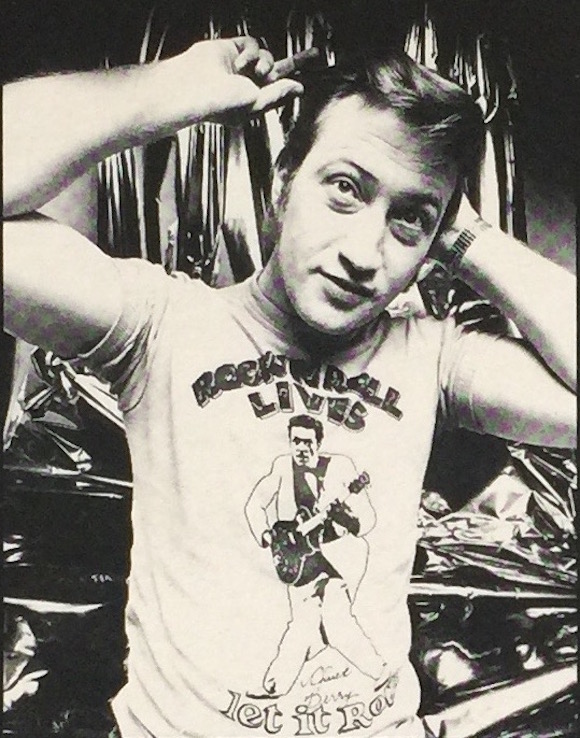
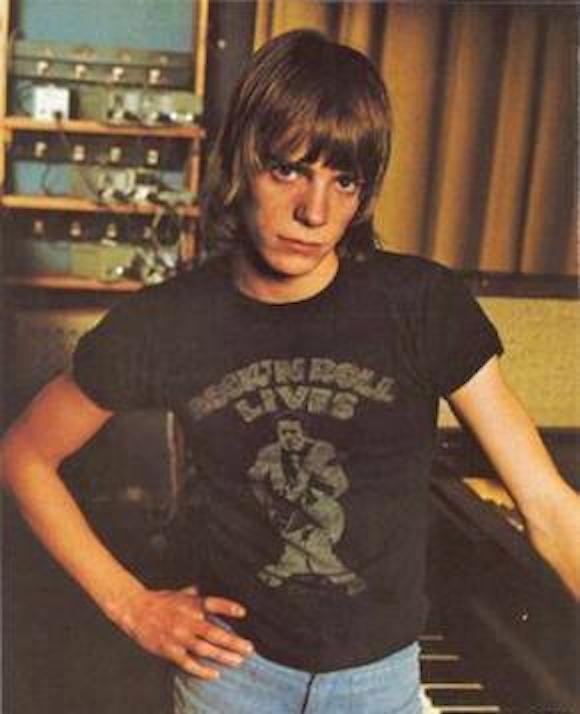
Three of The Sunsets wore Chuck Berry shirts for the portraits on the back cover of the sleeve to the group’s fourth LP, released in 1973.
McLaren conceived the design to coincide with the previous summer’s London Rock ‘N’ Roll Festival at Wembley Stadium. Chuck Berry was among the performers McLaren chose to celebrate in the form of T-shirts, the others being Little Richard (in the shirt bannered “Vive le Rock!”), Jerry Lee Lewis (“The ‘Killer’ Rocks On!”) and Screaming Lord Sutch.
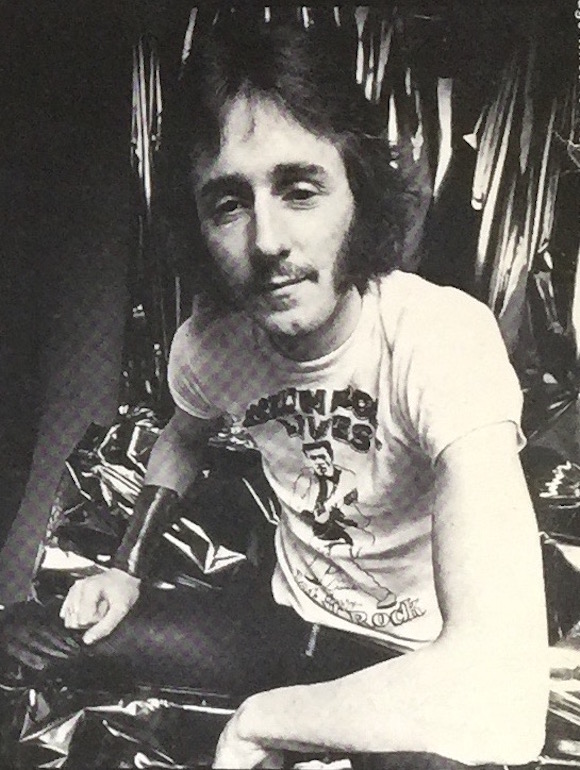
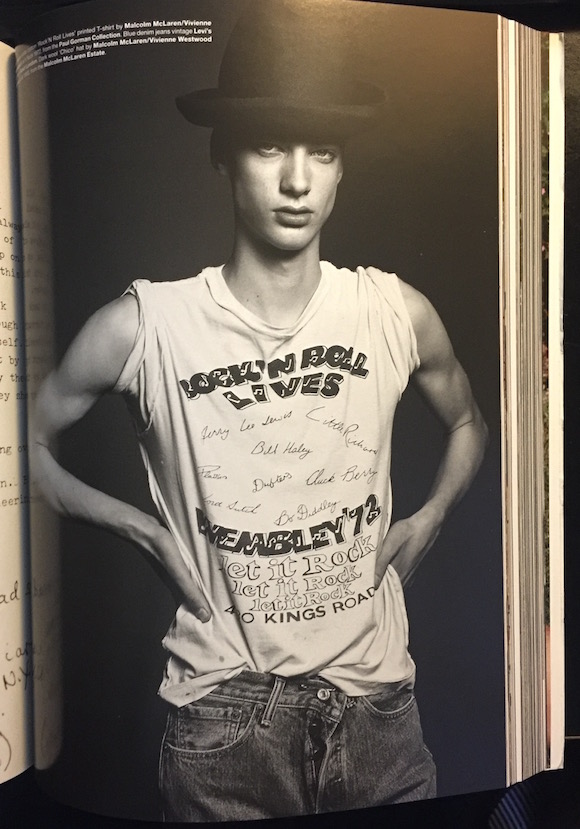
But two of the three Sunsets are wearing a rare variant on the original design. This includes elements which did not appear on the first set of Chuck Berry shirts: the hand-lettered Let It Rock title and address. These were evidently migrated by McLaren from another of his artworks from the period, known as “Wembley ’72”.
As far as I know, this is the first time that this hybrid design has come to light in more than four decades. I fully expect the replicators and fraudsters who bottom feed off the market for McLaren/Westwood rarities to start turning up “original” examples in the near future.
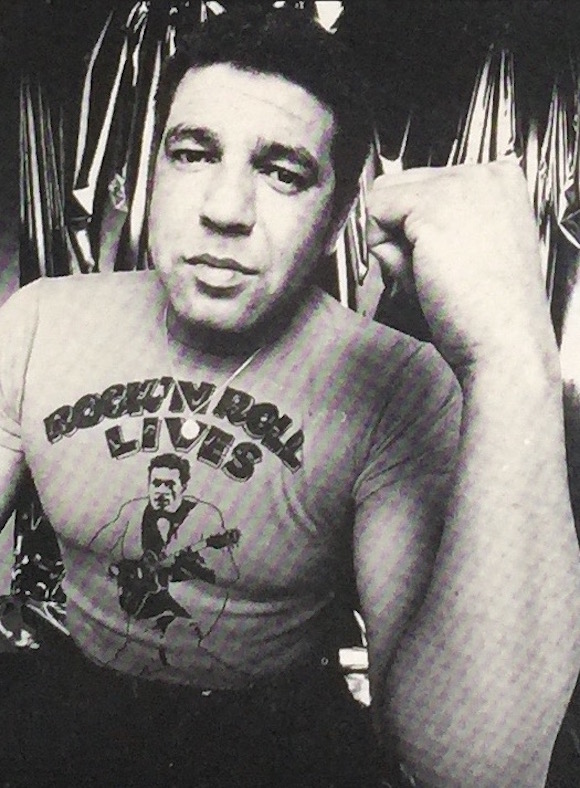
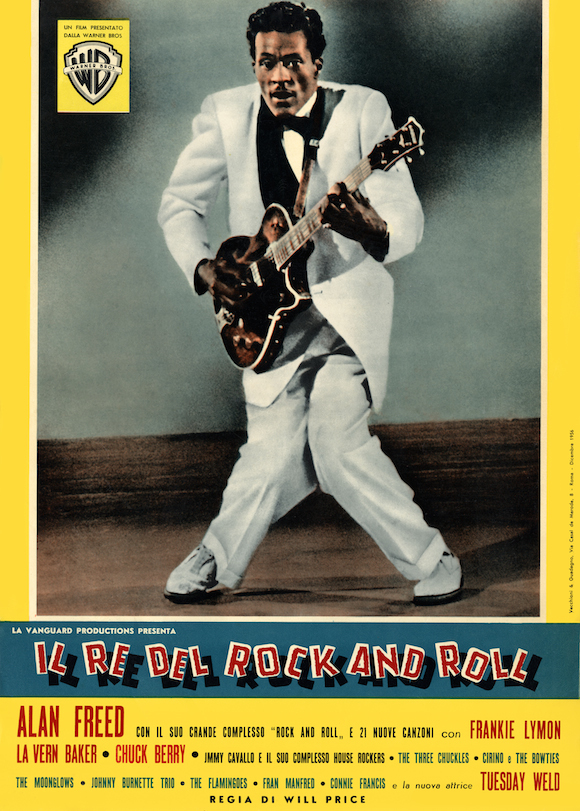
In realising his design, McLaren applied the Situationist technique of détournement by treating the components as “found” material (the image of Berry was in fact appropriated from a film poster stocked among the ephemera sold at Let It Rock). He then isolated and overexposed the figure of the guitarist and combined him with the statement “Rock ‘N’ Roll Lives” in retro musical note lettering and a facsimile of his signature.
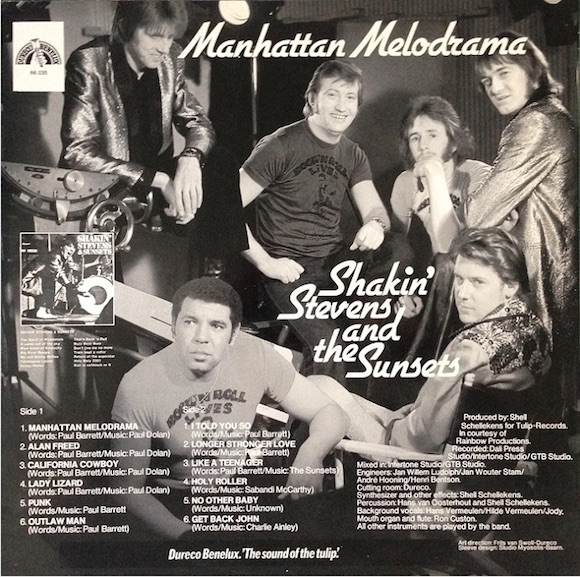
I saw Shaky and the Sunsets in the mid-70s supported by The 101’ers at South London Poly; they were a great live act, always up for playing benefits and other gigs for good causes under the direction of their card-carrying Communist Party member and manager Paul “Legs” Barrett, who was a driving force in Welsh rock ‘n’ roll circles for decades and died just a couple of weeks ago at the age of 78. Read Barrett’s obituary here.
Here are Shaky and The Sunsets tearing it up in Sweden in 1972:
Visit Peter Stanfield’s superb blog here.
Read my investigation into the roots of the Let It Rock Chuck Berry t-shirt here.

Joshua Shame
January 29, 2019 at 6:38 pmBRILLIANT. Paul, is that repro inside-out? I dig that. Can’t wait for the MacLaren book!
Paul Gorman Author
January 29, 2019 at 7:27 pmThanks. Yes the repro is a cheap knock-off from LA; the guy cheekily claimed he had the US licence to reproduce the designs. Er, I don’t think so. He soon stopped. We thought it would be great to add to the originals.
Joshua Shame
January 29, 2019 at 7:47 pmI wonder how it was handled at Wembley, were the artists aware that McLaren was selling their image on shirts? The concert merch booth slinging band shirts was certainly in its infancy at the time.
Paul Gorman Author
January 29, 2019 at 8:10 pmThere was no such thing as merch. That didn’t take off until the 80s.
Joshua Shame
January 29, 2019 at 8:26 pmIt might not have taken off but wouldn’t you agree this was the launch pad?
I mean, LIR is literally selling what we would call ‘merch’ today, sans a license from the artist, of course.
That’s what I meant by infancy, it hadn’t matured into merch as we know it yet but those are definitely event shirts, and, in a more primitive form, band shirts in this context (the artist shown is playing the event the shirt is sold at).
I don’t mean to sound contrary or anything. Having worked in the merch world for the last 15 years I really enjoy taking these journeys of yours and reading about these evolutions.
Paul Gorman Author
January 30, 2019 at 8:11 amI think you’re correct, though this was an unintended consequence. From the late 60s on, McLaren was interested in applying art practice to what was/is considered cultural ephemera. He was also fascinated by cults and fans – and band t-shirts fit into that category, along with the signed promo photographs, playbills, etc he sold at LIR at the time.
Apart from Barney Bubbles with Hawkwind – who adopted a wholly integrated approach: band logos, t-shirts, badges, equipment decoration, stage placings, backdrops, record sleeves, posters, adverts, banners – no-one was even making “official” merch. Soon the glam/pop fans would have their scarf-sellers outside venues, and there were badges and mirrors but in terms of a formal business even John Pasch’s tongue and lips logo for the Stones wasn’t exploited until the mid-70s (and then that was pretty much it). It was Punk, with its huge selection of impactful and savvy logos and graphics which really inaugurated “merch”.
That’s also why McLaren’s Wembley shirts have more substance than, say, UA’s “Rock N Roll Is Here To Stay” series produced for the same show (and sold on the LIR stand). Wherever you look in his life he injected his projects with the knowledge and approaches learned during eight years of art school education.
Steve E.
February 1, 2019 at 4:23 pmNice footage of Shaky there, but by god he was derivative…
They used to play a lot at The Swan in Mill Street, Kingston, which was a real rock’n’roll hangout during the early Seventies. Not my cup of tea at all, but the local Teds who were into ’em were a sight to see, including one of (very) restrictive height, who was still strutting his stuff down those same suburban streets for quite a few years later.
I wonder if Talcy ever gave him a discount… 😉
Paul Gorman Author
February 10, 2019 at 4:22 pmThere’s footage of Tongue-Tied Danny – for that would have been he – entering LIR in 72…
Steve E.
February 2, 2019 at 12:14 pmEr, that should have read ‘restricted’ not ‘restrictive’, obvs…