“There were many kings of the King’s Road at different periods of time but there was only one Emperor”
Lloyd Johnson
Very sad to note the passing of Billy Murphy, a thoroughly lovely bloke whose contribution to street fashion – particularly in Britain and specifically in and around the King’s Road – is sorely underrated.
I knew all about Billy’s significance in his field decades before I met him; as I wrote here, his shop The Emperor Of Wyoming was “an extremely important staging post not just in the story of British rock and roll fashion but also the development of the vintage scene in this country”.
//Stetson, embroidered shirt and hand-tooled leather belt from The Emperor Of Wyoming. Photo: David Parkinson for Club International, February 1974//
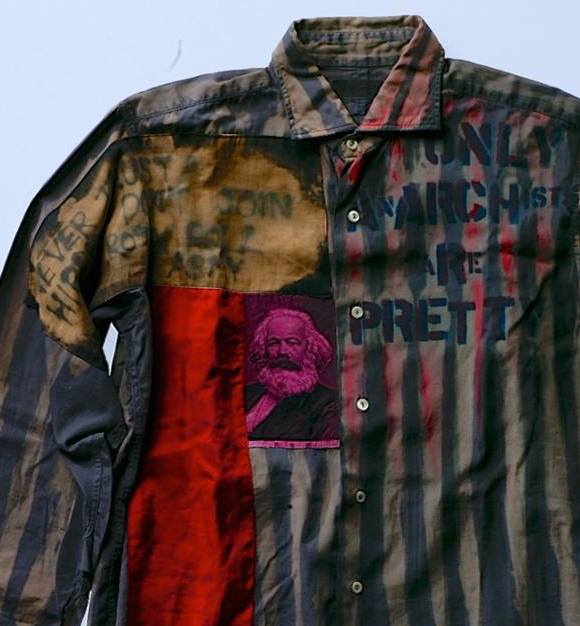
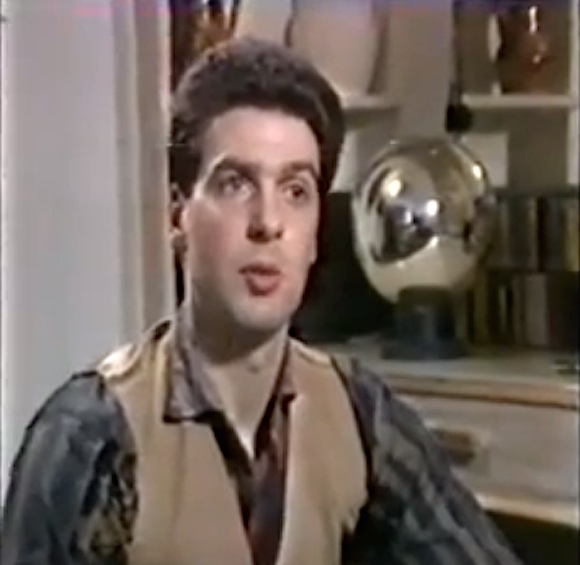
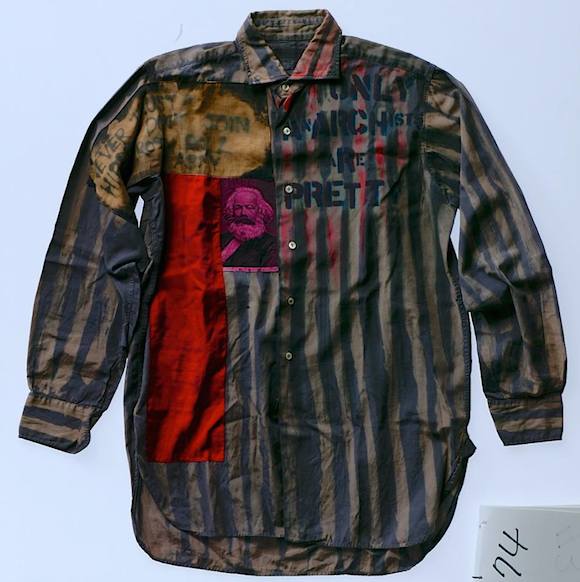
//”An inspired collage”. Section of Anarchy Shirt bought by Jon Savage at Seditionaries. Hiroshi Fujiwara Collection////Savage wearing the shirt for an interview on 1983’s “Positive Punk” movement for British TV//
Preparations are well underway for the next phase of the Malcolm McLaren exhibition: a room dedicated to the late cultural iconoclast’s work as a visual artist at group show Art In Pop, which opens next month at France’s National Centre Of Contemporary Art space Magasin in Grenoble.
Art In Pop will also feature rooms dedicated to paintings by the late Don Van Vliet (aka Captain Beefheart) and documentation of the artist John Miller’s exploits in music with the likes of Tony Conrad, Kim Gordon, Mike Kelley, Takuji Kogo and Thurston Moore.
And there will also be artworks by such musicians as the late Jerry Garcia of The Grateful Dead, Daniel Johnston, Cris Kirkwood of The Meat Puppets, David Thomas of Pere Ubu and Mayo Thompson of The Red Crayola.
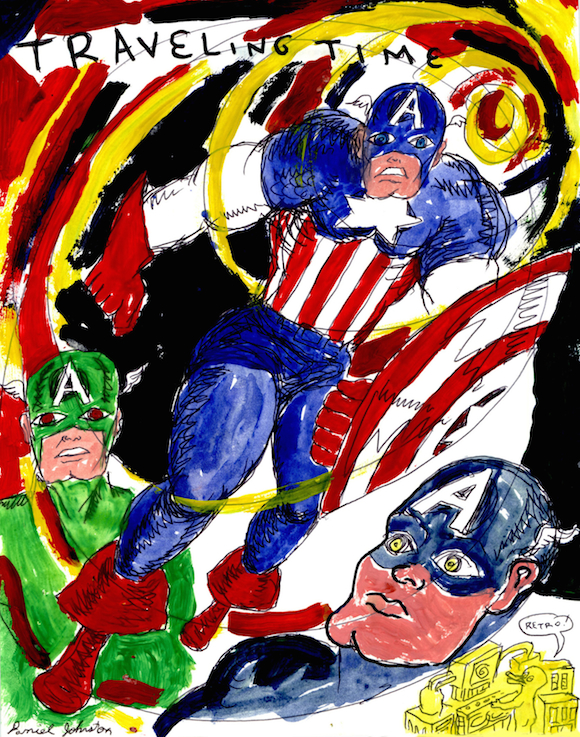
//Life In Hell, Daniel Johnston, 1998. Felt pen and paper, 21.5 x 28cm, courtesy Arts Factory//
//Alix Lambert is featured on this 2008 Buckethead track//
These will be exhibited with pieces by artists who have investigated music, including John Armleder (who will be showing a work created with Genesis Breyer P. Orridge and Alan Vega), David Bowes, Alix Lambert (creator of 90s fictional all-girl punk band Platipussy, described as an “oestregen-powered Spinal Tap), Randy Ludacer, Tony Oursler and Greg Parma Smith.
The Malcolm McLaren element of Art In Pop will include many of the exhibits displayed at Let It Rock in Copenhagen this summer along with some exciting additions which I will be previewing here over the coming weeks.
Among them will be paintings produced by McLaren as an art student in the 60s as well as an original example of one of the most “painterly” works McLaren created with Vivienne Westwood: The Anarchy Shirt.
This is being loaned by fashion guru and musician Hiroshi Fujiwara, who has one of the most important collections of McLaren & Westwood designs in the world.
//”An extraordinary package of compressed content”. Hiroshi Fujiwara Collection//
The shirt is a fine example of the extraordinary design first introduced in September 1976, and was originally owned by writer and cultural commentator Jon Savage.
“I bought it in late 1978 from Seditionaries,” says Savage. “It had a swastika applique which I immediately took off, not wishing to be the bearer of that particular insignia.”
Savage has described the Anarchy shirt as McLaren & Westwood’s “masterpiece… an inspired collage, using second hand clothes, craft and revolutionary slogans – an extraordinary package of compressed content”.
Art In Pop – which is curated by Magasin’s Yves Aupetitallot with John Armleder, me, Young Kim of the Malcolm McLaren Estate and John Miller – is at Magasin from October 11 to January 4 2015.
Here is the first part of the 1983 Positive Punk documentary, shown as part of ITV’s South Of Watford strand (Savage appears towards the end of this segment):
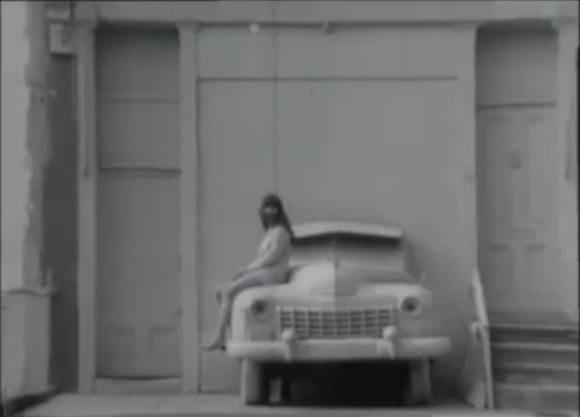
//Still from Long Haired Boy: Diana Crawshaw outside 488 King’s Road, 1969//
Diana Crawshaw – who designed for such boutiques as Mr Freedom and Paradise Garage – has contacted me about an appearance she made in an early pop promo clip: Piers Bedford’s short for the 1968 single Long Haired Boy by American singer-songwriter Tim Rose.
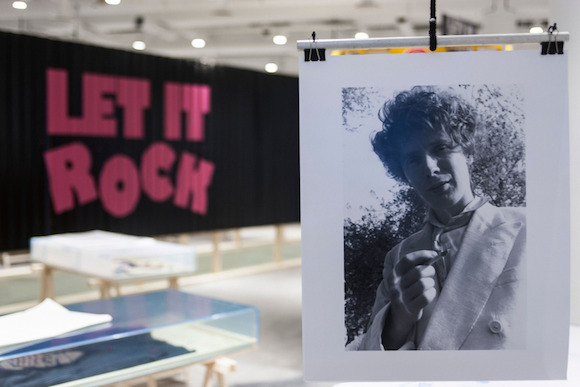
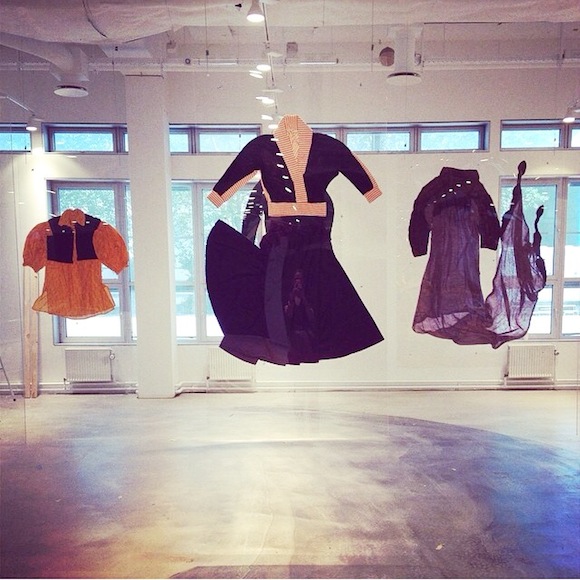
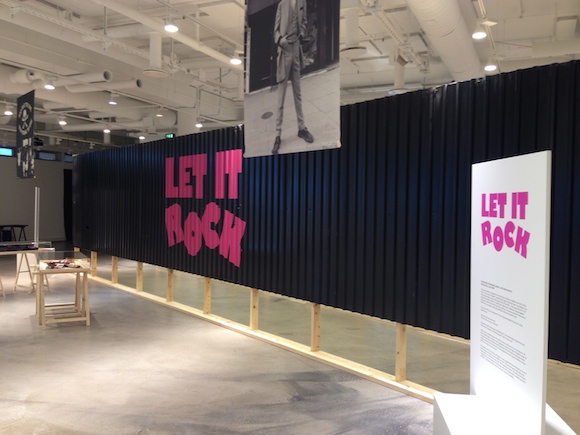
//Foreground: Mobile featuring portrait of Malcolm McLaren in Central Park, NYC, 1975 by Bob Gruen. In the background the 12m-long Let It Rock installation. Photo: Jean Francois Carly (c) Malcolm McLaren Estate////McLaren’s Buffalo sheepskin with Witches multi-tongued shoes contributed by designer Kim Jones. Photo: Jean Francois Carly (c) Malcolm McLaren Estate ////Outfits float in the air, from left: Pirate waistcoat and dress worn by Annabella Lwin of Bow Wow Wow in performance; Let It Rock shawl collared blouse and circle skirt; Nostalgia Of Mud wool toga dress with Folkways print. Malcolm McLaren Estate, Kim Jones Collection, private collection//
The response to this week’s Malcolm McLaren exhibition Let It Rock has been very encouraging; here are some images which hopefully give an idea of the show’s impact.
Running for four days at Copenhagen’s Bella Center as part of the Danish city’s international fashion fair CIFF, the show – curated by me and Young Kim of the MM Estate – focused on the late cultural iconoclast’s engagement with fashion with Vivienne Westwood in the 70s and 80s.
We have received favourable press, with particular praise from the FT’s Charlie Porter, who wrote that the hang of the garments was “exceptional”. Meanwhile style blogger Susie Bubble described the exhibition – full title Let It Rock: The Look Of Music The Sound Of Fashion – as “incredibly detailed and well put together”.
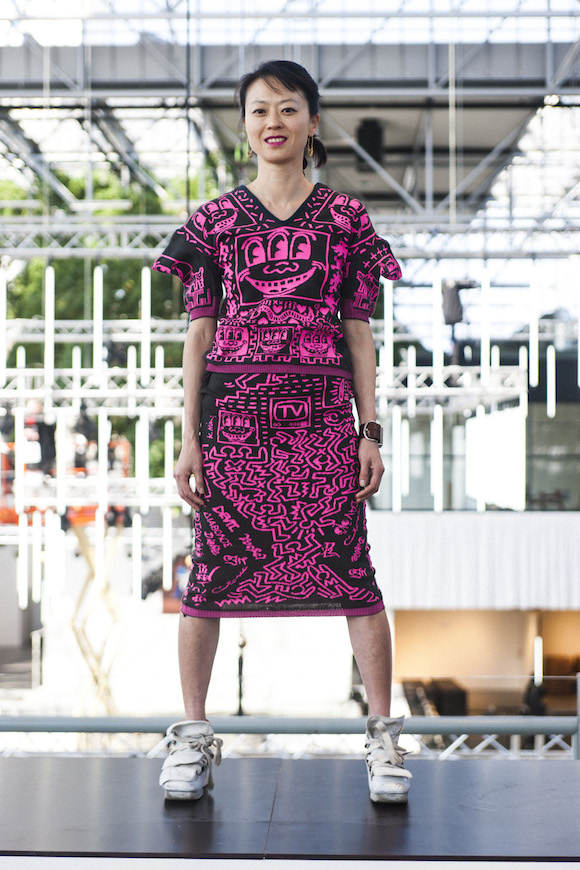
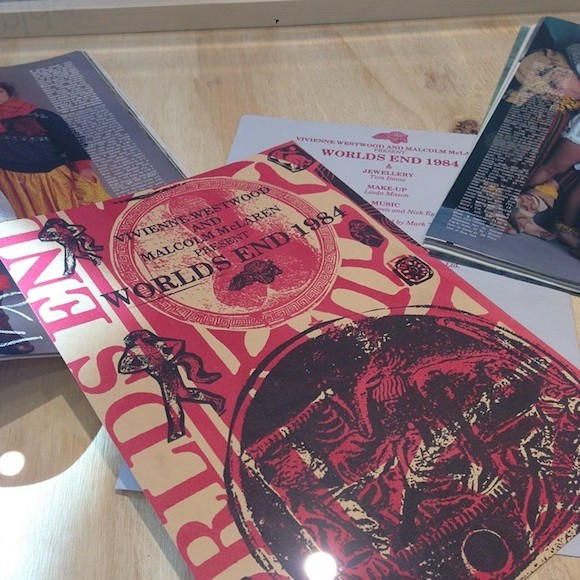
//Young Kim in jacquard Keith Haring print Witches two piece and multi-tongued sneakers. All clothes from Kim Jones coillection. Photo: Jean Francois Carly (c) Malcolm McLaren estate////Fans belt buckles with Fans press statement. Sources: Malcolm McLaren Estate and private collection////Press invite and showcard for the sixth catwalk collection designed by McLaren and Vivienne Westwood: Worlds End 1984, later Hypnos. The partnership was dissolved in March 1984. Malcolm McLaren Archive////ROCK! Marco Pirroni’s Let It Rock ties//
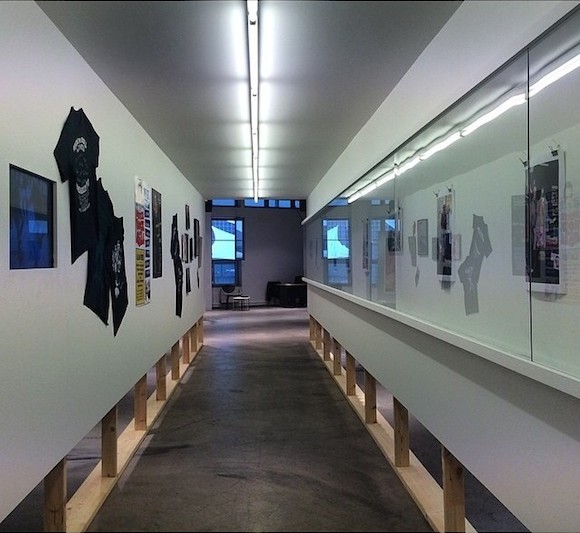
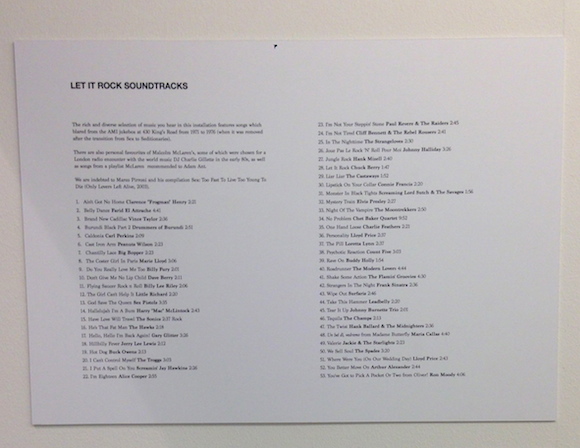
We designed the show centrepiece: an imposing black corrugated iron-clad 12-metre long tunnel installation celebrating McLaren’s first shop, Let It Rock. Among the exhibits inside were previously unpublished photographs of the shop interior taken by the late David Parkinson and an original shop price list owned by McLaren. A bespoke soundtrack blared music as featured on the jukebox at 430 King’s Road as well as personal favourites of McLaren’s, from Burundi Black by the Drummers Of Burundi to Cast Iron Arm by Peanuts Wilson and Hallelujah I’m A Bum by Harry “Mac” McLintock.
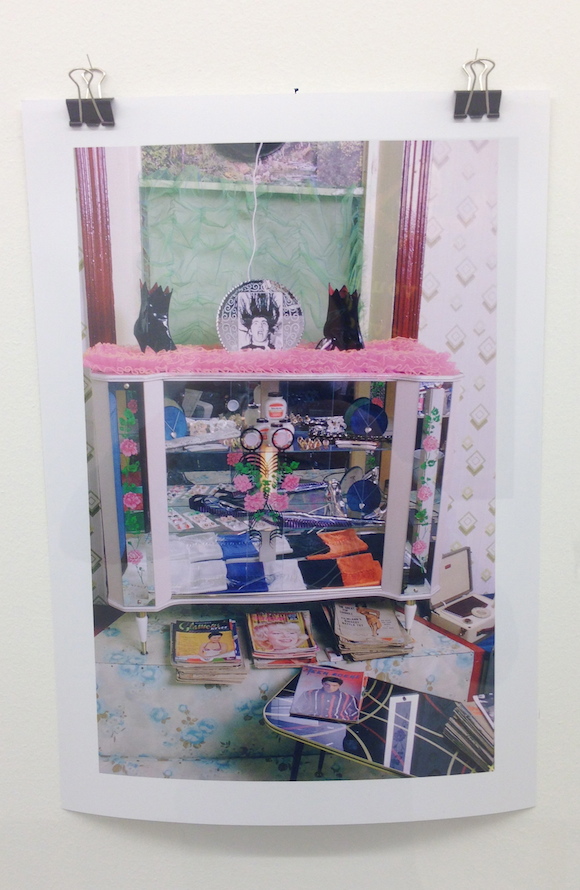
//Installation exterior////Installation interior////Let It Rock display cabinet, January 1972. Photo: David Parkinson////McLaren’s framed copy of the LIR price list he designed in 1972. Malcolm McLaren Estate////January 1972. Photo: David Parkinson/////Tracklisting for songs played in the insatllation//
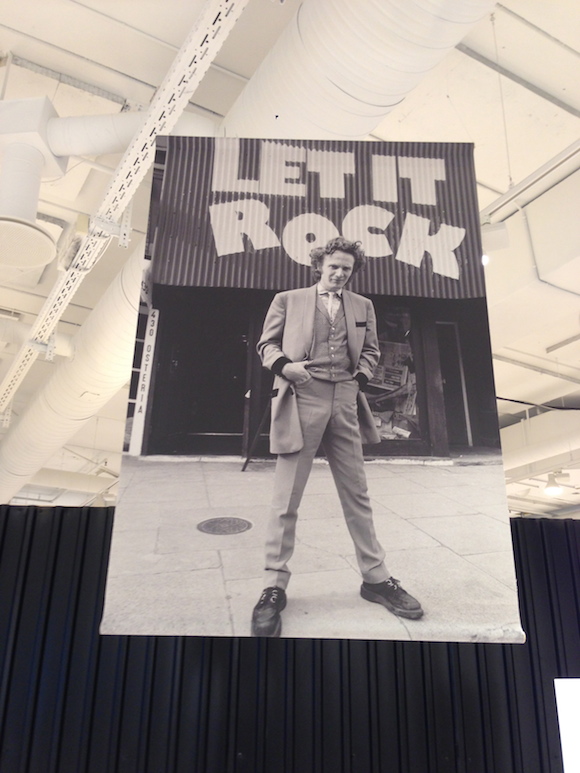
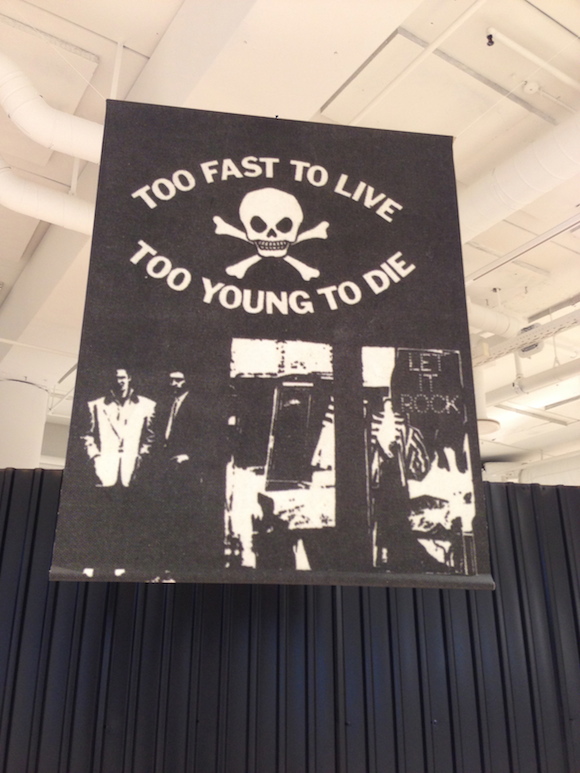
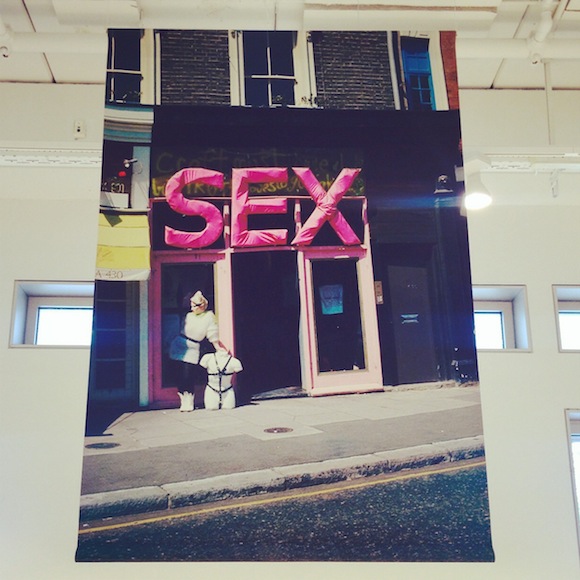
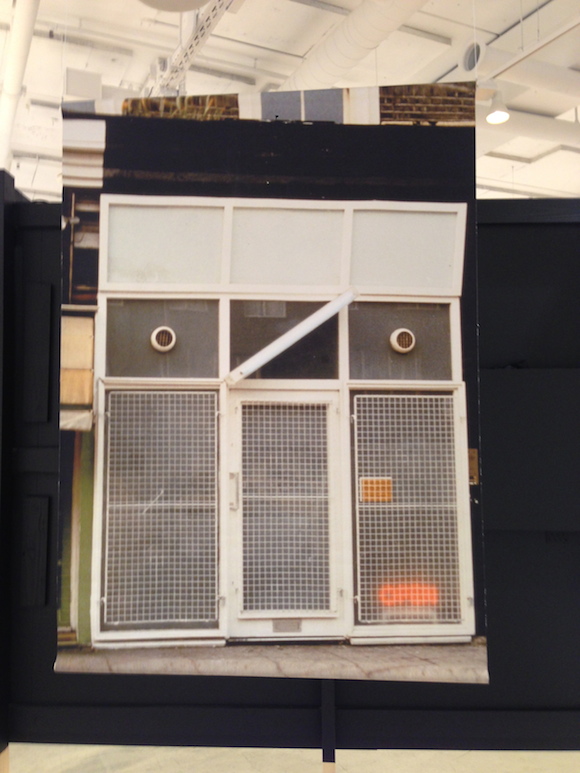
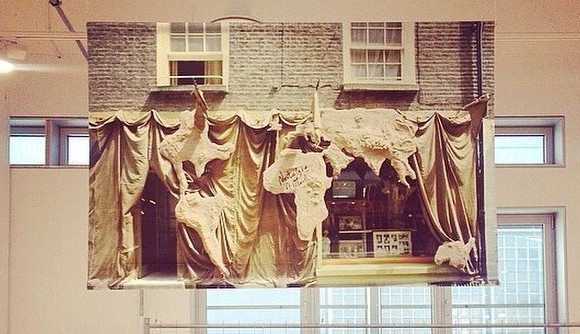
The show was subdivided into six areas each dedicated to a manifestation of the outlets McLaren operated with Westwood. These were signposted by 60 x 40″ photographic blow-ups of the exteriors we commissioned to be printed on canvas to add dimension and presence.
//Let It Rock exterior with McLaren in foreground, 1972. Photo: Mirrorpix. Printed on canvas 60 x 40″////Too Fast To Live Too Young To Die with McLaren and Gerry Goldstein in foreground, 1973. Photo: Malcolm McLaren Estate. Printed on canvas 60 x 40″////Sex with shop assistant Jordan in foreground, 1976. Photo: Sheila Rock. Printed on canvas 60 x 40″////Seditionaries frontage, 1976. Photo: Ben Kelly. Printed on canvas 60 x 40″////Worlds End frontage, 1981, photo: Sheila Rock. Printed on canvas 60 x 40″. Left: Marco Pirroni’s Let It Rock drape suit////Nostalgia Of Mud, 1982. Photo: Sheila Rock. Printed on canvas 40 x 60″//
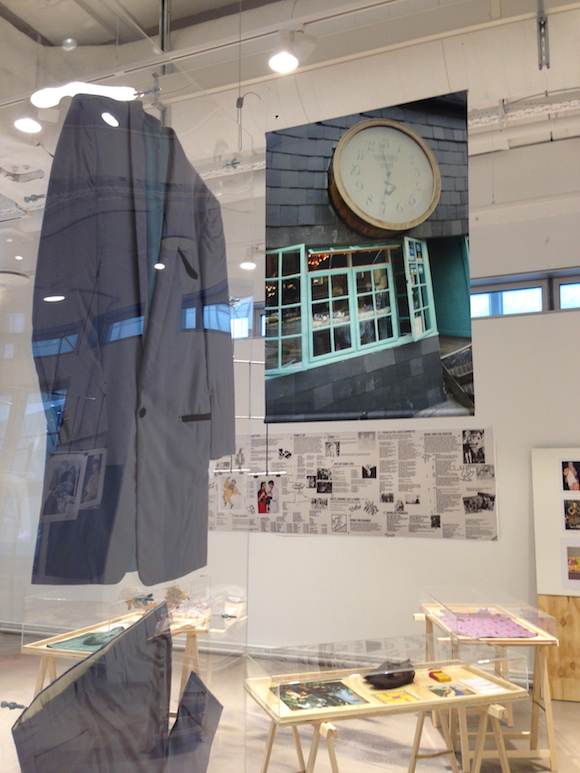
With text panels explaining exhibits in McLaren’s own words, each section also featured photographic mobiles suspended from the ceiling and Perspex-topped vitrines containing original garments, photography, notebooks, sketches and ephemera.
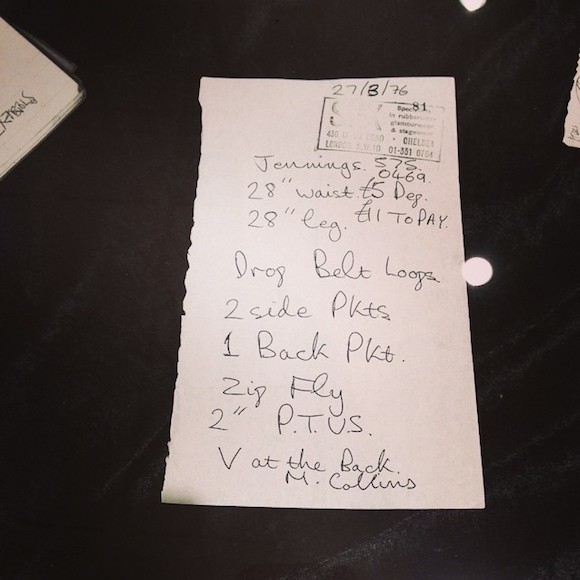
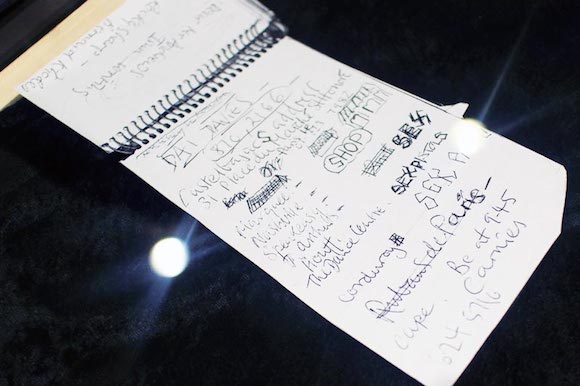
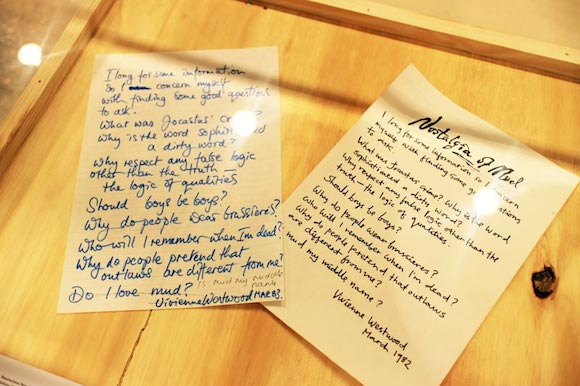
//Customer deposit receipt, Sex, 1976. Signed by shop assistant Michael Collins. Paul Burgess Collection////Pages from McLaren’s 1976 notebook. Paul Burgess Collection////McLaren’s handwritten Nostalgia Of Mud press release for Vivienne Westwood; her version in her own handwriting. Photo: Jean Francois Carly (c) Malcolm McLaren Estate//
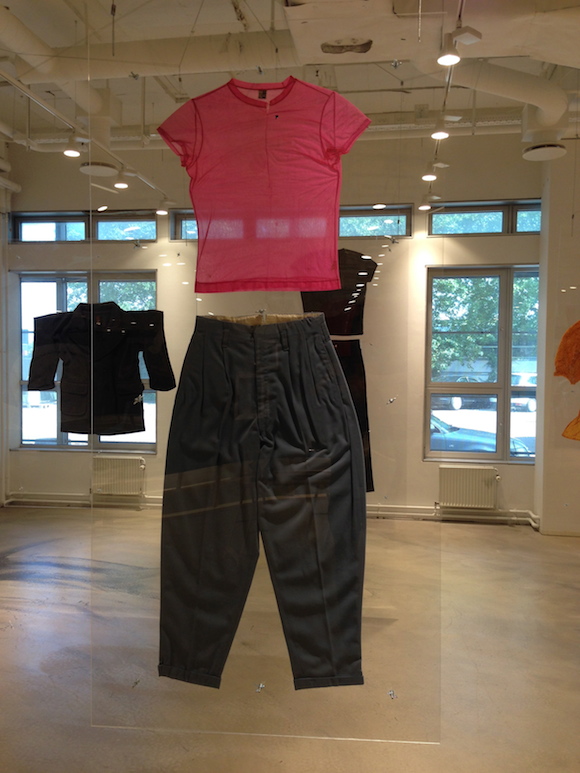
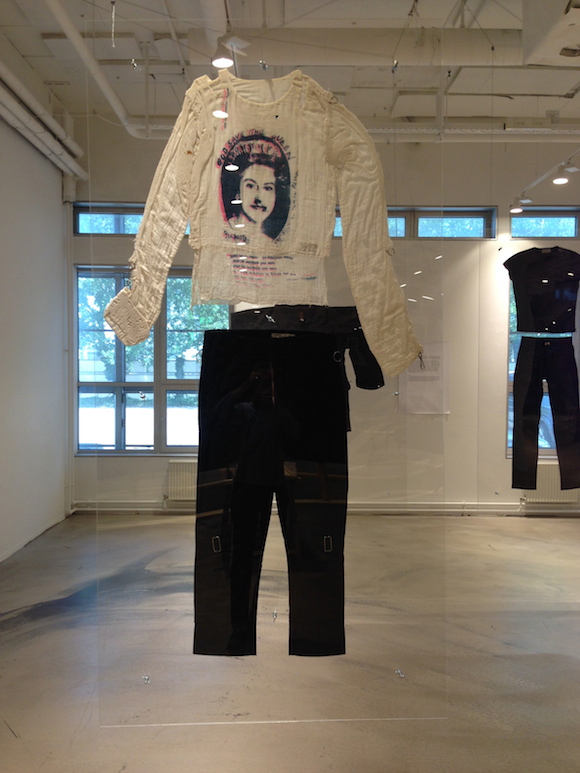
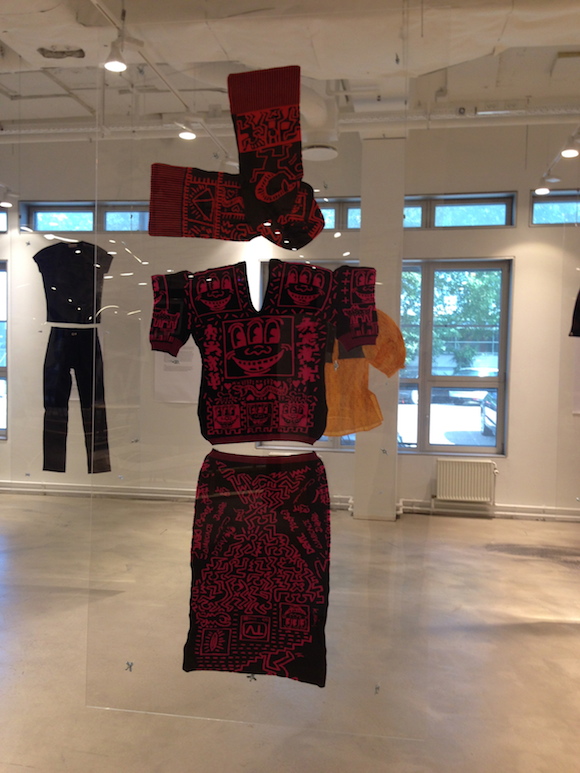
One area of the show was dedicated to 10 outfits reflecting the span of the designs from Let It Rock to Nostalgia Of Mud. Our solution to the ticklish problem of how clothes are presented in exhibitions was to fly these from the ceiling between sheets of Perspex, and we made a selection from the Estate archive as well as contributions by the likes of Louis Vuitton’s style director Kim Jones and guitarist/songwriter Marco Pirroni.
//Nylon top, Sex, 1976. Peg trousers, Let It Rock, 1974. Kim Jones Collection////God Save The Queen Muslin top, Seditionaries, 1977. McLaren’s bondage trousers, Sex, 1976. Malcolm McLaren Estate/private collection////Witches jacquard two piece and scarf with Haring print. Kim Jones Collection//
In the projection room visitors viewed moving images associated with McLaren, from rare film of the catwalk shows he conducted with Westwood in the early 80s to video clips for his hits such as Buffalo Gals and Soweto.
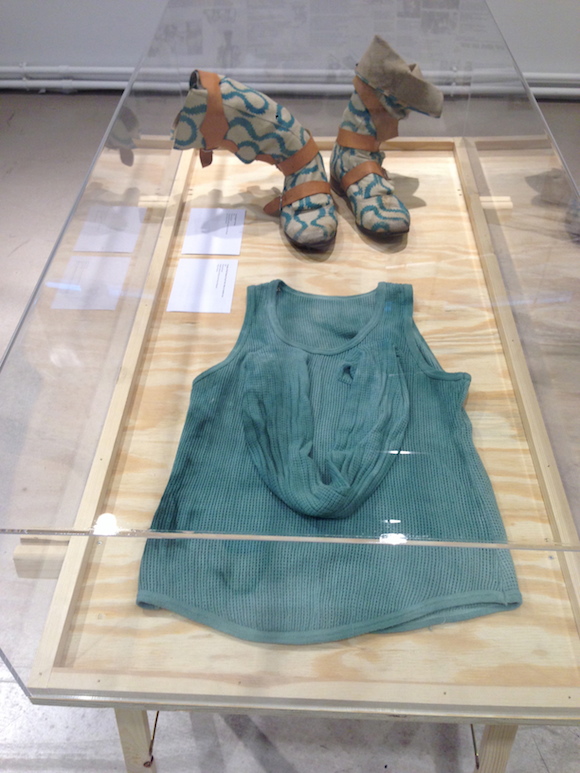
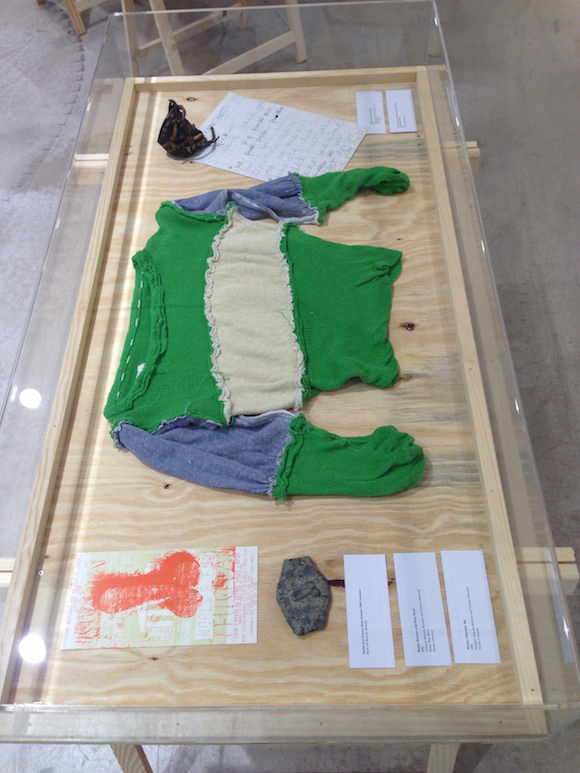
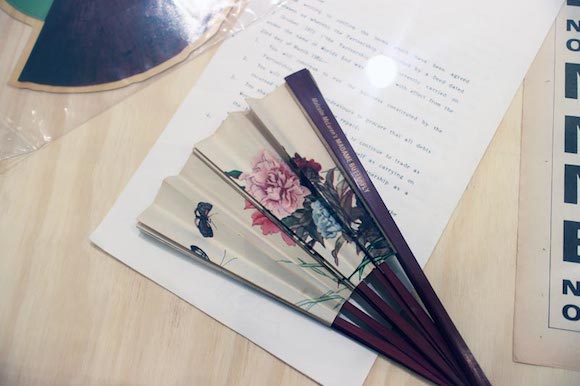
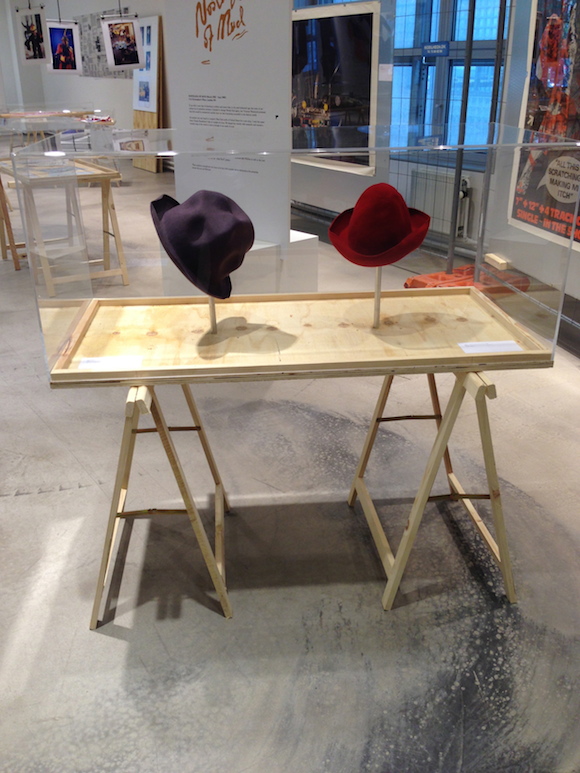
//Marco Pirroni’s print pirate boots, Worlds End, 1981. Top worn by Annabella Lwin of Bow Wow Wow in performance and subsequently dyed. Private collection////Savages Navajo print dress with McLaren’s annotated copy of Indian Rawhide. Both private collection////Invitation to Witches collection show, Folkways top, Dances Of The World’s People. Malcolm McLaren Estate/private collection////Two rubber bracelets deisgned by Tom Binns for Worlds End S/S 1984 with Hobo-Punkature top and Worlds End 1984 invite. Malcolm McLaren Estate/private collection////Document confirming the dissolution of the design partnership between McLaren and Westwood, March 1984. It is important to note that McLaren did not relinquish authorship over the works they produced together////The final exhibit: Buffalo hat and McLaren’s Chico hat. Kim Jones Collection/Malcolm McLaren Estate.//
Many visitors told us they were bowled over by the show; now we are working on another McLaren exhibition as part of Art In Pop at Le Magasin in Grenoble, France, this autumn. This will encompass McLaren’s creative output from his art-school days through his careers in fashion, music and film to his final works as a visual artist. I’ll keep you informed; it runs from October to January next year.
Follow these links for media coverage of Let It Rock:
Thanks go to CIFF fashion/design director Kristian Andersen and creative directors Pierre Tzenkoff + Arnaud Vanraet for their foresight in commissioning this show, and also to the exhibition architect, the talented Jean-Christophe Aumas and his excellent team of builders, particularly Annette, Henning + Stefan.
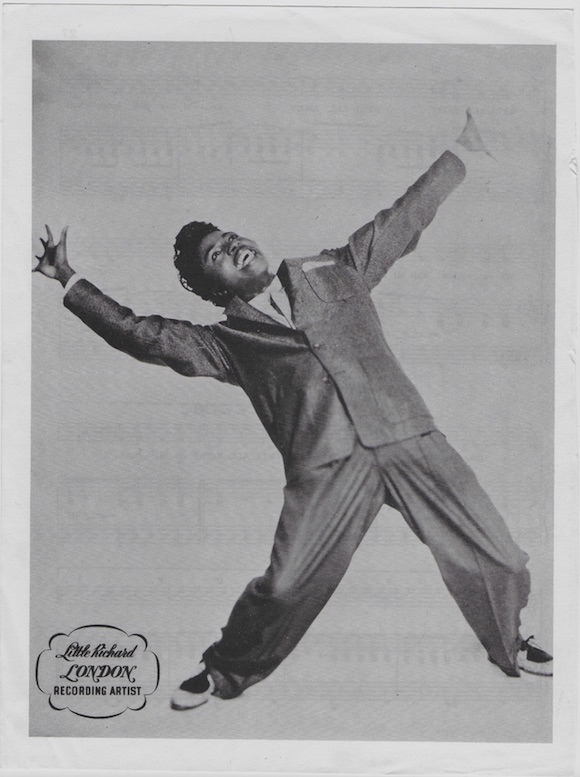
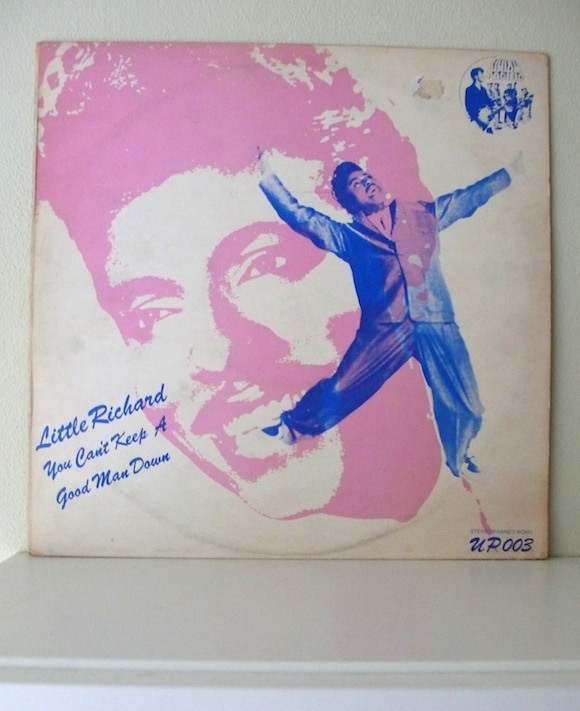
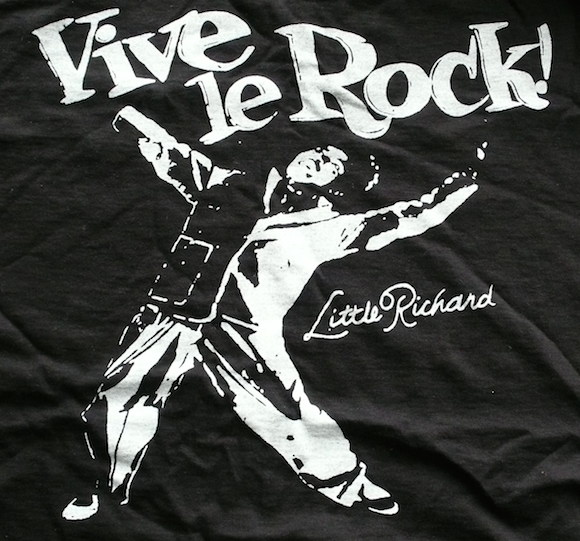
//Malcolm McLaren in front of display of Belgian 50s rock n roll movie posters inside Let It Rock, 430 King’s Road, January 1972. Note Vive le Rock! poster top left. Photo: David Parkinson////Taken by John E. Reed in 1956 to promote teen-movie Don’t Knock The Rock, the photo was reissued by London Records to mark the release of the four-track EP Little Richard And His Band////Front cover, You Can’t Keep A Good Man Down, Little Richard, Union Pacific, 1972. Designer: Unknown////As shown on this repro, McLaren’s design for the Little Richard shirt sold at the London Rock N Roll Festival held at Wembley Stadium in August 1972//
Yet another example of Malcolm McLaren’s astounding design talent is examined across a number of exhibits at the Let It Rock show, which opens at Copenhagen’s Bella Center on Sunday (August 3).
In 1972 McLaren expanded his investigations into 50s pop design culture by producing a series of t-shirt designs celebrating the great American rock & roll stars performing on the bill of the one-day festival at London’s Wembley Stadium that August.
McLaren continued to followed the path dictated by his formidable art education by creating new artworks out of the juxtaposition of found objects. A 1956 promotional photograph of Little Richard provided the main image for the shirt dedicated to The Georgia Peach.
In 1972 it also appeared on the cover of the UK compilation You Can’t Keep A Good Man Down; that year also witnessed a revival of interest in the pompadoured Richard Penniman after Let It Rock customer Charles (now Lord) Saatchi featured a Little Richard song in a 50s-styled TV advert for Libro jeans.
//The title lettering on the poster was isolated////Reed’s image was flipped vertically//
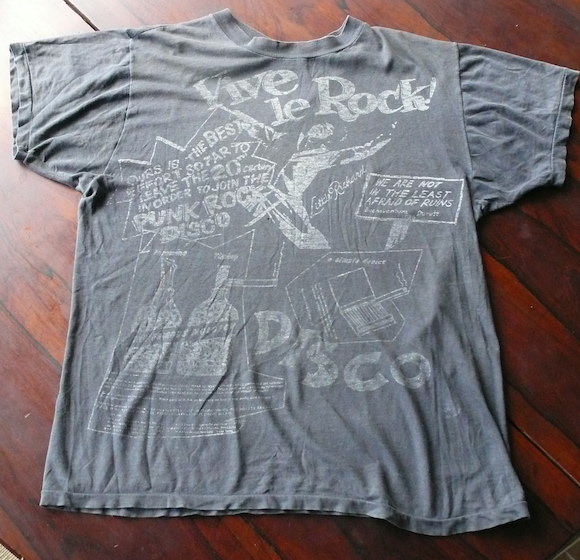
McLaren flipped the image, reversed it out and positioned the exuberant figure with the joyous title lettering from a rock & roll movie poster he stocked in Let It Rock. Vive Le Rock! was, in fact, the French title of the 1958 US production Let’s Rock, so tied indirectly with the name McLaren had chosen for his own venture. In Britain the film was marketed under the tamer Keep It Cool.
//Poster for the American release of the movie, 1958////McLaren later incorporated the Vive Le Rock! elements into a fresh composite for sale in 430 King’s Road when it was Seditionaries in 1979. This also featured Situationist slogans, a quote from the early 20th century Spanish anarcho-syndicalist Buenaventura Durruti and “recipes” from William Powell’s The Anarchist’s Cookbook, first published in 1971//
The Copenhagen show features a Let It Rock installation complete with a series of large prints of previously unseen photographs taken by David Parkinson inside 430 King’s Road in January 1972. Included is a full version of the image at the top of this post, as well as a Vive le Rock! shirt and the Little Richard LP cover.
Let It Rock: The Look Of Music The Sound Of Fashion is at the Crystal Hall in Copenhagen’s Bella Center from August 3-6.
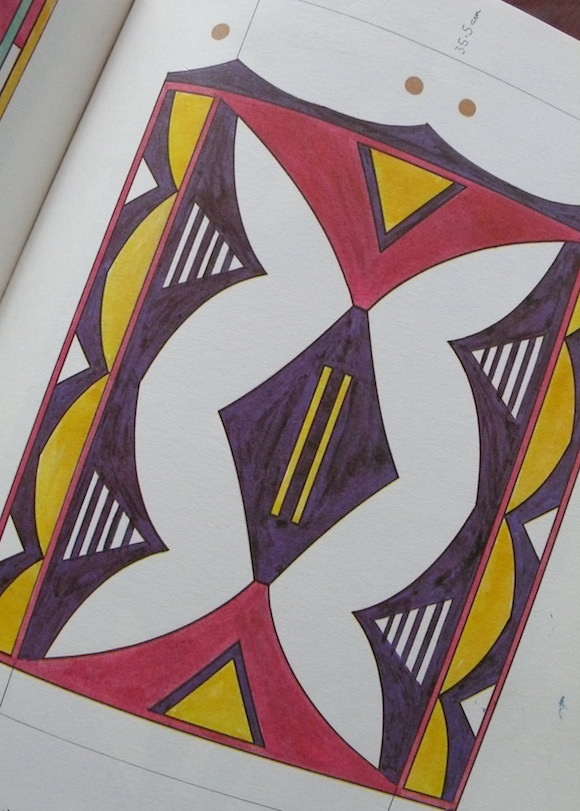
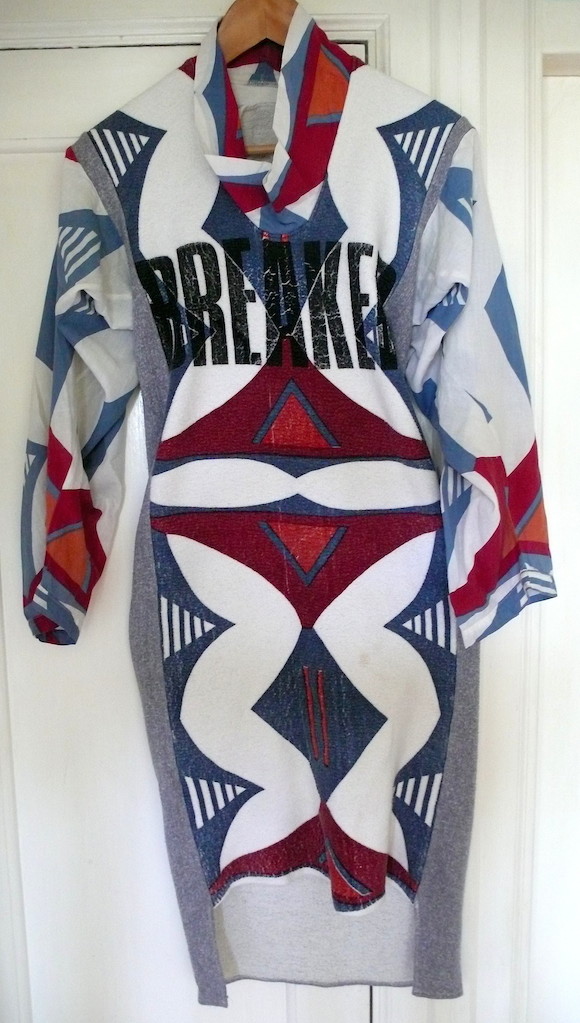
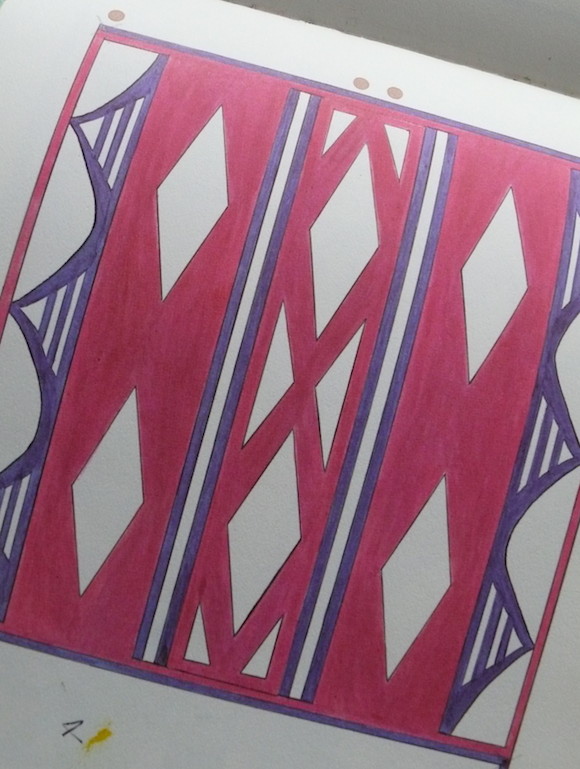
//Malcolm McLaren’s copy of Mable Morrow’s Indian Rawhide: An American Folk Art, published by Oklahoma University Press as part of the Civilization Of American Indian series in 1975////Annotated page showing design for a parfleche (painted hide) of the Dakota////Savages dress in thick marl and cotton with overprinted lettering. Design: Malcolm McLaren and Vivienne Westwood for Worlds End, 1981. Private collection//
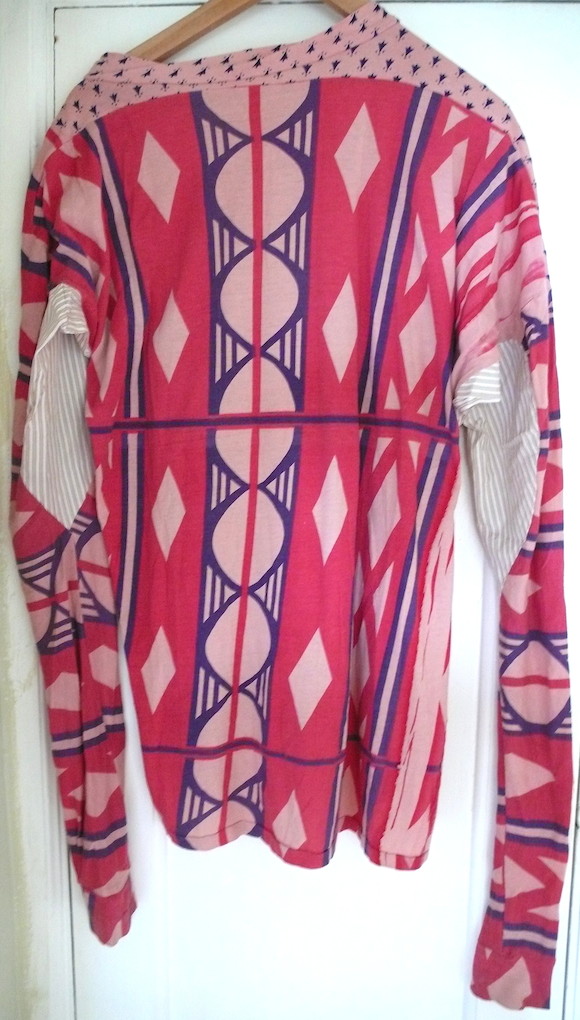
Among the most revealing exhibits at the Malcolm McLaren show Let It Rock is the cultural iconoclast’s copy of a folk art book which proved a rich source of reference when he came to design the Savage collection with Vivienne Westwood in 1981.
McLaren’s consistent approach to creative activity always began with deep research (from the first publicly recognised manifestation, the Teddy Boy outlet Let It Rock, to his final film artworks Shallow 1-21 and Paris: City Of The XXIst Century).
And in the early 80s, McLaren’s copy of Mable Morrow’s Indian Rawhide, published by Oklahoma University Press in 1975, proved inspirational for this lifelong fan of Native American Indian culture.
//Assiniboin parfleche design collected on the Fort Belknap Reservation, Montana////Savages soft jersey top with contrasting armpit inserts and neck yolk. Designed by Malcolm McLaren and Vivienne Westwood for Worlds End, 1981. Private collection.//
McLaren’s recasting of this folk art in the sphere of fashion aligns his work in the 70s and 80s with the post-modern practice of appropriation which infused all spheres of artistic endeavour at the time, from literature to film and fine art. It is arguable that he and Westwood were the first and the greatest to incorporate the approach in clothing design.
When Savage debuted in October 1981 at Olympia’s Pillar Hall in west London, the repurposing of Native American tribal prints across a range of fabrics and garments – some overprinted with block capital slogans such as “Breaker” and “Girly” – and meshing with contemporary urban black culture and streetwear proved groundbreaking in fashion terms, as can be seen in this film commissioned for the event by McLaren:
Indian Rawhide and the clothing featured in this post are among the many rare and unique exhibits in Let It Rock: The Look Of Music The Sound Of Fashion, which is at the Crystal Hall in Copenhagen’s Bella Center from August 3-6.
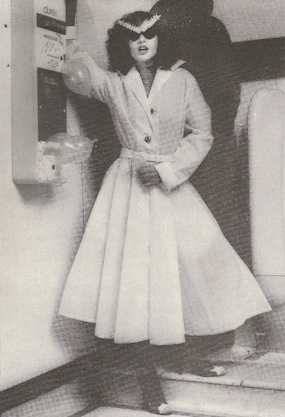
//Photography: Bob Carlos Clarke 1976 (left) and David Parkinson 1975//
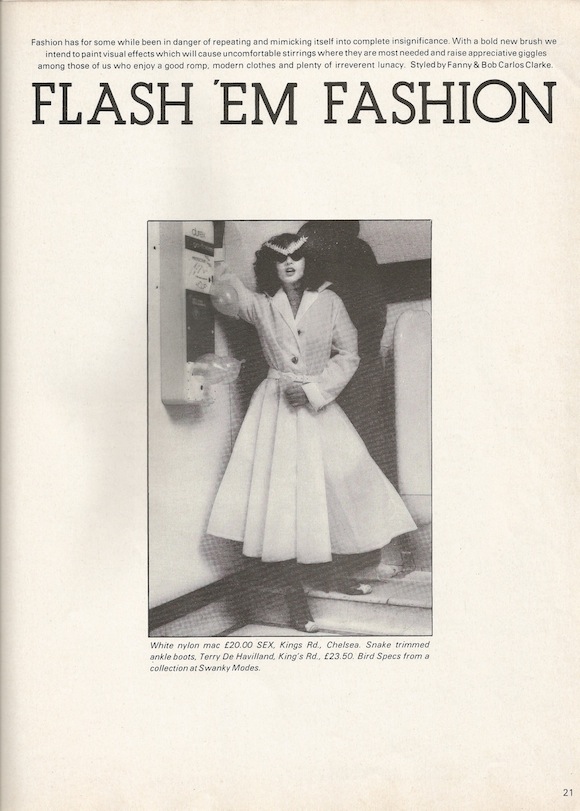
Malcolm designed a very nice women’s mac. A real 50s style, it was made of very thin ciré and looked almost like a dress, with its circular skirt and stand-up collar. It was like something that the B52s might have worn – half a dozen years later.
Glen Matlock on his time as a shop assistant at Sex in his memoir I Was A Teenage Sex Pistol (first published 1990, Omnibus Press)
As well as unique examples of Malcolm McLaren’s fashion designs with Vivienne Westwood, along with exclusive photographic prints of work by such luminaries as Robyn Beeche, Bob Gruen, Sheila Rock and Joe Stevens, the exhibition Let It Rock: The Look Of Music The Sound Of Fashion will present a panoply of ephemera, including many never previously catalogued publications which featured some of the extraordinary clothing emanating from 430 King’s Road in the 70s and 80s.
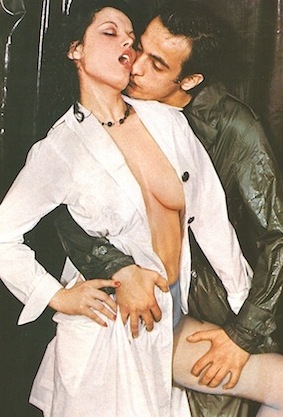
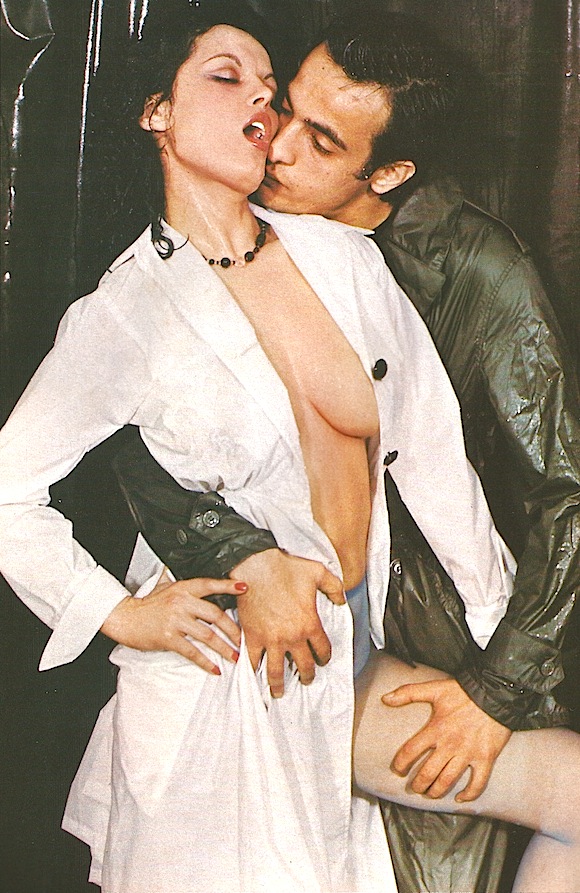
//From Vamp, 1976. Paul Burgess Collection////Female model in the Sex mac/dress, male in a raincoat from Kenny MacDonald’s Marx, The Common Market, King’s Road. David Parkinson for Club International, 1975//
Among them is the ultra rare 1976 issue of photographer Bob Carlos Clarke’s magazine Vamp, loaned by collector/expert Paul Burgess. Among the garments from Sex in the Flash ‘Em Fashion spread is the delightful rainwear dress designed by McLaren, which was also photographed by David Parkinson for Club International.
In his memoir I Was A Teenage Sex Pistol, Glen Matlcok recounted how this particular design was plundered by the mainstream fashion business: “This woman’s firm totally ripped it off for one of the mid-market youth fashion houses. And made a mint out of it. Without paying a penny to Malcolm and Vivienne – whose idea it was. Well, sort of. They probably ripped it off themselves from a Hollywood still. But that’s not the point really. Their’s was a fully-developed idea and garment.”
Let It Rock: The Look Of Music The Sound Of Fashion runs from August 3-6 at the Crystal Hall in Copenhagen’s Bella Center as part of Coepnhagen Fashion Week.
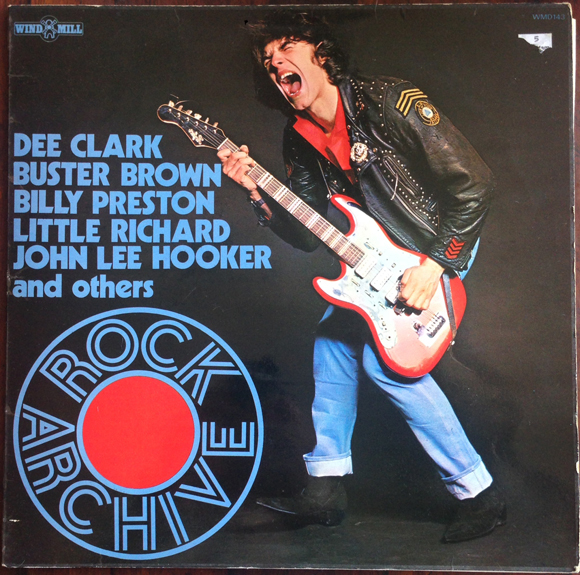
//Front cover, Rock Archive, Various Artists, Windmill Records, 1972//
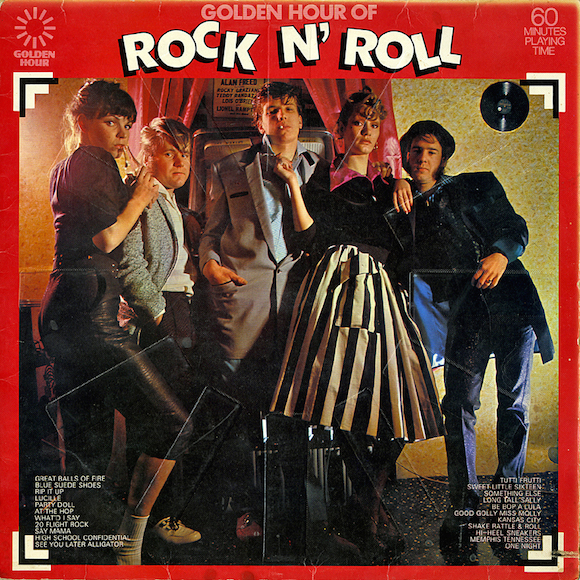
It is relatively common knowledge among those interested in the careers of Malcolm McLaren and Vivienne Westwood and their series of extraordinary shops that they supplied clothes to the 1973 album Golden Hour Of Rock & Roll; Let It Rock at 430 King’s Road was clearly credited on the back of the record sleeve.
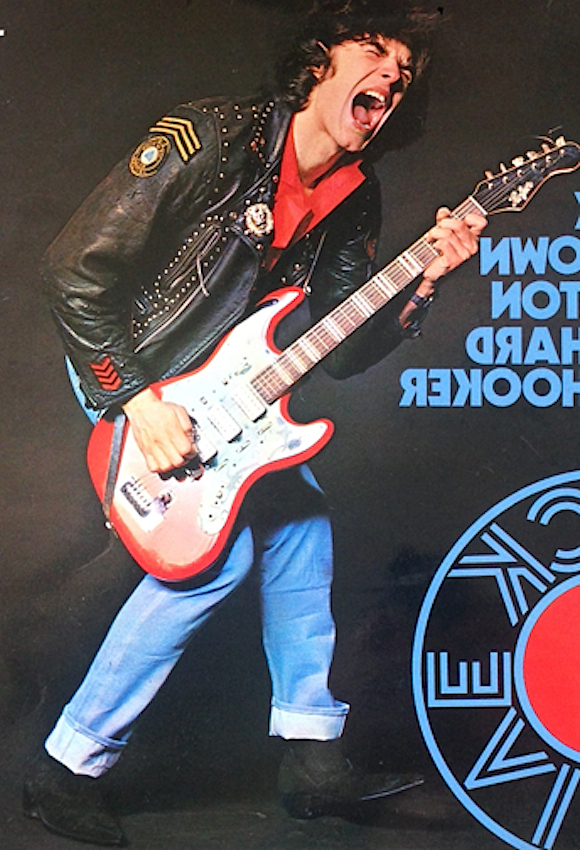
//Front cover, The Golden Hour Of Rock N Roll, Various Artists, Pye/Golden Hour, 1973////The photograph on the Rock Archive cover was flipped to better accommodate the text. Here it is as originally shot//
But I have fresh information which helps towards a greater understanding of McLaren’s project to investigate the detritus of popular culture’s recent past. During a bout of research recently I came across this earlier and hitherto undocumented use of Let It Rock clothing in a music context: the front cover of Rock Archive, a budget LP compilation released by the specialist British independent label Windmill in 1972.
And I am detailing the clothes on the cover with images taken inside Let It Rock which have never been previously published.
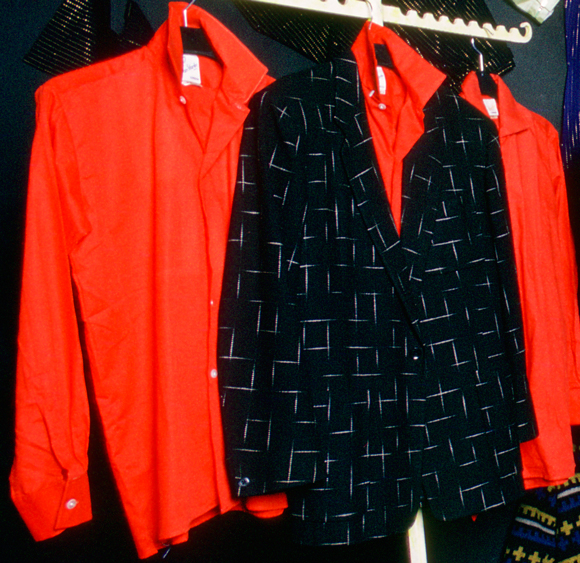
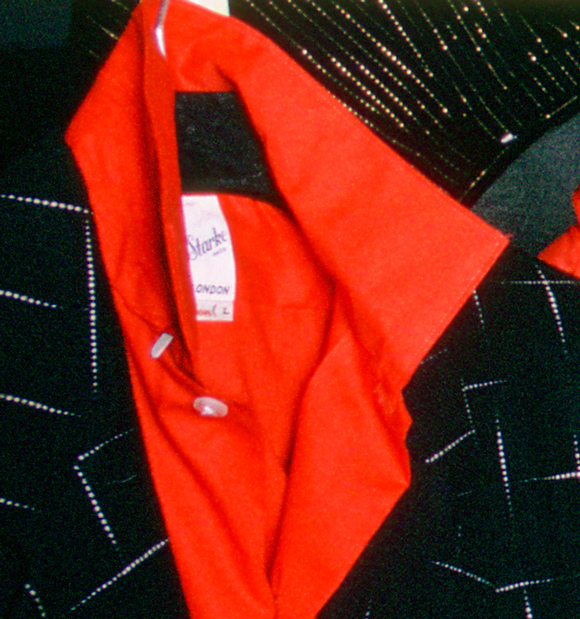
//Starke shirts with 50s sports jacket on Let It Rock wall, January 1972. Photograph: David Parkinson////Starke label detail//
Each garment worn by the model – whose attempts at rocking out resulted in his giving every appearance of suffering considerable pain – comes from the deadstock of British brands assiduously assembled by Malcolm McLaren and his art-school friend Patrick Casey for the opening of the world’s first avowedly post-modern retail outlet in November 1971.
From the ground up, the Rock Archive cover star wore black suede Denson’s Fine Poynts, ice-blue Lybro jeans with 5in cuffs, a Frederick Starke flyaway collar shirt and a studded and decorated Lewis Leathers early 60s Lightning jacket (which featured a highly collectable 6-5 Special patch).
//Front cover, Club International, 1974. Paul Raymond Publications. Photo: David Parkinson//
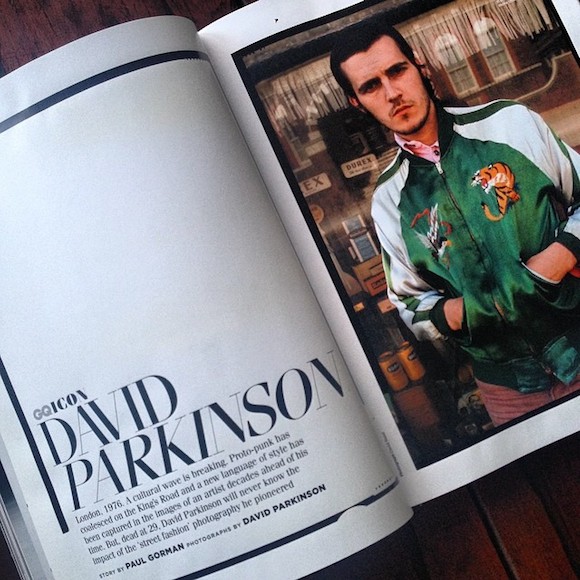
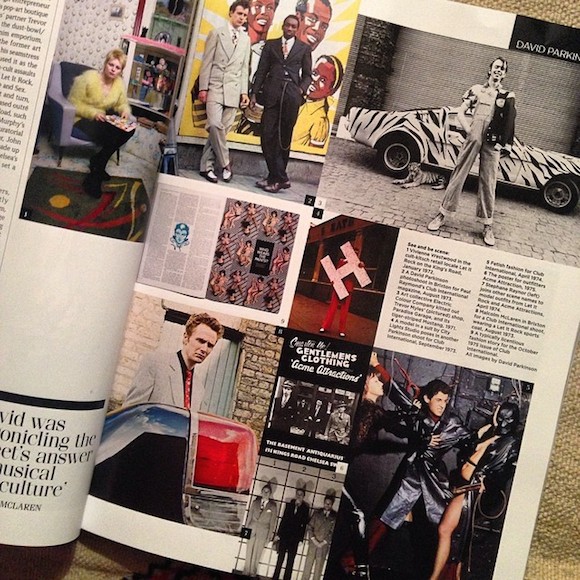
Ahead of the publication of my piece about the late photographer David Parkinson in GQ UK in a few weeks, here are a couple of masterful images which demonstrate his stylised, simultaneously gritty and glamorous approach.
//Front cover, Man Only, 1974//
Both stem from issues of men’s magazine Club International; the 1974 cover shot model is wearing Parkinson’s decorated Lewis Leathers jacket which he used to dress other fashion photo-sessions. The image was also used on the cover of Italian soft-porn title Man Only.
//Acme Attractions photoshoot for Club International 1975 including (left) Martin Brading and Don Letts and far right Steph Raynor. Photo: David Parkinson//
The spread above focused on the suits and menswear available at Acme Attractions, the Kings Road vintage/retro outlet co-owned by Parkinson’s Lesicester friend Steph Raynor, who appears in the photograph with Acme’s manager, filmmaker/DJ/BAD member Don Letts, and Parkinson’s assistant, photographer Martin Brading.
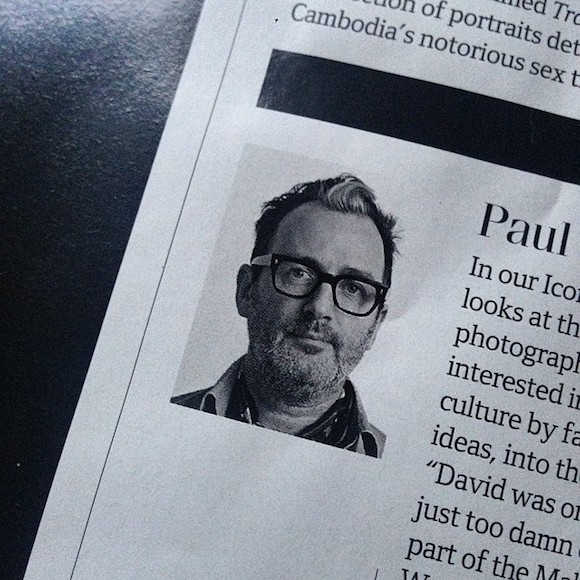
Raynor is among those who contributed to my feature on Parkinson, who is granted the accolade of ‘GQ Icon’ in the June issue (available at the beginning of May).