Only Anarchists Are Pretty: New Fragment x Peel + Lift Anarchy Shirt goes on sale as The Pool opens in Aoyoama

image-1

Among the lines launching Tokyo’s new fashion and music retail outlet The Pool is a collaboration between Japanese streetwear labels Fragment and Peel + Lift on a fresh version of the 1976 Anarchy Shirt design by Malcolm McLaren and Vivienne Westwood.

thepool

AnarchyShirt-HiroshiFujiwara2014ThePool

ec7fd5eab8f311e3a8701285f9dba909_8

The reissue, in four versions, is a stripped down reproduction of one of the original variants created by McLaren and Westwood to be worn by the Sex Pistols and for sale in their shop at 430 King’s Road in its incarnations as Sex and Seditionaries.

“I had been a student in the 60s, and the anarchic student movements in France really framed my critique,” McLaren told me in 2007.  “This particular shirt celebrated that.”

The original designs used as a base the deadstock Wemblex brand shirts stored in boxes at McLaren & Westwood’s flat in Clapham, south London in the mid-70s. “They were pin-striped and made in cheap cotton in the early 60s when the ‘pin-through’ collar style – an American look – was fashionable,” said McLaren.

“I wore and wore them and then, one day, Vivienne decided to paint stripes over one. She showed it to me and together we customised it, using my son’s stencil set, with slogans such as “Only Anarchists Are Pretty” and “Dangerously Close To Love”.

“As well as layering the stencils to increase the impact, I attached silk patches of Karl Marx I discovered in shops in Chinatown which sold Maoist literature.  I chose him because his book started the Socialist and workers’ movements in the 19th century. Also, Vivienne and I liked his beard.

“Marx was a writer/author, a creator of ideas, not a politician like Lenin. Marx represented a greater significance and was important to us because he lived in London at one point.”

Continue reading Only Anarchists Are Pretty: New Fragment x Peel + Lift Anarchy Shirt goes on sale as The Pool opens in Aoyoama

The Teds are back: McLaren + Westwood’s Let It Rock in the NME and the Evening Standard August 1972

LIR-NME+ESAug72
//TOP: From the NME’s coverage of the Wembley Rock N Roll Show – staff model Let It Rock clothing outside 430 King’s Road. Photo: Robert Ellis./ABOVE: From the Evening Standard special issue – Teds and (left) LIR assistant Addie Isman outside Let It Rock.//

As a follow-up to my recent post about the Rock N Roll revival show held at London’s Wembley Stadium in August 1972, here is another selection from the media surrounding the event.

The New Musical Express dedicated a section to reviewing the show, decking staffers Danny Holloway, James Johnston and the late Tony Tyler in appropriate clothing from Let It Rock. The journalists were photographed outside Malcolm McLaren and Vivienne Westwood’s outlet at 430 King’s Road by Robert Ellis.

Wembley-EveningStandardSpecial72TakeshiHosoyacover copy
//Bo Diddley on the cover of the ES special//
Wembley-EveningSTandardSpecial72TakeshiHosoyaspread copy
//Angus McGill and Geoffrey Aqulina Ross were among the journalists who contributed to the ES special. I love the juxtaposition with the knife and fork/skull and crossbones logo promoting a Sunday Times feature by the architectural writer Ian Nairn, whose work has recently undergone critical appraisal//

The capital’s daily paper the Evening Standard’s special issue – billed as the official programme – also included images taken outside Let It Rock, including assistant Addie Isman in one of the store’s then-new studded t-shirts (this one emblazoned with the phrase Rock N Roll Ruby) and customer and prominent London Ted Bill Hegarty in full regalia.

The images of the Evening Standard special issue are from the copy owned by collector Takeshi Hosoya, whose Japanese clothing label Peel + Lift can be viewed here.

Many thanks to Robert Ellis for permission to use his shot in the scan from the NME. Visit Robert Ellis’s Repfoto site here.

The London Rock n Roll Show at Wembley Stadium 1972: Memories of Oz, Frendz and the Let It Rock stall

wembleyrnr-flyer
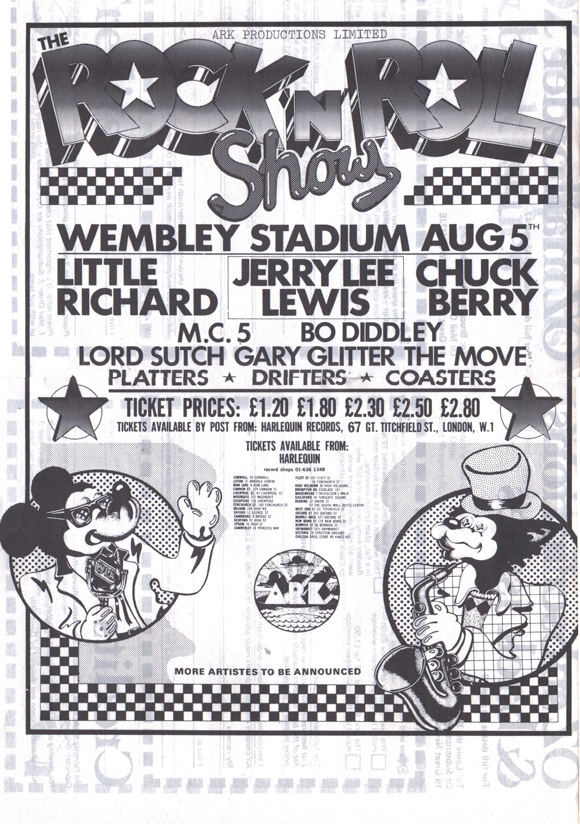
//Flyer for The Rock n Roll Show printed on the back of a subscription form for Oz magazine, July 1972. The Move were replaced by lead member Roy Wood’s new band Wizzard; this was their first gig. Original Brit-rocker Heinz was added to the bill; his backing band would soon become Dr Feelgood//

I acquired my first underground press publications in the summer of 1972, at about the point when the sector was taking the nosedive from which it never recovered.

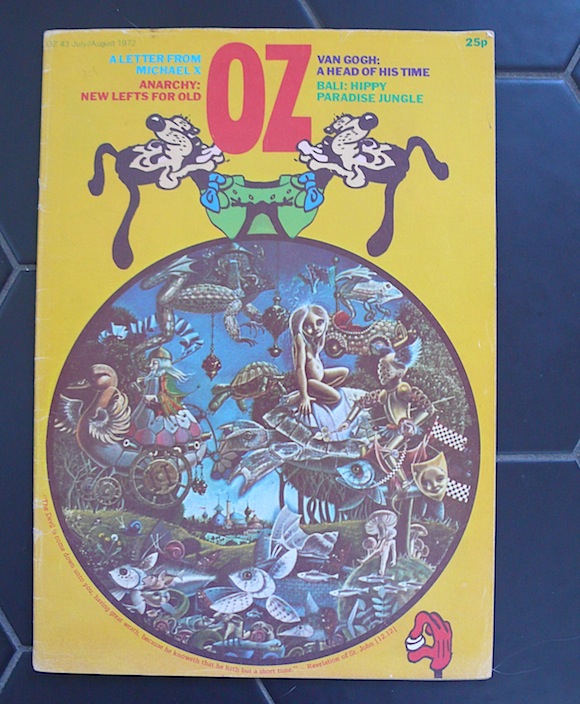
Still, better late than Sharon Tate, as they say. Aged 12, my taste had been whetted by sneak peeks at an older brother’s collection of magazines when a guy called Kevin O’Keefe who lived down the road gave me a few copies of Oz, including number 43, the July issue.

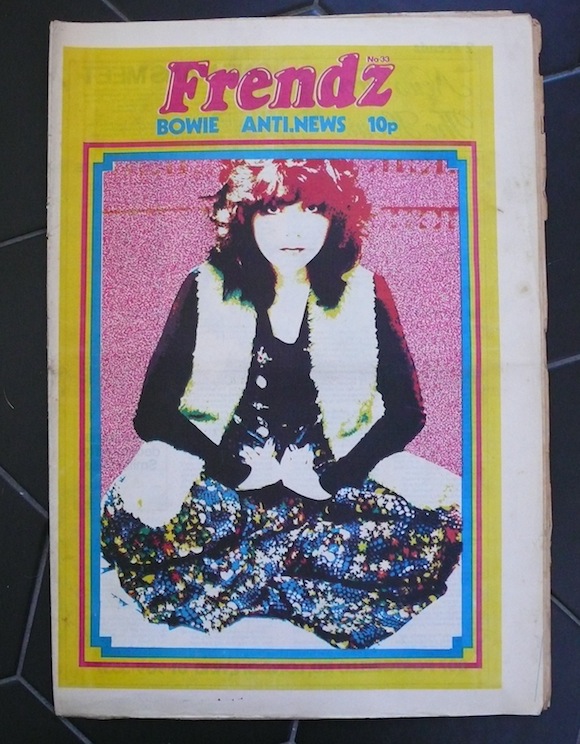
A few weeks later, to my astonishment, the newsagents in Hendon’s Church Road started stocking Frendz. I folded issue 33 between a couple of music papers and pored over it in my bedroom.

P1150578
//Front cover of OZ 43, the issue which included the Wembley flyer//
P1150560
//Front cover, Frendz 33, September 1972//
LetItRock-standWembley72
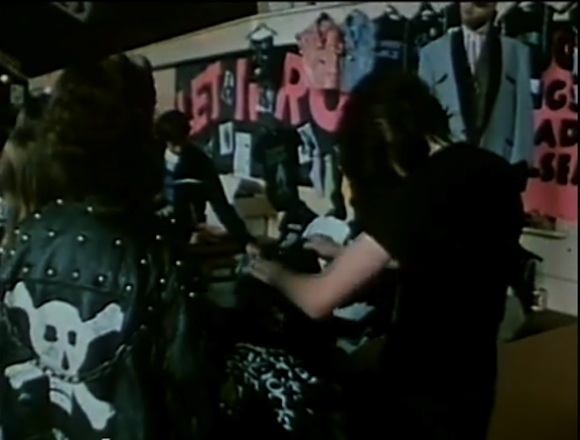
//Crowds around the Let It Rock stand. From the 1973 film London Rock N Roll Show directed by Peter Clifton//

Neither of the magazines are shining examples of the genre, but they had something in common: the centre spread of OZ 43 contained a subscription form back-printed with a flyer for the London Rock N Roll Show, a one-day festival of original 50s acts and those who could claim kinship held at Wembley Stadium on August 5 that year.

And for me the most beguiling article in Frendz 33 was a two-page stream-of-consciousness report of the event filed by one Douglas Gordon and illustrated with photographs by Pennie Smith, soon to leave for the NME and carve out her reputation as one of rock photography’s all-time greats.

Continue reading The London Rock n Roll Show at Wembley Stadium 1972: Memories of Oz, Frendz and the Let It Rock stall

Malcolm McLaren: After Pharrell, Westwood and Dries is he the disappearing man of fashion?

WorldsEnd-BuffaloHat2
//McLaren/Westwood Buffalo Hat 1982, V&A Collection.//

Long-standing revisionism is not unusual on the breakdown of a partnership, and there has been much rewriting – not least by the parties themselves – of the history of who did what, where and to whom in the three decades since the dissolution of one of the most potent creative collaborations in the history of popular culture: that between Malcolm McLaren and Vivienne Westwood.

WorldsEnd-Buffalohatbrim WorldsEnd-Buffalohatbrim2

buffalo-smash01
//In the arena: McLaren engages with pop, 1983//

It will be a while before we understand whether their achievements together will leap the boundaries of the still-bouyant decorative arts and the now-dessicated form of popular music into true and lasting cultural significance, but for the time being the couple’s combined impact on fashion design and the development of musical genres from punk to hip-hop and world music continues to draw in contemporary performers and designers.

QV the ballyhoo around Pharrell Williams’ recent sporting of a Westwood reissue of the so-called Buffalo Hat, a design produced by the pair for the Worlds End 1982 Buffalo collection. This coincided with the opening of their last retail environment Nostalgia Of Mud and also provided a major element in the visual identity of McLaren’s debut solo album, the towering pre-digital cross-genre pop masterpiece Duck Rock.

The hat, like the rest of the Buffalo collection, was undeniably a product of their collective resources. It may have been his concept – taken from images of traditional Peruvian dress discovered during research for Duck Rock – but it was their combined realisation.

Continue reading Malcolm McLaren: After Pharrell, Westwood and Dries is he the disappearing man of fashion?

Lunch with Messrs Hell + Riviera

photo 3-2
//Richard Hell + Jake Riviera, outside the Chelsea Arts Club, London, Feb 2014//

I’ve had few, if any, lunches as enjoyable as last week’s hook-up with Richard Hell and Jake Riviera for a piece I am writing for GQ magazine.

Richard and Jake first met outside CBGB in March 1976, having been introduced by photographer Roberta Bayley, who was working the club door that night.

With Dr Feelgood’s Lee Brilleaux, Jake had witnessed Richard in performance the night before with Johnny Thunders in the first – and soon to disintegrate – line-up of the Heartbreakers at Max’s Kansas City.

We dined less than half a mile away from Chelsea embankment, where Richard and the rest of his next band the Void-Oids spent a pretty miserable-sounding sojourn on a leaky boat when in the UK on tour with The Clash in 1978.

As Richard recounts in his fabulous memoir I Dreamed I Was A Very Clean Tramp, he and Jake have shared a series of adventures over the years, some of which I will be covering in my GQ feature which should be out in the summer.

I Dreamed I Was A Very Clean Tramp is out in paperback this week; buy here.

SEX Cowboys return to Situationist roots in new T-shirt inspired by one of my posts

SONY DSC
//Drift: New t-shirt from Japanese streetwear company Peel + Lift//

My 2011 post unraveling the threads running through the notorious Naked Cowboys punk t-shirt has itself inspired a new shirt.

The Cowboys t-shirt was designed by Malcolm McLaren in 1975 for sale in SEX, the shop he ran with Vivienne Westwood at 430 King’s Road in London’s World’s End.

Popular with punks and worn by members of the Sex Pistols and their coterie, it was initially known as the Saturday Night Dance shirt because of the presence of the dancehall sign in the appropriated homoerotic cowboy illustration by Jim French.

cowboys-auction
//Cowboys t-shirt sold at auction in London last year//

The new t-shirt has been produced by Japanese streetwear company Peel + Lift, which reproduces many McLaren and Westwood designs. It is entitled Drift, making overt the presence of 60s radical thinking in McLaren’s artwork: the drift, or the dérive, was a major theme of the Situationist International, which believed individuals should allow themselves to wander urban landscapes and become either repelled or enchanted by what they found (in the manner of the archetypal French urban explorer the flâneur).

Le Retour de la Colonne Durutti
//Panel, p3, Le Retour de la Colonne Durutti, 1966//

Continue reading SEX Cowboys return to Situationist roots in new T-shirt inspired by one of my posts

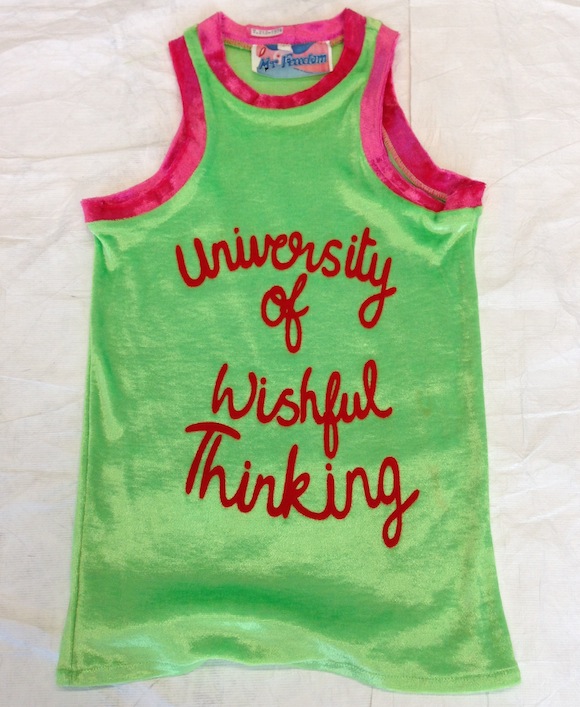
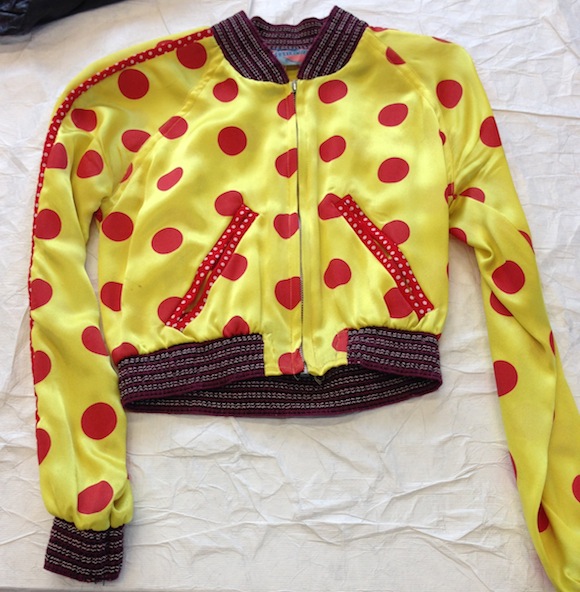
Mr Freedom designs at the V&A: ‘When what has been considered bad taste is suddenly found to be invigorating’

V+AArchive-MrFreedomWingedBoots2

“There is a moment when ‘good taste’ becomes dead; what has been considered ‘bad’ is suddenly found to be invigorating. Fashion today has little to do with la mode and the tacky is often accepted as an essential part of the necessary ‘total’ look. It can be fun.”

Cecil Beaton, introduction to the catalogue for the 1971 V&A exhibition Fashion: An Anthology

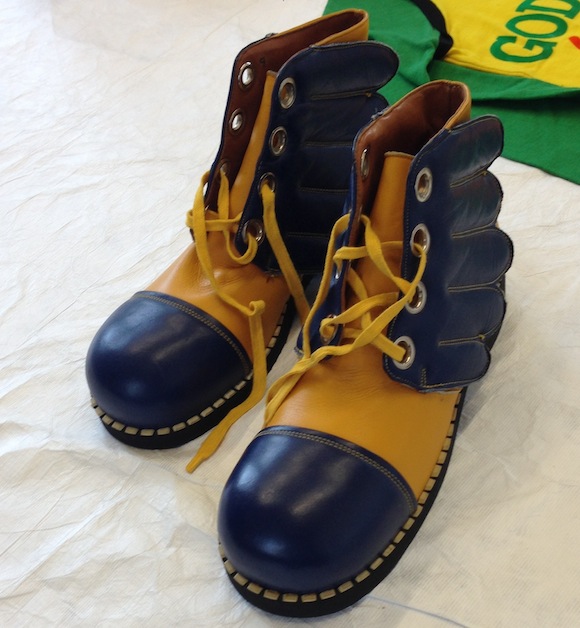
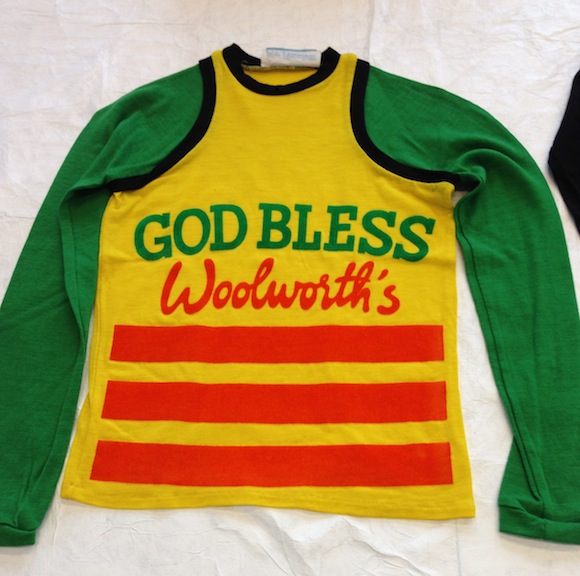
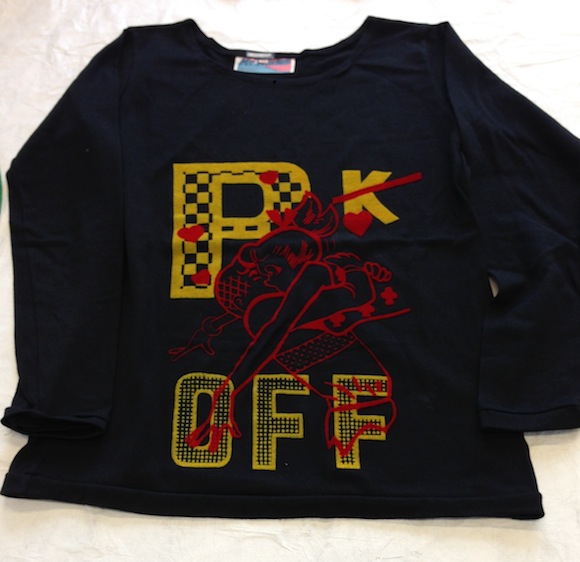
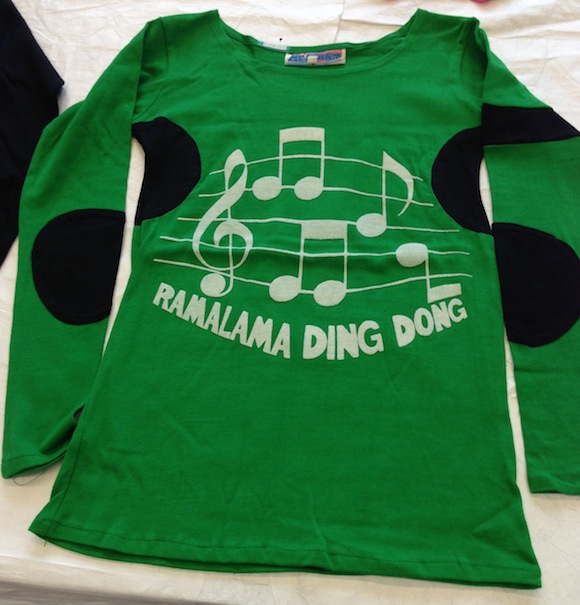
Recent visits to the V&A’s Archive of Art & Design have proved fruitful, particularly a viewing earlier this week of the collection of  Pop Art clothing sold through London boutique Mr Freedom in the late 60s and early 70s.

V+AArchive-MrFreedomGodBlessWoolworthstop
//Design: Diana Crawshaw, 1971//
V+AArchive-MrFreedomPKOfftop
//Kiss Off t-shirt, Jim O’Connor, 1971//
V+AArchive-MrFreedomRamalamadingdongtshirt
//Design Christopher Snow/Trevor Myles, body design: Diana Crawshaw, 1971//
V+AArchive-MrFreedomUniversityofWishfulThinkingtshirt
//Design: Pamla Motown, 1971//

V+AArchive-MrFreedomSpottedJockeyJacket

Continue reading Mr Freedom designs at the V&A: ‘When what has been considered bad taste is suddenly found to be invigorating’

Bravura + brilliance: Tommy Roberts, February 6 1941 – December 10 2012

P1150407
//Tommy Roberts, 1987. Photo: Christopher Clunn//

Sad to note the anniversary today of the death of Tommy Roberts, flamboyant design entrepreneur and subject of my book Mr Freedom.

P1150406
//Dedication (right) with (left on cover-flap) list of abiding interests (courtesy Eve Ferret + Mark Summerfield) and Brian Aris portrait//
P1150408
//Roberts opened Kleptomania with Charlie Simpson in Kingly Street, central London, in 1966//
P1150409
//Neon arch sales counter display designed by Jeffrey Pine for Mr Freedom, opened with partner Trevor Myles at 430 King’s Road in September 1969//

Here – with a selection of images from Mr Freedom – is an extract from an essay I have written about Roberts’ role in the development of design in Britain for Chris Breward and Ghislaine Wood’s book British Design: Tradition & Modernity, which will be published by Bloomsbury next year.

It is arguable that wider recognition for Tommy Roberts’ audacious innovations in the promotion of street style, furniture, gastronomy, home-wares, interiors and collectables was undercut by his refusal to observe the sensitivities of England’s post-war design world.

Roberts adopted an ebullient public persona to match his stout physique and broad Cockney accent. “I’m the most vulgar man in fashion, darlin’!” Roberts proclaimed to the no-less outrageous Sunday Times fashion editor Molly Parkin in the heyday of his Pop Art fashion and objects emporium Mr Freedom.

Continue reading Bravura + brilliance: Tommy Roberts, February 6 1941 – December 10 2012

Jim French: Tinker, Tailor, Soldier, Sailor exhibition + new Colt apparel collection

//Jim French Polaroid studies//

Tinker, Tailor, Soldier, Sailor is an exhibition of Polaroids taken by artist, illustrator and print-maker Jim French which opens tonight at New York’s ClampArt gallery.

These include studies for French’s 1969 Colt Studio print Longhorns Dance, incorporated by Malcolm McLaren in 1975 in his notorious Cowboys t-shirt design, as sold in Sex and Seditionaries at 430 King’s Road and worn by the Sex Pistols and others.

//Longhorns Dance by Colt (Jim French) from Manpower! issue 7, 1974//
//Wearing their Cowboys (clockwise from top left): McLaren 1975, Sid Vicious 1977, Siouxsie 1976, Steve Jones 1975. Photographs: Bob Gruen; Dennis Morris; Ray Stevenson; Mick Rock.//

//From queerclick.com//

Continue reading Jim French: Tinker, Tailor, Soldier, Sailor exhibition + new Colt apparel collection

Before Wire and The Motors, The Snakes: My part in their punk rock obscurity

//Richard Wernham, Nick Garvey, Robert Gotobed, Rob Smith on the front cover of Teenage Head/Lights Out by The Snakes, Dynamo Records, 1976//

I went to a good school (it was approved, as my first editor would have it in the late 70s. You had to be there).

I was taken on as a scholarship boy, one who showed enough promise for the fees to be paid by the council.

But I was lazy, not as bright as I made out, unhappy, an under-achiever. Aside from winning the cross-country race when I was 14, my life there was almost entirely undistinguished, so preoccupied was I with music, clothes and girls. I had pretensions to vast knowledge in all three areas undercut by lack of experience in the latter regard.

//Booklet with Quadrophenia, an album about "a cat with four personalities" according to me, 1973//
//School report 1975: "If Paul is as familiar with DG Mackean's Introduction To Biology as he is with the NME, he will pass his O-Level. As it is, he isn't, so I fear he won't." And I didn't//

Continue reading Before Wire and The Motors, The Snakes: My part in their punk rock obscurity