Two of Malcolm McLaren’s t-shirts from the very first production run of I Groaned With Pain – the notorious text design produced with Vivienne Westwood in 1974 – will be featured in Eyes For Blowing Up Bridges, the exhibition I am co-curating with David Thorp at Southampton’s John Hansard Gallery this autumn.
I Groaned With Pain is named after the first four words of the paragraph of text McLaren lifted from beat writer Alexander Trocchi’s erotic novel Helen And Desire (published in 1954 by Olympia Press under the pseudonym Francis Lengel).
My recent post about David Bowie’s visits in 1974 to 430 King’s Road when it was in its Too Fast To Live Too Young To Die incarnation prompted Facebook friend and DJ Graham “Sugarlump” Evans to alert me to Polaroid photographs of David Bowie trying out make-up, hair and styling options in preparation for his Diamond Dogs tour of the US that year.
// Polaroid taken by Dana Gillespie in New York in 1974//
In one, as Evans points out, Bowie posed in a leather hood of similar style to the model sold at 430 as it was transformed over a period of six months from TFTL to fetish emporium Sex.
//Nicholas de Jongh’s front-page report, The Guardian, August 2, 1975////Sex Original-labelled Cowboys t-shirt courtesy Hiroshi Fujiwara Collection//
This month – specifically July 26 – marks the 40th anniversary of the introduction for sale of Malcolm McLaren’s notorious Cowboys t-shirt in Sex, the revolutionary boutique he operated at 430 King’s Road with Vivienne Westwood.
The shirt’s status as the most provocative of all punk designs is enhanced by the fact that it made waves immediately: the same day the shirt went on sale, the first customer to wear it in public was arrested. Within 24 hours, the store itself was raided for indecency.
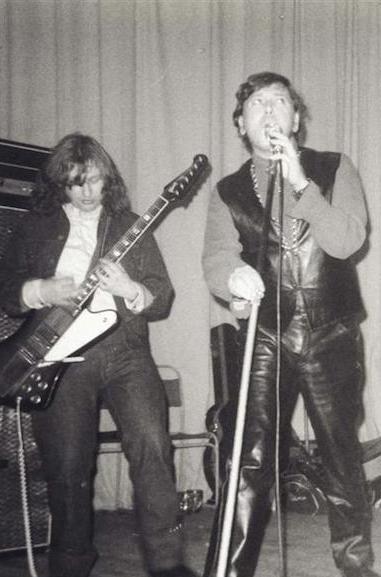
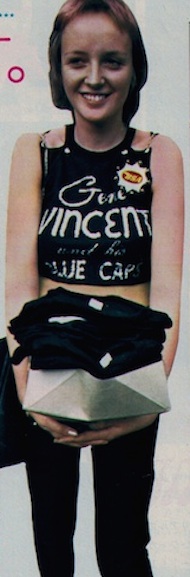
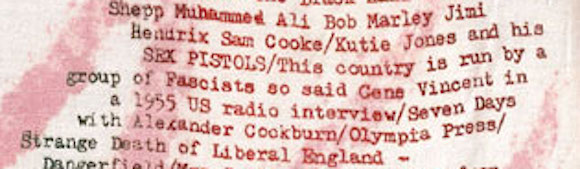
//Clockwise from top left: Gene Vincent with one of The Houseshakers, Magnet Club, Chelmsford, UK, February 1971. Photo: http://gene.vincent.fanclub.voila.net; Let It Rock assistant in Gene Vincent and the Blue Caps top, Wembley Stadium, August 5, 1972. Photo: Masayoshi Sukita; Vincent’s quote as featured on the Sex t-shirt You’re Gonna Wake Up, 1974//
‘Gene Vincent for me was the embodiment of rock’n’roll’
Malcolm McLaren 1997
On September 22 1971, Gene Vincent was a mid-week booking to play a “rock revival” night at central London club The Marquee.
Times were tough; at just 36, the soft-spoken American rocker was apparently way past his heyday and beset by severe health problems brought on by the combination of alcoholism and addiction to prescription drugs taken to dull the constant pain in his left leg. This was the result of a crippling motorbike accident in his youth and the lingering effects of having been in the 1960 car-crash which killed Eddie Cochran.
//Roxy, 25 Kensington Church Street, 1972. Photo: Masayoshi Sukita////Inside Roxy, 1972: Shelley Martin in a flamenco dress designed by Dinah Adams. Photo: Masayoshi Sukita////Some of the Roxy crowd photographed around the corner from the shop (from left): The late Granny’s co-owner Marty Breslau, whose ensemble includes a Wonder Workshop top; Louise Doktor; Shelley Martin; John Knight. Photo: Masayoshi Sukita//
I’ve been aware of the existence of the Kensington boutique Roxy for some time, particularly since the store name was used as the title of the feature on London street fashion in a 1972 edition of Japanese magazine An An.
But my curiosity was pricked recently while browsing that same issue of An An which appears in Freddie Hornik’s scrapbook (see last post).
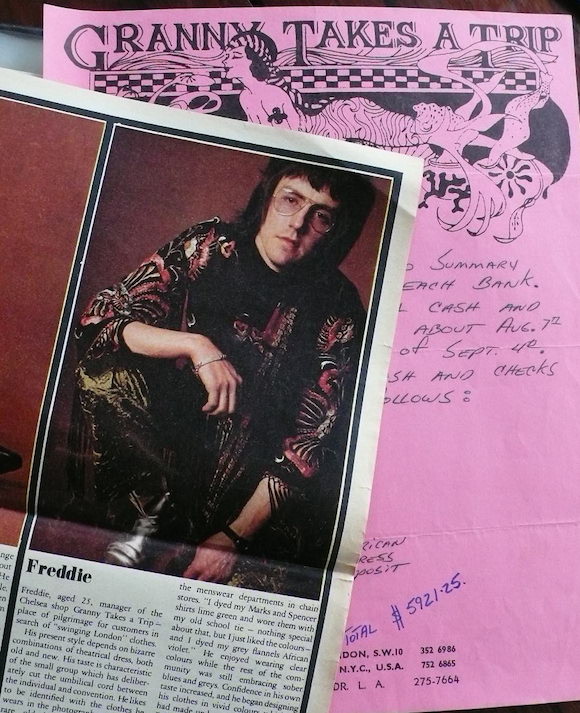
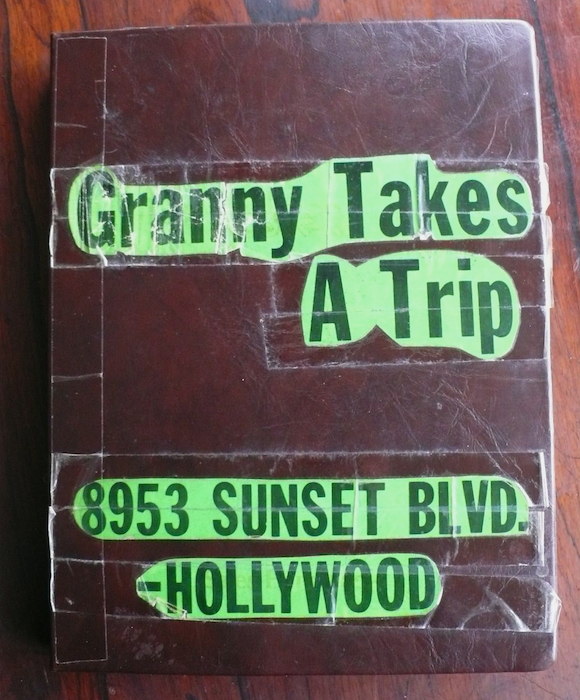
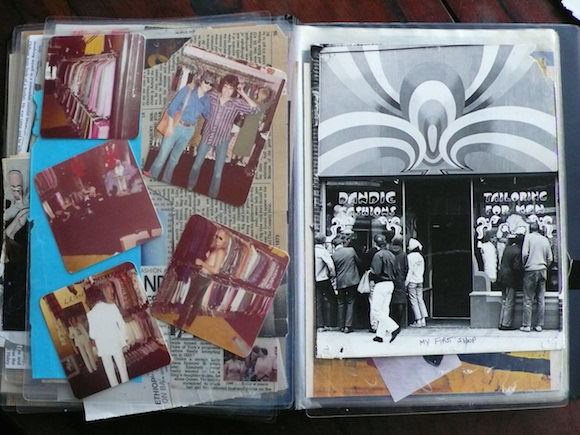
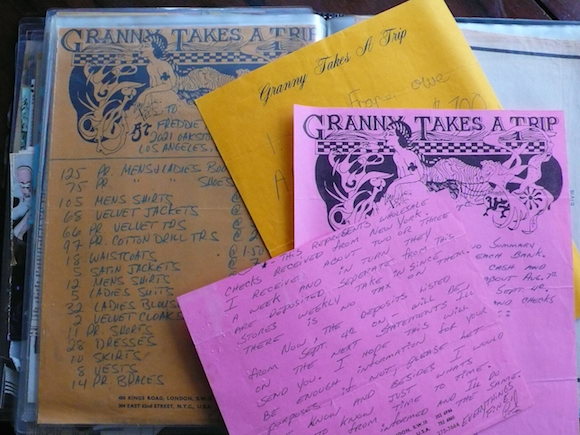
//Hornik featured in the Telegraph magazine in 1969 and GTAT paperwork dating from 1972. The livery was taken from a design by Granny’s founder Nigel Waymouth////Hornik maintained his scrapbook from the 60s to his death in 2009//
I have just filed a piece for GQ about Granny Takes A Trip and the branches of the King’s Road boutique which opened in the 70s in Manhattan and Hollywood under the stewardship of the late Freddie Hornik.
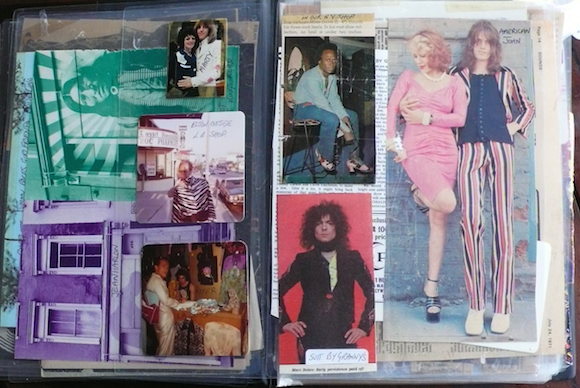
The feature also scrutinises the scrapbook Hornik maintained from the mid-60s, when he worked at the rival Dandie Fashions at 161 King’s Road, through his acquisition of Granny’s at 488 King’s Road in 1969 from founders Sheila Cohen, John Pearse and Nigel Waymouth.
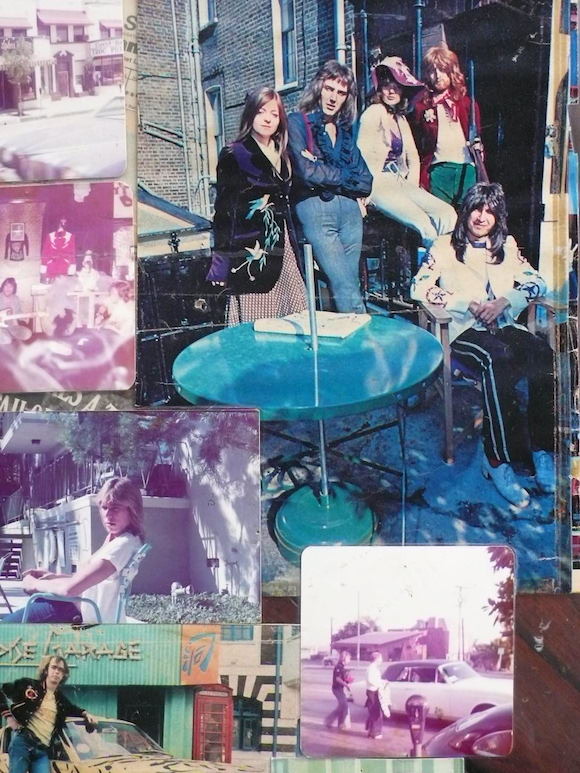
It charts in snapshots, magazine clippings, company paperwork and notes Hornik’s ambitious expansion plan which resulted in partners being brought on board at the Chelsea shop – in the form of co-owners Marty Breslau and Gene Krell – and for the launch of the New York outlet at 304 E.62nd Street, which was owned by John LiDonni and Richie Onigbene.
This strategy proved successful, and was capped by Hornik’s launch with Jenny Dugan-Chapman of an LA branch, first on Doheny in Beverly Hills and then on Sunset Strip.
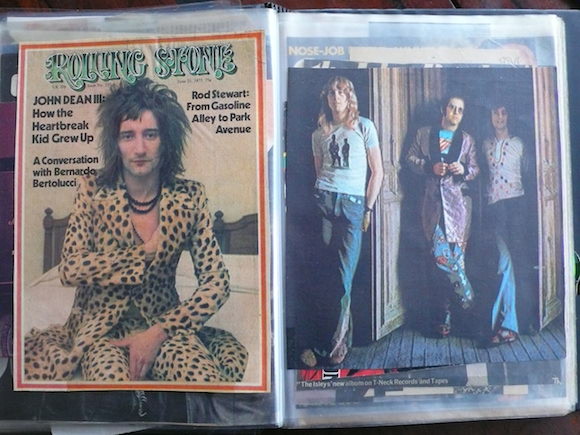
By this time the Granny’s international operation had hit the moment when rock turned to glam. Existing customers such as Paul McCartney, John Lennon, Mick Jagger and Keith Richards were joined by the new raft of dandy peacock performers making the moves in the early-to-mid 70s, including Marc Bolan, Alice Cooper, Bryan Ferry, Elton John, Lou Reed, Todd Rundgren, Rod Stewart and Ronnie Wood.
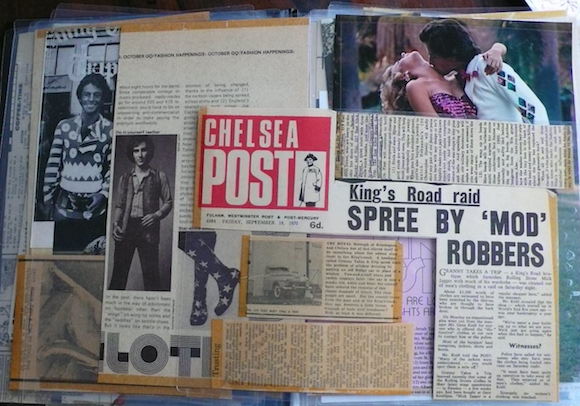
Hornik’s scrapbook – which was updated for him for a time by LA store manager Roger Klein – makes for a pop culture treasure trove, one which offers rare insights into this exciting era of rock and roll fashion.
Having returned to the UK to live a quiet life in the late 70s, it is poignant to note that Hornik, who died in 2009, kept an eagle eye out for any mention of his outlets and his associates, adding to the scrapbook as the revival of interest in the clothes and characters of the period really started to roll.
I’ll keep you informed as to when the piece is due to appear. Access to the scrapbook courtesy Alex Jarrett.
//Malcolm McLaren, 1973. Photo: David Parkinson. Bryan Ferry, 1976. Photo Richard Wallis//
A couple of years back I showed examples of photography by the late David Parkinson to car-nut graphic design maestro Jules Balme; I knew he would be interested in the incorporation of a 1959 Cadillac Eldorado in a 1973 Let It Rock fashion shoot.
What drew Balme’s eagle eye was not the car fin detail, but the fact that Malcolm McLaren in the shot below sported a tie of the same distinctive Atomic-style 50s pattern as worn by Bryan Ferry in the video clip for his 1976 solo hit Let’s Stick Together (and subsequently on the sleeve of the compilation of the same name rushed out to capitalise on the single’s success that year).
//McLaren and models in Let It Rock attire – right are examples of the so-called “Alan Ladd” and “Jazz” suits – photographed in Acre Lane, Brixton for Club International by David Parkinson, summer 1973//
“More than anyone, Malcolm McLaren bursts the definitions as to what exactly constitutes an artist.”
Yves Aupetitallot, curator at Magasin, the Centre National d’Art Contemporain, in the introduction to Art In Pop
Due to popular demand, the run of Art In Pop – the French exhibition about the intermingling of artistic practice with popular music where the main space is dedicated to the work of Malcolm McLaren – has been extended by a month.