//Left: Top in blue suede, JW Anderson for Loewe. Right: White cotton shirt and blue flared trousers, both Kenzo//
Photographer Brian Griffin rarely fails to beguile, as evinced by these portraits from a series produced with stylist Emma Clifton for architectural/design/fashion magazine Disegno earlier this year.
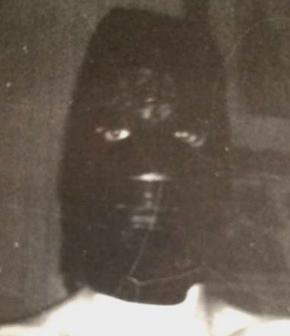
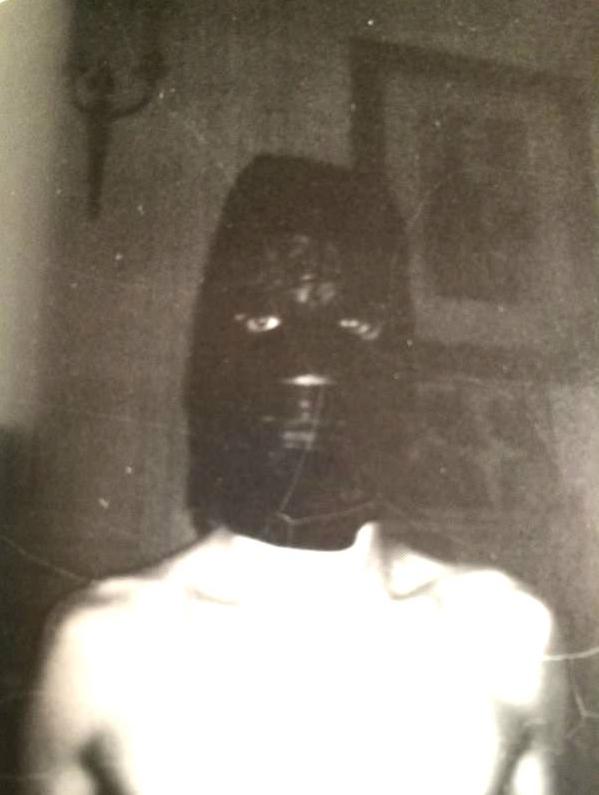
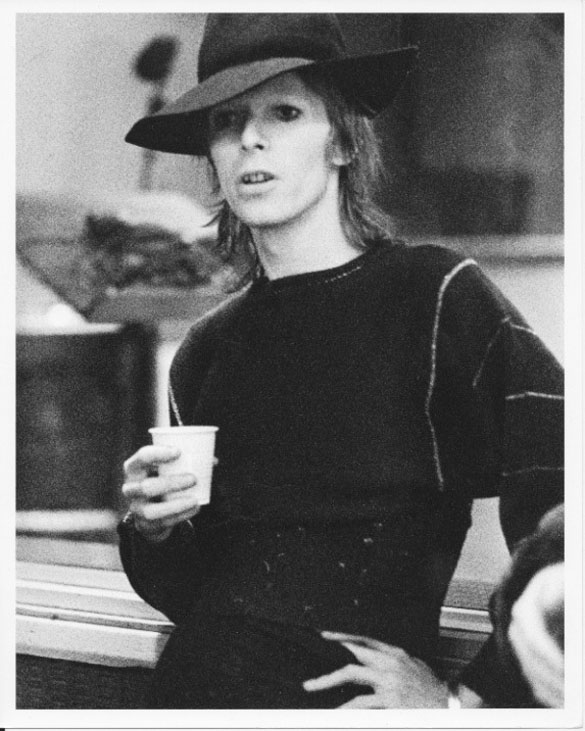
My recent post about David Bowie’s visits in 1974 to 430 King’s Road when it was in its Too Fast To Live Too Young To Die incarnation prompted Facebook friend and DJ Graham “Sugarlump” Evans to alert me to Polaroid photographs of David Bowie trying out make-up, hair and styling options in preparation for his Diamond Dogs tour of the US that year.
// Polaroid taken by Dana Gillespie in New York in 1974//
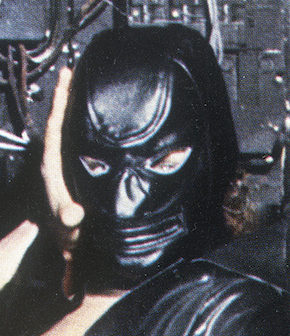
In one, as Evans points out, Bowie posed in a leather hood of similar style to the model sold at 430 as it was transformed over a period of six months from TFTL to fetish emporium Sex.
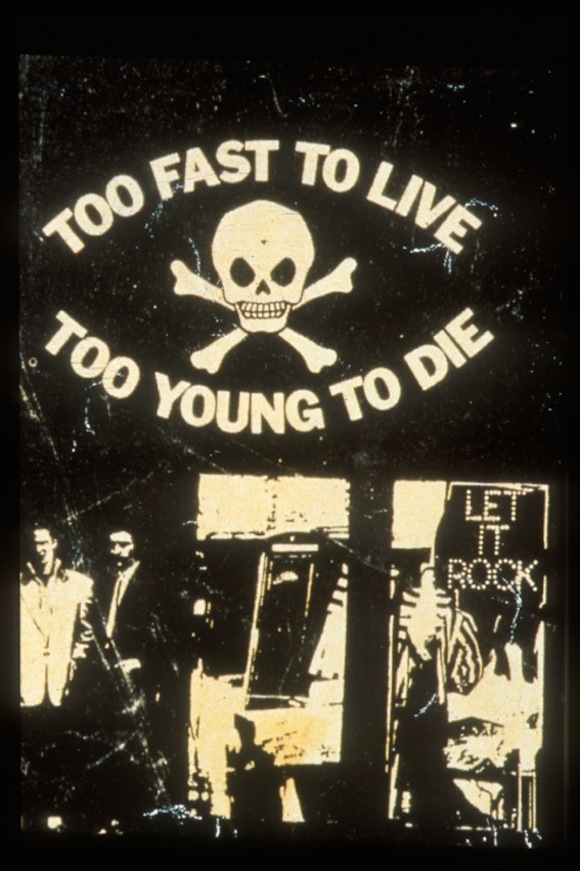
It is a little known fact that David Bowie was an occasional visitor to 430 King’s Road when it was operating as Too Fast To Live Too Young To Die.
This manifestation of Malcolm McLaren and Vivienne Westwood’s revolutionary boutique – which paid design tribute to the fetishistic studded leather attire of Britain’s early 60s Ton Up Boys and rockers and sold the cult clothing associated with 40s mobsters and Latino zoot suit rioters – succeeded the 50s outlet Let It Rock in the early spring of 1973, as noted at the time by the fashion writer Catherine Tennant in British Vogue.
//A doozy: This point-of-sale design by Barney Bubbles for Elvis Costello & The Attractions’ 1980 LP Get Happy!! is among rare rock posters on show at Mod Lang in Ludlow. Photo: Paul Bradshaw//
The regions are where it’s at these days, so we are told, and naturally Barney Bubbles designs can be found in the thick of it.
This portrait of Malcolm McLaren was captured among the columns outside the entrance to London’s august British Museum by Andy Rosen in 1983.
In the photograph taken during promotion of the Duck Rock album, which was released at the start of 1983, McLaren sported a rare trenchcoat design from the Witches collection he and Vivienne Westwood debuted on the catwalk that spring.
An under-acknowledged art world connection forged by Malcolm McLaren during his fashion design partnership with Vivienne Westwood was to the godfather of street art, conceptual artist Richard Hambleton.
During his forays in New York in the early 80s, McLaren was struck by Hambleton’s eerie representations of The Shadow Man figure; there was one on a wall in Bethune Street in the West Village, near the studio of McLaren’s photographer friend and ally Bob Gruen.