Malcolm McLaren in Witches trenchcoat on the steps of the British Museum 1983

2015ProudGallery_3__1983_280515

This portrait of Malcolm McLaren was captured among the columns outside the entrance to London’s august British Museum by Andy Rosen in 1983.

In the photograph taken during promotion of the Duck Rock album, which was released at the start of 1983, McLaren sported a rare trenchcoat design from the Witches collection he and Vivienne Westwood debuted on the catwalk that spring.

Continue reading Malcolm McLaren in Witches trenchcoat on the steps of the British Museum 1983

Richard Hambleton + Malcolm McLaren = Witches x The Shadow Man

Malcolm McLaren posing on the streets of NYC. April 1983. © Bob Gruen / www.bobgruen.com Please contact Bob Gruen's studio to purchase a print or license this photo. email: websitemail01@aol.com phone: 212-691-0391
//Malcolm McLaren and Andrea Linz with a Hambleton Shadow Man in the West Village, NYC, April 1983. © Bob Gruen/www.bobgruen.com. Please contact Bob Gruen’s studio to purchase a print or license this photo. Email: websitemail01@aol.com Phone: + 212-691-0391//
P1160042 copy
//Witches Shadow Man skirt, 1983. Malcolm McLaren, Vivienne Westwood and Richard Hambleton. This image (c) www.paulgormanis.com//

An under-acknowledged art world connection forged by Malcolm McLaren during his fashion design partnership with Vivienne Westwood was to the godfather of street art, conceptual artist Richard Hambleton.

During his forays in New York in the early 80s, McLaren was struck by Hambleton’s eerie representations of The Shadow Man figure; there was one on a wall in Bethune Street in the West Village, near the studio of McLaren’s photographer friend and ally Bob Gruen.

Continue reading Richard Hambleton + Malcolm McLaren = Witches x The Shadow Man

LP artwork distilled, venue interiors re-appraised and video portraits of Ian Brown, Matt Johnson and Richard Strange at Peter Wilkins’ Lost In Music

60s, Van Morrison - Astral Weeks, Peter Wilkins, 2015
//Astral Weeks – Van Morrison, Peter Wilkins, 2015//
Hammersmith Apollo, Peter Wilkins, 2015
//Hammersmith Apollo, Peter Wilkins, 2015//

In the 21st century, when digital downloads displaced compact discs as the format of consumer choice, music went naked into the world, unadorned by design or packaging. Yet this in turn gave rise to vigorous rear-guard action in the growing appreciation of what was fast disappearing. As if from the dead, vinyl made a comeback and the fan in Wilkins places him in a key position to cogitate this phenomenon.
From my text for the Lost In Music catalogue

Continue reading LP artwork distilled, venue interiors re-appraised and video portraits of Ian Brown, Matt Johnson and Richard Strange at Peter Wilkins’ Lost In Music

‘A profound influence’: Ian Lynam on Barney Bubbles’ impact on graphic design

bb5
//Lynam – just about visible on the right – talks through the extraordinary sleeve design and packaging for Armed Forces, the 1979 album by Elvis Costello & The Attractions//

A film of last month’s celebration of design hero Barney Bubbles by American graphic designer Ian Lynam is now available to view online.

Continue reading ‘A profound influence’: Ian Lynam on Barney Bubbles’ impact on graphic design

C’est C Bon: Nick Knight’s fond memories of Barney Bubbles

bb-nickknight
//The wacky picture is a photo-booth shot of Bubbles on the Stiff Records’ summer day-out in 1977. Courtesy Caramel Crunch//

Photographer Nick Knight has posted a fond tribute to Barney Bubbles.

carter2 Carlene-Carter-Cest-C-Bon-512475

//Back and front cover, C’Est C Bon, Carlene Carter, F-Beat/Epic, 1983//

Among the contributions Knight made to designs by the late graphics maestro was one of Bubbles’ last, for Carlene Carter’s 1983 LP C’est C Bon.


Barney Bubbles’ early 70s drum-head for Quiver

11174769_10153339955661694_4783911415684882423_n
//Bubbles’ drum-head for Willie Wilson of Quiver is the centrepiece of this arrangement by artist/designer Steven Thomas of pieces from John Pidgeon’s Poole pottery collection. Photo: John Pidgeon//

This drum-head design by Barney Bubbles for Willie Wilson, sticksman of early 70s folk-rockers Quiver, makes a fine addition to the group of artworks produced in this medium by the late graphics maestro.

Continue reading Barney Bubbles’ early 70s drum-head for Quiver

‘Beautiful objects but don’t try to read a book by them!’ Rad Light: The Radical Lighting Collection Of Jim Walrod

XB2W6337 XB2W6257 XB2W6177 XB2W6405//Clockwise from top left: A UFO by Ettore Sotsass, Italy 1957. Manufacturer Arredoluce; Passiflora by Superstudio, Italy 1966. Manufacturer: Design Centre; Belt Lamp by Gaetano Pesce, USA 1995. Manufacturer: Fish Design; C2 by Studio Rossi-Molinari, Italy 1969. Manufacturer: Totem//

“These lamps were in no way meant to be utilitarian. They were mass produced as expressions of art by the most innovative designers working at the time and are beautiful objects. Just don’t try to read a book by them!”

The pick of design authority and interiors practitioner Jim Walrod’s extraordinary lighting collection is on display at New York’s Patrick Parrish Gallery until Sunday (April 19).

Continue reading ‘Beautiful objects but don’t try to read a book by them!’ Rad Light: The Radical Lighting Collection Of Jim Walrod

Too little, too late? NY Met finally ‘de-accessions’ two bogus Seditionaries designs from Costume Institute collection

Met-deaccessionedjacketinAnglomania

Met-Bondagesuitblue
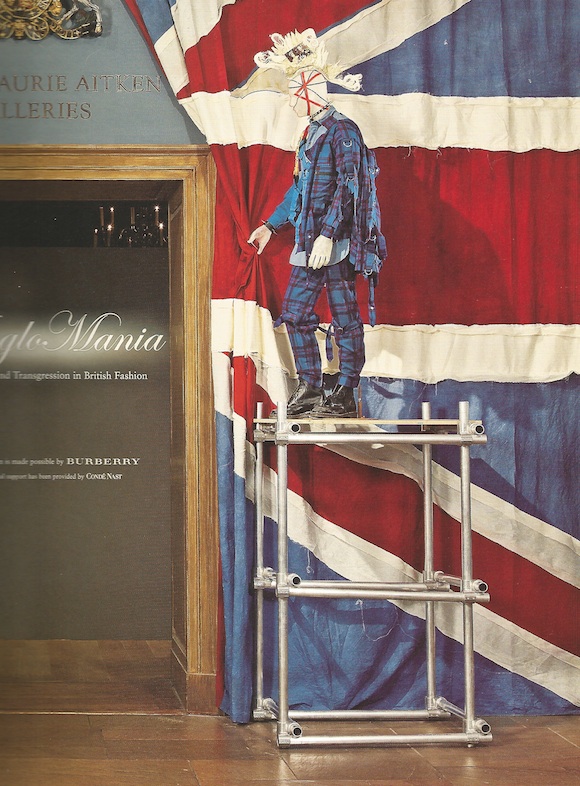
//One of the two bondage suits which have been removed from the Met collection. They were previously granted prominence in the museum’s 2006 exhibition Anglomania. This image is from the frontispiece of the show’s lavish catalogue//

Years after concerns were raised about the authenticity of around half of the punk fashion pieces in the Metropolitan Museum Of Art Costume Institute collection, cleaning house has finally begun at the New York institution with the expulsion of two bondage suits purporting to have been original 70s designs by Malcolm McLaren and Vivienne Westwood.

A museum spokesperson has confirmed that the suits have been “formally de-accessioned”. A relatively rare process in international-standard curatorial circles, de-accessioning occurs when information undermining the provenance and authenticity of a museum object comes to light.

Continue reading Too little, too late? NY Met finally ‘de-accessions’ two bogus Seditionaries designs from Costume Institute collection