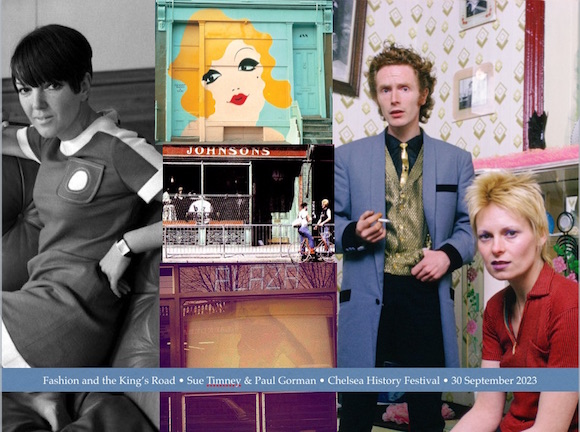
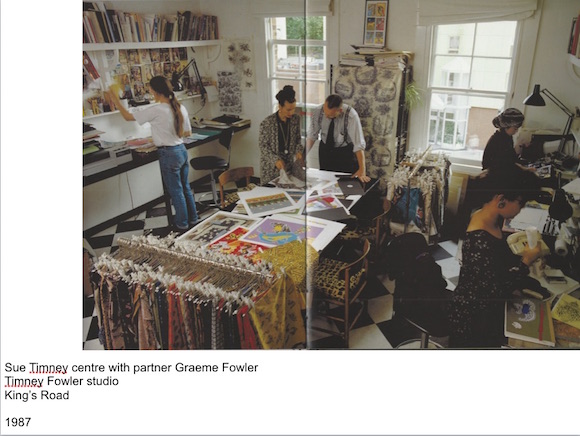
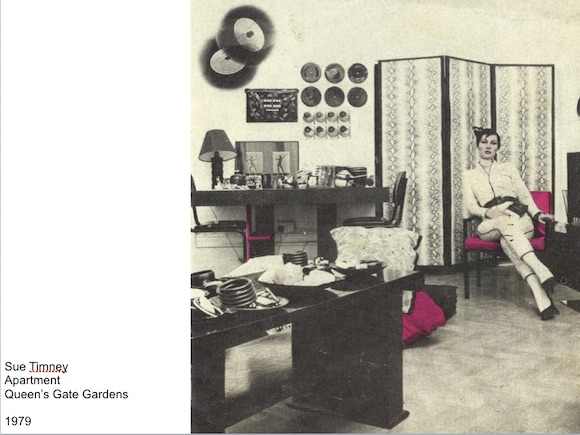
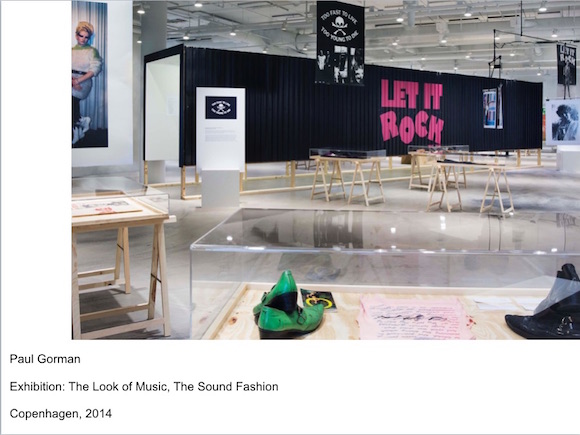
Tomorrow I’ll be talking to interiors, homewares and textile designer Sue Timney about the fashion legacy of the King’s Road, the two-and-a-half mile thoroughfare in west London’s Chelsea where the late Mary Quant kicked off the boutique boom by opening her clothes shop Bazaar at 135a in 1955.
The new interiors magazine TON – the first issue is out now – has two pieces by me on very different but equally extraordinary homes.
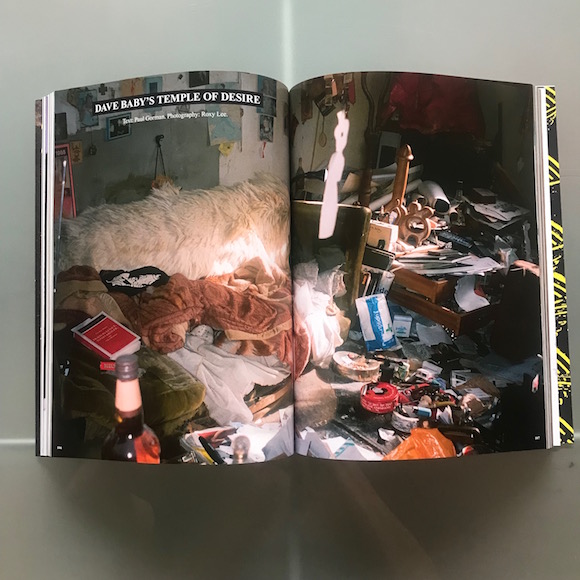
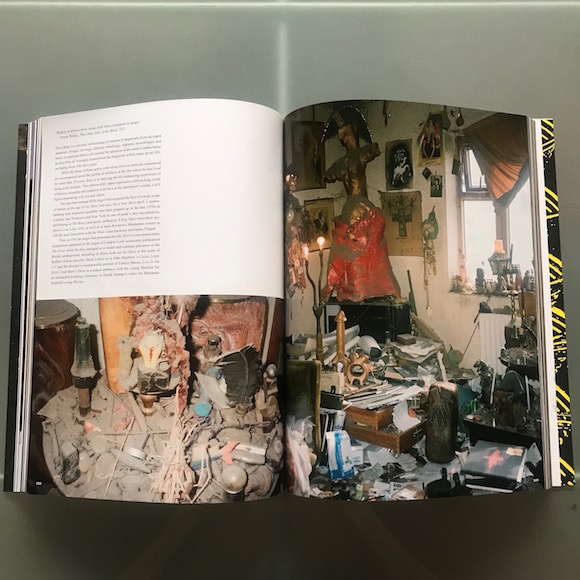
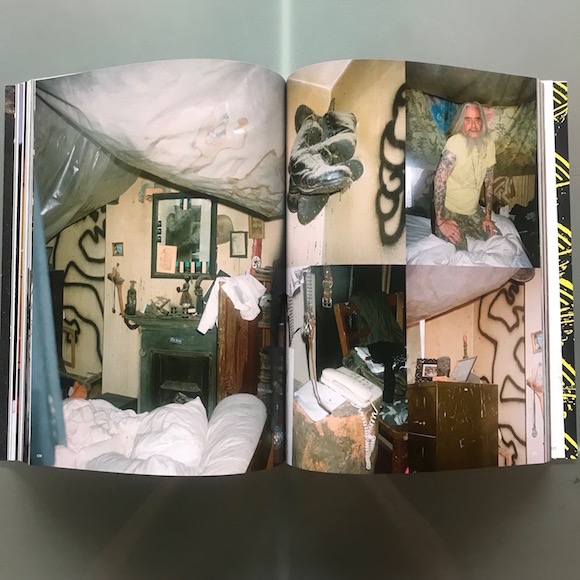
TON’s founder and editor-in-chief Jermaine Gallacher – who works with art director Rory Gleeson and editorial director Ted Stansfield – commissioned me to write about Dave Baby’s apartment close to where we both live, in south London’s Stockwell.
As I write, ‘this otherworldly space represents a bewitching realm of desires, sexuality and esoterica with Dave at the maelstrom’s centre, a still figure dispensing wily wit and charm’.
I’m looking forward to appearing at Pop Up, the subcultures festival being held in the Gloucestershire town of Stroud next month.
I’ll be comparing and contrasting the work of Barney Bubbles with that of his rivals Hipgnosis in the 70s and 80s with Mark Blake, author of the new book about the British music design studio and Pop Up organiser and writer Ben Wardle.
//Front Cover, Peter Gabriel, Charisma Records, 1977. Design: Hipgnosis//
//George Hardie’s design for card announcing the opening of Universal Witness at 167 Fulham Road on November 17 1970//
Here’s another treasure from the trove of Design magazines given to me by the designer Paul Walters; the invitation for the opening of Paul Reeves’ west London boutique Universal Witness in November 1970.
//Interior of the first Fiorucci boutique, Galleria Passerella, Milan, 1972//
I am extremely grateful to artist and designer Paul Walters for his gift of dozens of issues of Design magazine dating to the dawn of the 1970s.
These are being catalogued and added to the collection I already have of the title; some were donated by Paul’s fellow artist and designer Steve Thomas a few years ago.
Design was founded in the mid-60s by the Design Council precursor the Council of Industrial Design, and back issues are a goldmine of visuals and text about most aspects of the design world, from interiors, posters and packaging to product innovation, architecture and popular culture.
//The report on the store opening in Design, December 1972//
I’m going to post a selection of stories that have caught my eye over the coming months, starting with the image at the top of the post: a rarely seen view inside Elio Fiorucci’s first boutique, which he opened in Milan’s Galleria Passerella in late 1972.
Fiorucci was much inspired, to put it politely, by Trevor Myles and Tommy Roberts’ pop-art fashion outlet Mr Freedom – which had gone out of business in the spring of 1972 – and commissioned artist Stan Peskett, who had produced murals for Roberts, to create a space which engaged customers with a similar energy: the yellow and red colour scheme was extended to the exposed piping and venting with insignia of sunrays emanating from fluffy clouds hovering over the clothing racks. Stan, who I interviewed a couple of years ago for my Malcolm McLaren biography, has described his interior for Fiorucci as ‘an installation’.
//Advert in Design, December 1972////Spread from fashion shoot featuring Mr Freedom designs, Nova October 1971//
Coincidentally, an ad in the same issue of Design featured an image of a model in Mr Freedom clothes which had appeared in Nova magazine the previous year. The advert was for the architecture and interiors publication Abitare, which continues to this day – see here.
The all-new Barney Bubbles website has been launched as part of the celebration to mark what would have been the graphic genius’s 80th birthday this year.
//Subscribe exhibition ident////Artist and filmmaker Steve McQueen (right) featured in The Uniform Backlash, The i-D Bible Part 2, 1989. Photography Daniel Kohlbacher, styling Simon Foxton. Paul Gorman Archive//
Beginning in the early 1970s—as under-represented groups were demanding new forms of visibility following the emergence of political movements such as Black Power and the Stonewall Rebellion—a handful of British and American photo-driven alternative magazines came on the scene.
The Face, i-D, Rags, Out/Look, and other new publications amplified marginalized voices, especially those of queer makers and makers of colour, and made room for those makers to question who and what was accepted as mainstream. These publications introduced a hybrid model within the magazine industry: combining the high production standards and engagement with fashion of “powerhouse” publications such as Vogue and Life with the use of collage in zines and the text/image provocations of underground newspapers. In the end, these alternative magazines transformed their industry.
From the introduction to Subscribe.
Two years ago, just as the enormity of the pandemic was emerging, I met American curators Solveig Nelson and Michal Raz-Russo in London to discuss making a contribution to an exhibition at the Art Institute of Chicago about the significance of alternative magazines to Western culture.