Kommando Otl Aicher is Alexander Negrelli’s study of the 1972 Olympic Games through the prism of corporate and terrorist visual identities.
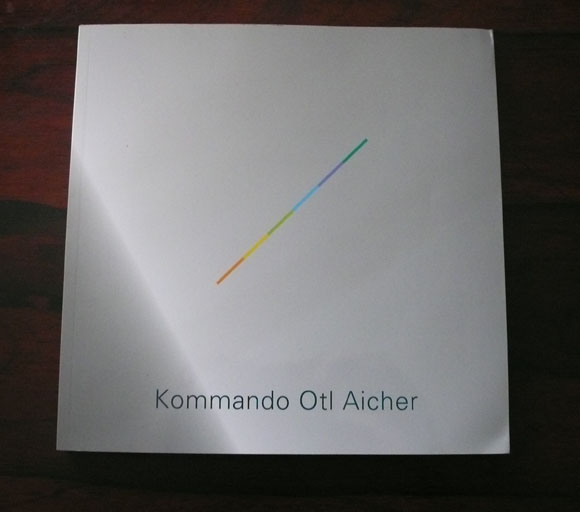

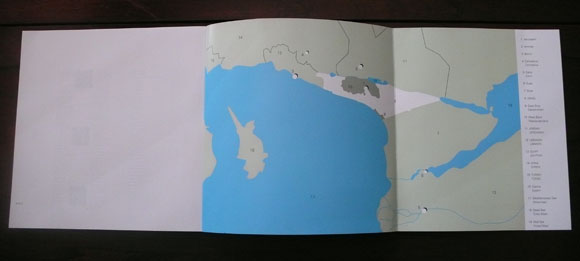
Continue reading Kommando Otl Aicher: Discover the dark side of the Olympics
Kommando Otl Aicher is Alexander Negrelli’s study of the 1972 Olympic Games through the prism of corporate and terrorist visual identities.
Continue reading Kommando Otl Aicher: Discover the dark side of the Olympics


Artist Derek Boshier’s practice is marked by his engagement with contemporary culture; this has been a consistent aspect of his work since the earliest days of the British Pop movement.
When popular music has invigorated the wider world, Boshier has been present, incorporating Buddy Holly into his painting I Wonder What My Heroes Think Of The Space Race? in Ken Russell’s defining 1962 Monitor piece Pop Goes The Easel, and providing one of the most vivid visual documents of the punk and post-punk era, Clash 2nd Songbook.
Continue reading Derek Boshier: David Bowie + The Clash at Pallant House this summer

British Design From 1948: Innovation In The Modern Age – the new book accompanying the forthcoming show at the V+A – is a bumper edition: 400 pages weighing in at 5lbs.
It’s cheering to see Barney Bubbles’ design Ian Dury With Love granted upfront prominence; the poster is in select company given special treatment by the book’s designer, Barnbrook’s Daniel Streat. The others are: Cecil Beaton’s 1953 coronation portrait of The Queen, a shot of Damien Hirst’s Notting Hill restaurant Pharmacy and Brian Duffy’s Aladdin Sane portrait of David Bowie.

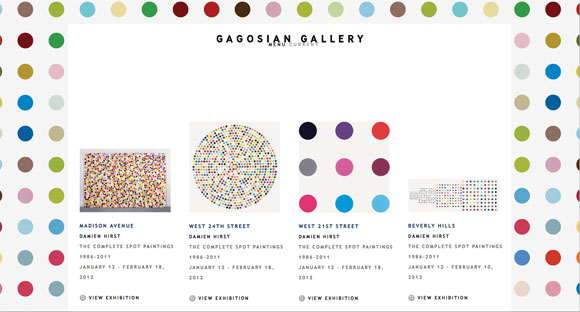
Sculptor John Frankland is a near-contemporary of Damien Hirst’s; both studied at Goldsmith’s in the 80s and their work has been included in the same group shows and prominent collections.
I asked John for his take on the grand Gagogo gesture of The Complete Spot Paintings, the exhibition which has “taken over the planet” (according to some press reports) by showing 1500 examples of one of the artist’s signature works across the 11 Gagosian galleries.
John visited the London shows, in Britannia Street and Davies Street.
Continue reading John Frankland on Damien Hirst – The Complete Spot Paintings 1986-2011


The new issue of The Word magazine includes a photo-spread on the exhibition Lloyd Johnson: The Modern Outfitter.

Earlier this month I gave a talk to foundation year art and design students at Saint Martin’s as part of a brief to deliver work based on their personal opinions and beliefs.
The subject was the 1974 t-shirt You’re Gonna Wake Up One Of These Days And Know Which Side Of The Bed You’ve Been Lying On!.

Sixty years after Blast, the You’re Gonna Wake Up t-shirt adopted the same truculent tone and diffuse dialectic to ring the alarms amid a culture rendered flaccid by the failure of the 60s dream.
You’re Gonna Wake Up – which went on sale in SEX in the late autumn of 1974 – was conceived by Bernie Rhodes and realised with contributions from friends Malcolm McLaren (who wrote the slogan) and Gerry Goldstein.
Of course, it is best known for carrying the following band name: “Kutie Jones and his SEX PISTOLS”.
I investigated its history in THE LOOK and also here. By publishing the list with links today I aim to dive deeper to demonstrate the tract’s range beyond popular culture.
Hence the references to artists David Holmes, Mel Ramos and Patrick Heron (and his campaign against The Tate), the literature of Alfred Bester, David Cooper, George Dangerfield, Konstantin Paustovsky and Bernard Wolfe, the work of radical journalists Alexander Cockburn and Mervin Jones and the campaigning of political activists Pat Arrowsmith and Marian and Doloures Price.
Such content dates the compilation to October 1974: The Guardian published Heron’s 14,000-word Tate critique over consecutive days between the 12th and 14th of that month; the shirt itself mentions a piece by Jones in the New Statesman on October 4 and also an Elton John interview in the NME on September 25 (in fact the issue was dated September 28).
Alongside the call-girl phone number taken from local newsagents there are such quizzical references as that for former Playboy Club UK head Victor Lownes: “To be avoided first thing in the morning”.
Is this because one of the contributors had encountered him leaving his club Stocks, just a few hundred yards from SEX along the King’s Road?