/Left: Andrew Greaves of Electric Colour Company in the back of Paradise Garage, May 1971. Right: Vivienne Westwood in the back of Let It Rock, January 1972. Photos: David Parkinson//
Preparation for my paper at Ben Kelly’s interior design symposium Dead Or Alive has coincided with the refurbishment of the Worlds End shop at 430 King’s Road in Chelsea.
The address is the subject of my talk; I’ll be detailing the history of 430 and how and why it was an important social and cultural locus over a number of decades.
//Back wall of 430 King’s Road on the opening of Mr Freedom, September 1969. Interior: Electric Colour Company. Photo: David Parkinson//
//A US vintage company is unwittingly featuring this forgery as an original t-shirt from Seditionaries on its Instagram feed. The unpleasant item is an example of the accelerating trade in McLaren/Westwood fakes, where previously non-existent designs – often with repellent overtones – are touted as ultra-rare one-offs//
//Banal content: More examples of previously non-existent designs marketed as McLaren/Westwood originals – complete with Seditionaries-style labels – from a Chinese retailer’s site last year. Note the design at bottom left has a fake label whereas the one at the top of this post does not//
//Above: A selection of more of the crude new designs touted as original garments on Japanese auction site Seditionaries Shop, which claimed more than 300 sales at prices averaging £150//
Since Malcolm McLaren’s death nearly five years ago there has been a palpable rise in the plundering of the designs – in particular the graphics produced for t-shirts – he created with Vivienne Westwood in the 1970s.
//Roxy, 25 Kensington Church Street, 1972. Photo: Masayoshi Sukita////Inside Roxy, 1972: Shelley Martin in a flamenco dress designed by Dinah Adams. Photo: Masayoshi Sukita////Some of the Roxy crowd photographed around the corner from the shop (from left): The late Granny’s co-owner Marty Breslau, whose ensemble includes a Wonder Workshop top; Louise Doktor; Shelley Martin; John Knight. Photo: Masayoshi Sukita//
I’ve been aware of the existence of the Kensington boutique Roxy for some time, particularly since the store name was used as the title of the feature on London street fashion in a 1972 edition of Japanese magazine An An.
But my curiosity was pricked recently while browsing that same issue of An An which appears in Freddie Hornik’s scrapbook (see last post).
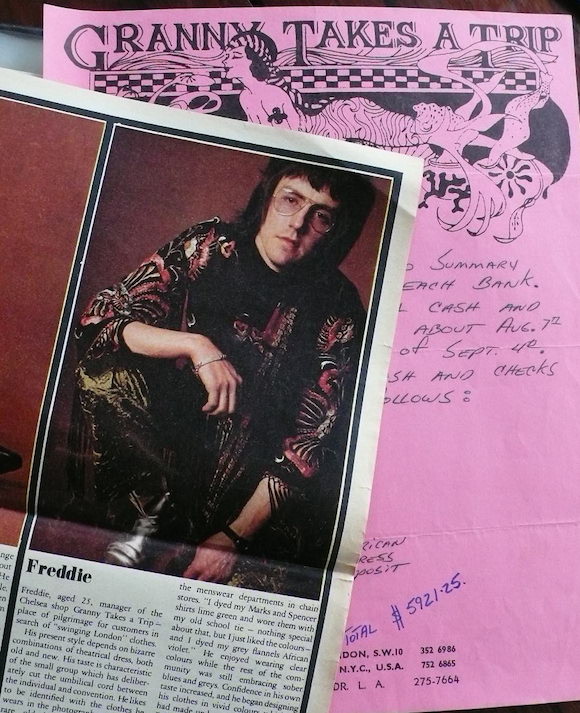
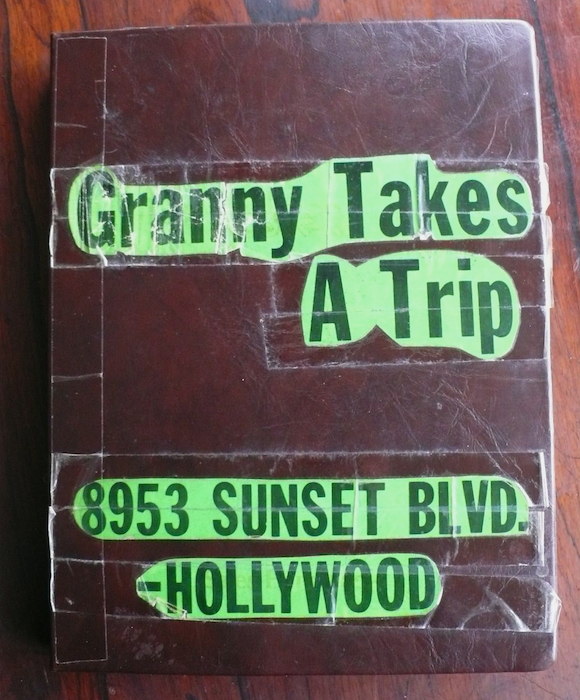
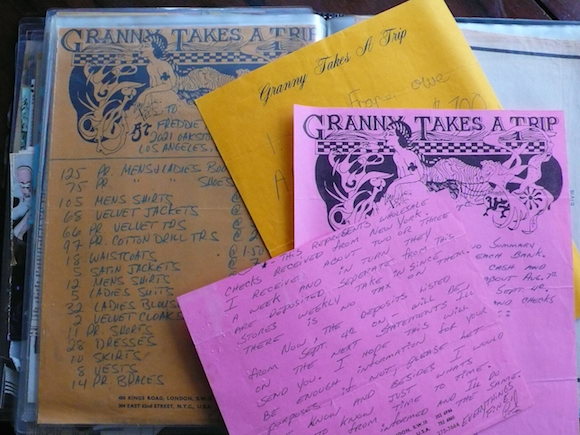
//Hornik featured in the Telegraph magazine in 1969 and GTAT paperwork dating from 1972. The livery was taken from a design by Granny’s founder Nigel Waymouth////Hornik maintained his scrapbook from the 60s to his death in 2009//
I have just filed a piece for GQ about Granny Takes A Trip and the branches of the King’s Road boutique which opened in the 70s in Manhattan and Hollywood under the stewardship of the late Freddie Hornik.
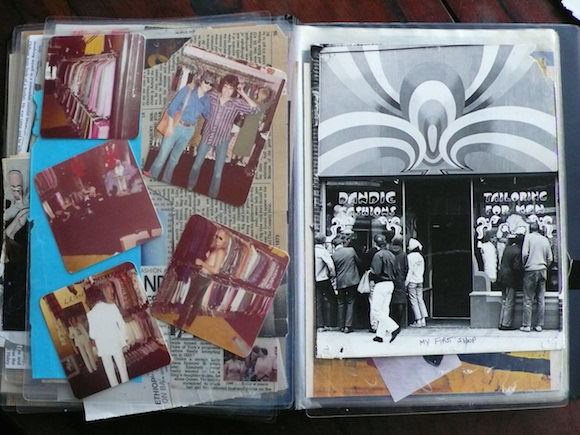
The feature also scrutinises the scrapbook Hornik maintained from the mid-60s, when he worked at the rival Dandie Fashions at 161 King’s Road, through his acquisition of Granny’s at 488 King’s Road in 1969 from founders Sheila Cohen, John Pearse and Nigel Waymouth.
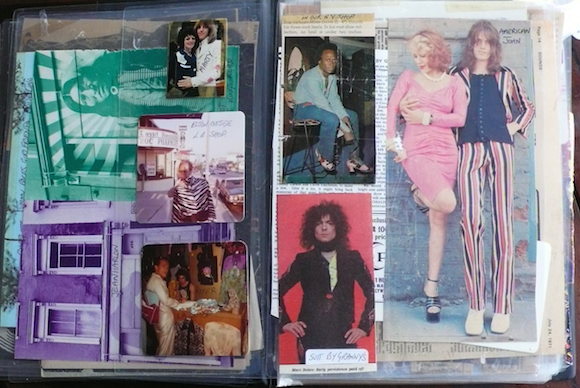
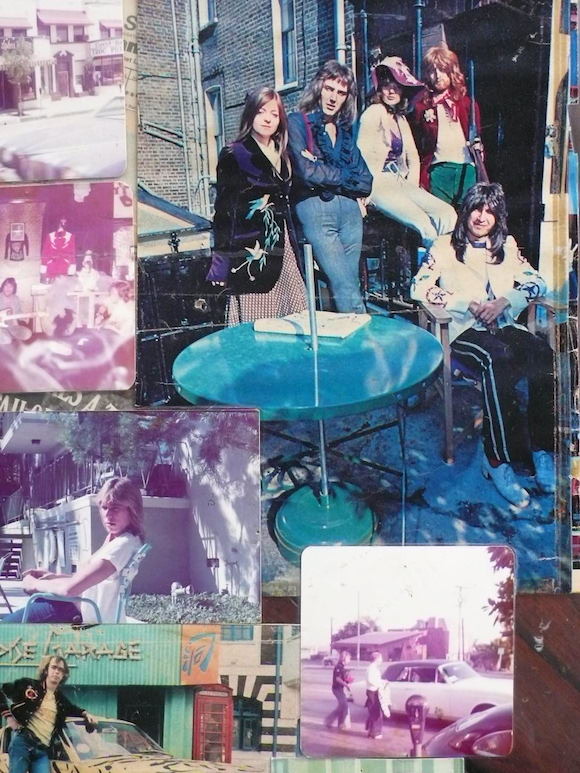
It charts in snapshots, magazine clippings, company paperwork and notes Hornik’s ambitious expansion plan which resulted in partners being brought on board at the Chelsea shop – in the form of co-owners Marty Breslau and Gene Krell – and for the launch of the New York outlet at 304 E.62nd Street, which was owned by John LiDonni and Richie Onigbene.
This strategy proved successful, and was capped by Hornik’s launch with Jenny Dugan-Chapman of an LA branch, first on Doheny in Beverly Hills and then on Sunset Strip.
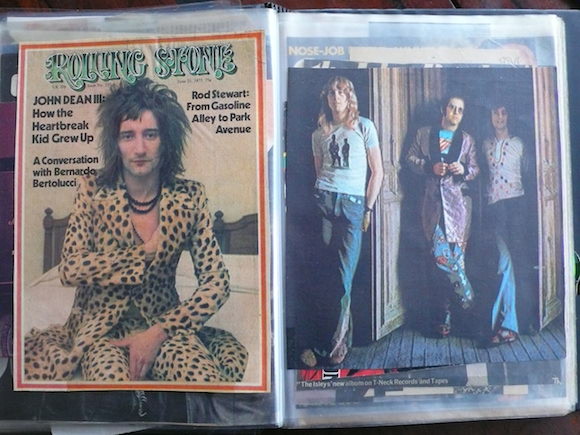
By this time the Granny’s international operation had hit the moment when rock turned to glam. Existing customers such as Paul McCartney, John Lennon, Mick Jagger and Keith Richards were joined by the new raft of dandy peacock performers making the moves in the early-to-mid 70s, including Marc Bolan, Alice Cooper, Bryan Ferry, Elton John, Lou Reed, Todd Rundgren, Rod Stewart and Ronnie Wood.
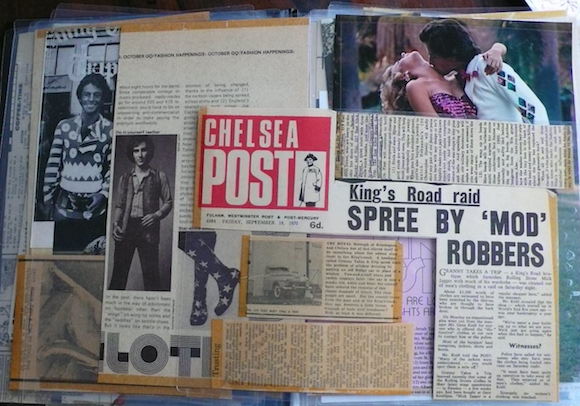
Hornik’s scrapbook – which was updated for him for a time by LA store manager Roger Klein – makes for a pop culture treasure trove, one which offers rare insights into this exciting era of rock and roll fashion.
Having returned to the UK to live a quiet life in the late 70s, it is poignant to note that Hornik, who died in 2009, kept an eagle eye out for any mention of his outlets and his associates, adding to the scrapbook as the revival of interest in the clothes and characters of the period really started to roll.
I’ll keep you informed as to when the piece is due to appear. Access to the scrapbook courtesy Alex Jarrett.
There’s a nice story behind this portrait of the late fashion designer Thea Porter, whose talents are celebrated at the just-opened exhibition at London’s Fashion & Textiles Museum.
These jaunty photographs were taken by Barry Plummer in the spring of 1979 for a Melody Maker interview with Malcolm McLaren about the just-released soundtrack for the Sex Pistols’ biopic The Great Rock N Roll Swindle (beset by financial and creative difficulties, the film wasn’t released for another year).
McLaren was accompanied by Vivienne Westwood; they made a striking pair in mixed and matched one-off and traditional pieces with a selection of clothing from their King’s Road shop Seditionaries. By now the transition away from punk – left behind when the Sex Pistols split a year earlier – was becoming evident.
//”This photograph was taken by Chris Morris in my bedroom at Commonwood Cottage in Downley village near High Wycombe in 1965 (when I swapped my mod life for university). I’m wearing an almost unwearably itchy John Stephen herringbone wool shirt. Apart from the Ricky Tick poster, I’d permanently pasted up two vintage London Transport posters I found in the attic. My old man wasn’t too pleased about that”. From http://johnpidgeon.com////Front cover of Pidgeon’s 1974 book//
I highly recommend John Pidgeon’s blog; Pidgeon is another of those unpindownable figures in the cultural landscape. His considerable talents have been expressed from music journalism and magazine publishing through roadie-ing for The Faces and composing songs with their recently departed and already much missed keyboard maestro Ian McLagan to commissioning stunning design work from Barney Bubbles and producing BBC documentaries and radio comedy (and in the process promoting the talents behind hit series such as Dead Ringers, Little Britain and The Mighty Boosh). Continue reading Highly recommended: The unpindownable John Pidgeon’s blog
//Left: Poster, 30 x 20″, one of a series of four, for Generation X residency at The Marque, Soho, London, September 1977. Right: Poster, 60 x 40″, one of a series of five for Stiff Records package tour of UK, October/November, 1977. Design (c) Barney Bubbles Estate//
//Installation view of Making Music Modern dominated by Bubbles’ Costello poster. Also note his Do It Yourself sleeve and Generation X poster. Photo: John Wronn//
New York’s Museum Of Modern Art is featuring seven works by the late graphics maestro Barney Bubbles in the current exhibition Making Music Modern: Design For The Eye & Ear.