
During a recent visit to his mother’s north London home, NY-based expat DJ, art/publishing player and blogger DB Burkeman took the opportunity to recover some of the ephemera of his youth, including the items you see here.

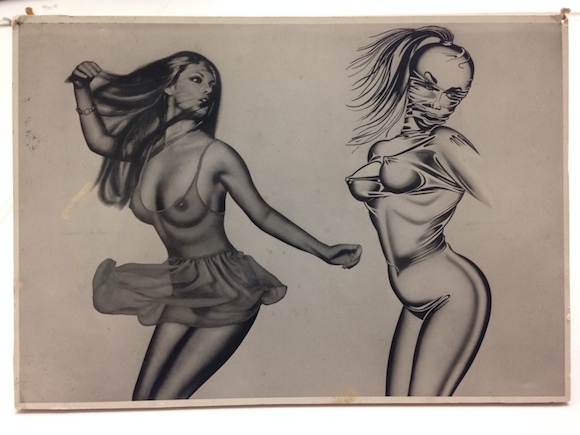
During a recent visit to his mother’s north London home, NY-based expat DJ, art/publishing player and blogger DB Burkeman took the opportunity to recover some of the ephemera of his youth, including the items you see here.
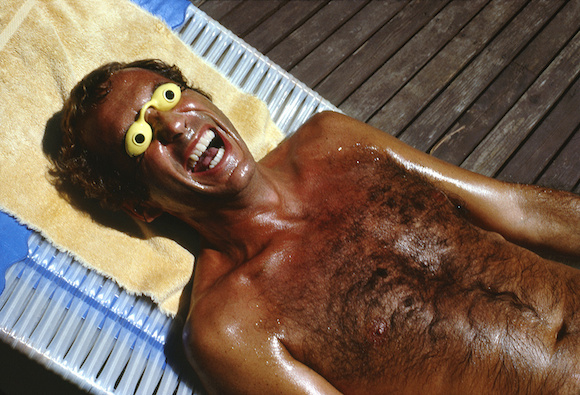
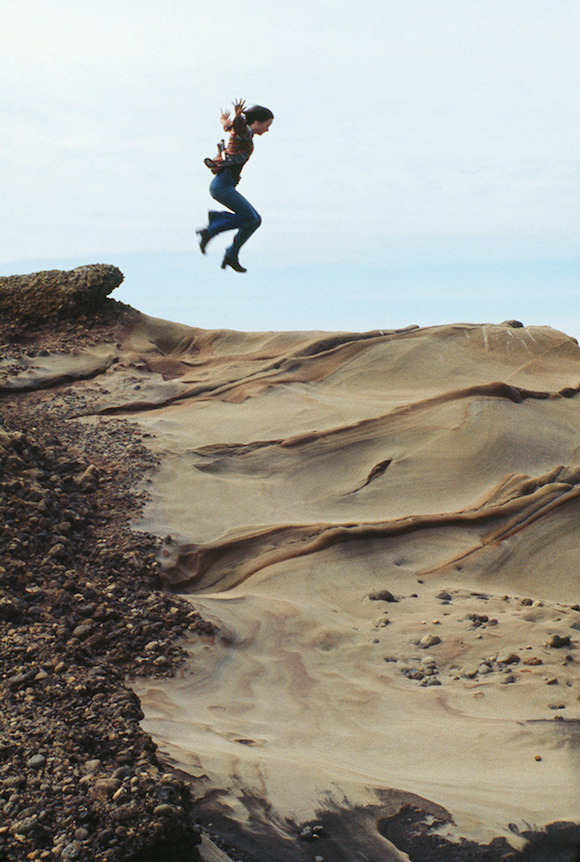
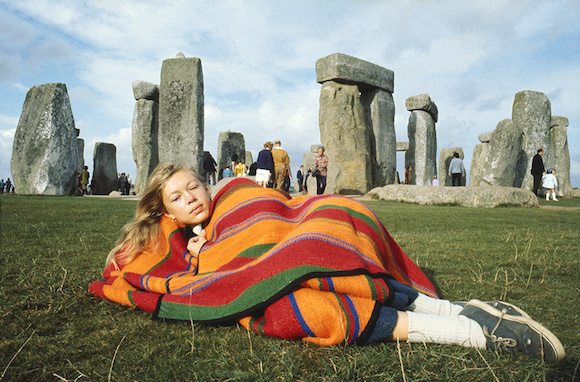
One of my favourite Instagram feeds is The Family Acid, run by Kate Steffens, daughter of reggae archivist, actor, anthologist, psychedelic pioneer and photographer Roger Steffens.
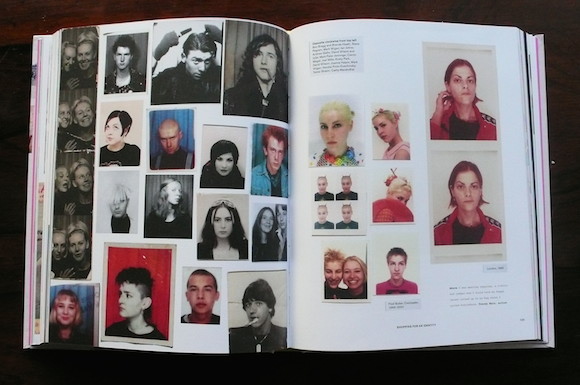
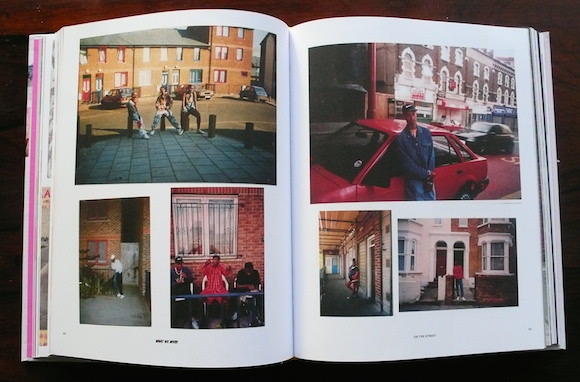
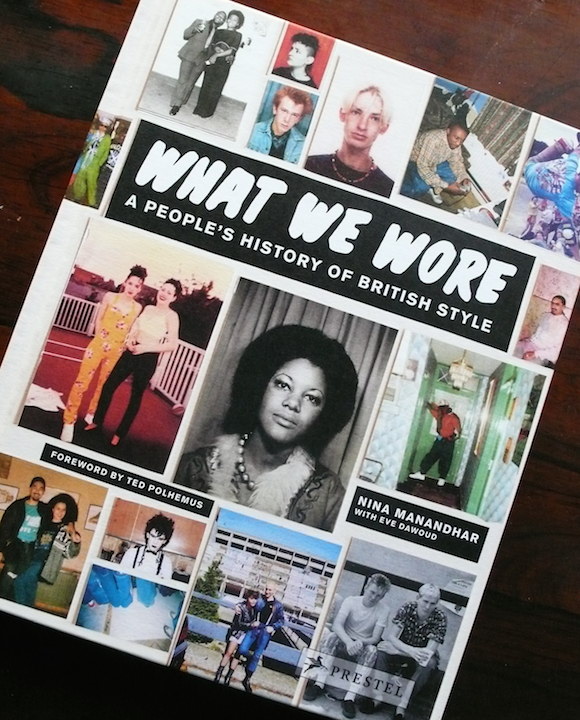
Into the over-worked field of ‘street style’ comes a breath of fresh air: What We Wore – A People’s History Of British Style.
Free of cliche and pretension, Nina Manandhar and Eva Dawoud’s book compiles the personal images and anecdotes of a hugely diverse set of contributors.
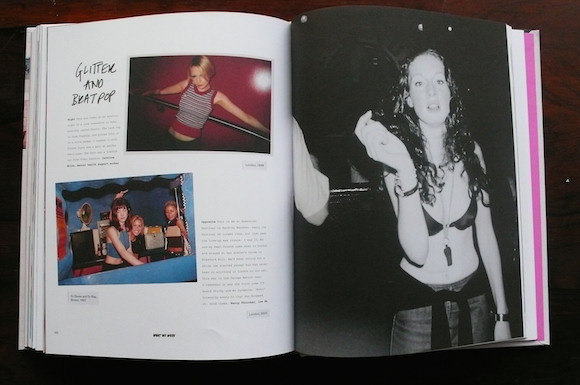
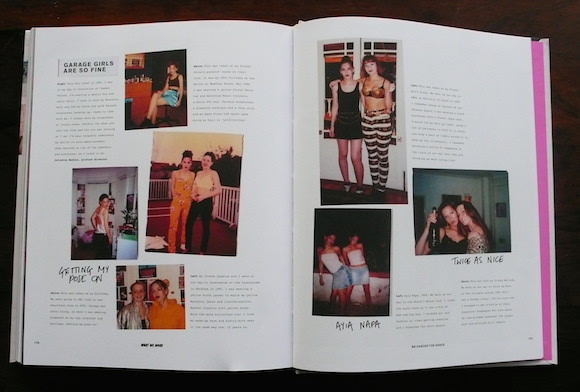
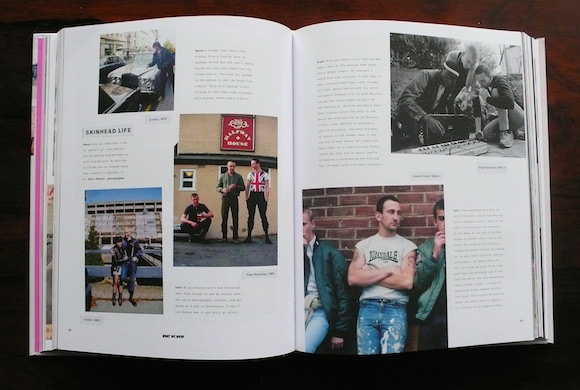
The book is not dominated by well-known people and the usual suspects who patronise this narrative (though I snuck in there) and so is true to the subtitle; What We Wore celebrates in a thoroughly egalitarian manner “the presentation of self” – Erving Goffman’s phrase as cited by Ted Polhemus in his excellent foreword.
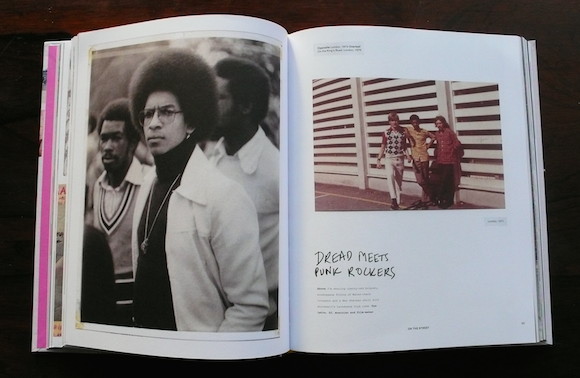
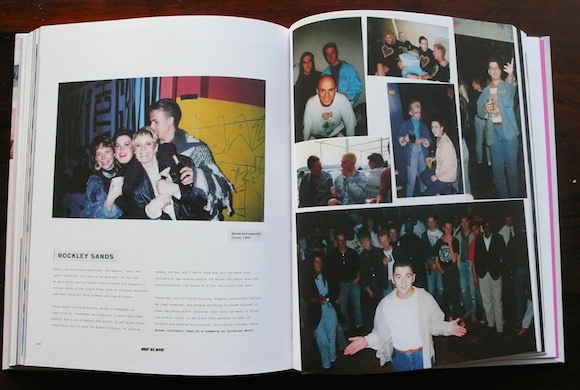
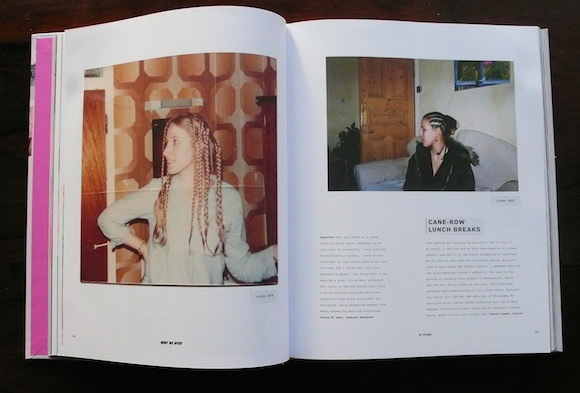
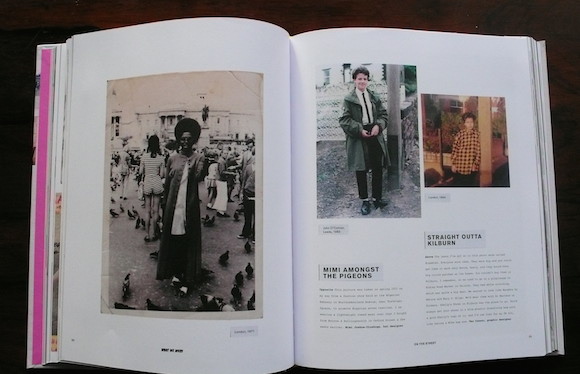
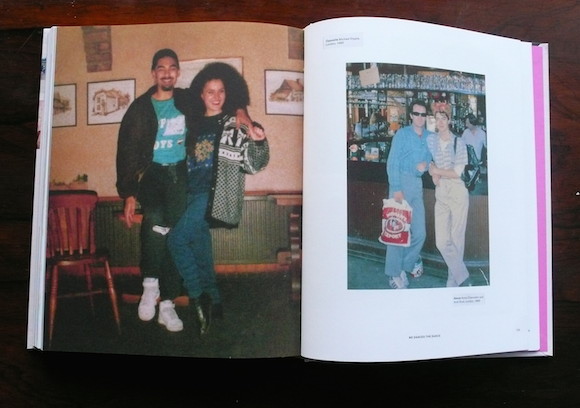
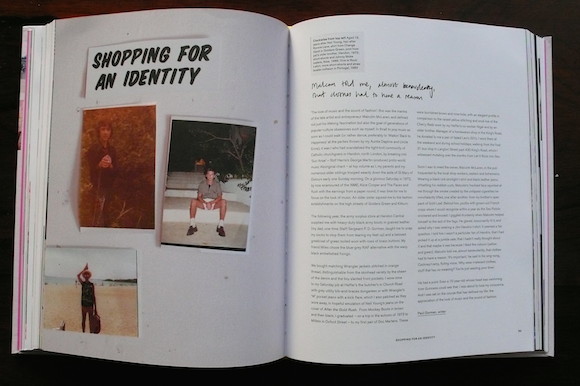
What We Wore is a fitting testament to our collective visual invention. I recommend it highly.
Buy What We Wore here.
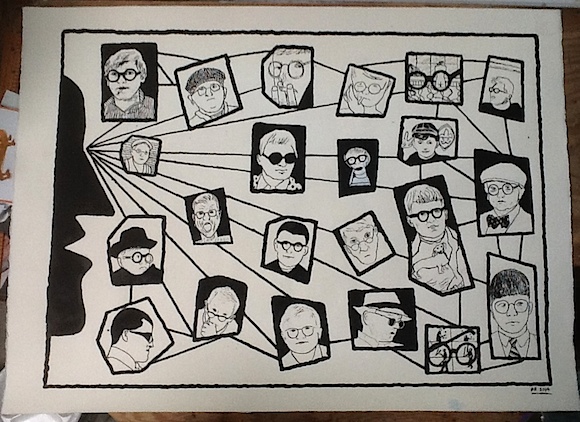
I’m delighted to announce that David Hockney has written the preface to Rethink/Re-Entry, the Derek Boshier monograph I am editing.
In the piece, Hockney points out that they have known each other since 1957, and that Boshier “like me, is an artist, and one who has never lost his wonder at the world”.

“I started out in art school as a painter. I studied there for eight years and most of my education was based around the visual arts. I learnt all my politics and understanding of the world through the history of art.”
Malcolm McLaren speaking on British arts documentary series the South Bank Show, 1983

Among the exhibits at Let It Rock, the Malcolm McLaren room at this autumn’s group exhibition Art In Pop at Magasin in Grenoble, are never-previously exhibited photographs of the late cultural iconoclast’s paintings taken by his teacher Barry Martin during McLaren’s student days in the 60s.
These are discussed in this extract from the exhibition introduction:
In the summer of 1969, at the end of his first year of the fine art course at London’s Goldsmith’s School Of Art, the 23-year-old student Malcolm Edwards showed 10 or so gestural paintings, mainly oils on canvas with some integrating text statements and others used as the basis for mixed media experimentation incorporating chicken wire, hammered wood planks and, in one case, an inverted paper envelope against depictions of leaf forms.

During a 90-minute critical review by his teacher Barry Martin, Edwards (soon to revert to his birth-name of McLaren) declared his rejection of the limitations imposed by traditional art forms, in particular painting.
McLaren subsequently destroyed all but one of the works. In a symbolic statement the exception, the largest canvas – the 7ft tall Map Of British Isles With Yellow Star And Hole, into which he had already kicked a sizeable hole – was left to rot in the summer rain in the yard at the back of the college. Eventually it was torn apart and taken away by the dustbin-men.

McLaren dedicated his remaining two years at Goldsmith’s to organization of events and film-making, one about his hero, the early British rock’n’roller Billy Fury merged into an unfinished commentary on consumerism centred on the history of London’s main commercial thoroughfare, Oxford Street.
In doing so McLaren was inserting himself into the lineage back to Duchamp which included such figures as the Dutch Situationist Asgar Jorn, who had proclaimed “Painting is dead” in 1958, and in particular Andy Warhol, who explained his sponsorship of The Velvet Underground in 1967 by saying: “Since I don’t really believe in painting anymore we have a chance to combine music and art.”

McLaren later described his decision to open the boutique Let It Rock in London’s King’s Road on exiting the art school system in 1971 as “jumping into the musical end of painting”; here McLaren blazed the trail dictated by his formidable art education by creating new artworks as fashion pieces out of the juxtaposition of found objects.


Thanks to Barry Martin for his insights and assistance in putting together the Malcolm McLaren segment of Art In Pop. Martin continues to practice as an artist and sculptor; this is his website.
Art In Pop, which opens on Saturday, is curated by Magasin’s Yves Aupetitallot with John Armleder, Young Kim of the Malcolm McLaren Estate, John Miller and I. The exhibition runs until January 4, 2015 at Le Magasin, Site Bouchayer-Viallet, 8 Esplanade Andry Farcy, 38028 Grenoble.
Details here.


‘Black is the most exciting colour’ (Goya). Black when used in different ways appears the most infinite and mysterious, the most spatial and loose.
Malcolm McLaren, essay for course at Croydon Art School, 1967
It’s exciting. Work is underway on building the Art In Pop group exhibition which opens next month at Le Magasin, France’s National Centre for Contemporary Art in Grenoble.


Featuring artworks by musicians such as Don Van Vliet and Daniel Johnstone as well as musical ventures by artists including John Armleder and John Miller, Art In Pop incorporates the sizeable space dedicated to Let It Rock, the show exploring the work of the late Malcolm McLaren.
This will focus on McLaren’s investigations into the visual arts from the 60s to his death in 2010 along with the engagements with commercial media such as fashion, film and music for which he is best known.
In line with Let It Rock’s manifestation at the Copenhagen International Fashion Fair this summer, the pink-on-black Let It Rock sign will be recreated, this time at the entrance to the Malcolm McLaren room.
For Art In Pop the sign is being matched by a giant reproduction of the shop logo which followed Let It Rock at 430 King’s Road: Too Fast To Live Too Young To Die.
The dominant use of black behind these logos riffs on McLaren’s repeated use of the colour in his work and should make for an impactful introduction to the show, which will feature hundreds of exhibits from throughout the cultural iconoclast’s artistic life.

Art In Pop – which is curated by Magasin’s Yves Aupetitallot with John Armleder, Young Kim of the Malcolm McLaren Estate, John Miller and I – runs from Oct 11 to January 4, 2015 at Le Magasin, 8 esplanade Andry Farcy, 38028 Grenoble.
More info here.

Pete Flanagan, owner of the long-gone Zippo Records in Clapham, south London, has sent me this photograph of the shop interior.

It sums up everything that was wonderful about this unique space, where Pete established a hub for like-minded souls. With staff including Edwin Pouncey (aka Savage Pencil), Pete also released otherwise hard-to-find records via his own independent imprints. These included Heartland, 5 Hours Back and MoFoCo for Julian Cope’s towering LP Droolian.


I bought a lot of music and also an example of every one of the short-run t-shirts Zippo sold, including my favourite, this MC5 number (other owners, and there can’t be many because they were printed in very limited numbers, include Bobby Gillespie).

As a local I was a Zippo regular with our Battersea hound Tom. Pete christened him “The Conqueroo Dog” after the four-legged friend on the cover of his reissue of the Austin band’s 1968 release From The Vulcan Gas Company.

When Zippo closed I bought a whole load of stock and had a few happy years trading in vinyl as a sideline, until my back gave out.
Pete’s still at it, running Soho Music which is now on eBay – see here.
I bumped into Edwin P a couple of years back; he was in the company of another great person who was also a former Zippo staffer. Can’t for the life of me recall his name but hopefully he’ll see this and get in touch.
See what Savage Pencil is up to here.


Looking forward to Not Black And White, a retrospective exhibition of work by British conceptual photographic artist John Hilliard which opens tonight at London’s Richard Saltoun Gallery.
Continue reading John Hilliard: Not Black And White at Richard Saltoun Gallery
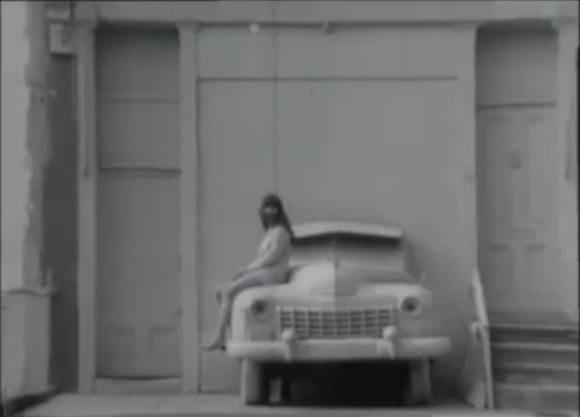
Diana Crawshaw – who designed for such boutiques as Mr Freedom and Paradise Garage – has contacted me about an appearance she made in an early pop promo clip: Piers Bedford’s short for the 1968 single Long Haired Boy by American singer-songwriter Tim Rose.
Continue reading Promo curio: Diana Crawshaw and the Granny Takes A Trip Dodge in Tim Rose clip

John Beck and Matthew Cornford’s intelligent and measured book The Art School And The Culture Shed may be a slim volume but it packs a hell of a punch in locating the ravages wreaked on our cultural life over the past 20 years by privatisation, the failings of local councils and town planners and the depredations of property developers.
