//Detail from 1965 showcard: Derek Boshier and 1965 works. Photo: Annette Green////Card for Boshier’s show at the Fraser Gallery, March 30 – May 1, 1965. Design: David Cripps. Courtesy: Pace London//
Thanks to Pace London for providing scans of the showcard for Derek Boshier’s spring 1965 exhibition at Robert Fraser Gallery in Mayfair’s Duke Street.
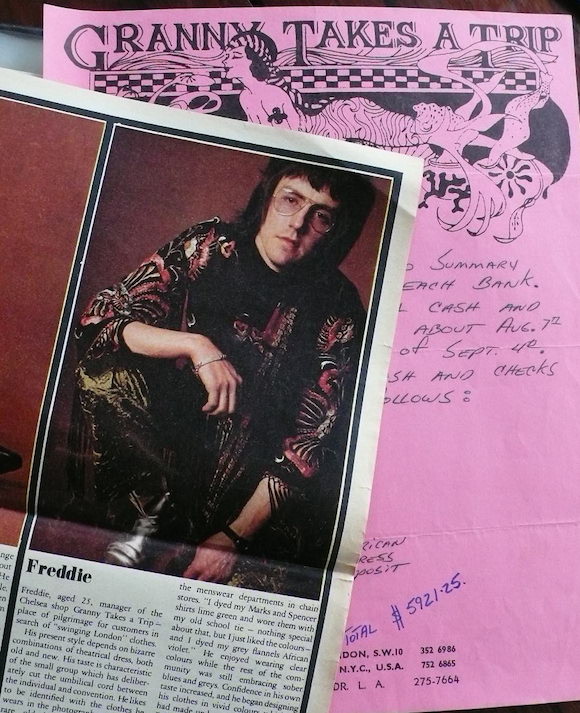
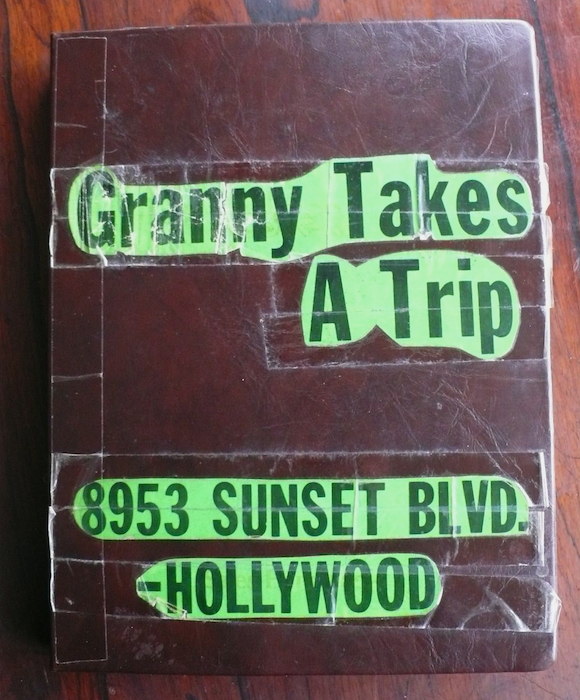
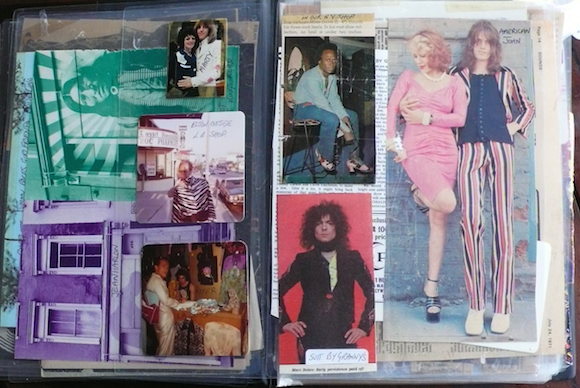
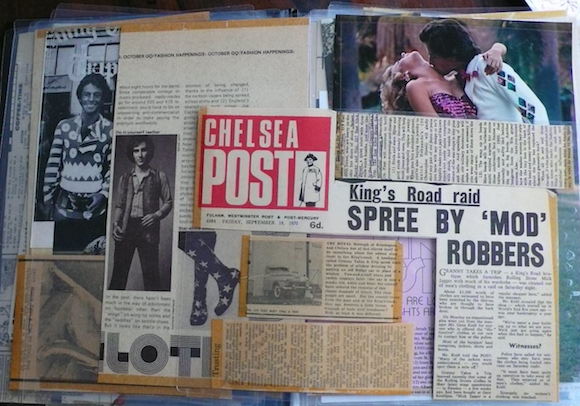
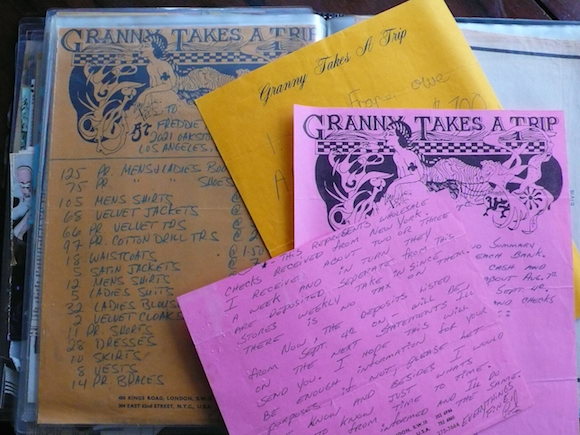
//Hornik featured in the Telegraph magazine in 1969 and GTAT paperwork dating from 1972. The livery was taken from a design by Granny’s founder Nigel Waymouth////Hornik maintained his scrapbook from the 60s to his death in 2009//
I have just filed a piece for GQ about Granny Takes A Trip and the branches of the King’s Road boutique which opened in the 70s in Manhattan and Hollywood under the stewardship of the late Freddie Hornik.
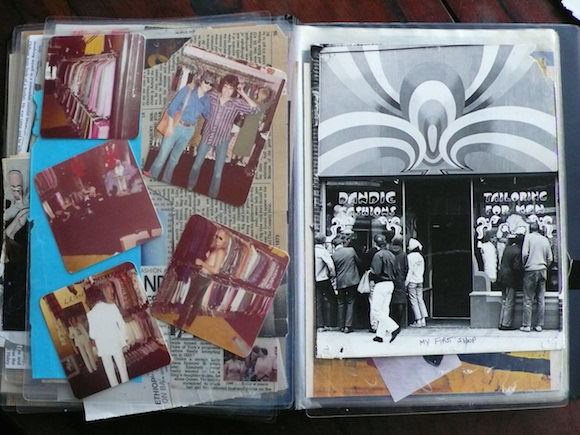
The feature also scrutinises the scrapbook Hornik maintained from the mid-60s, when he worked at the rival Dandie Fashions at 161 King’s Road, through his acquisition of Granny’s at 488 King’s Road in 1969 from founders Sheila Cohen, John Pearse and Nigel Waymouth.
It charts in snapshots, magazine clippings, company paperwork and notes Hornik’s ambitious expansion plan which resulted in partners being brought on board at the Chelsea shop – in the form of co-owners Marty Breslau and Gene Krell – and for the launch of the New York outlet at 304 E.62nd Street, which was owned by John LiDonni and Richie Onigbene.
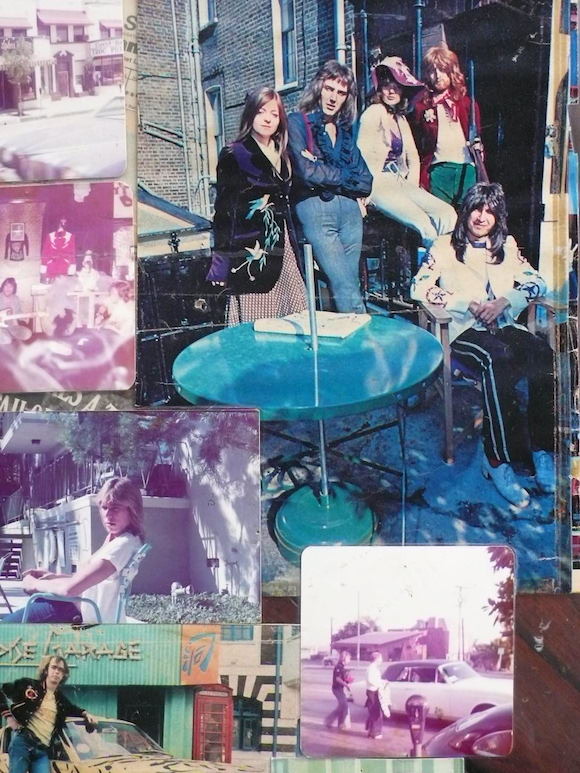
This strategy proved successful, and was capped by Hornik’s launch with Jenny Dugan-Chapman of an LA branch, first on Doheny in Beverly Hills and then on Sunset Strip.
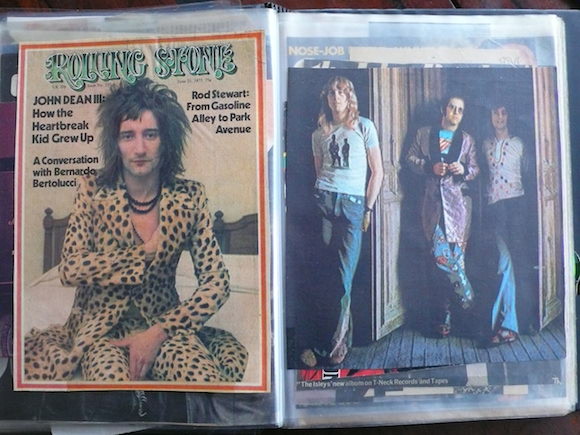
By this time the Granny’s international operation had hit the moment when rock turned to glam. Existing customers such as Paul McCartney, John Lennon, Mick Jagger and Keith Richards were joined by the new raft of dandy peacock performers making the moves in the early-to-mid 70s, including Marc Bolan, Alice Cooper, Bryan Ferry, Elton John, Lou Reed, Todd Rundgren, Rod Stewart and Ronnie Wood.
Hornik’s scrapbook – which was updated for him for a time by LA store manager Roger Klein – makes for a pop culture treasure trove, one which offers rare insights into this exciting era of rock and roll fashion.
Having returned to the UK to live a quiet life in the late 70s, it is poignant to note that Hornik, who died in 2009, kept an eagle eye out for any mention of his outlets and his associates, adding to the scrapbook as the revival of interest in the clothes and characters of the period really started to roll.
I’ll keep you informed as to when the piece is due to appear. Access to the scrapbook courtesy Alex Jarrett.
//Sam Spade, Derek Boshier, 1966, on the back wall of this recreation of the office at Robert Fraser Gallery, Duke Street, London W1//
Derek Boshier’s 1966 work Sam Spade is given prominence in A Strong Sweet Smell Of Incense, the exhibition dedicated to the connoisseurship of the late art dealer Robert Fraser.
Boshier was a client until he foreswore painting for a decade or more in 1968. This was a particularly difficult period for Fraser, who was jailed over the infamous Redlands drug bust at Rolling Stone Keith Richards’ house the previous year.
//From Pace’s exhibition guide. The work in the background looks to be another of Boshier’s from the Sam Spade period//
Boshier has recounted how he became so frustrated over Fraser’s unwillingness to pass on payments in the 60s that he and his friend, the poet Christopher Logue, once broke into the Duke Street gallery and retrieved works Fraser had refused to release in lieu.
//”This photograph was taken by Chris Morris in my bedroom at Commonwood Cottage in Downley village near High Wycombe in 1965 (when I swapped my mod life for university). I’m wearing an almost unwearably itchy John Stephen herringbone wool shirt. Apart from the Ricky Tick poster, I’d permanently pasted up two vintage London Transport posters I found in the attic. My old man wasn’t too pleased about that”. From http://johnpidgeon.com////Front cover of Pidgeon’s 1974 book//
I highly recommend John Pidgeon’s blog; Pidgeon is another of those unpindownable figures in the cultural landscape. His considerable talents have been expressed from music journalism and magazine publishing through roadie-ing for The Faces and composing songs with their recently departed and already much missed keyboard maestro Ian McLagan to commissioning stunning design work from Barney Bubbles and producing BBC documentaries and radio comedy (and in the process promoting the talents behind hit series such as Dead Ringers, Little Britain and The Mighty Boosh). Continue reading Highly recommended: The unpindownable John Pidgeon’s blog
John “Hoppy” Hopkins – who died yesterday aged 77 – was the photographer and activist best known for his associations with London’s counterculture of the 1960s and 70s, having been a founder of the radical London Free School which in turn led to the Notting Hill Carnival, a contributor to the pacifist paper Peace News, and a pivotal figure in the establishment of both the underground paper International Times and the psychedelic club UFO.
Hopkins was also a leading light of the squatting movement and a brave proselytiser for cannabis usage; electing for trial by jury for possession he was labelled “a pest to society” by the judge and sentenced to nine months in jail.
According to his friend Jeff Dexter, Hopkins’ favourites among his own photographs were of London rockers, those Ton-Up habitues of the North Circular’s Ace Cafe and Paddington’s 59 Club whose outsider cool and tribal clanship he documented with acuity.
//Portfolio shot of the newly completed Seditionaries, 430 King’s Road, London SW10, December 1976. (c) Ben Kelly//
Interior Design: Dead Or Alive is the title of the symposium being organised by the prominent British designer Ben Kelly at London’s Institute Of Contemporary Arts on March 14.
I am a contributing speaker alongside writer/curator Michael Bracewell, designers Fred Deakin, Ed Barber & Jay Osgerby and Peter Saville, artists Lucy McKenzie and Bridget Smith and David Toop of the London College Of Communications and Tate Britain’s Andrew Wilson.
“We’re going to be taking stock of the ways in which iconic interiors affect and influence the direction of popular culture and the wider world,” says Kelly, who is putting the event together in his capacity as professor of interior design and spatial studies at the University of the Arts London.
//Portfolio shot of the freshly installed Seditionaries name plaque, December 1976. (c) Ben Kelly//
Among Kelly’s designs was the November 1976 transformation of Malcolm McLaren and Vivienne Westwood’s shop Sex at 430 King’s Road into Seditionaries. Knowing that I have researched and produced a substantial document on the history of 430 King’s Road, Kelly has asked me to address this little space with a big impact in terms of its importance as a cultural hub and incubator of often radical ideas.
“More than anyone, Malcolm McLaren bursts the definitions as to what exactly constitutes an artist.”
Yves Aupetitallot, curator at Magasin, the Centre National d’Art Contemporain, in the introduction to Art In Pop
Due to popular demand, the run of Art In Pop – the French exhibition about the intermingling of artistic practice with popular music where the main space is dedicated to the work of Malcolm McLaren – has been extended by a month.
//Westside Sharpies Mick Emery and Steve M sporting Connies outside Flinders Street Station, Melbourne, 1978. Photo: Jacques Kosky, courtesy Stef Egan//
The ‘Connie’ cardigan was an essential element of dress for Sharpies, the tough and stylish Australian music/fashion youth subculture active in Melbourne’s blue collar suburbs from the 60s to the early 80s.
Designed by a Mr Conti, a Greek clothier in the Thornbury neighbourhood to the north of the city, Connies were picked up on by Sharpies for their tight fit.
//Ian McLagan, right with guitar, in Twickenham Art School band The Cherokees, sketched by Barney Bubbles – then Colin Fulcher – in 1963////”Come Cossack”: Ticket designed by Bubbles for The Muleskinners’ Christmas 1964 gig on Eel Pie Island//
Rolling Stone’s obituary description of Ian McLagan as “jovial and charismatic” has nailed the character of this charming man.
It seems to me that Mac chose to accentuate the positive and keep playing his vital music, an admirable trait in one who had often been dealt an unfair hand by the fates (not least when his beloved wife Kim was killed in a car accident in 2006).
As an alum of the early 60s Twickenham beat scene, Mac was a valued contributor to Reasons To Be Cheerful, my book about his art school friend, the graphic designer Barney Bubbles.