//In Let It Rock Rock ‘N Roll Lives Chuck Berry T-shirt, 1975. Photo: Ian Dickson/Getty Images////Also 1975 – pink pegs from Sex. Photo: Michael Putland/Getty Images////At home in London, 1978. Photo: Fin Costello/Getty Images////At a Nico show at CBGB, February 1979. Photo: Ebet Roberts/Getty Images//
Guitarist Chris Spedding is one of the unsung heroes of Seventies style.
I’ve been a fan of his music and look since 1974, when I acquired Jab It In Yore Eye. This was the second album by Sharks, formed by Spedding with other survivors of the early 70s music scene after leaving jazz-rock outfit Nucleus and gigging with Jack Bruce.
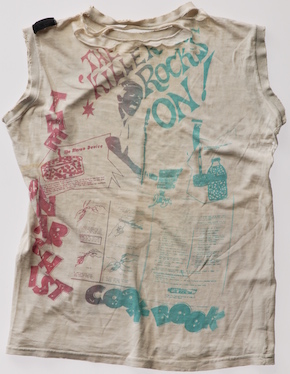
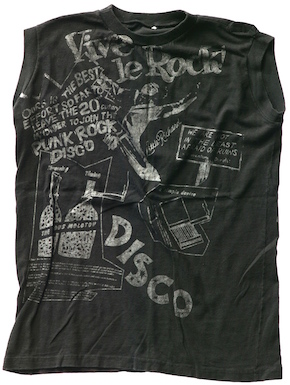
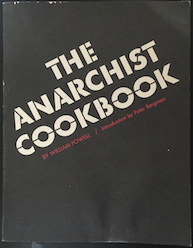
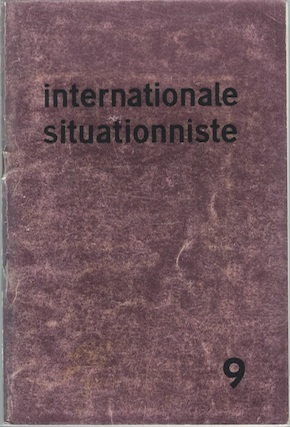
//Front and back of Vive le Rock/Punk Rock Disco and the radical political and military texts used as source material for the design//
There were T-shirts left over from the Wembley Rock & Roll revival festival in our cupboards in South Clapham; we had to do something with them. Sid Vicious liked them just the way they were and was often photographed in the original Vive Le Rock! design. But I needed to throw a few messages across them and reinvent them. So, I married the slogan and images of Little Richard and Jerry Lee Lewis with words and drawings from various texts, using the title of The Anarchist Cookbook as well as the famous phrase of the Spanish anarchist Buenaventura Durutti.
Malcolm McLaren 2008
Imogen Hunt is a recent graduate from London College Of Fashion who tells me she was inspired by my work to write her thesis for the college’s history of fashion and culture course.
Part of Hunt’s dissertation – on the importance of the Situationist International and King Mob to the development of punk style – is dedicated to an examination of the influences and source material for the double-sided design Vive Le Rock/Punk Rock Disco, which was printed on the front and back of t-shirts and tops first sold in Malcolm McLaren and Vivienne Westwood’s King’s Road store Seditionaries in 1978.
Steven Meisel’s campaign clip for Miu Miu’s autumn/winter 2015 collection tips a knowing wink to Malcolm McLaren and Vivienne Westwood’s 70s label Seditionaries, and in particular the design collage Vive Le Rock/Punk Rock Disco.
//One of the two bondage suits which have been removed from the Met collection. They were previously granted prominence in the museum’s 2006 exhibition Anglomania. This image is from the frontispiece of the show’s lavish catalogue//
Years after concerns were raised about the authenticity of around half of the punk fashion pieces in the Metropolitan Museum Of Art Costume Institute collection, cleaning house has finally begun at the New York institution with the expulsion of two bondage suits purporting to have been original 70s designs by Malcolm McLaren and Vivienne Westwood.
A museum spokesperson has confirmed that the suits have been “formally de-accessioned”. A relatively rare process in international-standard curatorial circles, de-accessioning occurs when information undermining the provenance and authenticity of a museum object comes to light.
//A US vintage company is unwittingly featuring this forgery as an original t-shirt from Seditionaries on its Instagram feed. The unpleasant item is an example of the accelerating trade in McLaren/Westwood fakes, where previously non-existent designs – often with repellent overtones – are touted as ultra-rare one-offs//
//Banal content: More examples of previously non-existent designs marketed as McLaren/Westwood originals – complete with Seditionaries-style labels – from a Chinese retailer’s site last year. Note the design at bottom left has a fake label whereas the one at the top of this post does not//
//Above: A selection of more of the crude new designs touted as original garments on Japanese auction site Seditionaries Shop, which claimed more than 300 sales at prices averaging £150//
Since Malcolm McLaren’s death nearly five years ago there has been a palpable rise in the plundering of the designs – in particular the graphics produced for t-shirts – he created with Vivienne Westwood in the 1970s.
These jaunty photographs were taken by Barry Plummer in the spring of 1979 for a Melody Maker interview with Malcolm McLaren about the just-released soundtrack for the Sex Pistols’ biopic The Great Rock N Roll Swindle (beset by financial and creative difficulties, the film wasn’t released for another year).
McLaren was accompanied by Vivienne Westwood; they made a striking pair in mixed and matched one-off and traditional pieces with a selection of clothing from their King’s Road shop Seditionaries. By now the transition away from punk – left behind when the Sex Pistols split a year earlier – was becoming evident.
//Portfolio shot of the newly completed Seditionaries, 430 King’s Road, London SW10, December 1976. (c) Ben Kelly//
Interior Design: Dead Or Alive is the title of the symposium being organised by the prominent British designer Ben Kelly at London’s Institute Of Contemporary Arts on March 14.
I am a contributing speaker alongside writer/curator Michael Bracewell, designers Fred Deakin, Ed Barber & Jay Osgerby and Peter Saville, artists Lucy McKenzie and Bridget Smith and David Toop of the London College Of Communications and Tate Britain’s Andrew Wilson.
“We’re going to be taking stock of the ways in which iconic interiors affect and influence the direction of popular culture and the wider world,” says Kelly, who is putting the event together in his capacity as professor of interior design and spatial studies at the University of the Arts London.
//Portfolio shot of the freshly installed Seditionaries name plaque, December 1976. (c) Ben Kelly//
Among Kelly’s designs was the November 1976 transformation of Malcolm McLaren and Vivienne Westwood’s shop Sex at 430 King’s Road into Seditionaries. Knowing that I have researched and produced a substantial document on the history of 430 King’s Road, Kelly has asked me to address this little space with a big impact in terms of its importance as a cultural hub and incubator of often radical ideas.
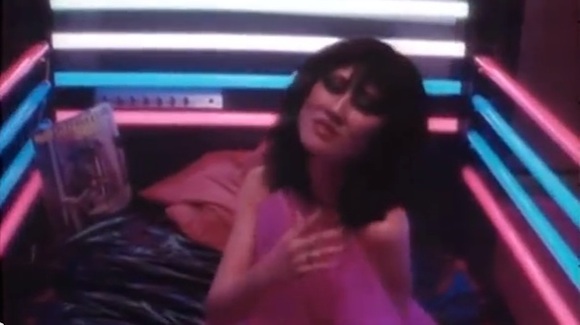
//Shinobu Kanai aka “Shinny” in a Seditionaries top in Episode 9 of the first series of The Return Of The Saint, broadcast November 1978?////Kanai in The Great Rock N Roll Swindle, 1980//// As “Japanese Woman” in the opening sequence of Insignificance, 1985//
Currently doing the rounds of the punk groups on various social networking sites is this clip from the cheesy 70s revival of classic 60s British television series The Saint.
Entitled The Arrangement, episode nine of The Return Of The Saint was broadcast on November 5, 1978 and starred such UK TV drama stalwarts as Carolyn Seymour, seen here looking glam in a car in Soho’s Wardour Street outside The Marquee where the great Aussie band The Saints are crashing through Swing For The Crime from their Eternally Yours album. Continue reading The Return Of The Saint: Cameo by The Saints at The Marquee and Shinny in Seditionaries
//Berries – 8 Yellowy Green Female Forms, Malcolm McLaren, 1969. Mixed media, 5 x 4’. Photo (c) Barry Martin/Malcolm McLaren Estate//
“I started out in art school as a painter. I studied there for eight years and most of my education was based around the visual arts. I learnt all my politics and understanding of the world through the history of art.”
Malcolm McLaren speaking on British arts documentary series the South Bank Show, 1983
//I Will Be So Bad, Malcolm McLaren, 1969. Oil on canvas, 15 x 12”. Photo (c) Barry Martin/Malcolm McLaren Estate//
Among the exhibits at Let It Rock, the Malcolm McLaren room at this autumn’s group exhibition Art In Pop at Magasin in Grenoble, are never-previously exhibited photographs of the late cultural iconoclast’s paintings taken by his teacher Barry Martin during McLaren’s student days in the 60s.
These are discussed in this extract from the exhibition introduction:
In the summer of 1969, at the end of his first year of the fine art course at London’s Goldsmith’s School Of Art, the 23-year-old student Malcolm Edwards showed 10 or so gestural paintings, mainly oils on canvas with some integrating text statements and others used as the basis for mixed media experimentation incorporating chicken wire, hammered wood planks and, in one case, an inverted paper envelope against depictions of leaf forms.
//Map Of British Isles With Yellow Star And Hole, Malcolm McLaren, 1969. Oil on canvas, 7 x 4’. Photo (c) Barry Martin/Malcolm McLaren Estate//
During a 90-minute critical review by his teacher Barry Martin, Edwards (soon to revert to his birth-name of McLaren) declared his rejection of the limitations imposed by traditional art forms, in particular painting.
McLaren subsequently destroyed all but one of the works. In a symbolic statement the exception, the largest canvas – the 7ft tall Map Of British Isles With Yellow Star And Hole, into which he had already kicked a sizeable hole – was left to rot in the summer rain in the yard at the back of the college. Eventually it was torn apart and taken away by the dustbin-men.
//The Intangible Manipulation Of Minds, Malcolm McLaren, 1969. Mixed media, 4’6″ x 4’6”. Photo (c) Barry Martin/Malcolm McLaren Estate//
McLaren dedicated his remaining two years at Goldsmith’s to organization of events and film-making, one about his hero, the early British rock’n’roller Billy Fury merged into an unfinished commentary on consumerism centred on the history of London’s main commercial thoroughfare, Oxford Street.
In doing so McLaren was inserting himself into the lineage back to Duchamp which included such figures as the Dutch Situationist Asgar Jorn, who had proclaimed “Painting is dead” in 1958, and in particular Andy Warhol, who explained his sponsorship of The Velvet Underground in 1967 by saying: “Since I don’t really believe in painting anymore we have a chance to combine music and art.”
//Leaves, Nature And Cuts, Malcolm McLaren, 1969. Mixed media, 4 x 3’. Photo (c) Barry Martin/Malcolm McLaren Estate//
McLaren later described his decision to open the boutique Let It Rock in London’s King’s Road on exiting the art school system in 1971 as “jumping into the musical end of painting”; here McLaren blazed the trail dictated by his formidable art education by creating new artworks as fashion pieces out of the juxtaposition of found objects.
//Words Trapped In Brick Compartments With Prostrate Figures, Malcolm McLaren 1969. Oil on canvas, 5 x 4’. Photo (c) Barry Martin/Malcolm McLaren Estate////14 Pink Figures On Moving Sea Of Green, Malcolm McLaren, 1969. Oil on canvas, 12 x 15”. Photo (c) Barry Martin/Malcolm McLaren Estate//
Thanks to Barry Martin for his insights and assistance in putting together the Malcolm McLaren segment of Art In Pop. Martin continues to practice as an artist and sculptor; this is his website.
Art In Pop, which opens on Saturday, is curated by Magasin’s Yves Aupetitallot with John Armleder, Young Kim of the Malcolm McLaren Estate, John Miller and I. The exhibition runs until January 4, 2015 at Le Magasin, Site Bouchayer-Viallet, 8 Esplanade Andry Farcy, 38028 Grenoble.
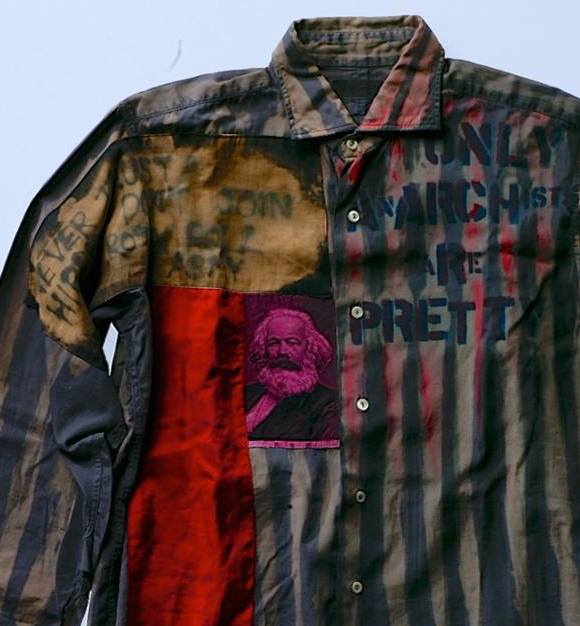
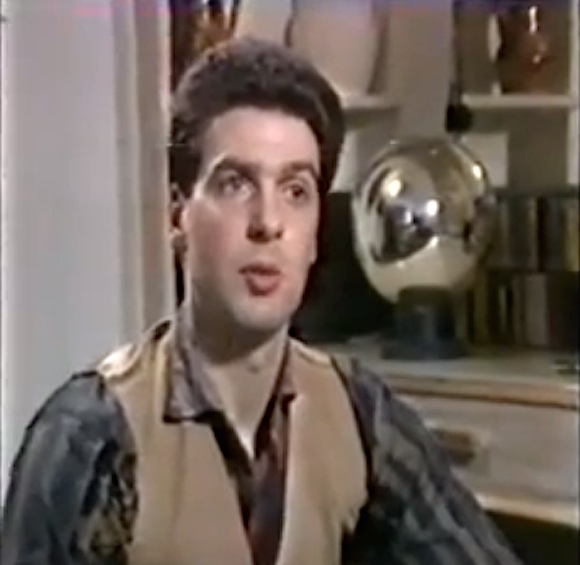
//”An inspired collage”. Section of Anarchy Shirt bought by Jon Savage at Seditionaries. Hiroshi Fujiwara Collection////Savage wearing the shirt for an interview on 1983’s “Positive Punk” movement for British TV//
Preparations are well underway for the next phase of the Malcolm McLaren exhibition: a room dedicated to the late cultural iconoclast’s work as a visual artist at group show Art In Pop, which opens next month at France’s National Centre Of Contemporary Art space Magasin in Grenoble.
Art In Pop will also feature rooms dedicated to paintings by the late Don Van Vliet (aka Captain Beefheart) and documentation of the artist John Miller’s exploits in music with the likes of Tony Conrad, Kim Gordon, Mike Kelley, Takuji Kogo and Thurston Moore.
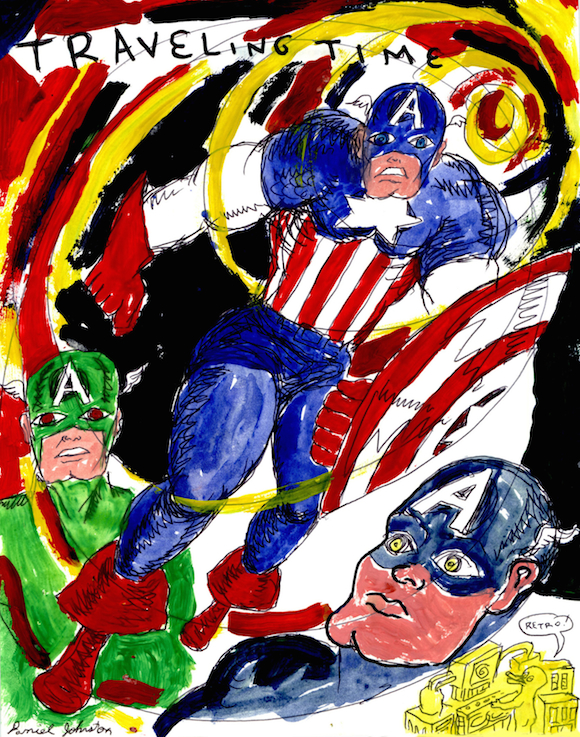
And there will also be artworks by such musicians as the late Jerry Garcia of The Grateful Dead, Daniel Johnston, Cris Kirkwood of The Meat Puppets, David Thomas of Pere Ubu and Mayo Thompson of The Red Crayola.
//Life In Hell, Daniel Johnston, 1998. Felt pen and paper, 21.5 x 28cm, courtesy Arts Factory//
//Alix Lambert is featured on this 2008 Buckethead track//
These will be exhibited with pieces by artists who have investigated music, including John Armleder (who will be showing a work created with Genesis Breyer P. Orridge and Alan Vega), David Bowes, Alix Lambert (creator of 90s fictional all-girl punk band Platipussy, described as an “oestregen-powered Spinal Tap), Randy Ludacer, Tony Oursler and Greg Parma Smith.
The Malcolm McLaren element of Art In Pop will include many of the exhibits displayed at Let It Rock in Copenhagen this summer along with some exciting additions which I will be previewing here over the coming weeks.
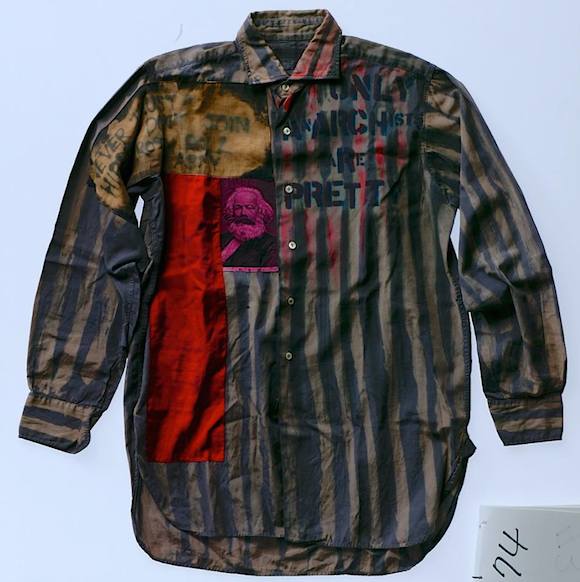
Among them will be paintings produced by McLaren as an art student in the 60s as well as an original example of one of the most “painterly” works McLaren created with Vivienne Westwood: The Anarchy Shirt.
This is being loaned by fashion guru and musician Hiroshi Fujiwara, who has one of the most important collections of McLaren & Westwood designs in the world.
//”An extraordinary package of compressed content”. Hiroshi Fujiwara Collection//
The shirt is a fine example of the extraordinary design first introduced in September 1976, and was originally owned by writer and cultural commentator Jon Savage.
“I bought it in late 1978 from Seditionaries,” says Savage. “It had a swastika applique which I immediately took off, not wishing to be the bearer of that particular insignia.”
Savage has described the Anarchy shirt as McLaren & Westwood’s “masterpiece… an inspired collage, using second hand clothes, craft and revolutionary slogans – an extraordinary package of compressed content”.
Art In Pop – which is curated by Magasin’s Yves Aupetitallot with John Armleder, me, Young Kim of the Malcolm McLaren Estate and John Miller – is at Magasin from October 11 to January 4 2015.
Here is the first part of the 1983 Positive Punk documentary, shown as part of ITV’s South Of Watford strand (Savage appears towards the end of this segment):