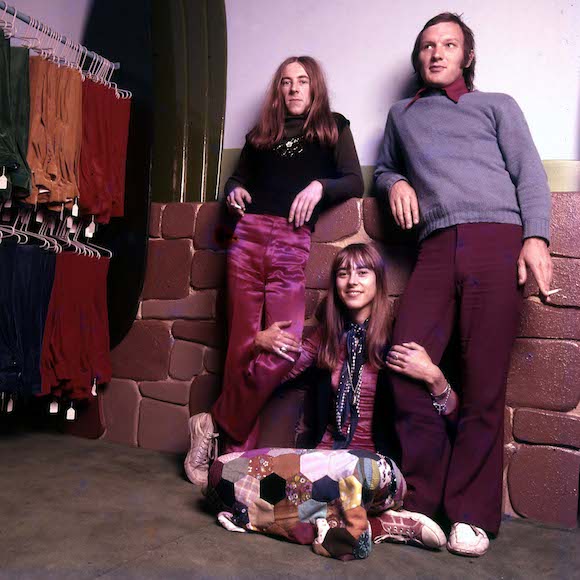
//Above Taron Egerton as Elton John and Jamie Bell as Bernie Taupin meet “Tommy Roberts” in Rocketman. Stills from Kii Arens promo video for Egerton and John’s new single (I’m Gonna) Love Me Again//
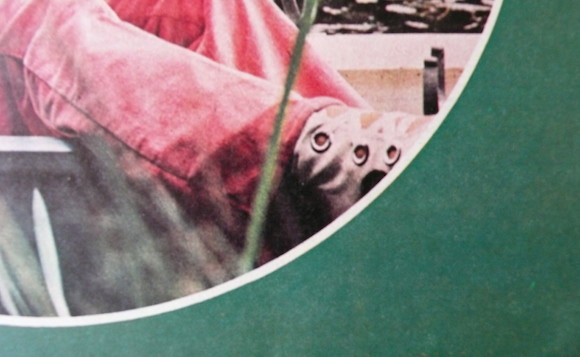
//The pair of Mr Freedom winged boots acquired by Cecil Beaton for the V&A 1971 exhibition: Fashion: An Anthology//
During the production of Elton John biopic Rocketman there were plans for a scene set in London’s groundbreaking pop-art boutique Mr Freedom in the early 70s.
This was to set up the central character’s visual transformation during visits to the store under the influence of its charismatic founder and frontman, the late, lamented Tommy Roberts.
//ECC’s sign on the facade of the Time Out offices at 374 Gray’s Inn Road, King’s Cross, London, autumn 1970. Photos courtesy Electric Colour Company/Andrew Greaves//
Recent encounters with Time Out founder Tony Elliott have brought to mind the audacious sign created by design collective Electric Colour Company to mark the magazine’s move into premises at 374 Gray’s Inn Road.
As punk expert/collector and design academic Paul Burgess notes, references to 430 King’s Road turn up in the most surprising places.
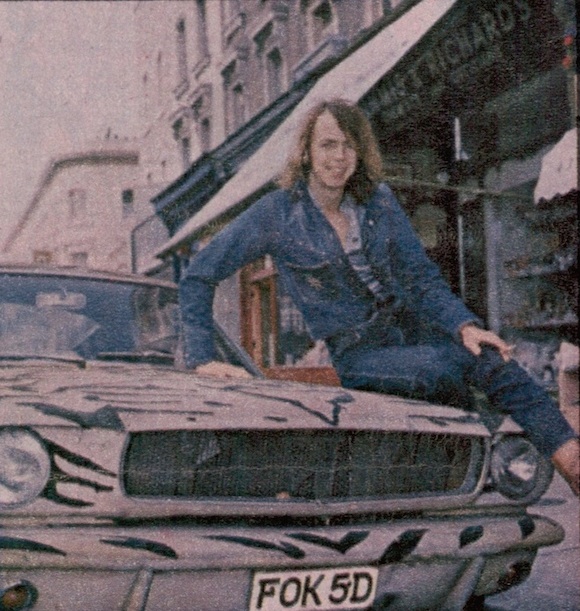
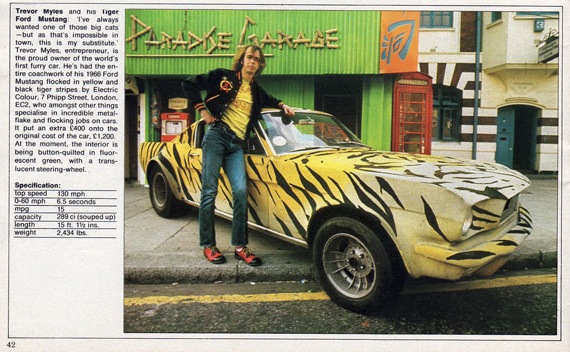
So thanks to him for notifying me about this photograph of the coolest address in pop culture – and in particular the tiger stripe-flocked Ford Mustang which adorned the street outside during the Paradise Garage phase – in a 1976 light educational book for young children.
/Left: Andrew Greaves of Electric Colour Company in the back of Paradise Garage, May 1971. Right: Vivienne Westwood in the back of Let It Rock, January 1972. Photos: David Parkinson//
Preparation for my paper at Ben Kelly’s interior design symposium Dead Or Alive has coincided with the refurbishment of the Worlds End shop at 430 King’s Road in Chelsea.
The address is the subject of my talk; I’ll be detailing the history of 430 and how and why it was an important social and cultural locus over a number of decades.
//Back wall of 430 King’s Road on the opening of Mr Freedom, September 1969. Interior: Electric Colour Company. Photo: David Parkinson//
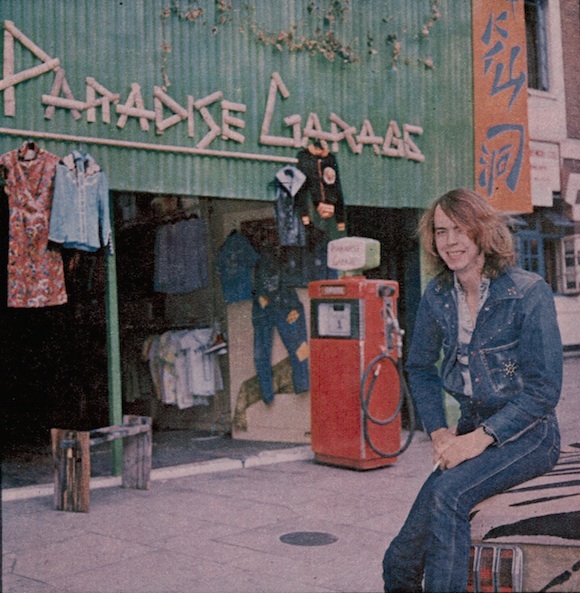
//Trevor Myles in front of his store at 430 King’s Road, autumn 1971. Photographer: Not credited////pp6-7, Jackie, December 4, 1971//
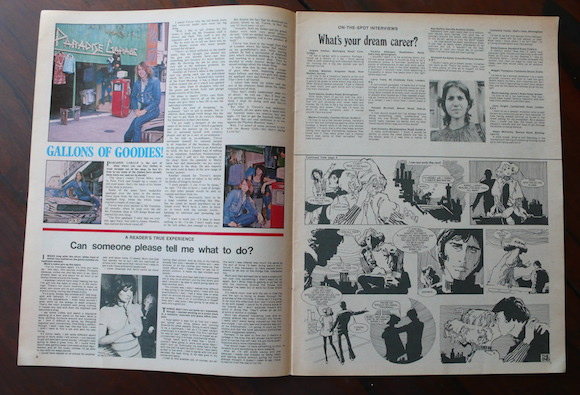
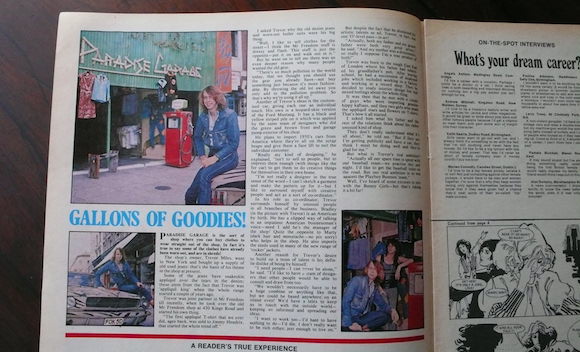
Well done to vintage collector/dealer Sharon of Sweet Jane’s Pop Boutique blog for spotting this wowser on a Facebook group: a 1971 article in teen fashion and music magazine Jackie about the game-changing fashion outlet Paradise Garage run by Trevor Myles at 430 King’s Road.
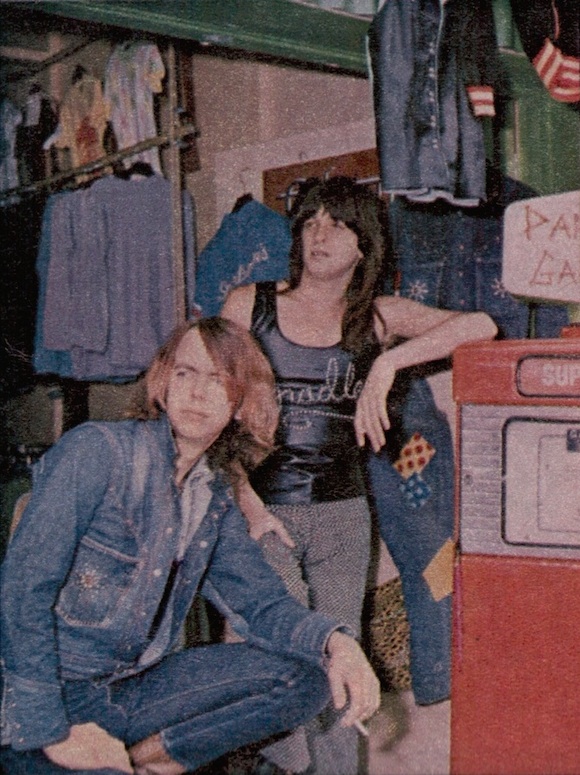
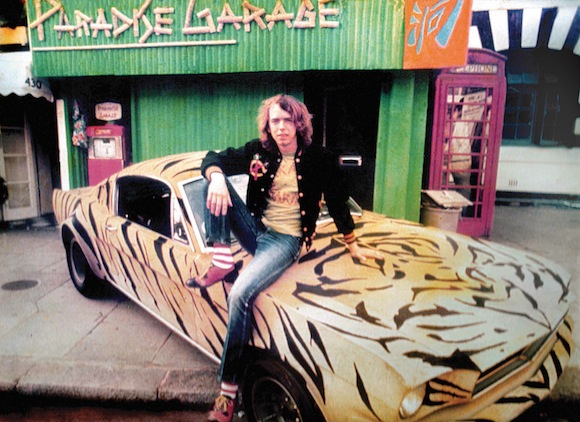
//Myles with Bradley Mendelson (in ‘Bradley’ studded top) outside Paradise Garage. Photographer uncredited////Myles on his tiger-strip flocked 1966 Ford Mustang Pony car. Photographer uncredited/
Paradise Garage is important because it was the first shop in Britain to import and sell used denim in a meaningful way. Using the astounding environment created by Electric Colour Company, faded and worn denim, sometimes appliqued or patched, was stocked alongside an acutely compiled selection of soon-to-be-familiar dead-stock: Hawaiian shirts, baseball and souvenir jackets, Osh Kosh B’Gosh dungarees, bumper boots, cheongsams and so on.
Myles opened Paradise Garage in May 1971 as a reaction to the Pop Art flash he had engineered at Mr Freedom with his ex-partner Tommy Roberts. In the Jackie article he makes a point about fashion and environmental sustainability of pertinence today:
“There’s so much pollution in the world that we thought you should use the gear you already have – not buy something just because it’s fashionable. By throwing the old lot away you only add to the pollution problem. So that’s why we’re using it all up.”
Also interviewed and photographed is shop manager Bradley Mendelson, the New Yorker whose November 1971 encounter with Malcolm McLaren while Myles was absent overseas resulted in the establishment of Let It Rock at the same address.
The publication date of the issue of Jackie – December 4, 1971 – is poignant; by the time the feature appeared Paradise Garage was gone and McLaren and others, including his art-school student friend Patrick Casey and Vivienne Westwood, had taken over the outlet and were refurbishing it to match Mclaren’s radical British take on 50s retromania.
//Mr Freedom designs produced under Myles’ former partner Tommy Roberts appeared elsewhere in the same issue. Here customer Elton John sports an appliqued top////The female cover model wore a pair of green and white winged boots from Mr Freedom (detail cropped out)//
//Electric Colour Company’s Roderic Stokes and David Smith with Carol Davey at Blueberry Hill, 91 King’s Road, London, 1970//
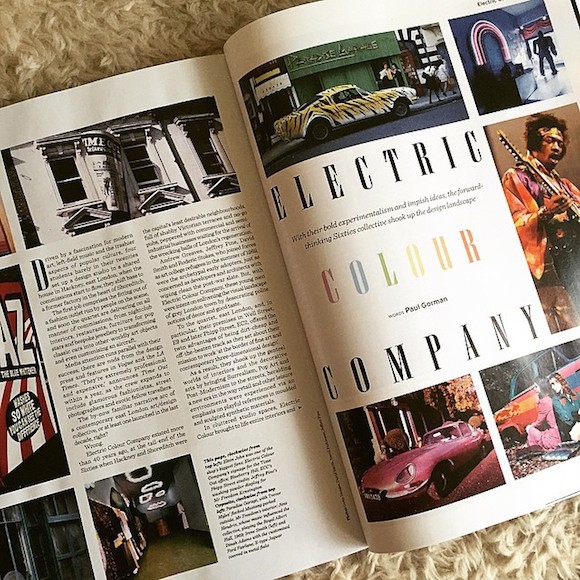
Here are a couple of images relating to late 60s/early 70s British design studio Electric Colour Company; I’m writing a magazine feature about their exceptional body of work which ran from signage, custom-built furniture and shop designs (notably Mr Freedom, Paradise Garage and City Lights Studio) to lighting modules, display objects, interior decoration, murals, custom cars and fashion accessories.
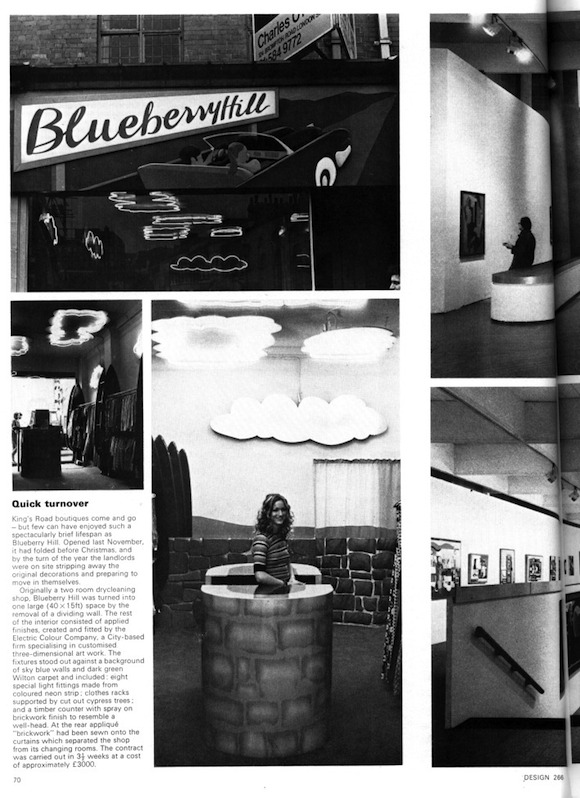
In November 1970 the King’s Road boutique Blueberry Hill was launched with a comprehensive fit-out – reported at a substantial-for-those-days £3,000 – by the ECC team of Andrew Greaves, Jeffrey Pine, David Smith and Roderic Stokes.
//By the time this coverage appeared in the February 1971 issue of Design magazine, Blueberry Hill had been closed for several weeks//
Despite the extraordinary nature of the shop design – which included cloud-form light fittings in neon strip and a timber counter with spray-on brickwork finish resembling a well-head – Blueberry Hill closed after just six weeks when the landlords opted to replace it with a more bankable betting shop.
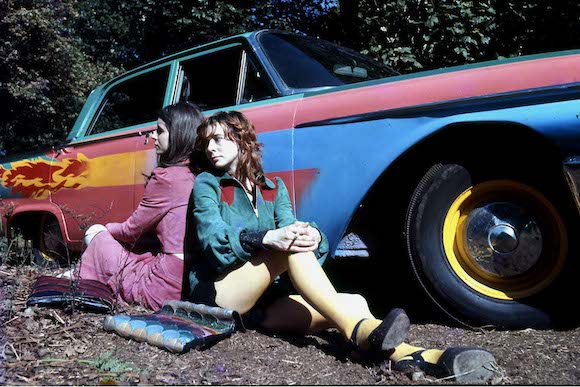
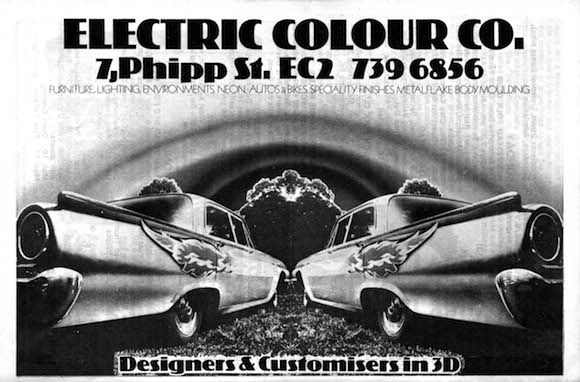
//Irene Smith and Dinah Adams with the ECC-customised Ford Fairlane 500, 1970////Advert, Time Out, 1970//
The other photograph shows ECC fellow travellers Dinah Adams – who designed clothes for Mr Freedom, Paradise Garage and Granny Takes A Trip – and Irene Smith with the customised Ford Fairlane which also appeared in the East End company’s advertising.
I’ll give the nod when my piece on Electric Colour Company is nearing publication.
//Trevor Myles, Mustang and 430 King's Road, late summer 1971. Photo: Michael Roberts////From Michael Roberts' article Men & Their Machines, Club, October 1971//
Trevor Myles’ decision to incorporate a flocked and tiger-striped 1966 Ford Mustang as part of his retail space Paradise Garage naturally attracted a lot of attention during the brief existence of this unusual fashion outlet at 430 King’s Road in Chelsea’s World’s End in 1971.
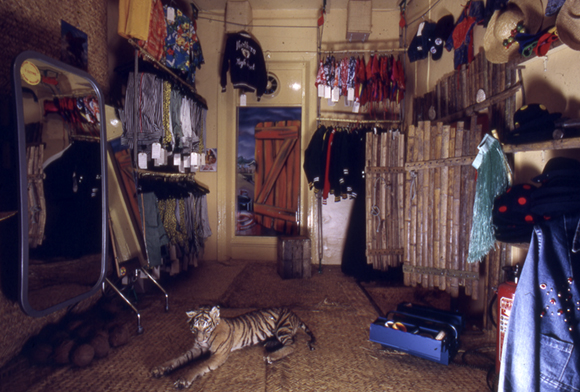
//Interior, 430 King's Road, Chelsea, May 1971. Note coconut matting, shack-style dressing room doors, trompe de l'oeil gate painted on stockroom door... and fake tiger. Photography: David Parkinson.//
I first wrote about Electric Colour Company – the design studio formed in the East End by four fine art students in the late 60s – in The Look and then in more detail here.
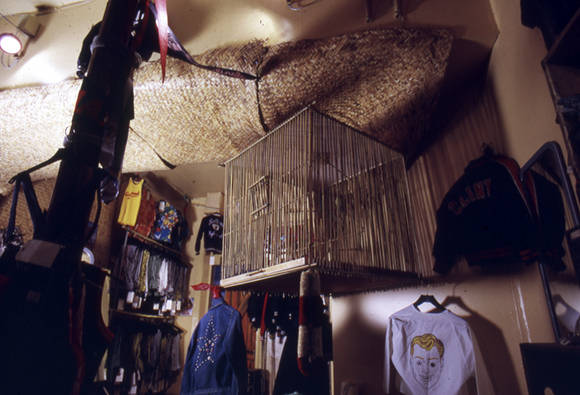
//Amid the singlets, printed sweatshirts and appliqued denim, a bamboo cage housed birds of paradise, suspended from the matting covered ceiling.//
In my view, ECC deserves much greater recognition for executing some very clever work in the field of retail design and interiors in the period 1969-1973.
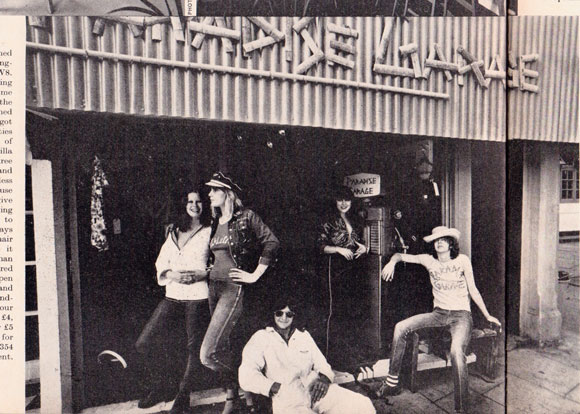
Harpers & Queen ran this photograph of the short-lived but significant World’s End boutique Paradise Garage in the Shopping Bazaar section of the September 1971 issue.