“With this book, Gorman convincingly moves away from the ossified image of McLaren as a great rock’n’roll swindler, a morally bankrupt punk Mephistopheles, and closer towards his art-school roots, his love of ideas”
Victoria Segal reviewing The Life & Times of Malcolm McLaren in the Sunday Times, April 5, 202
The first reviews of my Malcolm McLaren biography are carried today by Britain’s Sunday Times Culture section and in The New Review magazine of it’s broadsheet rival The Observer.
A few years back over dinner in New York when I was working on The Story of The Face, the British artist and filmmaker Steve McQueen mentioned that he (“well, it was mainly my back and my arse”) had appeared in an i-D fashion shoot when he was a student. Continue reading When Steve McQueen modelled for i-D
“Within the slippery divides between disciplines and media – fashion, art, music, interiors, commerce – one finds Malcolm McLaren, roaming and creating.”
Lou Stoppard in her essay in The Life & Times Of Malcolm McLaren
Disruption to the publication of a book is extremely small beer at a time when the COVID-19 pandemic has set the world in disarray, so I’m sanguine about the postponement of several events and signings which were due to occur around the publication of my biography The Life & Times Of Malcolm McLaren.
//The back of the book jacket features this 1976 portrait by photographer Joe Stevens//
Small is beautiful when it comes to the inventive mini-edition of The Gentlewoman, a greatest hits package celebrating the exemplary British magazine’s “10 years of fabulousness”.
During that time (after all print had been roundly declared as “dead” in 2010), editor Penny Martin and her team have consistently confounded expectations around independent print publishing and the traditional editorial stances of periodicals aimed at female readers.
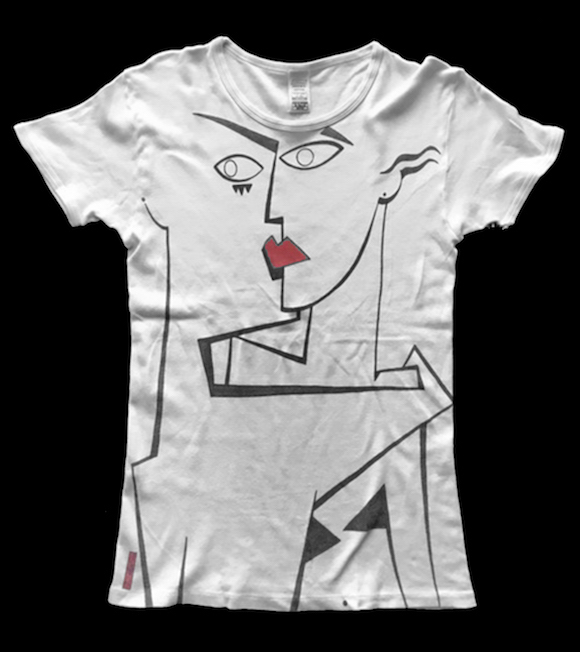
//Flyer for Ludus performance at Cabaret Futura, London, 1981////One of two hand-painted t-shirts given to the author, depicting him and Linder’s sister Nettie in a lover’s embrace in 1983. No reproduction without permission//
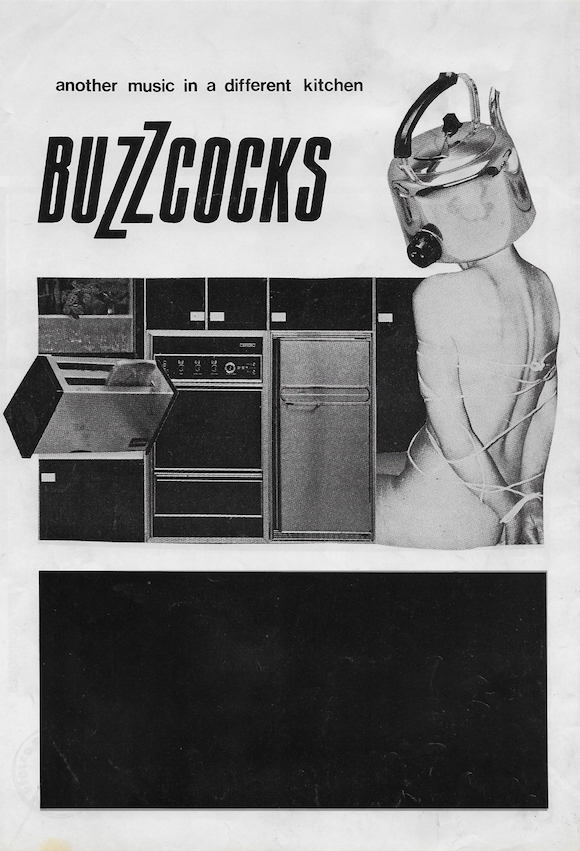
On the eve of the opening of Linderism, a new exhibition by the great contemporary artist Linder, I’m publishing a guest post by a follower of this blog who, like many, was introduced to her work via the sleeve artwork for Buzzcocks’ 1977 single Orgasm Addict.
“To me, it was punk for the eyes rather than the ears,” writes the contributor, who has asked for anonymity and was a 17-year-old school-leaver living in south London at the time.
He went on to forge a connection with Linder by following her post-punk group Ludus and encountered many in her circle, including the pre-Smiths Steven Morrissey.
Here he tells his story and shows a selection of the artworks Linder gave him:
The message I received from the Orgasm Addict sleeve was: “Think A.N.Other way. See it as it is”. A few months later I purchased The Secret Public, Linder’s print collaboration with Jon Savage. Again I’d never seen anything like it, hardcore pornographic imagery redirected into a cocktail of consumerist lust.
//Back page of The Secret Public, Linder + Jon Savage, 1978//
In October 1974 Malcolm McLaren conjured an unusual group name for four young musicians who congregated at his shop at 430 King’s Road.
//The group name as it appeared on the ‘right’ side of the You’re Gonna Wake Up t-shirt//
At the time the transition from the premises’ previous incarnation as Too Fast To Live Too Young To Die to Sex was nearing completion; in fact the teenagers Paul Cook, Steve Jones, Glen Matlock (who was also a sales assistant on Saturdays) and Wally Nightingale assisted McLaren in applying the finishing touch with the erection of the pink vinyl shop sign constructed at his direction by carpenter Vic Mead.
//The premises of Jack English Snr’s lighting shop in Leicester’s Granby Street provide the book’s cover image////Will English (right) with Helen Robinson and Steph Raynor in a transport cafe c.1970. Photo by Rose Kendall////David Parkinson and his Messerschmitt bubble car, 1974. Photography: Will English//
Perfect Binding, the recently published book by British experimental filmmaker/broadcaster/bookseller William English, is a psychogeographic portrait of a particular strain of cultural activity in a particular place at a particular time: the Midlands city of Leicester from the 1950s to the 70s.
//T-shirt from the first run produced by Malcolm McLaren in March 1976. Photo courtesy Bonhams//
“This was my first attempt at making a Sex Pistols T-shirt. I wanted to create something of a stir” Malcolm McLaren, 2005
An extremely rare and controversial T-shirt from the first run produced by Malcolm McLaren in the early spring of 1976 for the new group he managed, the Sex Pistols, is up for sale tomorrow at London auctioneers Bonhams.
Curator and writer Faye Dowling’s latest venture is the intriguing Goth Shop, which enters the physical realm tonight as a pop-up gallery and retail outlet in London’s Spitalfields.
//Cover, Curious issue 19, 1971. Photography: Brian Ward. No reproduction without permission.This copy: Paul Gorman Archive////Opening spread The Queen Of Clapham. Photography: Edward Bell. No reproduction without permission////From The Cool Kilt vs The Hot Pant. Photographer not credited. No reproduction without permission////Opening spread I Was A TV. Photographer not credited. No reproduction without permission//