I’m featured in the Los Angeles Review of Books in conversation with the journalist and musician Elizabeth Nelson about the life and times of the late graphic designer Barney Bubbles.
Nelson has also recorded a tribute to the late graphic artist with her band The Paranoid Style. The track was released yesterday and is available to stream/download via Bandcamp.
Here’s the song lyric video complete with customised Bubbles artworks:
The Wild World of Barney Bubbles, the third edition of my monograph, is published by Thames & Hudson this summer accompanied by specialist imprint Volume’s limited edition A Box of Bubbles. Order your’s here.
//Subscribe exhibition ident////Artist and filmmaker Steve McQueen (right) featured in The Uniform Backlash, The i-D Bible Part 2, 1989. Photography Daniel Kohlbacher, styling Simon Foxton. Paul Gorman Archive//
Beginning in the early 1970s—as under-represented groups were demanding new forms of visibility following the emergence of political movements such as Black Power and the Stonewall Rebellion—a handful of British and American photo-driven alternative magazines came on the scene.
The Face, i-D, Rags, Out/Look, and other new publications amplified marginalized voices, especially those of queer makers and makers of colour, and made room for those makers to question who and what was accepted as mainstream. These publications introduced a hybrid model within the magazine industry: combining the high production standards and engagement with fashion of “powerhouse” publications such as Vogue and Life with the use of collage in zines and the text/image provocations of underground newspapers. In the end, these alternative magazines transformed their industry.
From the introduction to Subscribe.
Two years ago, just as the enormity of the pandemic was emerging, I met American curators Solveig Nelson and Michal Raz-Russo in London to discuss making a contribution to an exhibition at the Art Institute of Chicago about the significance of alternative magazines to Western culture.
British design media outlet Creative Review has reported on the publication of A Box Of Bubbles, the forthcoming limited edition boxed and enhanced edition of the new monograph The Wild World Of Barney Bubbles.
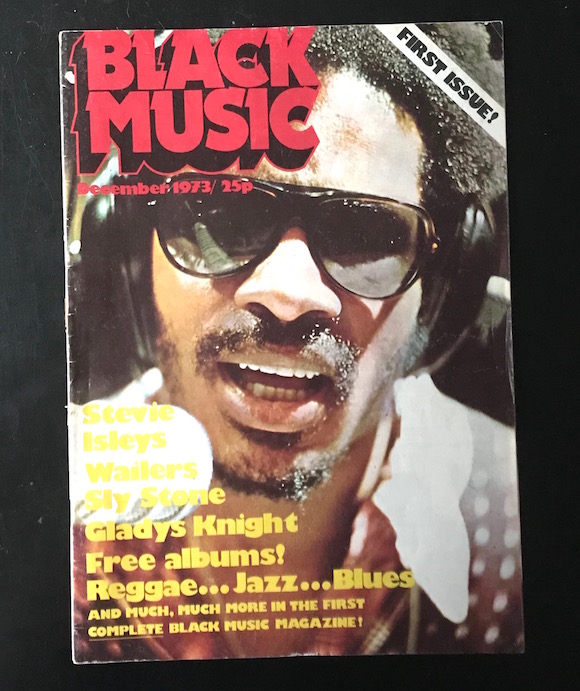
Working on my forthcoming book The Rise & Fall Of The Music Press has brought home to me the brilliance of publications and journalists who have been marginalised in the story of the media sector inaugurated by the launch of The Melody Maker (as it was then known) in 1926.
//Fax of treatment sent by Malcolm McLaren to Neal Purvis and Robert Wade on January 9, 1991//
These faded pages constitute a film pitch Malcolm McLaren sent by fax to screenwriters Neal Purvis and Robert Wade way back in 1991.
//The first page of the fax shows that this treatment was completed a couple of weeks before it was sent, on December 20, 1990////From my transcription of the now-very faded fax//
Purvis and Wade are responsible for many film successes including the astounding run of screenplays for the seven James Bond movies from 1999’s The World Is Not Enough to the recently released No Time To Die. I’ve known them for a while and Neal has mentioned their contact with McLaren during preparations for their first feature Let Him Have It, so made sure it was covered in the hardback edition of The Life & Times of Malcolm McLaren.
//Malcolm McLaren between Patti Smith and David Johansen with Cyrinda Foxe and Lenny Kaye, Sheep Meadow, Central Park, May 11, 1975. Photo: Danny Fields////Close up: Malcolm McLaren refreshes himself behind Smith and Johansen//
46 years after music manager Danny Fields took the photograph of a group of New York’s 70s demi-monde at the top of this post I’ve spotted the previously unidentified person behind them: the subject of my latest book, Malcolm McLaren (who appears to be chugging a half-bottle of Smirnoff).
//Left: ‘Waitress dress’ designed by Diana Crawshaw for Mr Freedom 1971. Right: Karen Elson models Moschino dress in the Italian luxury brand’s campaign for its SS22 resort collection//
Even by the cynical standards of today’s fashion industry, the lifting – down to the closest detail – of a particular early 1970s design for British pop art store Mr Freedom by Italian luxury brand Moschino is breathtaking.
‘UNBELIEVABLE’ was the take of a leading fashion journalist while an internationally renowned fashion designer told me they thought it was ‘Outrageous!’
‘I’m sickened,’ says Diana Crawshaw, who came up with the original of this and many other designs for Mr Freedom’s owners Trevor Myles and Tommy Roberts between 1970 and 1972. ‘It’s terrible that they’ve simply been able to take things I spent a lot of time and effort on realising.’
The new version of Crawshaw’s waitress dress is the centrepiece of the Moschino collection, which is the brainchild of creative director Jeremy Scott. As well as direct quotes of these individual pieces, Moschino’s campaign appears as a tribute to a particular phase of Mr Freedom’s brief life, when its second set of premises at 20 Kensington Church Street included the cartoonish restaurant Mr Feed’Em.
//Mr Feed’Em waitress in hamburger repeat print dress in the restaurant 1971. Photography: Tim Street Porter/Elizabeth Whiting & Associates////Left: Mr Freedom designer Jim O’Connor. Photography: Tim Street Porter/Elizabeth Whiting & Associates////Mr Feed’Em interior. Photography: Tim Street Porter/Elizabeth Whiting & Associates//
And so the new Moschino campaign is replete with repeat prints and references to fried eggs, dripping hamburgers, hot dogs and ice-cream, all Mr Freedom and Mr Feed’Em motifs, as you can see in the film Scott has released to coincide with the collection drop:
And Crawshaw isn’t alone. The use of colour contrasts in the Moschino garments and on accessories such as bags imitates those used by another Mr Freedom designer, Jim O’Connor, as you can see here from this jumpsuit design in the Victoria & Albert Museum’s collection:
//Jim O’Connor for Mr Freedom jumpsuit collar and lapel detail. Photo: Paul Gorman Collection////Biker jacket handbag Moschino SS22//
That there is a paucity of new ideas in mainstream fashion is not news though I can’t help wondering about the role of those operators of vintage collections who are regularly raided by fashion designers in return for payments and thus encourage this behaviour.
Diana Crawshaw started her career at the King’s Road branch of I Was Lord Kitchener’s Valet before moving on to make important contributions not just to Mr Freedom but also the legendary outlet Paradise Garage at 430 King’s Road.
//Frederiques Cifuentes photographs Diana Crawshaw outside 430 King’s Road for the King’s Road Fashion & Music Trail, 2012.//
A charming and constantly creative person, Diana was a Royal College a graduate and is now in her 70s. I interviewed her for the King’s Road music and fashion trail I created for Kensington & Chelsea Council in 2012 and when last I bumped into her (inevitably in Worlds End Books) she snapped a photograph of me and sent a flattering portrait she drew from it.
Diana continues as an inveterate Chelsea-ite as a palmist for the enduring outlet Wilde Ones (though at the moment is giving phone consultations). You can book a reading with her through the Wilde Ones website.
//The two maps are housed in handsome folders////The guide was designed by Ricardo Santos and includes photography of the band, quotes and a card for my Malcolm McLaren biography//
My new guide out with Herb Lester Associates is out now.
A celebration of the London lives of the Sex Pistols and their charismatic – some might say notorious – manager Malcolm McLaren, it comprises two fold-out maps with 100-plus addresses from birthplaces, schools, colleges, art schools, pubs, clubs, venues and boutiques to such diverse places as Buckingham Palace (where the Pistols signed to A&M Records), the Soho gay club Il Duce (frequented by McLaren after leaving art school in the early 70s) and the Shepherds Bush remand home where the teenage Steve Jones resided before being pulled up before various beaks on assorted burglary charges.
//There are nearly 60 entries charting the lives of the Pistols in London////The Pistols map shows how Punk Rock was at its dark heart a London thing//
The Pistols maps covers the group’s 29-month existence and the lives of the five members as they relate to the British capital, while McLaren’s shows how this fourth generation Scottish/Jewish provocateur used the city as a weapon of sex, style and subversion.
//Born in Stoke Newington, McLaren roamed the capital, from Lewisham and Clapham to Chelsea and Notting Hill to Fitzrovia and Oxford Street to Whitechapel and Rotherhithe////No coincidence that some of the major projects of McLaren’s life – a psychogeography of Oxford Street, the shop at 430 King’s Road and his campaign to become Mayor of London – were firmly rooted in the city//
SITUATION VACANT: Sex Pistols and Malcolm McLaren in London is available from Herb Lester Associates here.