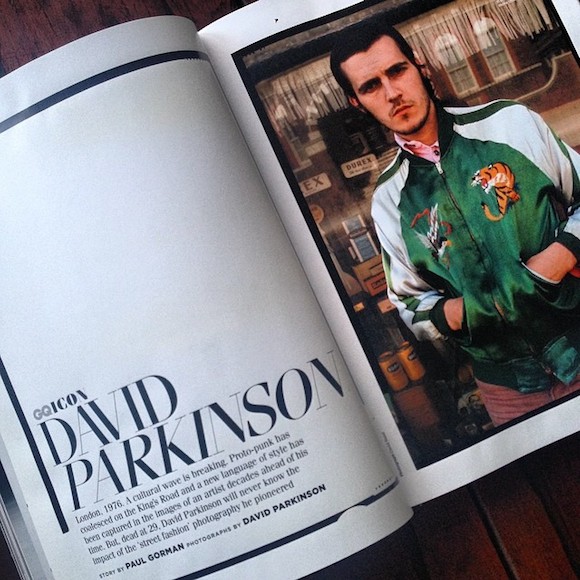
My feature on the work of the late fashion photographer David Parkinson is in the June issue of GQ UK, which is out now.
Visit GQ online here.
My feature on the work of the late fashion photographer David Parkinson is in the June issue of GQ UK, which is out now.
Visit GQ online here.
It is relatively common knowledge among those interested in the careers of Malcolm McLaren and Vivienne Westwood and their series of extraordinary shops that they supplied clothes to the 1973 album Golden Hour Of Rock & Roll; Let It Rock at 430 King’s Road was clearly credited on the back of the record sleeve.
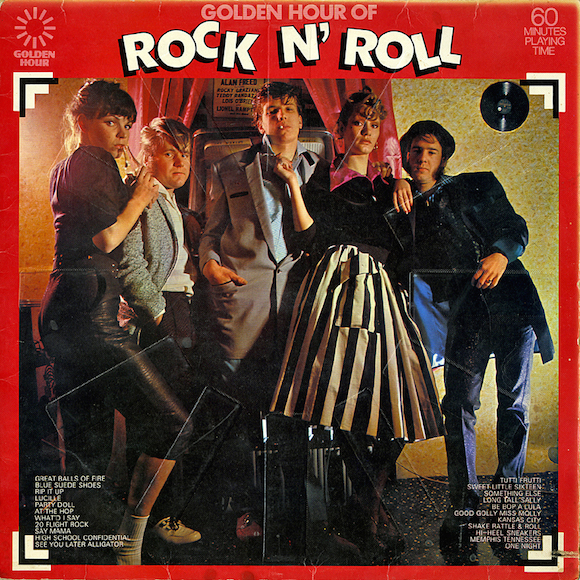
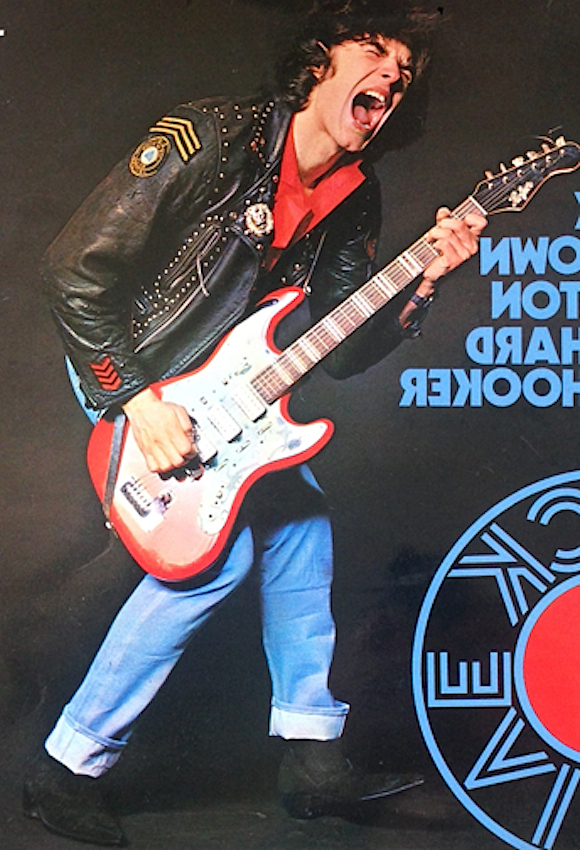
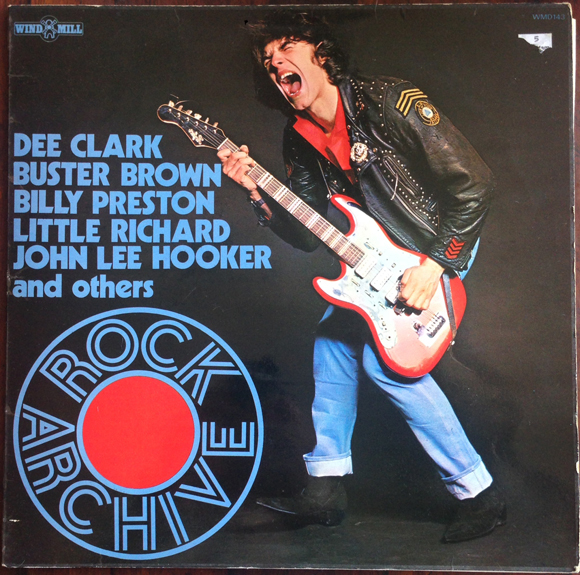
But I have fresh information which helps towards a greater understanding of McLaren’s project to investigate the detritus of popular culture’s recent past. During a bout of research recently I came across this earlier and hitherto undocumented use of Let It Rock clothing in a music context: the front cover of Rock Archive, a budget LP compilation released by the specialist British independent label Windmill in 1972.
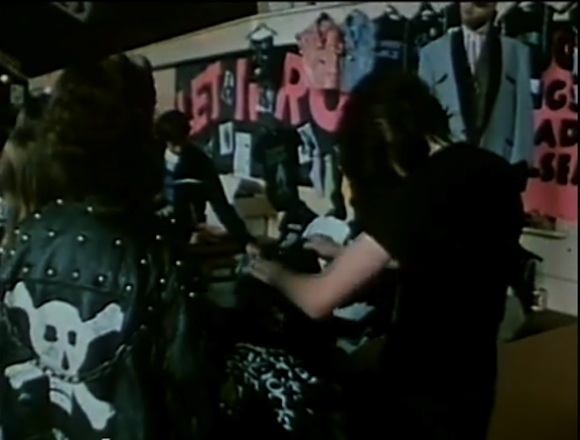
And I am detailing the clothes on the cover with images taken inside Let It Rock which have never been previously published.
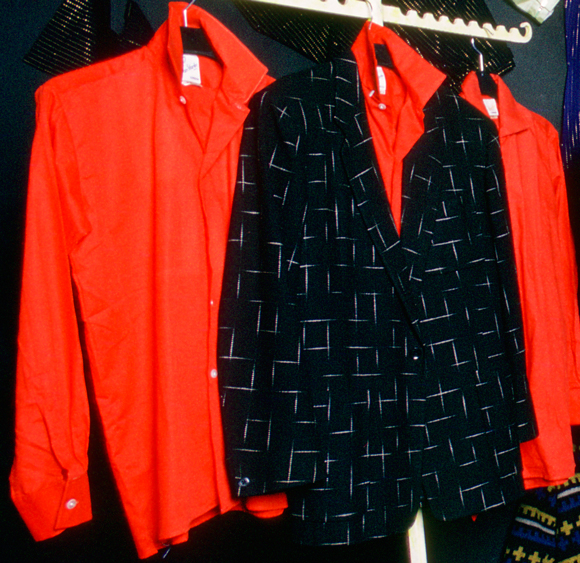
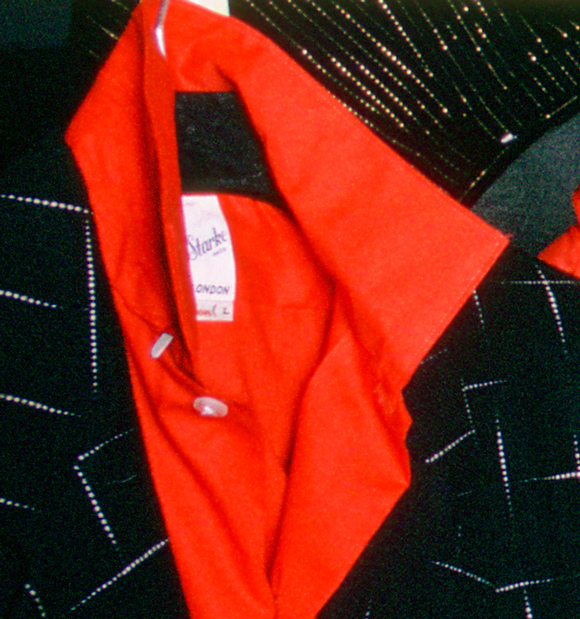
Each garment worn by the model – whose attempts at rocking out resulted in his giving every appearance of suffering considerable pain – comes from the deadstock of British brands assiduously assembled by Malcolm McLaren and his art-school friend Patrick Casey for the opening of the world’s first avowedly post-modern retail outlet in November 1971.
From the ground up, the Rock Archive cover star wore black suede Denson’s Fine Poynts, ice-blue Lybro jeans with 5in cuffs, a Frederick Starke flyaway collar shirt and a studded and decorated Lewis Leathers early 60s Lightning jacket (which featured a highly collectable 6-5 Special patch).

Among the lines launching Tokyo’s new fashion and music retail outlet The Pool is a collaboration between Japanese streetwear labels Fragment and Peel + Lift on a fresh version of the 1976 Anarchy Shirt design by Malcolm McLaren and Vivienne Westwood.


The reissue, in four versions, is a stripped down reproduction of one of the original variants created by McLaren and Westwood to be worn by the Sex Pistols and for sale in their shop at 430 King’s Road in its incarnations as Sex and Seditionaries.
“I had been a student in the 60s, and the anarchic student movements in France really framed my critique,” McLaren told me in 2007. “This particular shirt celebrated that.”
The original designs used as a base the deadstock Wemblex brand shirts stored in boxes at McLaren & Westwood’s flat in Clapham, south London in the mid-70s. “They were pin-striped and made in cheap cotton in the early 60s when the ‘pin-through’ collar style – an American look – was fashionable,” said McLaren.
“I wore and wore them and then, one day, Vivienne decided to paint stripes over one. She showed it to me and together we customised it, using my son’s stencil set, with slogans such as “Only Anarchists Are Pretty” and “Dangerously Close To Love”.
“As well as layering the stencils to increase the impact, I attached silk patches of Karl Marx I discovered in shops in Chinatown which sold Maoist literature. I chose him because his book started the Socialist and workers’ movements in the 19th century. Also, Vivienne and I liked his beard.
“Marx was a writer/author, a creator of ideas, not a politician like Lenin. Marx represented a greater significance and was important to us because he lived in London at one point.”

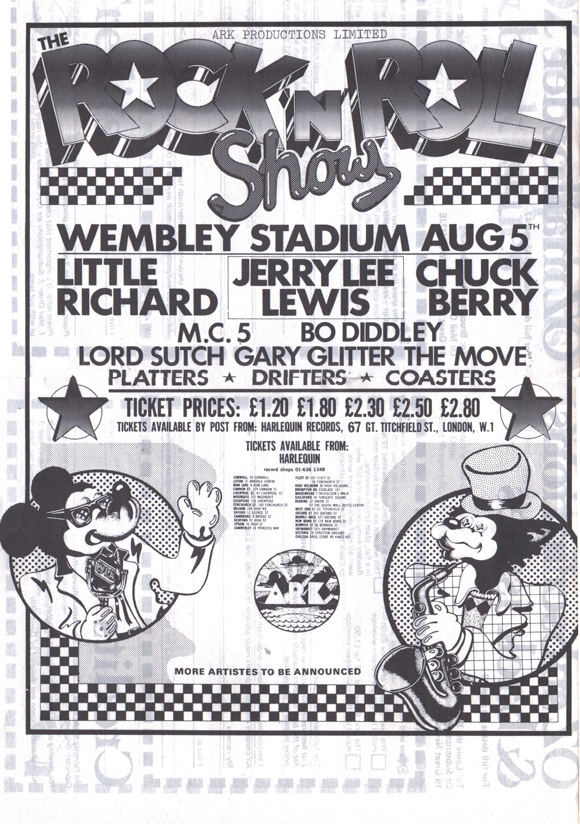
As a follow-up to my recent post about the Rock N Roll revival show held at London’s Wembley Stadium in August 1972, here is another selection from the media surrounding the event.
The New Musical Express dedicated a section to reviewing the show, decking staffers Danny Holloway, James Johnston and the late Tony Tyler in appropriate clothing from Let It Rock. The journalists were photographed outside Malcolm McLaren and Vivienne Westwood’s outlet at 430 King’s Road by Robert Ellis.


The capital’s daily paper the Evening Standard’s special issue – billed as the official programme – also included images taken outside Let It Rock, including assistant Addie Isman in one of the store’s then-new studded t-shirts (this one emblazoned with the phrase Rock N Roll Ruby) and customer and prominent London Ted Bill Hegarty in full regalia.
The images of the Evening Standard special issue are from the copy owned by collector Takeshi Hosoya, whose Japanese clothing label Peel + Lift can be viewed here.
Many thanks to Robert Ellis for permission to use his shot in the scan from the NME. Visit Robert Ellis’s Repfoto site here.
I acquired my first underground press publications in the summer of 1972, at about the point when the sector was taking the nosedive from which it never recovered.
Still, better late than Sharon Tate, as they say. Aged 12, my taste had been whetted by sneak peeks at an older brother’s collection of magazines when a guy called Kevin O’Keefe who lived down the road gave me a few copies of Oz, including number 43, the July issue.
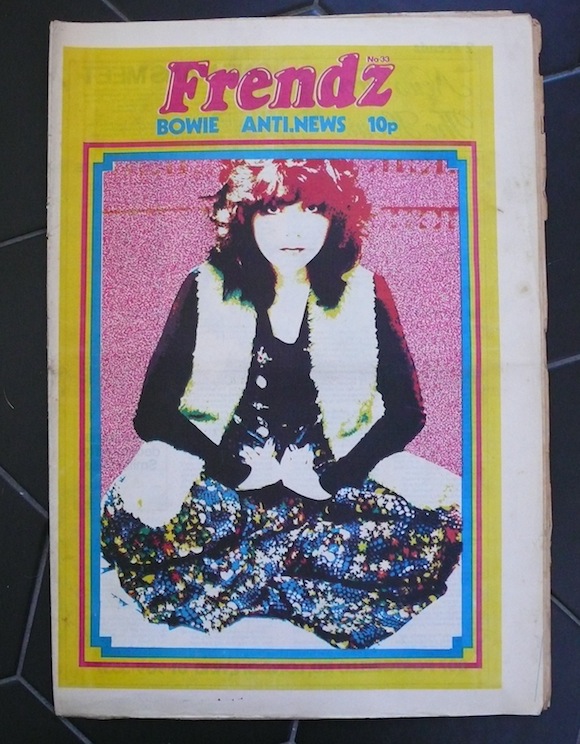
A few weeks later, to my astonishment, the newsagents in Hendon’s Church Road started stocking Frendz. I folded issue 33 between a couple of music papers and pored over it in my bedroom.
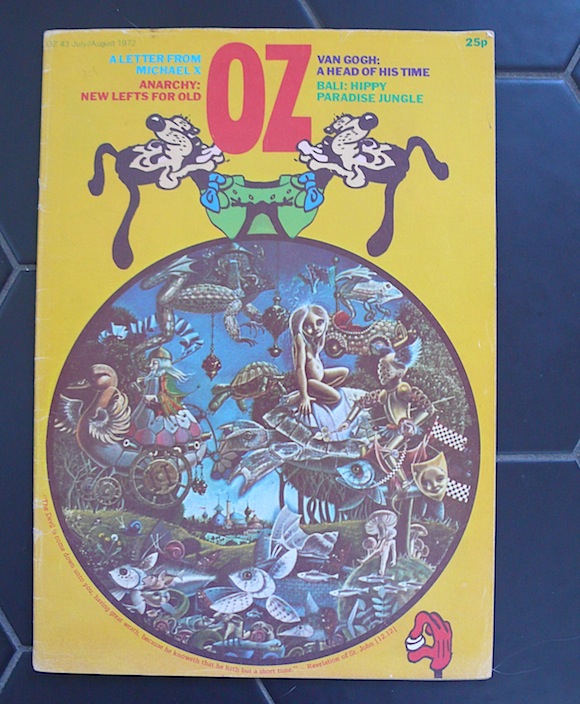
Neither of the magazines are shining examples of the genre, but they had something in common: the centre spread of OZ 43 contained a subscription form back-printed with a flyer for the London Rock N Roll Show, a one-day festival of original 50s acts and those who could claim kinship held at Wembley Stadium on August 5 that year.
And for me the most beguiling article in Frendz 33 was a two-page stream-of-consciousness report of the event filed by one Douglas Gordon and illustrated with photographs by Pennie Smith, soon to leave for the NME and carve out her reputation as one of rock photography’s all-time greats.

Long-standing revisionism is not unusual on the breakdown of a partnership, and there has been much rewriting – not least by the parties themselves – of the history of who did what, where and to whom in the three decades since the dissolution of one of the most potent creative collaborations in the history of popular culture: that between Malcolm McLaren and Vivienne Westwood.


It will be a while before we understand whether their achievements together will leap the boundaries of the still-bouyant decorative arts and the now-dessicated form of popular music into true and lasting cultural significance, but for the time being the couple’s combined impact on fashion design and the development of musical genres from punk to hip-hop and world music continues to draw in contemporary performers and designers.
QV the ballyhoo around Pharrell Williams’ recent sporting of a Westwood reissue of the so-called Buffalo Hat, a design produced by the pair for the Worlds End 1982 Buffalo collection. This coincided with the opening of their last retail environment Nostalgia Of Mud and also provided a major element in the visual identity of McLaren’s debut solo album, the towering pre-digital cross-genre pop masterpiece Duck Rock.
The hat, like the rest of the Buffalo collection, was undeniably a product of their collective resources. It may have been his concept – taken from images of traditional Peruvian dress discovered during research for Duck Rock – but it was their combined realisation.
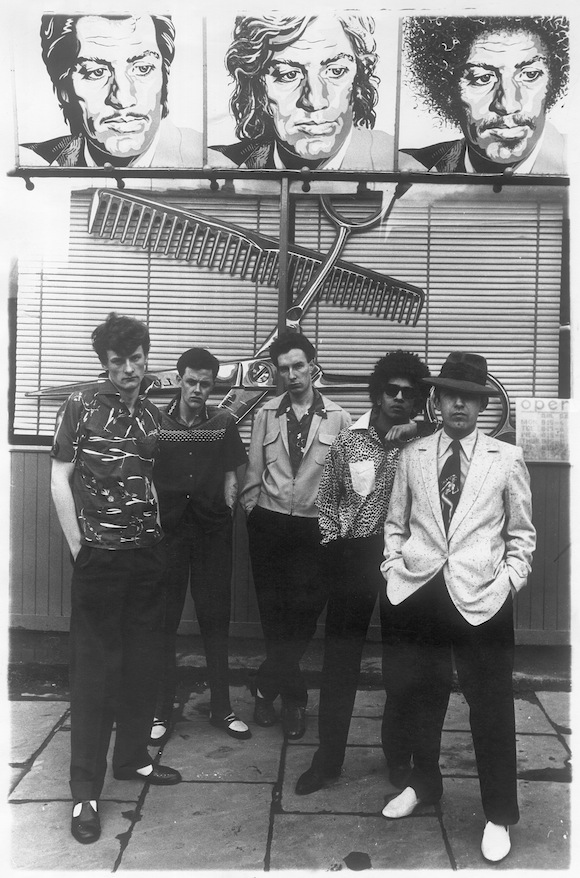
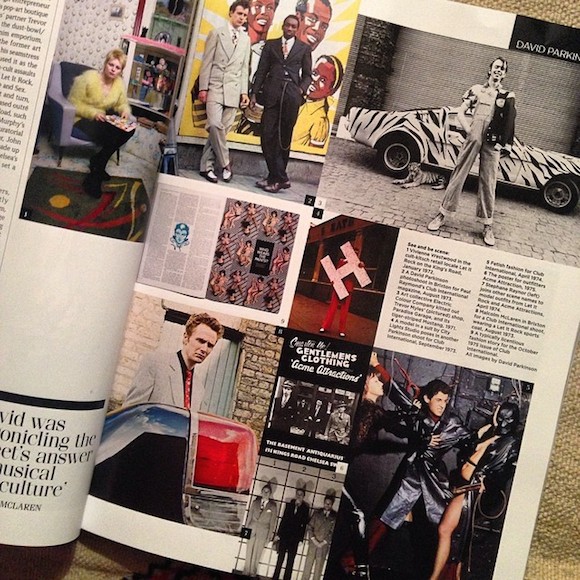
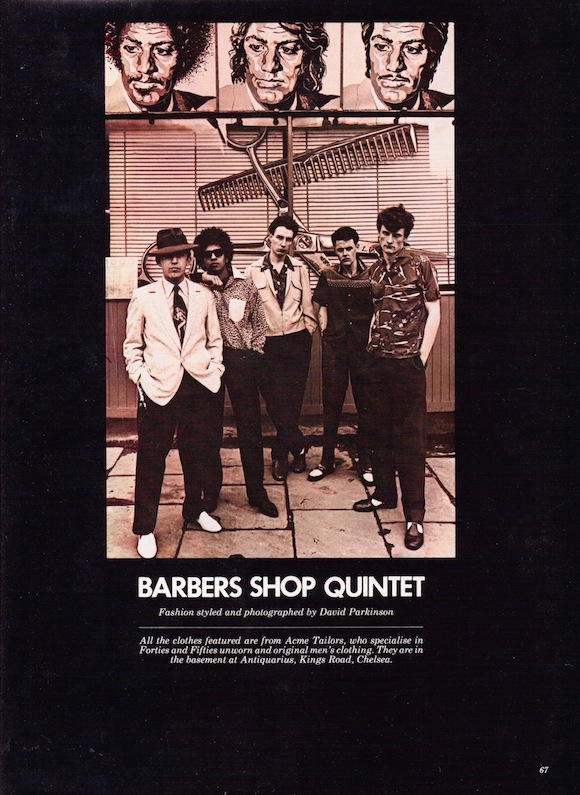
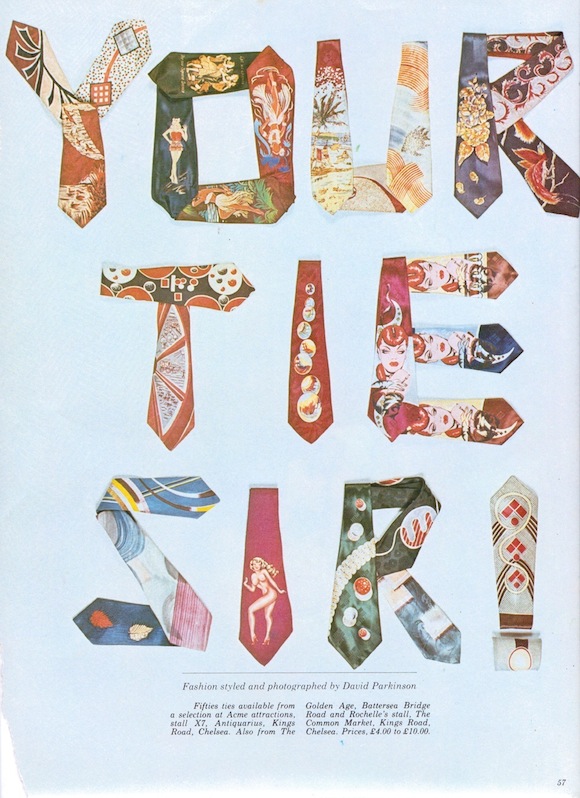
I’ve been enjoying researching materials relating to the late photographer David Parkinson for a feature for GQ magazine, so thought I’d share some of the images I dug out of the Parkinson archive concerning the 70s King’s Road retro clothing store Acme Attractions.
Parkinson’s position as fashion editor of Paul Raymond’s sophisticated soft-porn magazine Club International enabled him to style and present Acme clothing for a wide readership, on occasion using the shop team as models.
Acme was opened by Parkinson’s friend Stephan Raynor (they’d known each other since they were part of a gang of style-obsessed teenagers in Leicester in the early 60s) with John Krivine, previously a Brixton-based jukebox dealer, in 1974.
Continue reading Photography: David Parkinson shoots Acme Attractions

My 2011 post unraveling the threads running through the notorious Naked Cowboys punk t-shirt has itself inspired a new shirt.
The Cowboys t-shirt was designed by Malcolm McLaren in 1975 for sale in SEX, the shop he ran with Vivienne Westwood at 430 King’s Road in London’s World’s End.
Popular with punks and worn by members of the Sex Pistols and their coterie, it was initially known as the Saturday Night Dance shirt because of the presence of the dancehall sign in the appropriated homoerotic cowboy illustration by Jim French.

The new t-shirt has been produced by Japanese streetwear company Peel + Lift, which reproduces many McLaren and Westwood designs. It is entitled Drift, making overt the presence of 60s radical thinking in McLaren’s artwork: the drift, or the dérive, was a major theme of the Situationist International, which believed individuals should allow themselves to wander urban landscapes and become either repelled or enchanted by what they found (in the manner of the archetypal French urban explorer the flâneur).

Continue reading SEX Cowboys return to Situationist roots in new T-shirt inspired by one of my posts

Sad to note the anniversary today of the death of Tommy Roberts, flamboyant design entrepreneur and subject of my book Mr Freedom.


Here – with a selection of images from Mr Freedom – is an extract from an essay I have written about Roberts’ role in the development of design in Britain for Chris Breward and Ghislaine Wood’s book British Design: Tradition & Modernity, which will be published by Bloomsbury next year.
It is arguable that wider recognition for Tommy Roberts’ audacious innovations in the promotion of street style, furniture, gastronomy, home-wares, interiors and collectables was undercut by his refusal to observe the sensitivities of England’s post-war design world.
Roberts adopted an ebullient public persona to match his stout physique and broad Cockney accent. “I’m the most vulgar man in fashion, darlin’!” Roberts proclaimed to the no-less outrageous Sunday Times fashion editor Molly Parkin in the heyday of his Pop Art fashion and objects emporium Mr Freedom.
Continue reading Bravura + brilliance: Tommy Roberts, February 6 1941 – December 10 2012

These captivating 70s images stem from the amazing photographic archive of New York DJ legend Bobby Busnach.
Many feature Busnach’s friend and muse, the fabulous writer/photographer/performer Gerry Visco, as well as the circles they moved in at NYC’s Park Royal Hotel, Boston disco/bar The Other Side and the nascent hip-hop scene in the South Bronx.


