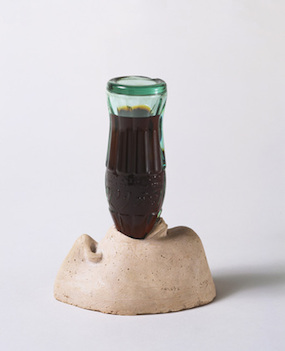
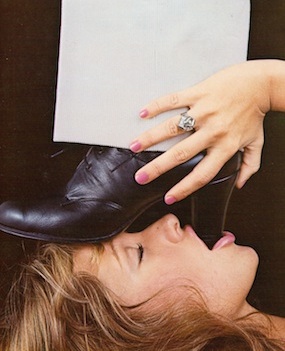
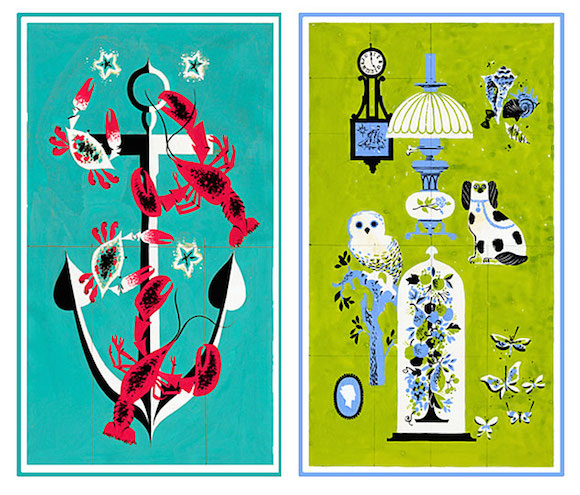
//Left: Love, 1962, Marisol. Plaster and glass (Coca-Cola bottle), 6 1/4 x 4 1/8 x 8 1/8″, MoMA. Right: From I Get A Kick Out Of You, David Parkinson, Club International, 1975//
A disturbing David Parkinson image from a mid-70s fashion shoot for British porn magazine Club International puts me in mind of the early 60s sculpture Love by the artist Marisol.
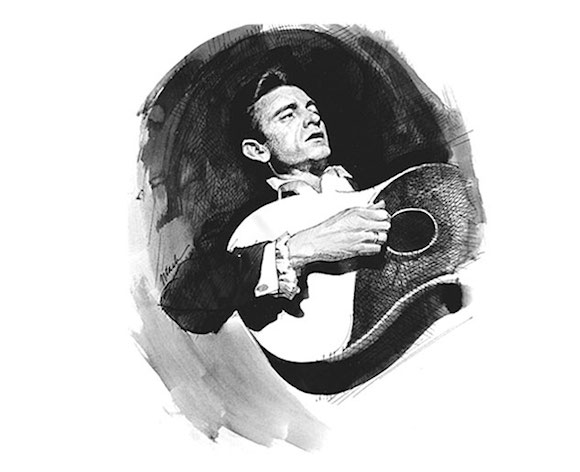
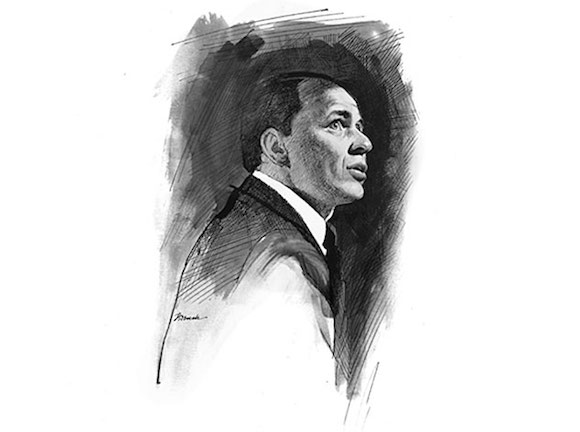
Prior to Jim French launching his homoerotic imprint Colt Studios, the venerable American illustrator and photographer made his bones on Madison Avenue in the 1950s and 60s producing work for such clients as Columbia Records and scarf and handkerchief designer Tammis Keefe.
Now a selection of French’s artworks from this period are going on display in an exhibition at Palm Springs gallery Nat Reed.
//Frank Sinatra for Columbia Record Club, Jim French////Textile design for Tammis Keefe, Jim French//
//Cover: Boy George with Mica + Jade, styling David Mignon, photography Thomas Krygier//
From time to time I’m going to be turning over information and images here as I go through the process of writing my book Legacy: The story of The Face.
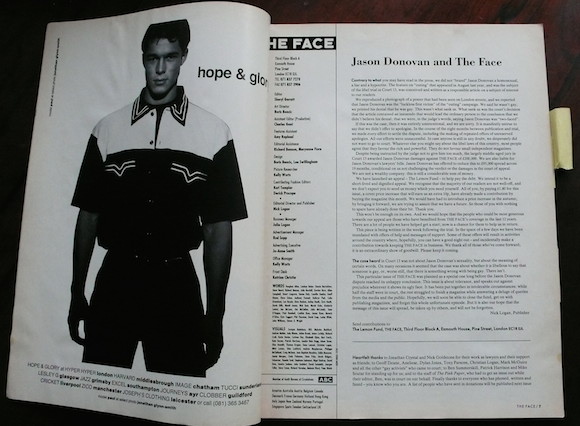
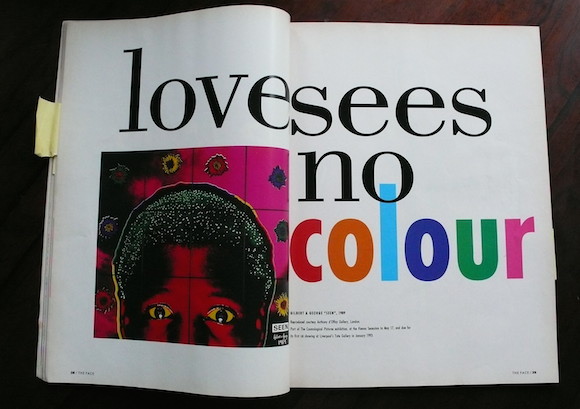
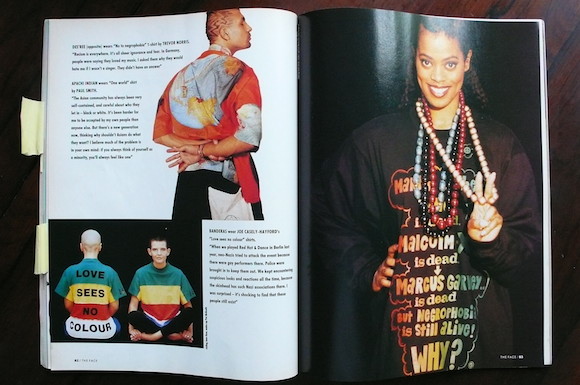
Today I spent an enjoyable and enlightening few hours interviewing former editor Richard Benson; during our conversation it became clear that one of the turning points in the history of this significant magazine occurred with the spring 1992 publication of the issue headed Love Sees No Colour.
This coincided with the High Court judgment against the magazine in the unfortunate libel case brought by actor/singer Jason Donovan on the grounds that he had been branded a liar and a hypocrite as a result of the inference that he was gay.
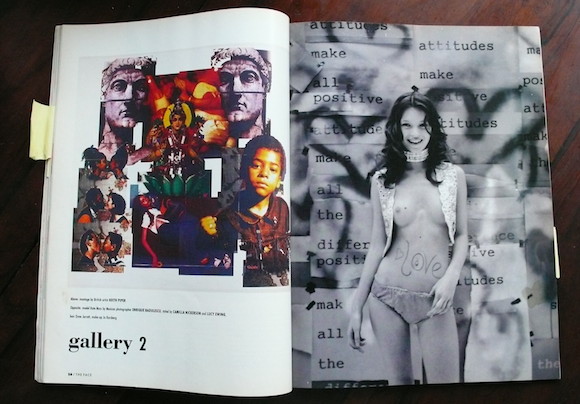
//The Face May 1992, pp6-7: Nick Logan’s editorial on the right////PP58-59: Left, montage by Keith Piper/Right, Kate Moss by Enrique Badalescu, styling Camille Nickerson + Lucy Ewing////PP38-39: Seen, Gilbert & George, 1989//
The theme of tolerance had been hatched by Benson’s predecessor Sheryl Garratt long before the dispute reached, in publisher Nick Logan’s words, “its unhappy conclusion”.
In terms of the magazine’s narrative, the issue affirmed The Face’s position as the lightning rod of the progress of popular culture in the inclusive 90s.
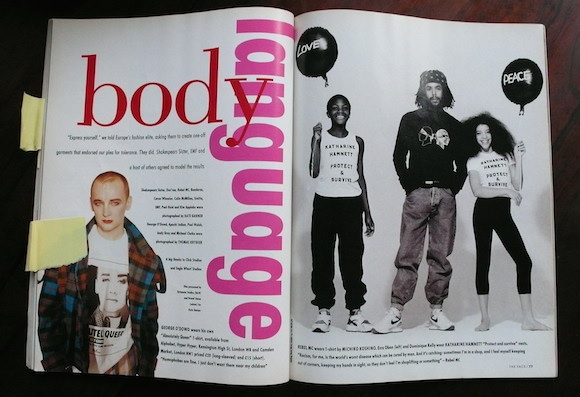
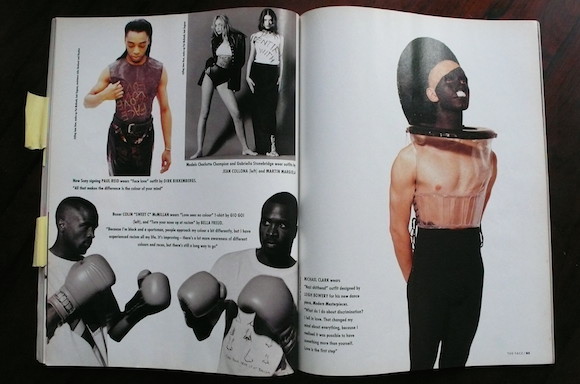
//PP76-77: Left, George O’Dowd in his Absolutely Queer T-shirt – “Homophobes are fine. I just don’t want them near my children.”/Right, Rebel MC in Michiko Koshino T-shirt, Ezra Oban + Dominique Kelly in Katharine Hamnett Protect + Survive vests. Photos: Kate Garner + Thomas Krygier////PP82-83: Left (top), Apachi Indian in One World shirt by Paul Smith, (below) Banderas in Love Sees No Colour shirts by Joe Casely-Hayford,/Right, Des’Ree in No To Negrophobia T-shirt by Trevor Norris. Photos: Kate Garner + Thomas Krygier////PP84-85: Left, (top left) Paul Reid in Face Love outfit by Dirk Bikkembergs, (top right) Charlotte Champion + Gabriella Stonebridge in Jean Colonna and Martin Margiela, (below) Colin “Sweet C” McMillan in Love Sees No Colour T-shirt by Gio Goi and Turn Your Nose Up At Racism by Bella Freud/Right, Michael Clark in Nazi Shithead outfit by Leigh Bowery. Photos: Kate Garner + Thomas Krygier//
Designed by Boris Bencic and Lee Swillingham, the issue tipped the hat to those figures who had played a part in the 80s story – Boy George, Paul Smith, Leigh Bowery – and also hit the mark with the generation setting the pace for the new decade, whether it be Joe Bloggs, Kate Moss or Martin Margiela.
Produced in an all-hands-to-the-pump atmosphere, with Logan and Garratt in daily court attendance and the all-too-real prospect of forced closure as a result of the huge legal bills resulting from the Donovan case, The Face May 1992 is a cracking issue, one which stands up as a consummate example of journalistic excellence achieved under duress.
Legacy: The story of The Face is published by Thames & Hudson in autumn 2017.
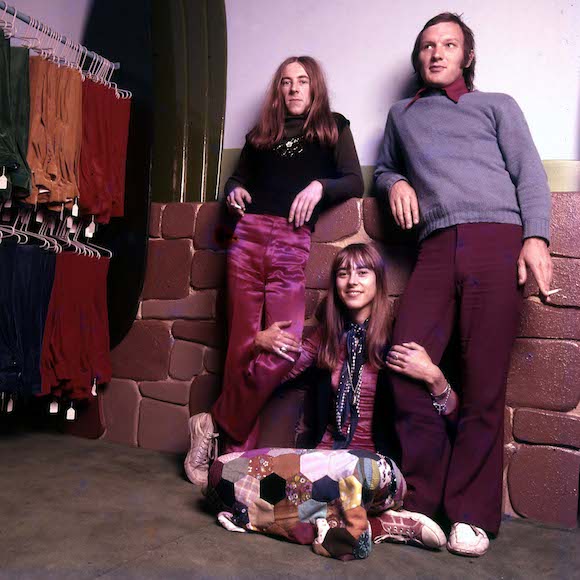
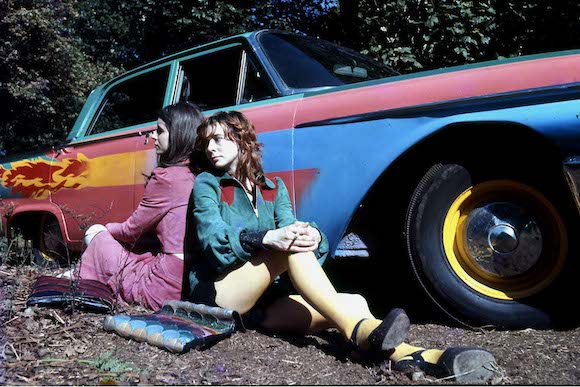
//Electric Colour Company’s Roderic Stokes and David Smith with Carol Davey at Blueberry Hill, 91 King’s Road, London, 1970//
Here are a couple of images relating to late 60s/early 70s British design studio Electric Colour Company; I’m writing a magazine feature about their exceptional body of work which ran from signage, custom-built furniture and shop designs (notably Mr Freedom, Paradise Garage and City Lights Studio) to lighting modules, display objects, interior decoration, murals, custom cars and fashion accessories.
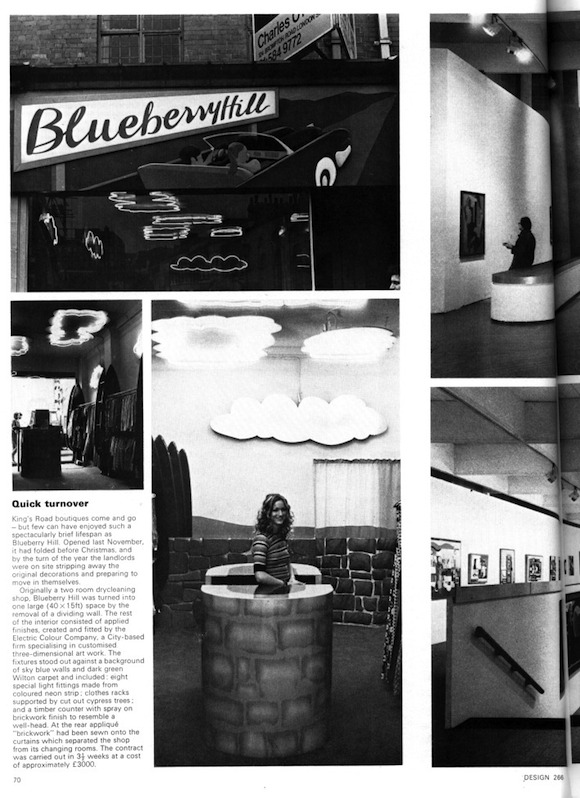
In November 1970 the King’s Road boutique Blueberry Hill was launched with a comprehensive fit-out – reported at a substantial-for-those-days £3,000 – by the ECC team of Andrew Greaves, Jeffrey Pine, David Smith and Roderic Stokes.
//By the time this coverage appeared in the February 1971 issue of Design magazine, Blueberry Hill had been closed for several weeks//
Despite the extraordinary nature of the shop design – which included cloud-form light fittings in neon strip and a timber counter with spray-on brickwork finish resembling a well-head – Blueberry Hill closed after just six weeks when the landlords opted to replace it with a more bankable betting shop.
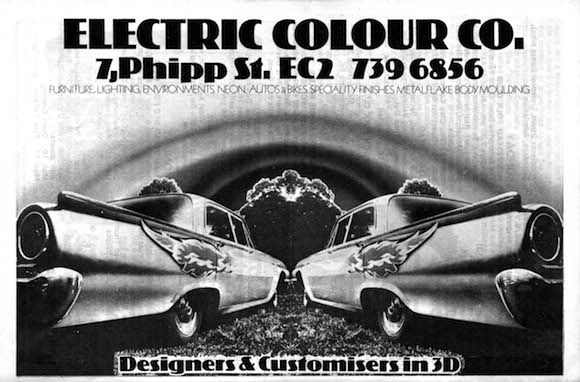
//Irene Smith and Dinah Adams with the ECC-customised Ford Fairlane 500, 1970////Advert, Time Out, 1970//
The other photograph shows ECC fellow travellers Dinah Adams – who designed clothes for Mr Freedom, Paradise Garage and Granny Takes A Trip – and Irene Smith with the customised Ford Fairlane which also appeared in the East End company’s advertising.
I’ll give the nod when my piece on Electric Colour Company is nearing publication.
//Prophetika: Based on an ancient formula with hints of Cairo, Chicago…and Casseopia//
One day I’ll write a post justifying my view that Kicks #6 is the hands-down greatest music magazine of all time, but for now it’s worth recording that the folks behind Kicks – namely Miriam Linna and Billy Miller – continue to, er, kick out the wildest music and related stuff via their Norton Records and Kicks Books imprints.
To coincide with the publication of the first volume of the trilogy Prophetika – which gathers together a trove of unpublished poetry and prose by the intergalactic visionary Sun Ra – Kicks Books (“The publisher, the parfumier”) has announced a fragrance of the same name which draws on an ancient formula “invoking a mirage of memories and mysteries and inciting a call to action”. Apparently there are hints of Cairo, Chicago…and Casseopia.
The perfume comes in a deluxe 0.5 oz Italian glass bottle in a presentation box and is just $13 – buy your’s here.
FB friend Joss Hutton nailed it with his response to the question as to what Prophetika smells like: “The Future”. Of course.
There’s a shindig to launch the book and niff at NYC’s St Mark’s Church next Friday. Details here.
//Front cover, Club International, 1974. Paul Raymond Publications. Photo: David Parkinson//
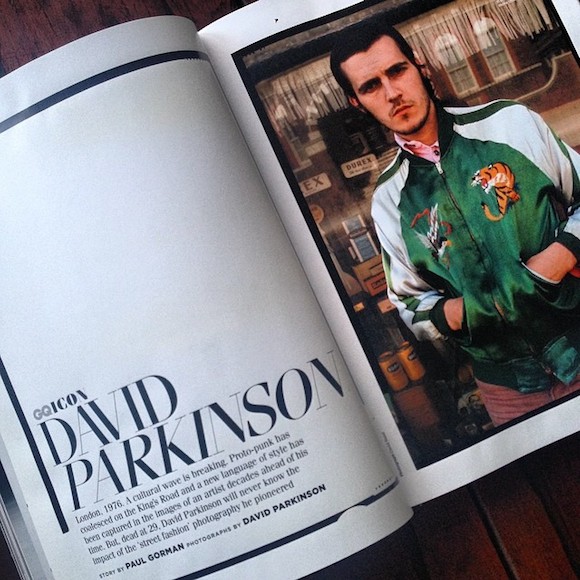
Ahead of the publication of my piece about the late photographer David Parkinson in GQ UK in a few weeks, here are a couple of masterful images which demonstrate his stylised, simultaneously gritty and glamorous approach.
//Front cover, Man Only, 1974//
Both stem from issues of men’s magazine Club International; the 1974 cover shot model is wearing Parkinson’s decorated Lewis Leathers jacket which he used to dress other fashion photo-sessions. The image was also used on the cover of Italian soft-porn title Man Only.
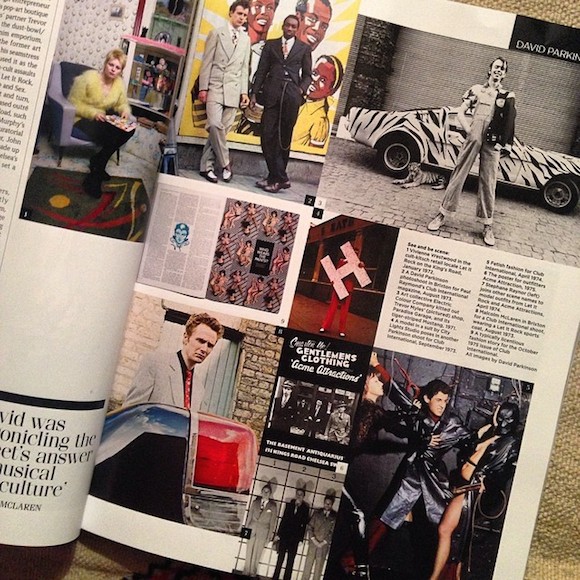
//Acme Attractions photoshoot for Club International 1975 including (left) Martin Brading and Don Letts and far right Steph Raynor. Photo: David Parkinson//
The spread above focused on the suits and menswear available at Acme Attractions, the Kings Road vintage/retro outlet co-owned by Parkinson’s Lesicester friend Steph Raynor, who appears in the photograph with Acme’s manager, filmmaker/DJ/BAD member Don Letts, and Parkinson’s assistant, photographer Martin Brading.
Raynor is among those who contributed to my feature on Parkinson, who is granted the accolade of ‘GQ Icon’ in the June issue (available at the beginning of May).
//Deakin drinking, 1960s. John Deakin, courtesy Robin Muir////The cover of the new book features this 50s portrait of author JP Donleavy//
“The second nastiest little man I have ever met” – Barbara Hutton
“He was a member of photography’s unhappiest minority whose members, while doubting its status as art, sometimes prove better than anyone else that there is no doubt about it” – Bruce Bernard
The documentary portraiture of British fashion photographer John Deakin from the 1940s to his death in the early 70s is poised for a fresh round of appraisal with next week’s opening of the exhibition Under The Influence at London’s Photographers’ Gallery.
This coincides with the publication of Robin Muir’s companion book of the same title.
//Girl In Cafe, late 1950s. (c) John Deakin, The John Deakin Archive 2013////Tony Abbro of Abbro & Varriano, newsagents, 48 Old Compton Street, Soho, 1961. (c) John Deakin, The John Deakin Archive 2013//
Muir is Deakin’s foremost proponent, responsible for 2002’s A Maverick Eye. This collected Deakin’s so-called “street photography” in London and on the Continent compiled during bouts of employment for British Vogue. As the title suggests, the new book focuses on the inhabitants of the stamping ground most associated with Deakin’s lush life: Soho.
On Deakin’s death in May 1972, his friend and subject Bruce Bernard rescued what comprises Deakin’s body of work in this field from a set of tatty cardboard boxes under the bed in his Berwick Street flat.
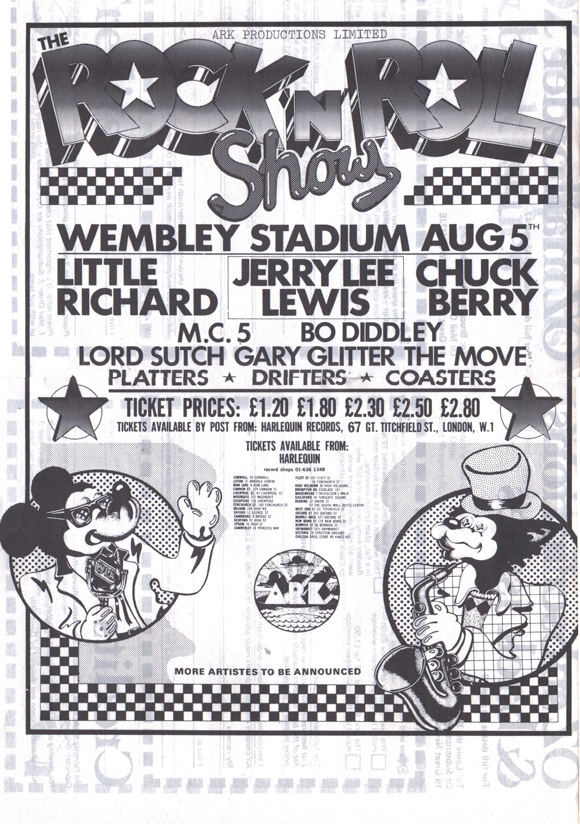
//Flyer for The Rock n Roll Show printed on the back of a subscription form for Oz magazine, July 1972. The Move were replaced by lead member Roy Wood’s new band Wizzard; this was their first gig. Original Brit-rocker Heinz was added to the bill; his backing band would soon become Dr Feelgood//
I acquired my first underground press publications in the summer of 1972, at about the point when the sector was taking the nosedive from which it never recovered.
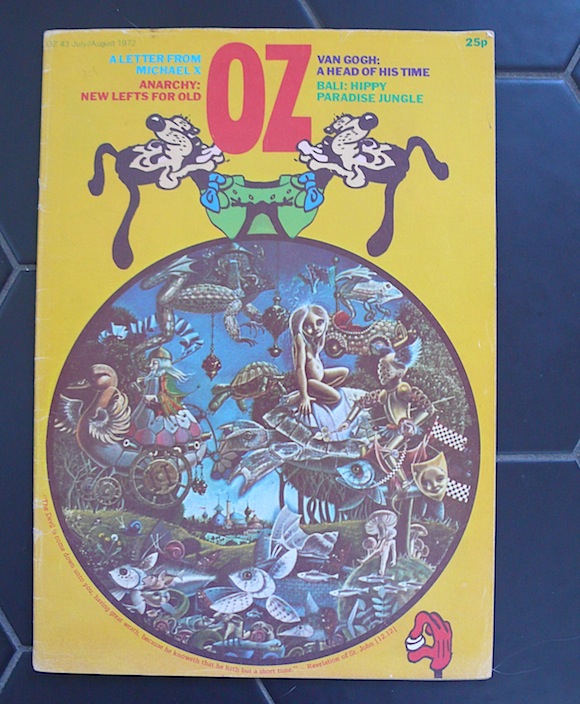
Still, better late than Sharon Tate, as they say. Aged 12, my taste had been whetted by sneak peeks at an older brother’s collection of magazines when a guy called Kevin O’Keefe who lived down the road gave me a few copies of Oz, including number 43, the July issue.
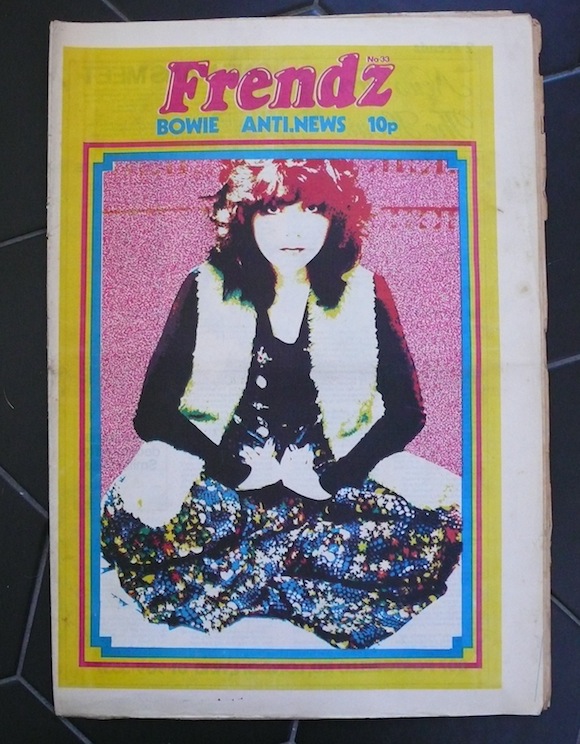
A few weeks later, to my astonishment, the newsagents in Hendon’s Church Road started stocking Frendz. I folded issue 33 between a couple of music papers and pored over it in my bedroom.
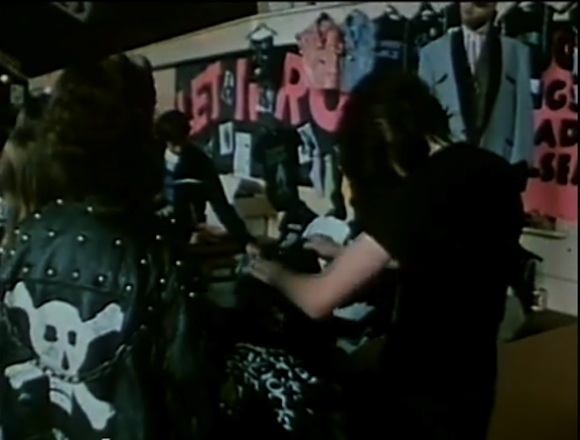
//Front cover of OZ 43, the issue which included the Wembley flyer////Front cover, Frendz 33, September 1972////Crowds around the Let It Rock stand. From the 1973 film London Rock N Roll Show directed by Peter Clifton//
Neither of the magazines are shining examples of the genre, but they had something in common: the centre spread of OZ 43 contained a subscription form back-printed with a flyer for the London Rock N Roll Show, a one-day festival of original 50s acts and those who could claim kinship held at Wembley Stadium on August 5 that year.
And for me the most beguiling article in Frendz 33 was a two-page stream-of-consciousness report of the event filed by one Douglas Gordon and illustrated with photographs by Pennie Smith, soon to leave for the NME and carve out her reputation as one of rock photography’s all-time greats.
//McLaren/Westwood Buffalo Hat 1982, V&A Collection.//
Long-standing revisionism is not unusual on the breakdown of a partnership, and there has been much rewriting – not least by the parties themselves – of the history of who did what, where and to whom in the three decades since the dissolution of one of the most potent creative collaborations in the history of popular culture: that between Malcolm McLaren and Vivienne Westwood.
//In the arena: McLaren engages with pop, 1983//
It will be a while before we understand whether their achievements together will leap the boundaries of the still-bouyant decorative arts and the now-dessicated form of popular music into true and lasting cultural significance, but for the time being the couple’s combined impact on fashion design and the development of musical genres from punk to hip-hop and world music continues to draw in contemporary performers and designers.
QV the ballyhoo around Pharrell Williams’ recent sporting of a Westwood reissue of the so-called Buffalo Hat, a design produced by the pair for the Worlds End 1982 Buffalo collection. This coincided with the opening of their last retail environment Nostalgia Of Mud and also provided a major element in the visual identity of McLaren’s debut solo album, the towering pre-digital cross-genre pop masterpiece Duck Rock.
The hat, like the rest of the Buffalo collection, was undeniably a product of their collective resources. It may have been his concept – taken from images of traditional Peruvian dress discovered during research for Duck Rock – but it was their combined realisation.