“What’s to say, save that his contempt was not reserved solely for the music business? Or the art business. Or the business of being human. There were times when he saw with his own dead eyes. But he had the sight to see through them.”
K-LS on the album’s opening track Afoju Ti Ole Riran (Dead Eyes)
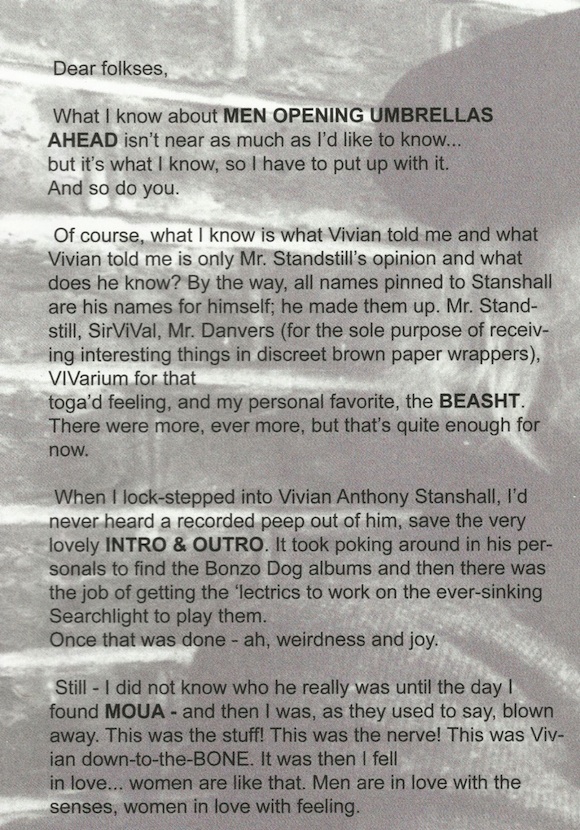
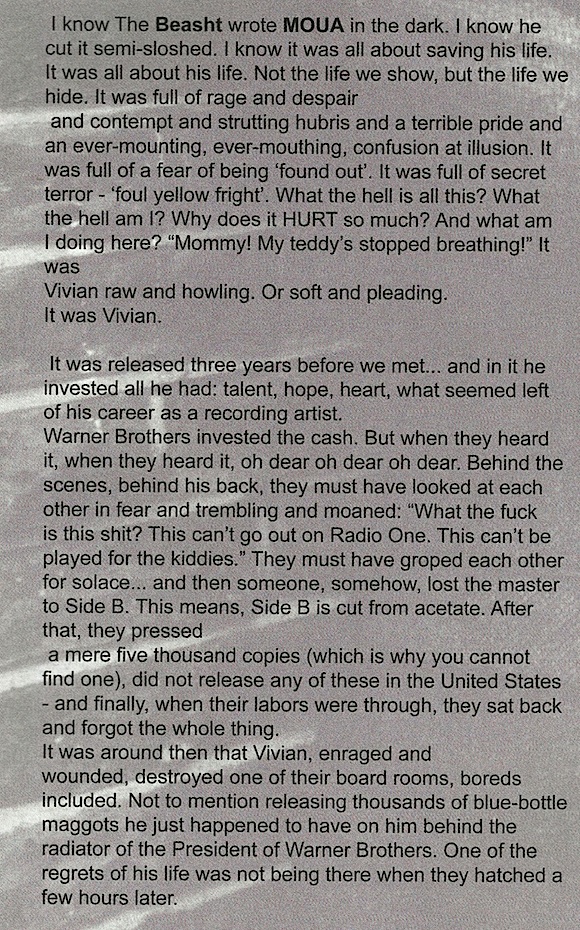
Ki-Longfellow Stanshall’s sleevenotes for the 2012 reissue of the lost classic Men Opening Umbrellas Ahead are stunning, filled with anguish and joy, rather like the life and work of the LP’s creator, her much-missed partner Vivian Stanshall.
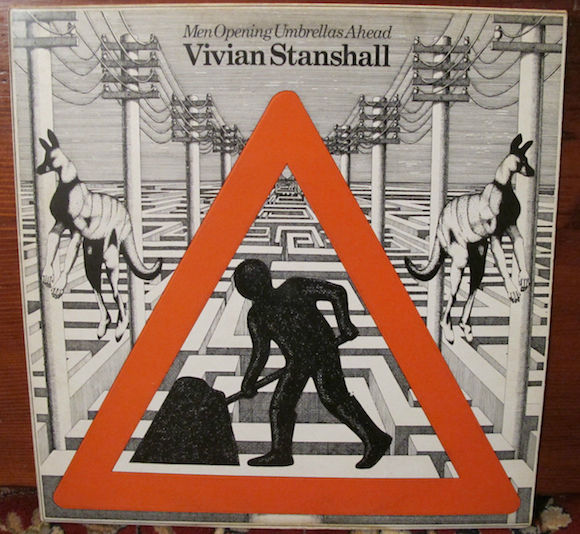
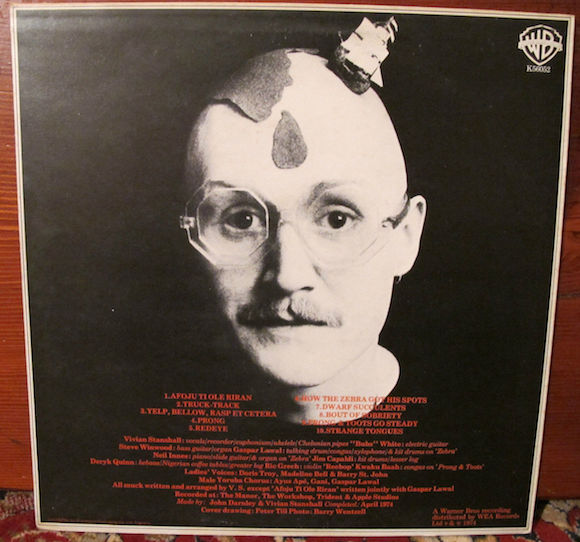
I treasure my vinyl copy, put out with much love by my old mucker Joe Foster, and heartily recommend the Afro-flavoured grooves Stanshall brewed up back in 1974 with such fellow legends as Reebop Kwaku Baah, Jim Capaldi, Neil Innes, Gaspar Lawal and Steve Winwood.
//The PoppyDisc reissue recreates the sleeve artwork of the Warner 1974 release: Cover drawing by Peter Till////Back cover of original release. Photo: Barrie Wentzell//
Buy a copy of PoppyDisc’s vinyl reissue of Men Opening Umbrellas Ahead here.
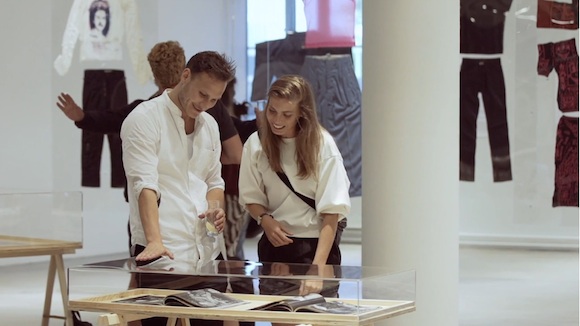
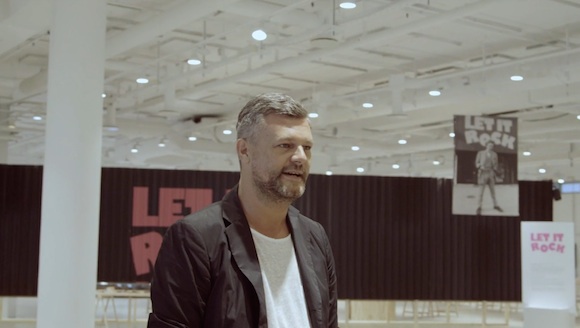
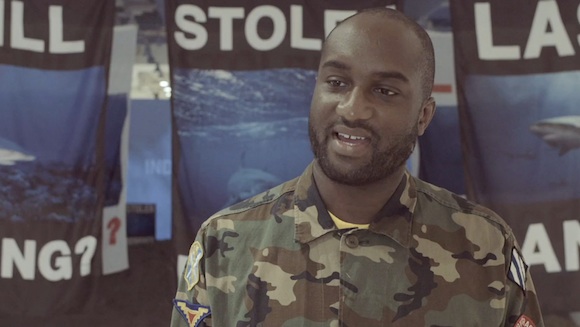
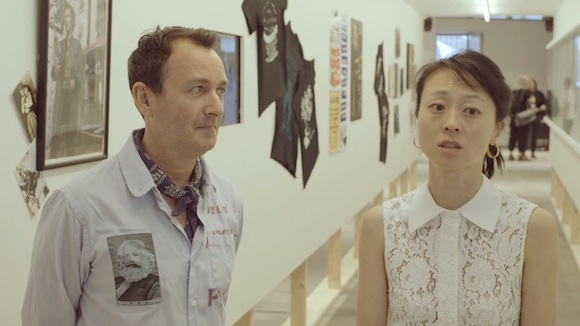
This short film gives a flavour of Let It Rock, the exhibition about Malcolm McLaren’s engagement with fashion in the 70s and 80s curated by Young Kim and I in Copenhagen earlier this month.
We are interviewed along with Kristian Andersen, Copenhagen International Fashion Fair fashion and design director, and our co-exhibitor, US streetwear designer Virgil Abloh.
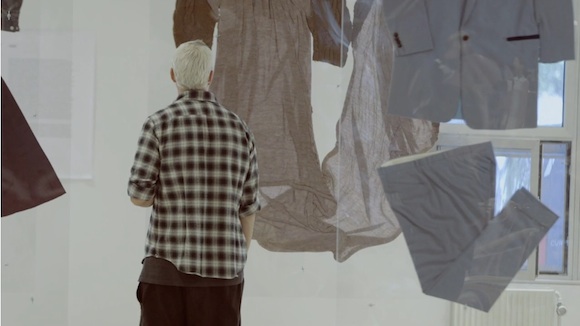
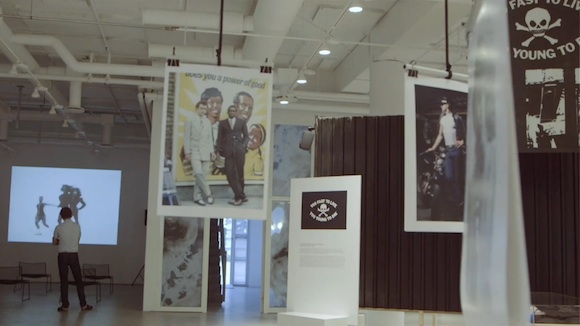
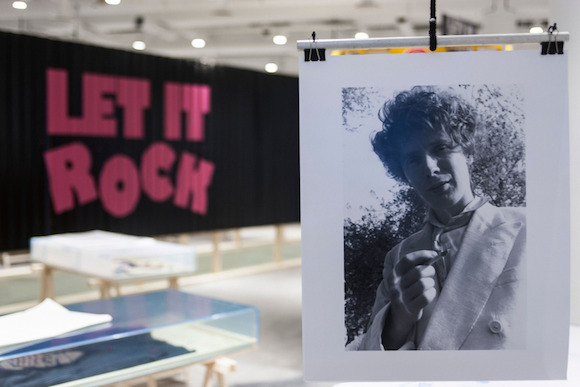
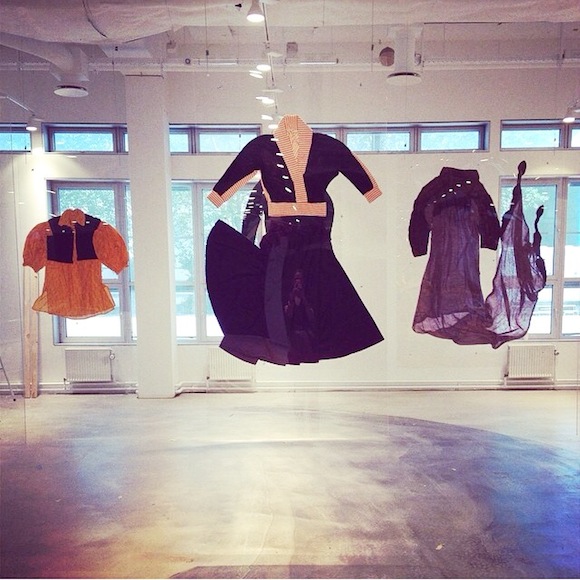
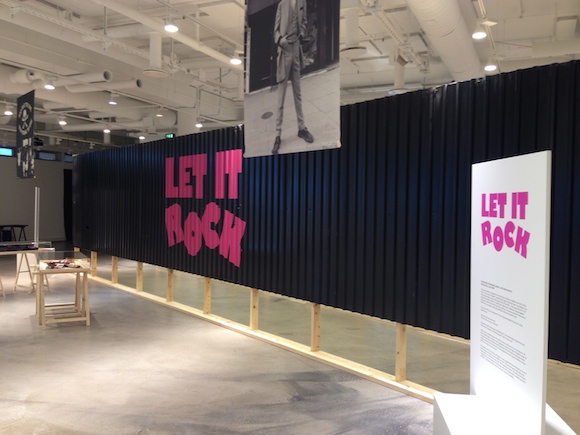
//Foreground: Mobile featuring portrait of Malcolm McLaren in Central Park, NYC, 1975 by Bob Gruen. In the background the 12m-long Let It Rock installation. Photo: Jean Francois Carly (c) Malcolm McLaren Estate////McLaren’s Buffalo sheepskin with Witches multi-tongued shoes contributed by designer Kim Jones. Photo: Jean Francois Carly (c) Malcolm McLaren Estate ////Outfits float in the air, from left: Pirate waistcoat and dress worn by Annabella Lwin of Bow Wow Wow in performance; Let It Rock shawl collared blouse and circle skirt; Nostalgia Of Mud wool toga dress with Folkways print. Malcolm McLaren Estate, Kim Jones Collection, private collection//
The response to this week’s Malcolm McLaren exhibition Let It Rock has been very encouraging; here are some images which hopefully give an idea of the show’s impact.
Running for four days at Copenhagen’s Bella Center as part of the Danish city’s international fashion fair CIFF, the show – curated by me and Young Kim of the MM Estate – focused on the late cultural iconoclast’s engagement with fashion with Vivienne Westwood in the 70s and 80s.
We have received favourable press, with particular praise from the FT’s Charlie Porter, who wrote that the hang of the garments was “exceptional”. Meanwhile style blogger Susie Bubble described the exhibition – full title Let It Rock: The Look Of Music The Sound Of Fashion – as “incredibly detailed and well put together”.
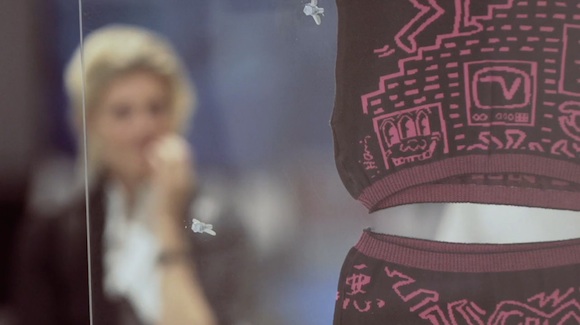
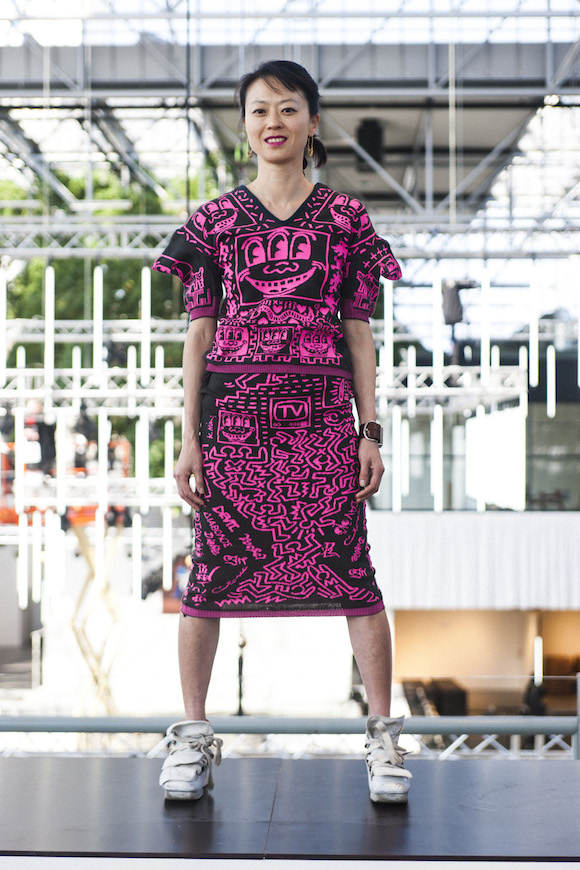
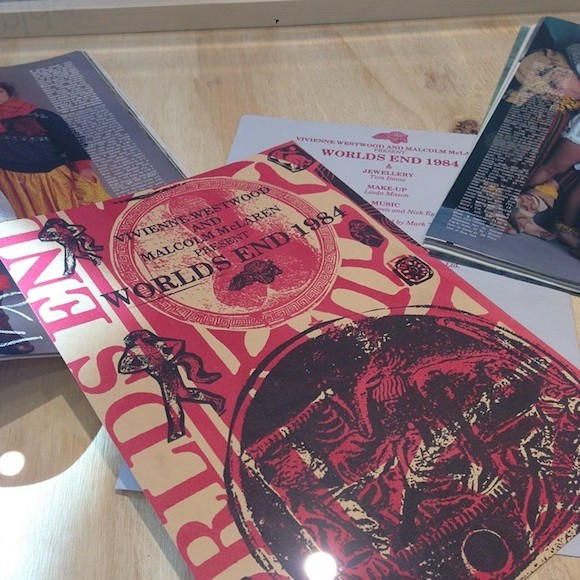
//Young Kim in jacquard Keith Haring print Witches two piece and multi-tongued sneakers. All clothes from Kim Jones coillection. Photo: Jean Francois Carly (c) Malcolm McLaren estate////Fans belt buckles with Fans press statement. Sources: Malcolm McLaren Estate and private collection////Press invite and showcard for the sixth catwalk collection designed by McLaren and Vivienne Westwood: Worlds End 1984, later Hypnos. The partnership was dissolved in March 1984. Malcolm McLaren Archive////ROCK! Marco Pirroni’s Let It Rock ties//
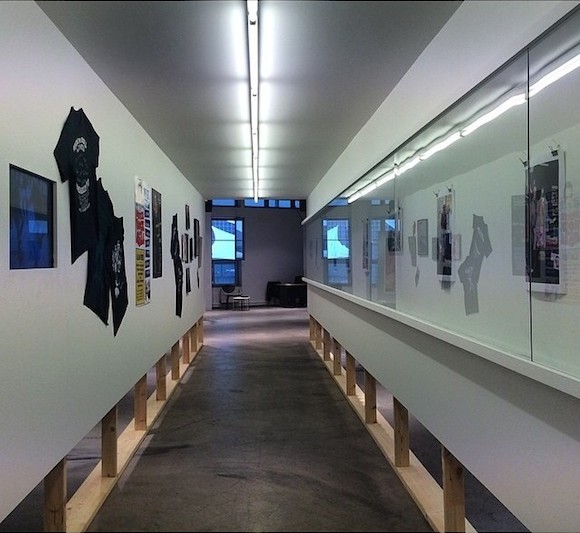
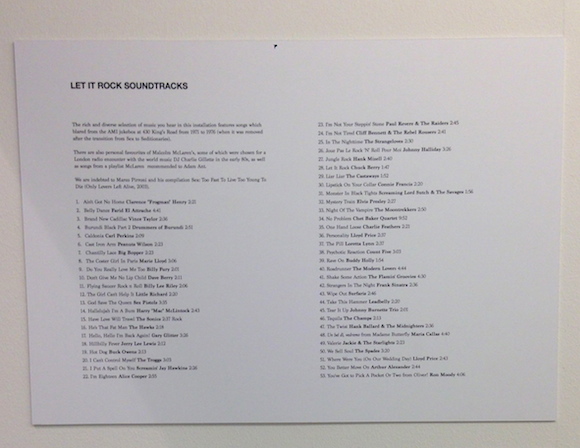
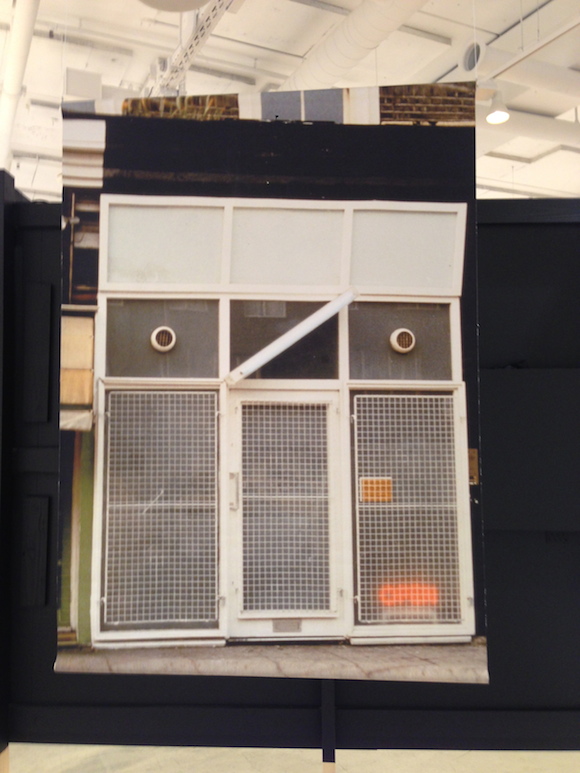
We designed the show centrepiece: an imposing black corrugated iron-clad 12-metre long tunnel installation celebrating McLaren’s first shop, Let It Rock. Among the exhibits inside were previously unpublished photographs of the shop interior taken by the late David Parkinson and an original shop price list owned by McLaren. A bespoke soundtrack blared music as featured on the jukebox at 430 King’s Road as well as personal favourites of McLaren’s, from Burundi Black by the Drummers Of Burundi to Cast Iron Arm by Peanuts Wilson and Hallelujah I’m A Bum by Harry “Mac” McLintock.
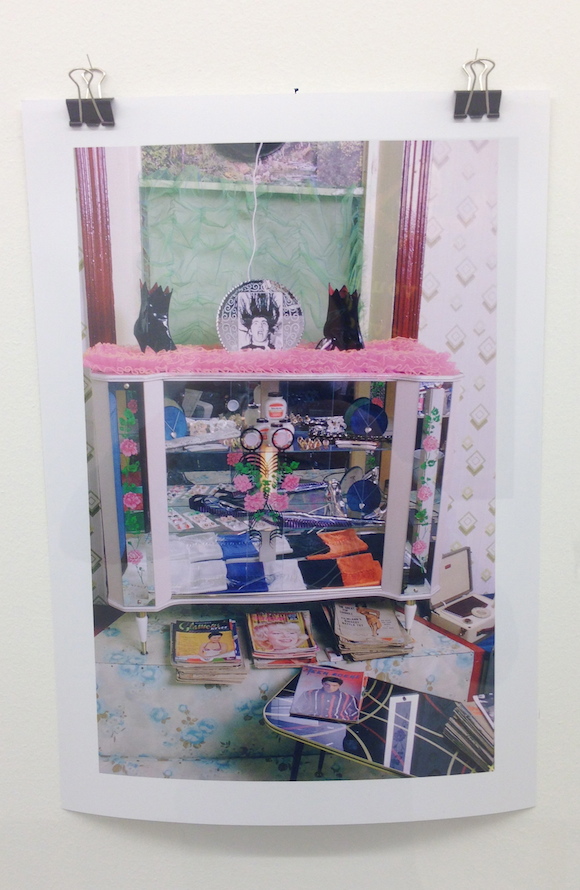
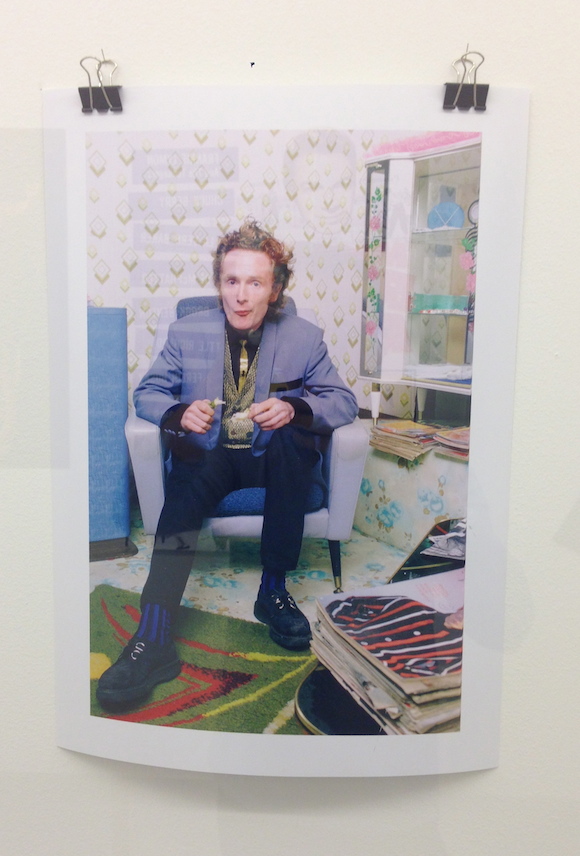
//Installation exterior////Installation interior////Let It Rock display cabinet, January 1972. Photo: David Parkinson////McLaren’s framed copy of the LIR price list he designed in 1972. Malcolm McLaren Estate////January 1972. Photo: David Parkinson/////Tracklisting for songs played in the insatllation//
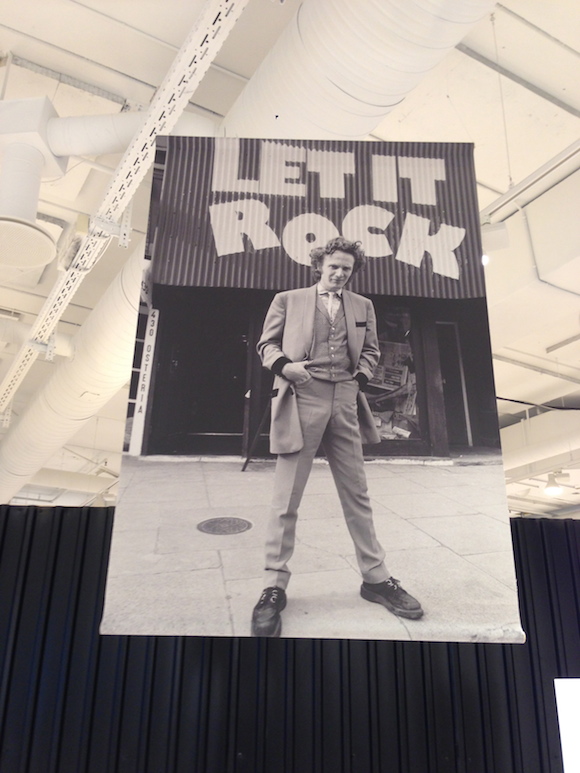
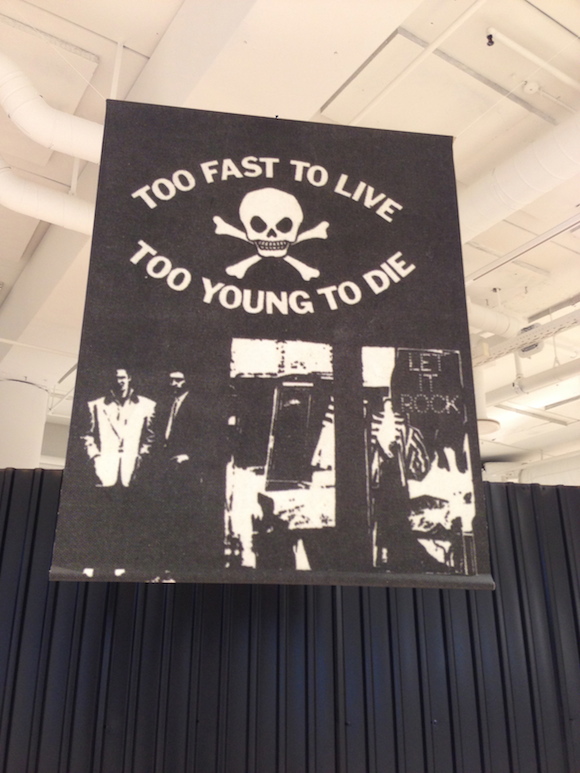
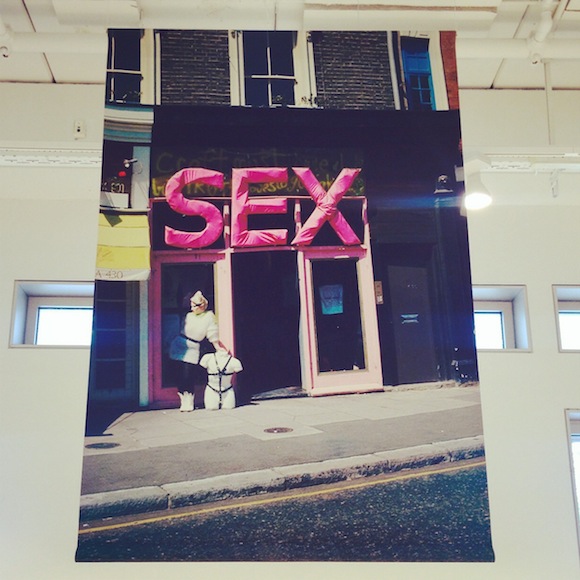
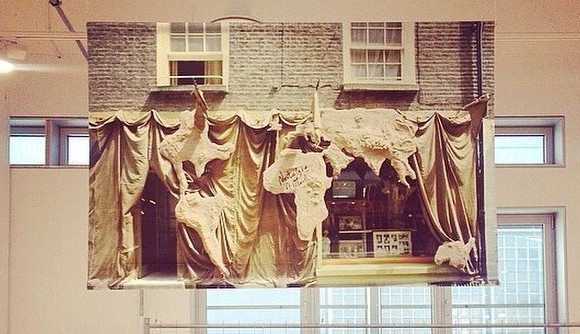
The show was subdivided into six areas each dedicated to a manifestation of the outlets McLaren operated with Westwood. These were signposted by 60 x 40″ photographic blow-ups of the exteriors we commissioned to be printed on canvas to add dimension and presence.
//Let It Rock exterior with McLaren in foreground, 1972. Photo: Mirrorpix. Printed on canvas 60 x 40″////Too Fast To Live Too Young To Die with McLaren and Gerry Goldstein in foreground, 1973. Photo: Malcolm McLaren Estate. Printed on canvas 60 x 40″////Sex with shop assistant Jordan in foreground, 1976. Photo: Sheila Rock. Printed on canvas 60 x 40″////Seditionaries frontage, 1976. Photo: Ben Kelly. Printed on canvas 60 x 40″////Worlds End frontage, 1981, photo: Sheila Rock. Printed on canvas 60 x 40″. Left: Marco Pirroni’s Let It Rock drape suit////Nostalgia Of Mud, 1982. Photo: Sheila Rock. Printed on canvas 40 x 60″//
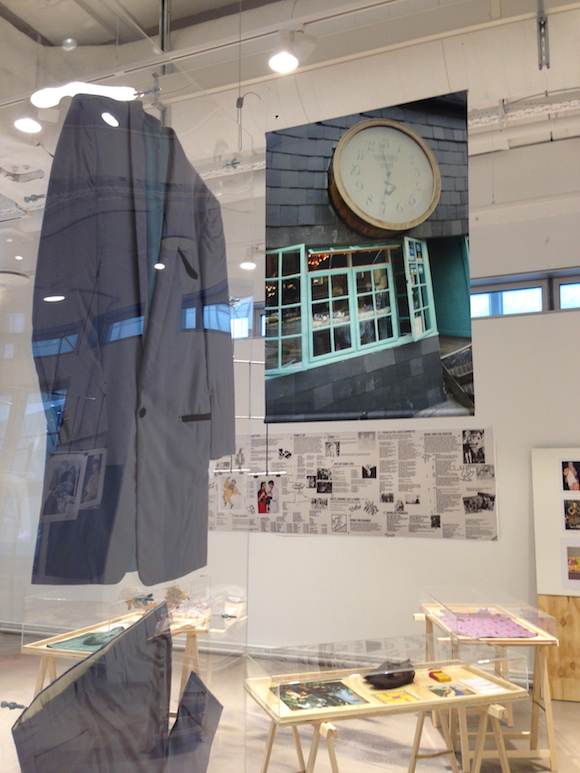
With text panels explaining exhibits in McLaren’s own words, each section also featured photographic mobiles suspended from the ceiling and Perspex-topped vitrines containing original garments, photography, notebooks, sketches and ephemera.
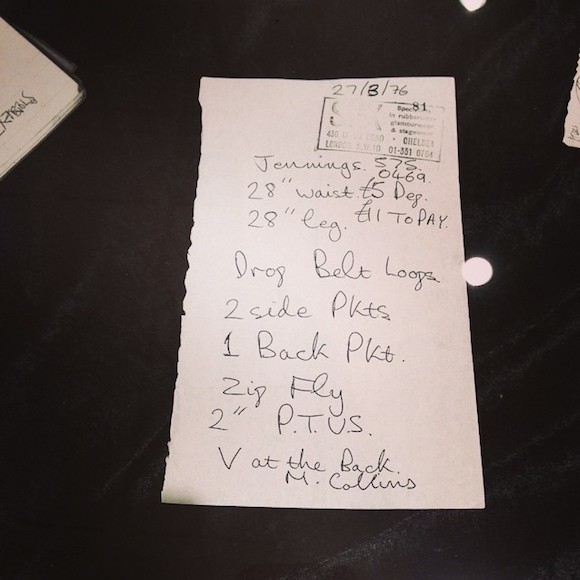
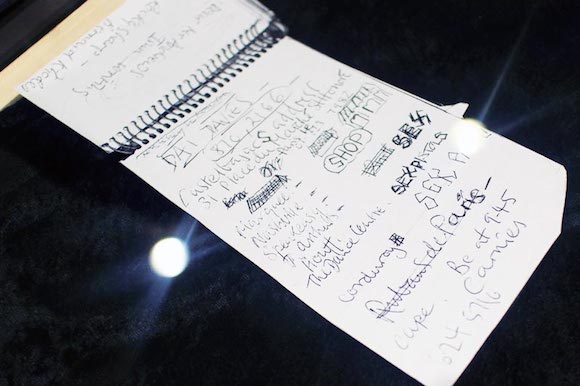
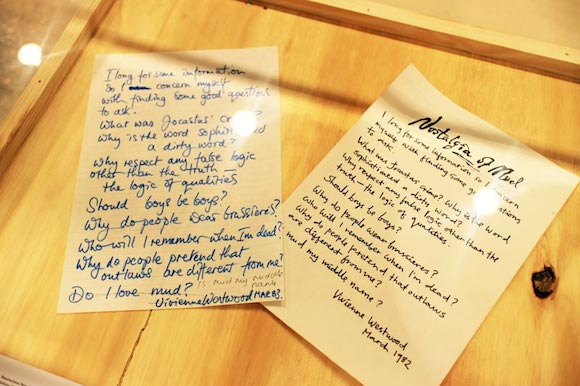
//Customer deposit receipt, Sex, 1976. Signed by shop assistant Michael Collins. Paul Burgess Collection////Pages from McLaren’s 1976 notebook. Paul Burgess Collection////McLaren’s handwritten Nostalgia Of Mud press release for Vivienne Westwood; her version in her own handwriting. Photo: Jean Francois Carly (c) Malcolm McLaren Estate//
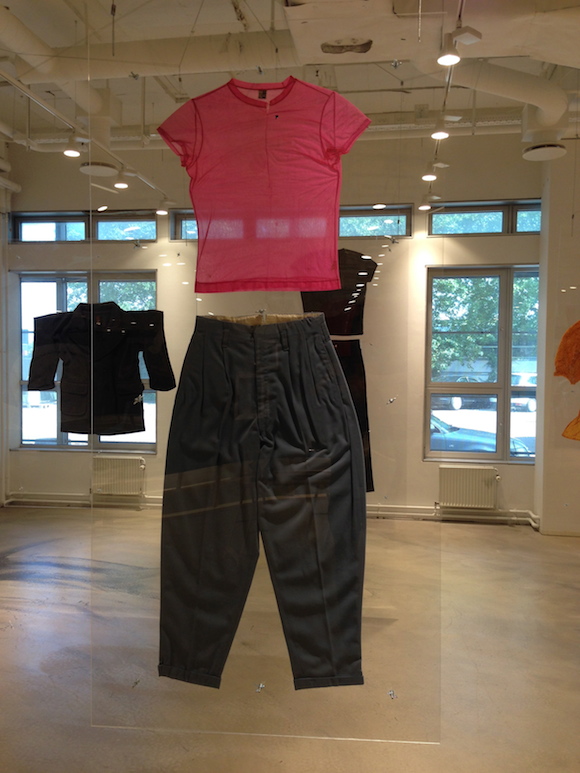
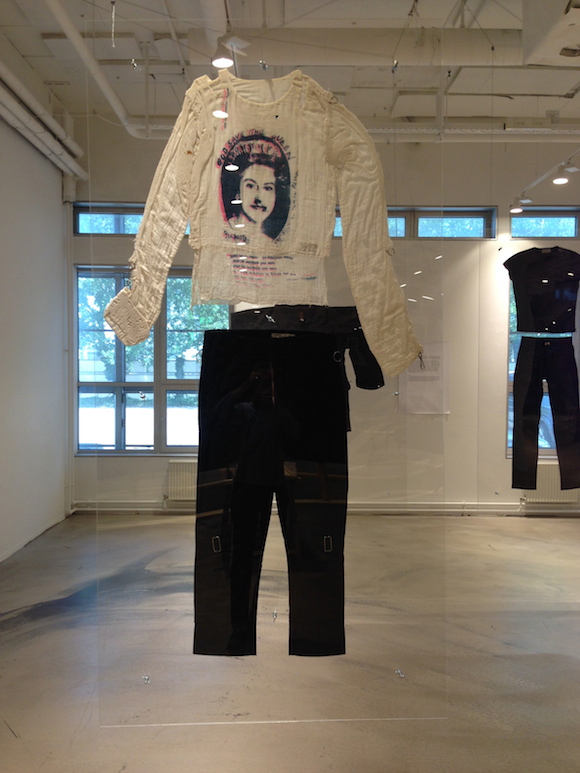
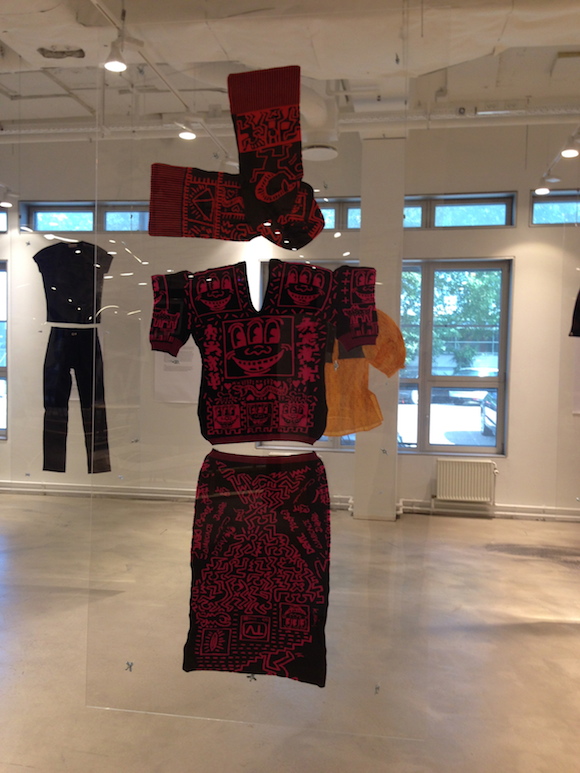
One area of the show was dedicated to 10 outfits reflecting the span of the designs from Let It Rock to Nostalgia Of Mud. Our solution to the ticklish problem of how clothes are presented in exhibitions was to fly these from the ceiling between sheets of Perspex, and we made a selection from the Estate archive as well as contributions by the likes of Louis Vuitton’s style director Kim Jones and guitarist/songwriter Marco Pirroni.
//Nylon top, Sex, 1976. Peg trousers, Let It Rock, 1974. Kim Jones Collection////God Save The Queen Muslin top, Seditionaries, 1977. McLaren’s bondage trousers, Sex, 1976. Malcolm McLaren Estate/private collection////Witches jacquard two piece and scarf with Haring print. Kim Jones Collection//
In the projection room visitors viewed moving images associated with McLaren, from rare film of the catwalk shows he conducted with Westwood in the early 80s to video clips for his hits such as Buffalo Gals and Soweto.
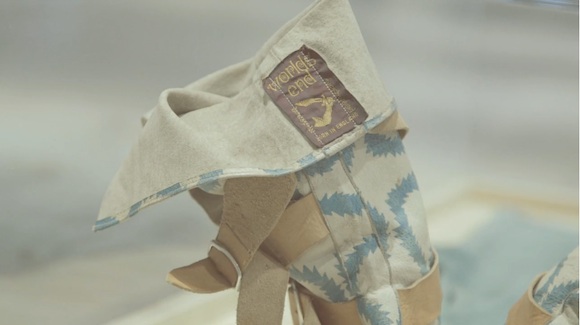
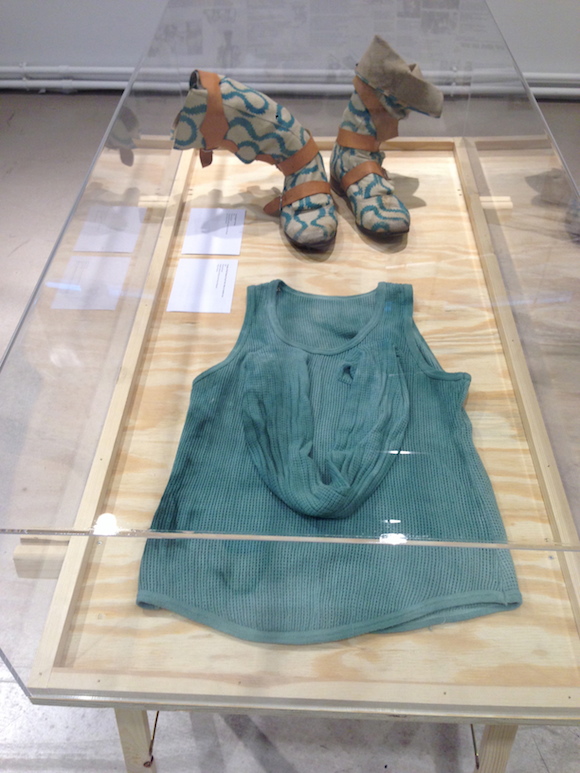
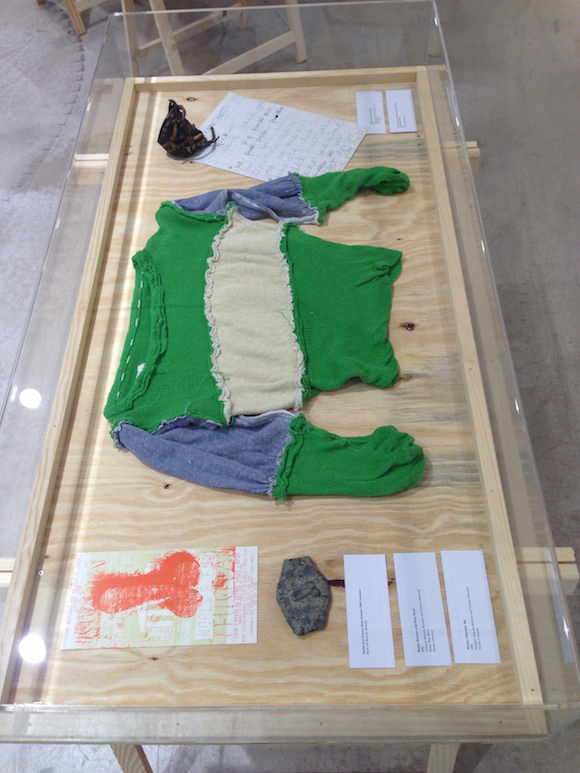
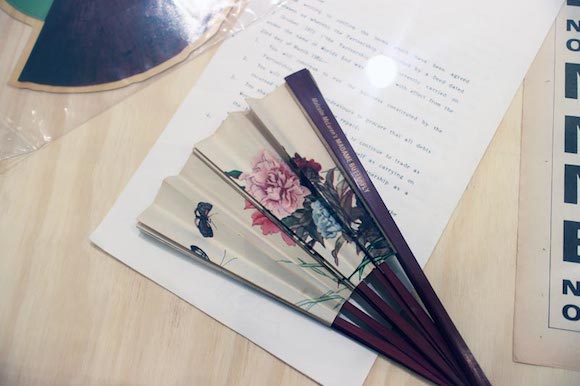
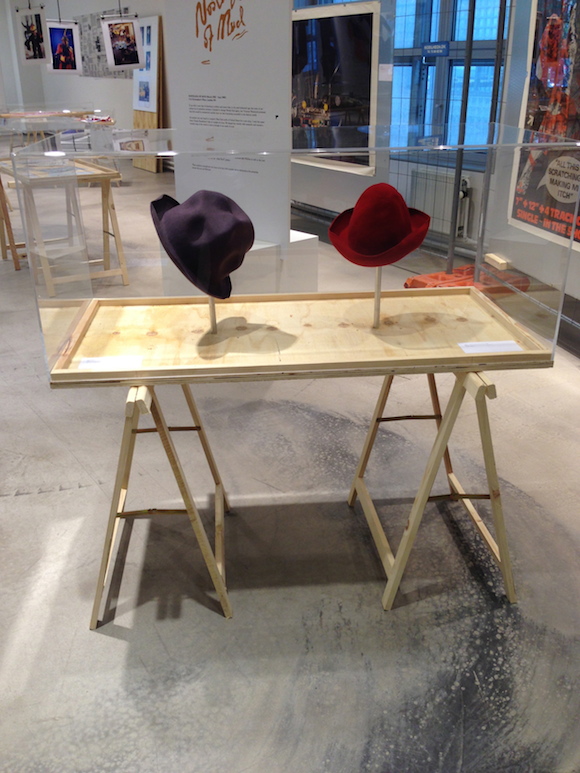
//Marco Pirroni’s print pirate boots, Worlds End, 1981. Top worn by Annabella Lwin of Bow Wow Wow in performance and subsequently dyed. Private collection////Savages Navajo print dress with McLaren’s annotated copy of Indian Rawhide. Both private collection////Invitation to Witches collection show, Folkways top, Dances Of The World’s People. Malcolm McLaren Estate/private collection////Two rubber bracelets deisgned by Tom Binns for Worlds End S/S 1984 with Hobo-Punkature top and Worlds End 1984 invite. Malcolm McLaren Estate/private collection////Document confirming the dissolution of the design partnership between McLaren and Westwood, March 1984. It is important to note that McLaren did not relinquish authorship over the works they produced together////The final exhibit: Buffalo hat and McLaren’s Chico hat. Kim Jones Collection/Malcolm McLaren Estate.//
Many visitors told us they were bowled over by the show; now we are working on another McLaren exhibition as part of Art In Pop at Le Magasin in Grenoble, France, this autumn. This will encompass McLaren’s creative output from his art-school days through his careers in fashion, music and film to his final works as a visual artist. I’ll keep you informed; it runs from October to January next year.
Follow these links for media coverage of Let It Rock:
Thanks go to CIFF fashion/design director Kristian Andersen and creative directors Pierre Tzenkoff + Arnaud Vanraet for their foresight in commissioning this show, and also to the exhibition architect, the talented Jean-Christophe Aumas and his excellent team of builders, particularly Annette, Henning + Stefan.
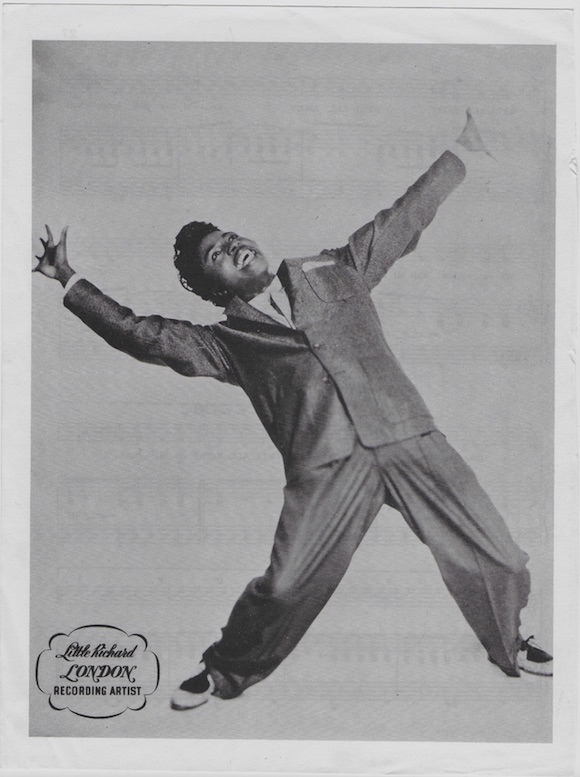
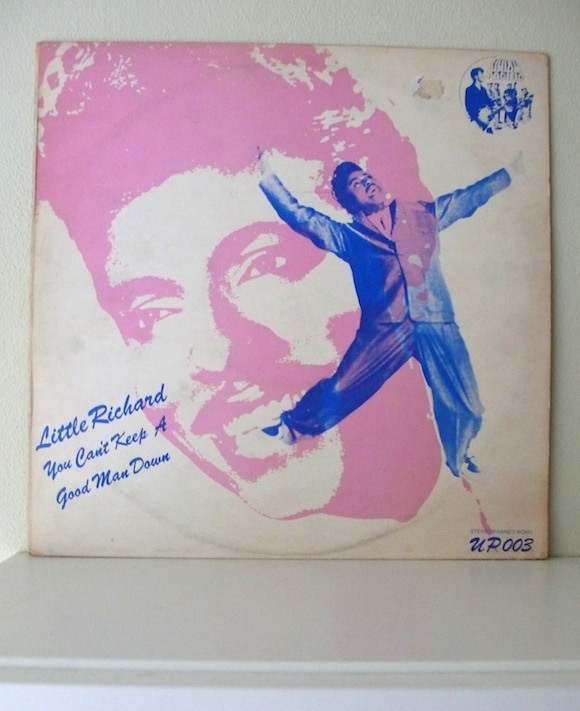
//Malcolm McLaren in front of display of Belgian 50s rock n roll movie posters inside Let It Rock, 430 King’s Road, January 1972. Note Vive le Rock! poster top left. Photo: David Parkinson////Taken by John E. Reed in 1956 to promote teen-movie Don’t Knock The Rock, the photo was reissued by London Records to mark the release of the four-track EP Little Richard And His Band////Front cover, You Can’t Keep A Good Man Down, Little Richard, Union Pacific, 1972. Designer: Unknown////As shown on this repro, McLaren’s design for the Little Richard shirt sold at the London Rock N Roll Festival held at Wembley Stadium in August 1972//
Yet another example of Malcolm McLaren’s astounding design talent is examined across a number of exhibits at the Let It Rock show, which opens at Copenhagen’s Bella Center on Sunday (August 3).
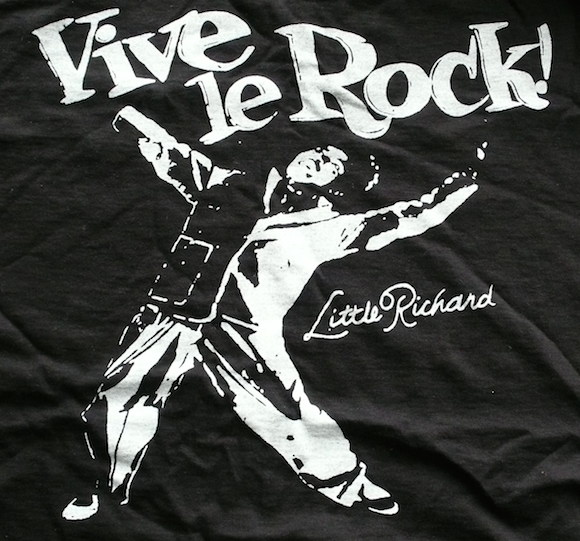
In 1972 McLaren expanded his investigations into 50s pop design culture by producing a series of t-shirt designs celebrating the great American rock & roll stars performing on the bill of the one-day festival at London’s Wembley Stadium that August.
McLaren continued to followed the path dictated by his formidable art education by creating new artworks out of the juxtaposition of found objects. A 1956 promotional photograph of Little Richard provided the main image for the shirt dedicated to The Georgia Peach.
In 1972 it also appeared on the cover of the UK compilation You Can’t Keep A Good Man Down; that year also witnessed a revival of interest in the pompadoured Richard Penniman after Let It Rock customer Charles (now Lord) Saatchi featured a Little Richard song in a 50s-styled TV advert for Libro jeans.
//The title lettering on the poster was isolated////Reed’s image was flipped vertically//
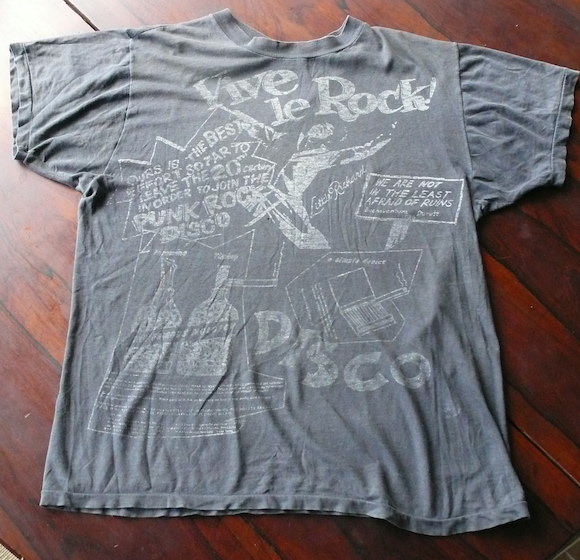
McLaren flipped the image, reversed it out and positioned the exuberant figure with the joyous title lettering from a rock & roll movie poster he stocked in Let It Rock. Vive Le Rock! was, in fact, the French title of the 1958 US production Let’s Rock, so tied indirectly with the name McLaren had chosen for his own venture. In Britain the film was marketed under the tamer Keep It Cool.
//Poster for the American release of the movie, 1958////McLaren later incorporated the Vive Le Rock! elements into a fresh composite for sale in 430 King’s Road when it was Seditionaries in 1979. This also featured Situationist slogans, a quote from the early 20th century Spanish anarcho-syndicalist Buenaventura Durruti and “recipes” from William Powell’s The Anarchist’s Cookbook, first published in 1971//
The Copenhagen show features a Let It Rock installation complete with a series of large prints of previously unseen photographs taken by David Parkinson inside 430 King’s Road in January 1972. Included is a full version of the image at the top of this post, as well as a Vive le Rock! shirt and the Little Richard LP cover.
Let It Rock: The Look Of Music The Sound Of Fashion is at the Crystal Hall in Copenhagen’s Bella Center from August 3-6.
//Front cover, Dances Of The World’s Peoples, Vol 3, Folkways Records, 1958. Design: W. Johnson, printed on paper glued to cardboard sleeve.////Front of four-page song and information sheet utilising W.Johnson’s design, paper, 1958////Invitation card to Paris show of McLaren and Westwood’s Nostalgia Of Mud collection, March 1982. Design: Nick Egan. Courtesy Malcolm McLaren Estate//
The idea is to show in clothes and music that, in the post-industrial age, the roots of our culture lie in primitive societies. Malcolm McLaren on Nostalgia Of Mud and Duck Rock, 1983
Thanks to Hiroshi Fujiwara for tipping the wink over one of the sources of visual inspiration fed by Malcolm McLaren into the concepts unified by his solo album Duck Rock, the central London clothing store Nostalgia Of Mud and the fashion collections he designed with Vivienne Westwood in 1982-3.
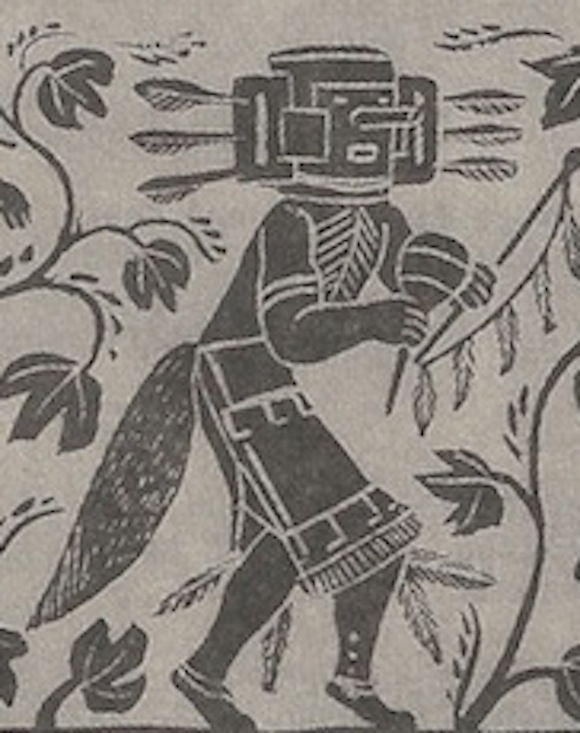
//Witchdoctor figure from W. Johnson’s design////Figure recast by McLaren and Westwood with Keith Haring adornments on cotton top from Witches collection, 1983. From private collection//
One of the cues for Duck Rock’s investigations into music from all over the world was the series of recordings by enthnological music archivists Ronnie and Stu Lipner released on Folkways Records in the late 50s under the banner Dances Of The World’s Peoples. And McLaren’s appropriation of the naive cover art by W. Johnson – in particular the striking witchdoctor figure – found new form in design collaborations with Westwood, graphics supremo Nick Egan and artist Keith Haring.
//Nostalgia Of Mud pattern show card, 1982. Courtesy Malcolm McLaren Estate//
McLaren’s brilliance at fusing disparate elements into culture-defining and dazzling artworks is being celebrated next week with the exhibition Let It Rock: The Look Of Music The Sound Of Fashion at the Crystal Hall in Copenhagen’s Bella Center.
The show – which runs from August 3-6 during Copenhagen Fashion Week – will incorporate hundreds of exhibits, many rare and never previously shown to the public, including clothing and objects featured here such as the Witches top, the show cards and original copies of the Dances Of The World’s Peoples LP and catalogue.
The exhibition Disobedient Objects opens at the V&A tonight; here curator Catherine Flood – who originated the concept for the show – talks me through five exhibits which embody the spirit of contemporary protest.
TEAR GAS MASKS MADE FROM WATER BOTTLES
//How To guide: Makeshift Tear-Gas Mask. Illustrated by Marwan Kaabour at Barnbrook//
Disobedient objects are often those which are simply to hand and waiting to be re-purposed. These masks made from water bottles were used during last year’s Gezi Park protests in Istanbul as a response to the unprecedented amounts of teargas used against protestors in Taksim Square, and became symbolic – they were featured in street art and graffiti and there are photographs of whirling dervishes wearing them.
One of the key points of the exhibition is to demonstrate that excellent design can emerge from people with limited resources and not much time but brilliant ideas. These also show that design doesn’t have to be about professional practice or commercial purpose but can still make a wide impact; people also tweeted images from local chemists of the products which could be bought to make up a survival kit when gassed. As an accessible form of design we chose it for one of our “how to” guides because it is a great example of “swarm” design, documented by one group so that others can use them in different contexts.
PLACARDS IN THE DIGITAL AGE
//A message to you Vladimir. Gay rights activist protests at Putin’s re-election in 2012: “We won’t give it to Putin a third time.”////Protestor – who has subsequently had to leave Russia – with his placard, which was collected by Flood herself. She was in Moscow taking an exhibition down when the protests were on//
This placard was made for demonstrations against Putin’s re-election in 2012 and marked a different style of protest in Russia: rather than a crowd united under by one slogan, hand-painted placards were produced with personal, sometimes witty messages. There’s nothing especially innovative about hand-rendered placards but this time they were used in conjunction with social media so were a bit like tweets, conveying pithy messages which were photographed and put on Twitter.
This was created by a gay rights activist and says: “We won’t give it to Putin a third time,” apparently quite a crude reference in Russia and playing on his homophobia. The protestor told us that this was the first time the LGBT Rainbow colours were used in public. He has subsequently had to leave the country.
INFLATABLES
//Testing an inflatable hammer made by Eclectic Electric Collective at the Berlin Mauer Park, 2010. Photo: Jakub Simcik//
The Berlin-based Eclectic Electric Collective (now called Tools For Action) produce inflatables of protest objects such as cobblestones and hammers. When they’re thrown at police lines they change the dynamic of demonstrations; the police either become distracted by the big shiny thing or they throw it back and the exchange turns into a game, like a surreal version of volleyball.
It’s a really interesting way of occupying public space. This element of unruliness upsets the authorities because the protestors are not abiding by protocol and the accepted rules of engagement. The clever use of props – giant puppets have been used elsewhere – allows the protestors to wrest control.
In the same section of the show we have “bloc books”, painted shields in the form of giant works of literature and philosophy made by students protesting at education cuts. When they demonstrated, the students were effectively being defended by culture, and by striking the shields, the police not only invoked the destruction of books but were also forced into a performance without realising it.
This started off in Italy and was taken up in Britain and America by students who had seen them on social media.
The Eclectic Electric Collective made us a cobblestone for the exhibition. This is an issue with this material, because quite often it is destroyed in the process of protest.
EMBROIDERY
//Dónde están nuestros hijos (“Where are our children?”). Chilean Arpilleras wall hanging, Roberta Bacic collection. Photo: Martin Melaugh//
We start in the 70s and the rise of neo-liberalism; among the earliest objects in the show are Chilean appliqued textiles produced by women in workshops during the Pinochet regime. These documented the social realities of the disappearances, the tortures, the economic hardships. These worked on a number of levels.
Made from scraps of material, these were sold, so provided economic support, and in the act of gathering to make them, the women found solidarity and collective strength.
There are accounts of women saying that it was only when they had their eyes down on their sewing that they felt safety in confronting what was going on and were able to document what they were otherwise proscribed against speaking about.
These textiles often left the country, and were seen as innocent by the authorities because of their resemblance to folk art, but carried letters and communicated with the outside world. This technique spread, and we have examples from Colombia in 2010. It was also used in Ireland by women protesting against the use of Shannon Airport in extraordinary rendition.
THE TIKI LOVE TRUCK
//The Tiki Love Truck, Art Car Parade, Manchester, 2007. Photo: Paul Herrmann//
This is one of the biggest objects in the exhibition. Made by British ceramic and mosaic artist Carrie Reichardt, The Tiki Love Truck protests against the US death penalty. It’s an incredibly powerful piece, not least because it features the death mask of John Joe “Ash” Amador, who had corresponded with her and asked Carrie to be a witness at his execution.
Her friend Nick Reynolds went with her and cast the mask, which was woven into the truck and driven in the Art Car Parade in Manchester 10 days after the execution.
Disobedient Objects runs until February 1, 2015. More info here.
//Malcolm McLaren outside 430 King’s Road, March 1972. Photo: Mirrorpix//
In the shop’s various incarnations I made clothes that looked like ruins. I created something new by destroying the old. This wasn’t fashion as a commodity; this was fashion as an idea.
From his foreword to The Look: Adventures In Rock & Pop Fashion, Malcolm McLaren, 2001
The first exhibition to examine the late cultural iconoclast Malcolm McLaren’s engagement with fashion in the 70s and early 80s is to be held next month in Copenhagen.
Let It Rock: The Look Of Music The Sound Of Fashion – curated by Young Kim of the Malcolm McLaren Estate and me – is being staged from August 3-6 as part of the Copenhagen International Fashion Fair; creative directors Pierre Tzenkoff and Arnaud Vanraet have commissioned the show in conjunction with an exhibition entitled Industrial by Nature by streetwear guru Virgil Abloh.
Let It Rock will investigate McLaren’s deep roots in fashion (his mother + stepfather operated the womenswear brand Eve Edwards in the 50s and 60s and his grandfather was a master tailor’s cutter) and will also demonstrate how he drew on his art-school investigations into environments to become the progenitor of the pop up shop concept.
Let It Rock revolves around an installation dedicated to the shop from which it takes its title, complete with a recreation of the frontage in black corrugated iron and pink rock&roll signage McLaren designed when he opened the premises with Vivienne Westwood in 1971.
The exhibition is divided into six sections each dedicated to the manifestations at 430 King’s Road as well as Nostalgia Of Mud, the outlet operated by McLaren and Westwood at 5 St Christopher’s Place in London’s West End from 1982 to 1984.
These sections will all feature rarely-seen and never previously publicly-exhibited clothing designs, photography, sketches, notes, magazine spreads and even pages from McLaren’s notebooks.
Among the exhibits is McLaren’s own ‘I Groaned…” t-shirt from Sex, the Chico hat and grey Crombie coat he wore in the famous portrait for the Witches collection taken by Steven Meisel for Vogue in 1983, the short sheepskin jacket worn through the Buffalo Girls and Duck Rock period and a Let It Rock drape suit fitted personally by McLaren for guitarist songwriter Marco Pirroni.
//McLaren modelling Witches in the Chico hat and Crombie coat with Talisa Soto and Vivienne Westwood by Steven Miesel, US Vogue, June 1983////Button, pocket and cuff detail of Marco Pirroni’s drape jacket fitted by McLaren and made by Sid Green, 1974////Leather t-shirt with Let It Rock label from 430 King’s Road in summer 1974 during the transition from Too Fast To Live Too Young To Die to Sex//
Ben Kelly – who realised the design for the exterior of Seditionaries in 1976 and is now professor of interiors & spatial design at University Of The Arts London – is contributing photographs taken of his work at the time for his portfolio and there is a very special leather t-shirt bearing a Let It Rock label during the transition in 1974 to the incarnation as Sex.
Contributors also include photographers Robyn Beeche, Bob Gruen, the David Parkinson Estate and Sheila Rock as well as others close to McLaren during his game-changing adventures in the fashion world.
Find out more about the show on the CIFF site here.
John Beck and Matthew Cornford’s intelligent and measured book The Art School And The Culture Shed may be a slim volume but it packs a hell of a punch in locating the ravages wreaked on our cultural life over the past 20 years by privatisation, the failings of local councils and town planners and the depredations of property developers.
//Left: Moseley School Of Art, closed 1975. Right: The site of Sidcup School Of Art, occupied since 2010 by a Morrisons and a car park//
//From the catalogue for Christie’s Pop Culture auction, June 20,2014//
Six years ago on The Look blog I posted images and memories supplied by Terry Slobodzian, who ran boutiques Explosion and Lacy Lady in the upstate New York town of North Tonawanda in the late 60s and early 70s.
Such shops as Slobodzian’s and The People’s Space (run by Tommy Hilfiger in the neighbouring Emira) were part of a regional US trend for wild and usually wildly-named clothing stores sparked by eccentric retail ventures such as Granny Takes A Trip in England.
As I discovered through contact with vintage dealer/expert Ben Cooney, these are the places who showed at the National Boutique Show in NYC and broadcast their wares from the back pages of Baron Wolman’s fashion/music mag Rags: A Long Time Comin’ in San Anselmo, The Bead Experience in Baltimore, The Great Linoleum Clothing Experiment in LA, Bouncing Bertha’s Banana Blanket and Jenny Waterbags in New York, Mom’s Apple Grave in San Francisco…you get the picture.
//From The Look blog, December 2008//
Granny’s occupied a totemic status for the people who operated these outlets; Slobodzian visited London on a buying spree in 1970 and naturally dropped in at 488 King’s Road. “What a trip it was,” he told me in 2008.“Every piece fit like a glove right off the rack. The craftmanship and choice of fabric was amazing.”
Now Slobodzian’s Granny’s suits as featured on The Look blog are in this Friday’s Pop Culture sale at Christie’s along with two shirts from Bouncing Bertha’s Banana Blanket.
Here’s Rod Stewart in the same paneled velvet suit design as Lot 55 in the sale:
 “What’s to say, save that his contempt was not reserved solely for the music business? Or the art business. Or the business of being human. There were times when he saw with his own dead eyes. But he had the sight to see through them.”