There’s a nice story behind this portrait of the late fashion designer Thea Porter, whose talents are celebrated at the just-opened exhibition at London’s Fashion & Textiles Museum.
//”This photograph was taken by Chris Morris in my bedroom at Commonwood Cottage in Downley village near High Wycombe in 1965 (when I swapped my mod life for university). I’m wearing an almost unwearably itchy John Stephen herringbone wool shirt. Apart from the Ricky Tick poster, I’d permanently pasted up two vintage London Transport posters I found in the attic. My old man wasn’t too pleased about that”. From http://johnpidgeon.com////Front cover of Pidgeon’s 1974 book//
I highly recommend John Pidgeon’s blog; Pidgeon is another of those unpindownable figures in the cultural landscape. His considerable talents have been expressed from music journalism and magazine publishing through roadie-ing for The Faces and composing songs with their recently departed and already much missed keyboard maestro Ian McLagan to commissioning stunning design work from Barney Bubbles and producing BBC documentaries and radio comedy (and in the process promoting the talents behind hit series such as Dead Ringers, Little Britain and The Mighty Boosh). Continue reading Highly recommended: The unpindownable John Pidgeon’s blog
//The simulation of the Seditionaries facade in industrial materials provided the entry and exit point for models on the runway today////With rings representing the positions where designer Ben Kelly exposed air conditioning vents to view, Kim Jones replaced the diagonal bar which occupied the central square over the door with the trademark Vuitton ‘V’////Ben Kelly’s portfolio shot of the facade he designed and installed at 430 King’s Road in December 1976//
Amid the references to the late Christopher Nemeth in today’s Paris show of the Louis Vuitton A/W 15 menswear collection (see my last post), artistic director Kim Jones used the staging to pay subtle homage to the two great maverick figures of London street culture – namely Malcolm McLaren and Vivienne Westwood and specifically their 70s punk store Seditionaries.
//Malcolm McLaren in a previously unpublished shot wearing original 50s George Cox Bingley D-ring brothel creepers to match his detail-perfect Teddy Boy garb. Photo taken inside Let It Rock, 430 King’s Road, January 1972. (c) David Parkinson//
//Left, Saint Laurent point-toed patent brothel creepers, A/W 2014. Right: George Cox Buckle Diano made to the 1950s last//
Last season’s foregrounding by Saint Laurent of the pointed brothel creeper is just one of a run of examples of fashion brands plugging into the purity of this quintessentially British rock & roll style minted in 1949 by the UK independent footwear company George Cox.
Among the first stylistic innovators to take the design out of Teddy Boy revivalism and apply it to contemporary fashion was Malcolm McLaren, who had been selling creepers for a couple of years at Let It Rock, the boutique he operated with Vivienne Westwood, by the time he visited the Cox factory in Northampton in November 1973. Here he ordered samples for six styles, some of which went into production for sale at 430 King’s Road.
//Portfolio shot of the newly completed Seditionaries, 430 King’s Road, London SW10, December 1976. (c) Ben Kelly//
Interior Design: Dead Or Alive is the title of the symposium being organised by the prominent British designer Ben Kelly at London’s Institute Of Contemporary Arts on March 14.
I am a contributing speaker alongside writer/curator Michael Bracewell, designers Fred Deakin, Ed Barber & Jay Osgerby and Peter Saville, artists Lucy McKenzie and Bridget Smith and David Toop of the London College Of Communications and Tate Britain’s Andrew Wilson.
“We’re going to be taking stock of the ways in which iconic interiors affect and influence the direction of popular culture and the wider world,” says Kelly, who is putting the event together in his capacity as professor of interior design and spatial studies at the University of the Arts London.
//Portfolio shot of the freshly installed Seditionaries name plaque, December 1976. (c) Ben Kelly//
Among Kelly’s designs was the November 1976 transformation of Malcolm McLaren and Vivienne Westwood’s shop Sex at 430 King’s Road into Seditionaries. Knowing that I have researched and produced a substantial document on the history of 430 King’s Road, Kelly has asked me to address this little space with a big impact in terms of its importance as a cultural hub and incubator of often radical ideas.
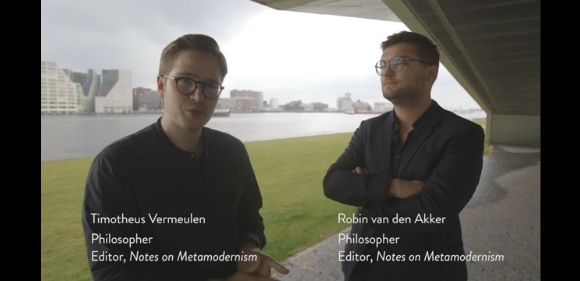
In the 90s and the early 2000s it’s fair to say we grew up with a particular outlook on life, one of irony, of deconstruction and cynicism. This was noticeable in the music of Nirvana and Radiohead, in the books of Michel Houellebecq and Bret Easton Ellis, and we saw it in the arts with the YBAs and Jeff Koons. This is very much a sensibility that spoke to us, that we embraced.
That time was summed up by a sense of boredom in culture. This is it? And what now?
Throughout the 2000s we began noticing – as many people did and many have written about this – slight changes. First you get the complete reappraisal of writers such as David Foster Wallace, who started in the 90s but suddenly became big in the early 2000s. And you had sincere movies by Wes Anderson and Michel Gondry. This was all very different from the kind of stuff we grew up with. Something was changing. The irony of Nirvana, the desperation of Radiohead, the cynicism of Michel Houellebecq were replaced by something that was at once still cynical, still ironic and had an acknowledgement of how the world worked, but at the same time seemed to want more.
“More than anyone, Malcolm McLaren bursts the definitions as to what exactly constitutes an artist.”
Yves Aupetitallot, curator at Magasin, the Centre National d’Art Contemporain, in the introduction to Art In Pop
Due to popular demand, the run of Art In Pop – the French exhibition about the intermingling of artistic practice with popular music where the main space is dedicated to the work of Malcolm McLaren – has been extended by a month.
“There were many kings of the King’s Road at different periods of time but there was only one Emperor”
Lloyd Johnson
Very sad to note the passing of Billy Murphy, a thoroughly lovely bloke whose contribution to street fashion – particularly in Britain and specifically in and around the King’s Road – is sorely underrated.
I knew all about Billy’s significance in his field decades before I met him; as I wrote here, his shop The Emperor Of Wyoming was “an extremely important staging post not just in the story of British rock and roll fashion but also the development of the vintage scene in this country”.
//Stetson, embroidered shirt and hand-tooled leather belt from The Emperor Of Wyoming. Photo: David Parkinson for Club International, February 1974//
I’m really proud of my niece Esme Bradbury, whose exuberant handmade designs via her label EsDes have received a boost with inclusion at the Craft Council’s Established East London pop up shop at Westfield Stratford.