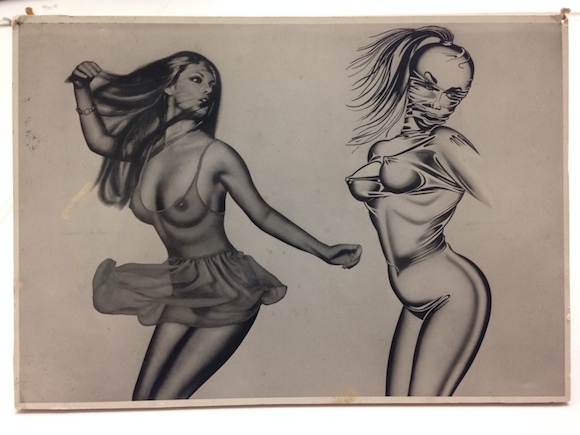
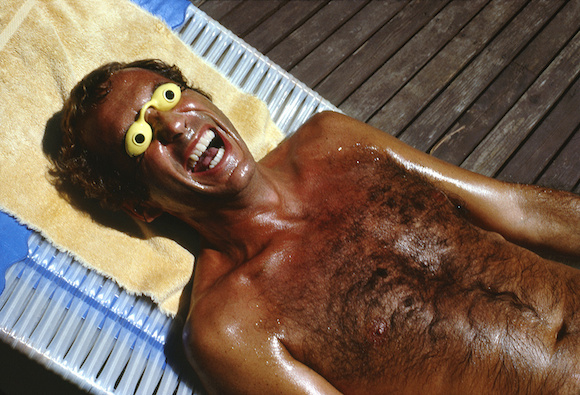
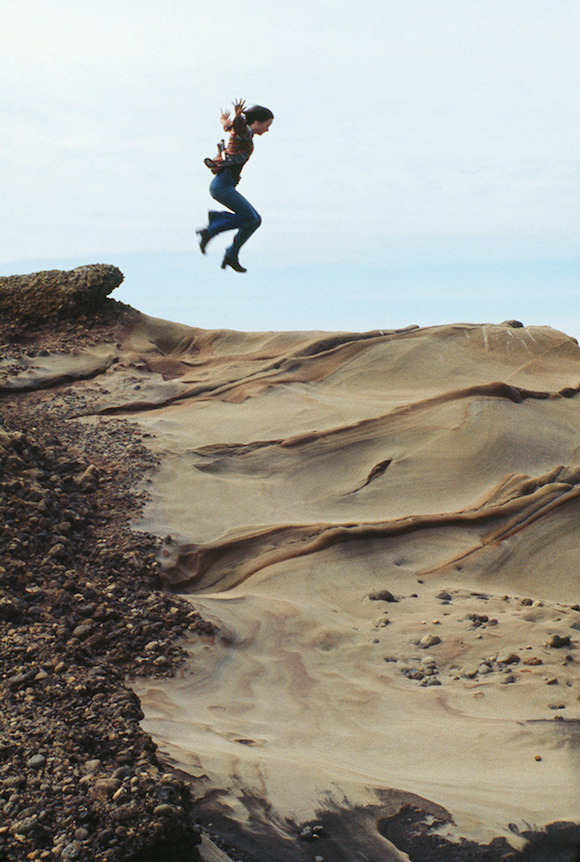
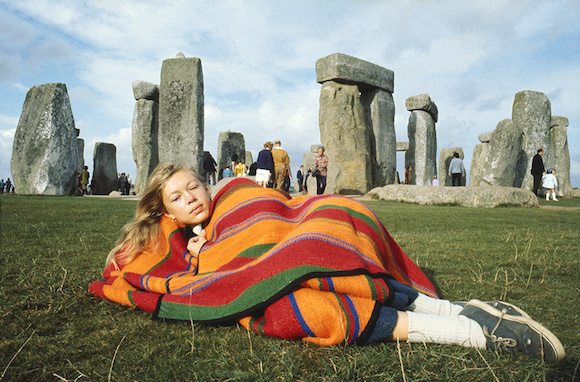
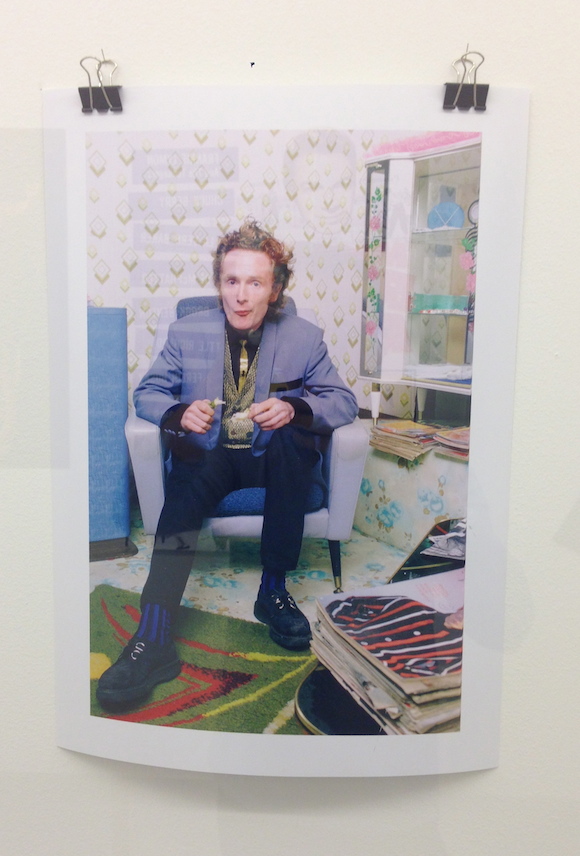
This album is titled Fans. It’s about wearing your emotion on your sleeve, just as fans scream out from the audience or want to get on stage so they can kiss him or are terrified they’re going to have a nervous breakdown if he don’t come round the corner and sit beside them. They all bear the frustration… we’re all fans waiting to jump out.
//Westside Sharpies Mick Emery and Steve M sporting Connies outside Flinders Street Station, Melbourne, 1978. Photo: Jacques Kosky, courtesy Stef Egan//
The ‘Connie’ cardigan was an essential element of dress for Sharpies, the tough and stylish Australian music/fashion youth subculture active in Melbourne’s blue collar suburbs from the 60s to the early 80s.
Designed by a Mr Conti, a Greek clothier in the Thornbury neighbourhood to the north of the city, Connies were picked up on by Sharpies for their tight fit.
//Copy of PIL’s Metal Box complete with tape printed with Dennis Morris’ logo for the band; DB reckons this may have come from the group’s guitarist Keith Levene//
During a recent visit to his mother’s north London home, NY-based expat DJ, art/publishing player and blogger DB Burkeman took the opportunity to recover some of the ephemera of his youth, including the items you see here.
//Flyer for evening at the London outpost of Peter Gatien’s 80s club brand featuring Barnsley (now Barnzley), Tim Simenon (of Bomb The Bass) and the Wild Bunch’s Nellee Hooper////Photo of Allen Jones artwork obtained from Burkeman’s first employer//
One of my favourite Instagram feeds is The Family Acid, run by Kate Steffens, daughter of reggae archivist, actor, anthologist, psychedelic pioneer and photographer Roger Steffens.
//Left: Among the contributors Ian Johns, Mark Wigan, Nendie Pinto-Duschinsky and Andrew Gallix. Right: Fred Butler 1995-2001 and Tracey Emin in 1995////Winston Milton and friends, Hackney 1993-8//
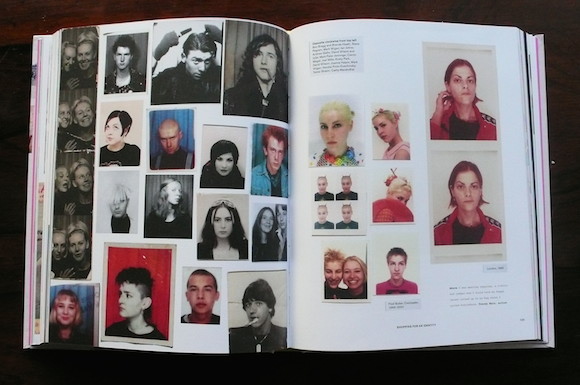
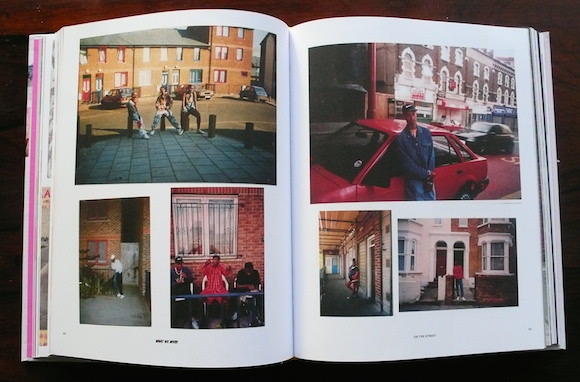
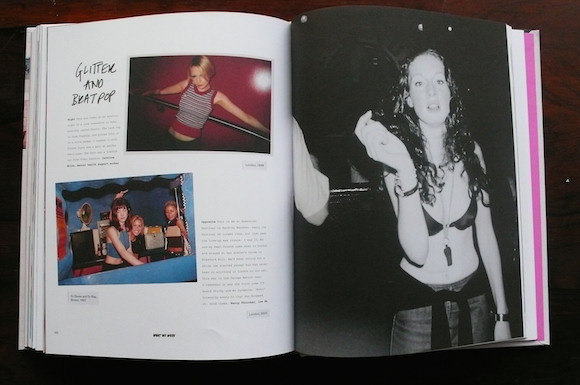
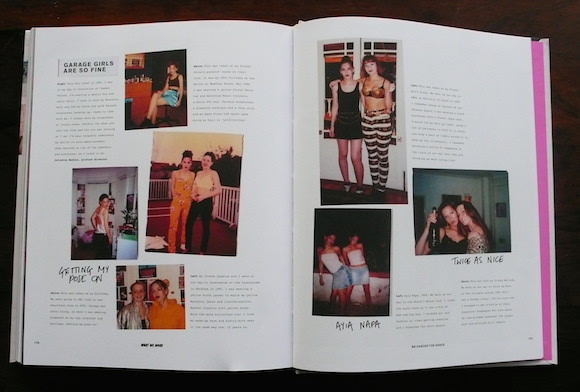
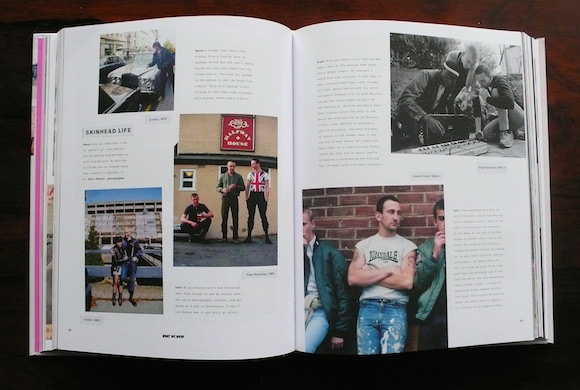
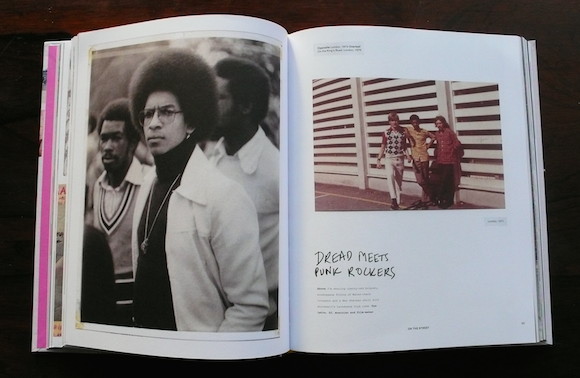
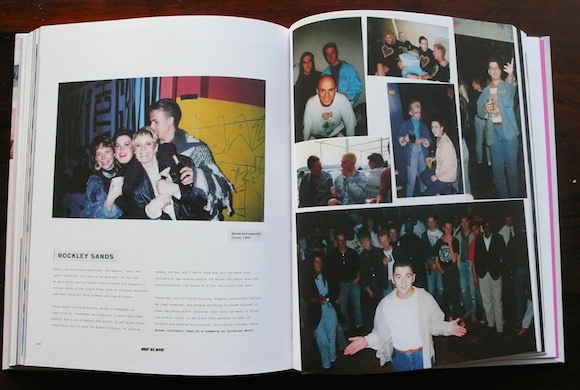
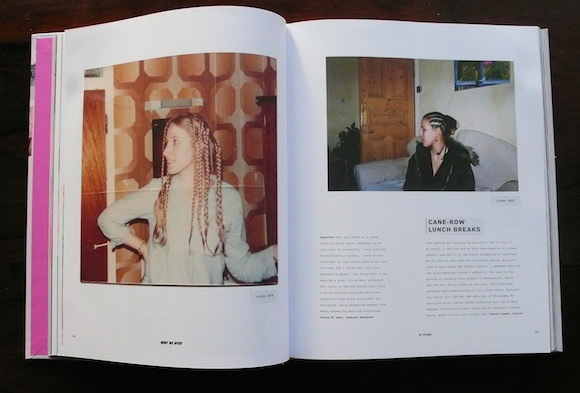
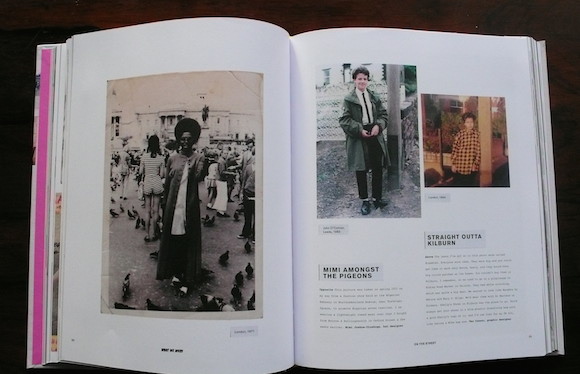
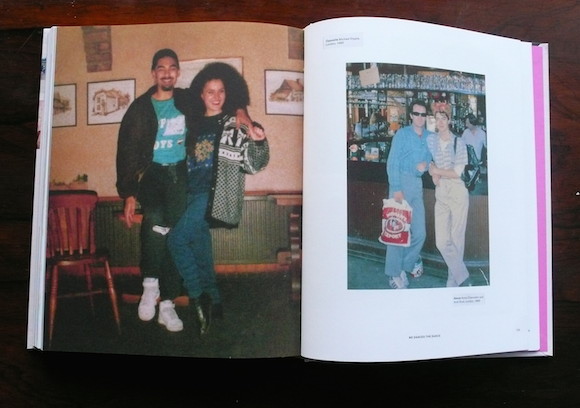
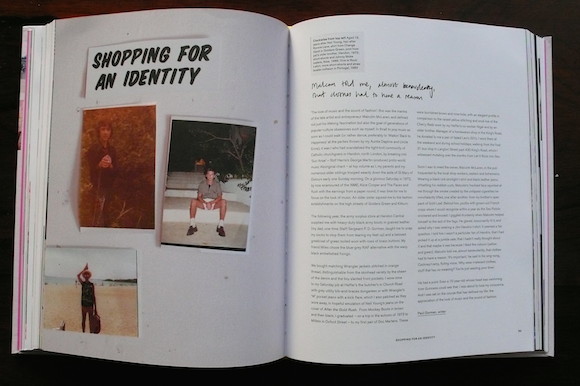
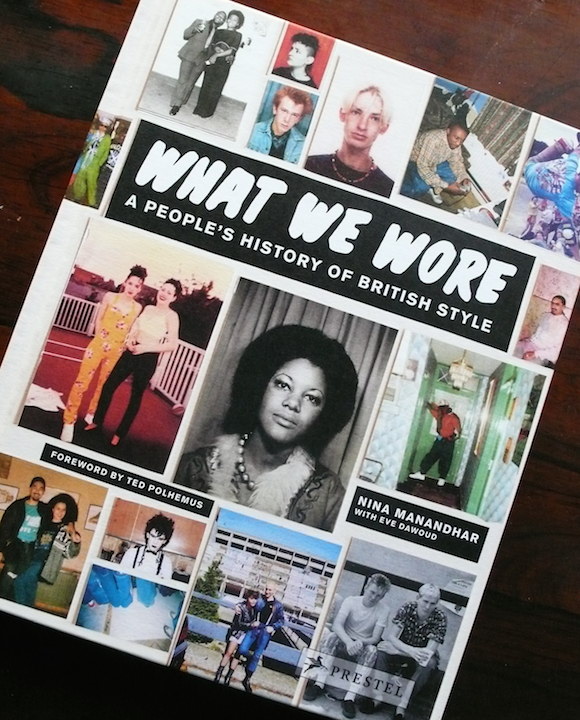
Into the over-worked field of ‘street style’ comes a breath of fresh air: What We Wore – A People’s History Of British Style.
Free of cliche and pretension, Nina Manandhar and Eva Dawoud’s book compiles the personal images and anecdotes of a hugely diverse set of contributors.
//Left: Caroline Milne, Ghetto, London, 1999; DJ Dazee and DJ Rap, Bristol, 1997. Right: Nancy Thornber, Essential Festival, London, 2001////Juliette Hedoin and friends clubbing in London and Ayia Napa 1995-2002////Gavin Watson and friends on the skinhead scene, 1982-5//
The book is not dominated by well-known people and the usual suspects who patronise this narrative (though I snuck in there) and so is true to the subtitle; What We Wore celebrates in a thoroughly egalitarian manner “the presentation of self” – Erving Goffman’s phrase as cited by Ted Polhemus in his excellent foreword.
//Don Letts with friends, London, 1971 (right) and 1973////Russel Coulthart and friends at Rockley Sands, Dorset, 1988////Left: Diane El Dabi, London, 1979. Right: Cassie Clarke, London, 2002////Left: Mimi Joshua-Olushoga, London, 1971. Right: John O’Connor, Leeds, 1982 and Teo Connor, London, 1994////Left: Michael Dipple and friend, London 1980. Right: Jock Scot and Anna Chancellor, London, 1986////Me, London 1973, Ibiza, 1986, Portugal, 1982//
What We Wore is a fitting testament to our collective visual invention. I recommend it highly.
//Berries – 8 Yellowy Green Female Forms, Malcolm McLaren, 1969. Mixed media, 5 x 4’. Photo (c) Barry Martin/Malcolm McLaren Estate//
“I started out in art school as a painter. I studied there for eight years and most of my education was based around the visual arts. I learnt all my politics and understanding of the world through the history of art.”
Malcolm McLaren speaking on British arts documentary series the South Bank Show, 1983
//I Will Be So Bad, Malcolm McLaren, 1969. Oil on canvas, 15 x 12”. Photo (c) Barry Martin/Malcolm McLaren Estate//
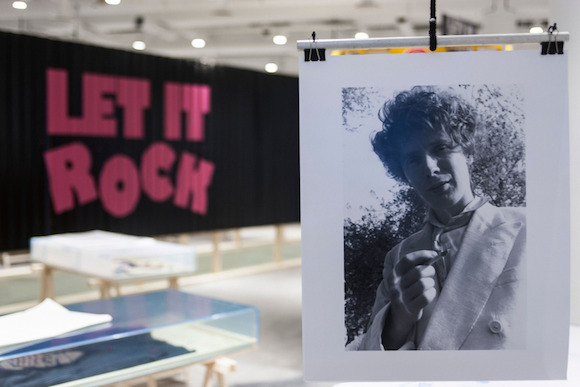
Among the exhibits at Let It Rock, the Malcolm McLaren room at this autumn’s group exhibition Art In Pop at Magasin in Grenoble, are never-previously exhibited photographs of the late cultural iconoclast’s paintings taken by his teacher Barry Martin during McLaren’s student days in the 60s.
These are discussed in this extract from the exhibition introduction:
In the summer of 1969, at the end of his first year of the fine art course at London’s Goldsmith’s School Of Art, the 23-year-old student Malcolm Edwards showed 10 or so gestural paintings, mainly oils on canvas with some integrating text statements and others used as the basis for mixed media experimentation incorporating chicken wire, hammered wood planks and, in one case, an inverted paper envelope against depictions of leaf forms.
//Map Of British Isles With Yellow Star And Hole, Malcolm McLaren, 1969. Oil on canvas, 7 x 4’. Photo (c) Barry Martin/Malcolm McLaren Estate//
During a 90-minute critical review by his teacher Barry Martin, Edwards (soon to revert to his birth-name of McLaren) declared his rejection of the limitations imposed by traditional art forms, in particular painting.
McLaren subsequently destroyed all but one of the works. In a symbolic statement the exception, the largest canvas – the 7ft tall Map Of British Isles With Yellow Star And Hole, into which he had already kicked a sizeable hole – was left to rot in the summer rain in the yard at the back of the college. Eventually it was torn apart and taken away by the dustbin-men.
//The Intangible Manipulation Of Minds, Malcolm McLaren, 1969. Mixed media, 4’6″ x 4’6”. Photo (c) Barry Martin/Malcolm McLaren Estate//
McLaren dedicated his remaining two years at Goldsmith’s to organization of events and film-making, one about his hero, the early British rock’n’roller Billy Fury merged into an unfinished commentary on consumerism centred on the history of London’s main commercial thoroughfare, Oxford Street.
In doing so McLaren was inserting himself into the lineage back to Duchamp which included such figures as the Dutch Situationist Asgar Jorn, who had proclaimed “Painting is dead” in 1958, and in particular Andy Warhol, who explained his sponsorship of The Velvet Underground in 1967 by saying: “Since I don’t really believe in painting anymore we have a chance to combine music and art.”
//Leaves, Nature And Cuts, Malcolm McLaren, 1969. Mixed media, 4 x 3’. Photo (c) Barry Martin/Malcolm McLaren Estate//
McLaren later described his decision to open the boutique Let It Rock in London’s King’s Road on exiting the art school system in 1971 as “jumping into the musical end of painting”; here McLaren blazed the trail dictated by his formidable art education by creating new artworks as fashion pieces out of the juxtaposition of found objects.
//Words Trapped In Brick Compartments With Prostrate Figures, Malcolm McLaren 1969. Oil on canvas, 5 x 4’. Photo (c) Barry Martin/Malcolm McLaren Estate////14 Pink Figures On Moving Sea Of Green, Malcolm McLaren, 1969. Oil on canvas, 12 x 15”. Photo (c) Barry Martin/Malcolm McLaren Estate//
Thanks to Barry Martin for his insights and assistance in putting together the Malcolm McLaren segment of Art In Pop. Martin continues to practice as an artist and sculptor; this is his website.
Art In Pop, which opens on Saturday, is curated by Magasin’s Yves Aupetitallot with John Armleder, Young Kim of the Malcolm McLaren Estate, John Miller and I. The exhibition runs until January 4, 2015 at Le Magasin, Site Bouchayer-Viallet, 8 Esplanade Andry Farcy, 38028 Grenoble.
It sums up everything that was wonderful about this unique space, where Pete established a hub for like-minded souls. With staff including Edwin Pouncey (aka Savage Pencil), Pete also released otherwise hard-to-find records via his own independent imprints. These included Heartland, 5 Hours Back and MoFoCo for Julian Cope’s towering LP Droolian.
//Droolian’s back cover////Zippo’s distinctive price label (this from The Many Faces Of Gale Garnett, an obscure 1965 release on RCA)//
I bought a lot of music and also an example of every one of the short-run t-shirts Zippo sold, including my favourite, this MC5 number (other owners, and there can’t be many because they were printed in very limited numbers, include Bobby Gillespie).
As a local I was a Zippo regular with our Battersea hound Tom. Pete christened him “The Conqueroo Dog” after the four-legged friend on the cover of his reissue of the Austin band’s 1968 release From The Vulcan Gas Company.
//Front cover, From The Vulcan Gas Company, The Conqueroo, 1968/reissued 1987 on 5 Hours Back//
When Zippo closed I bought a whole load of stock and had a few happy years trading in vinyl as a sideline, until my back gave out.
Pete’s still at it, running Soho Music which is now on eBay – see here.
I bumped into Edwin P a couple of years back; he was in the company of another great person who was also a former Zippo staffer. Can’t for the life of me recall his name but hopefully he’ll see this and get in touch.
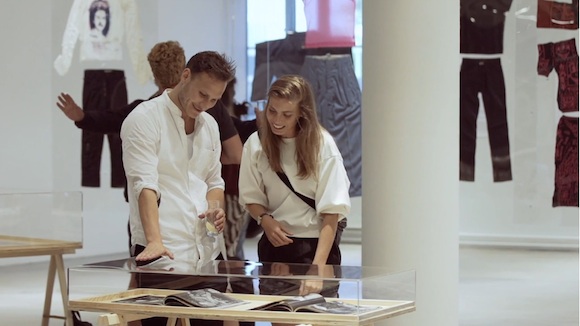
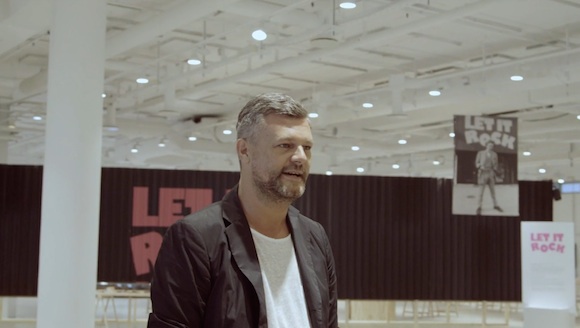
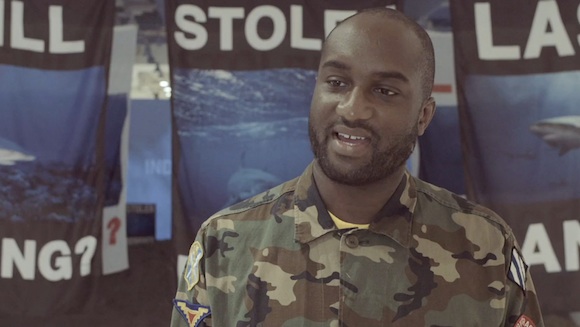
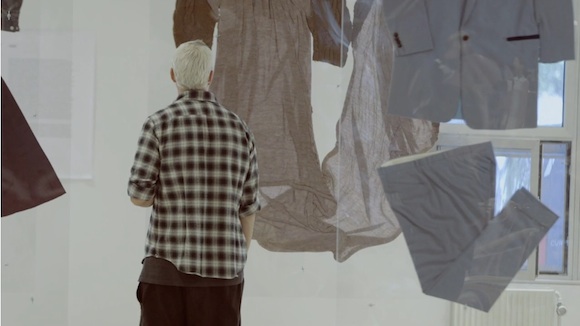
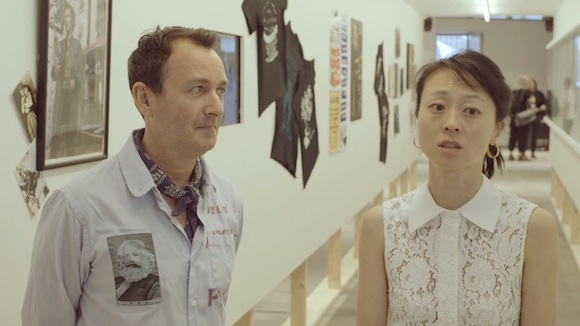
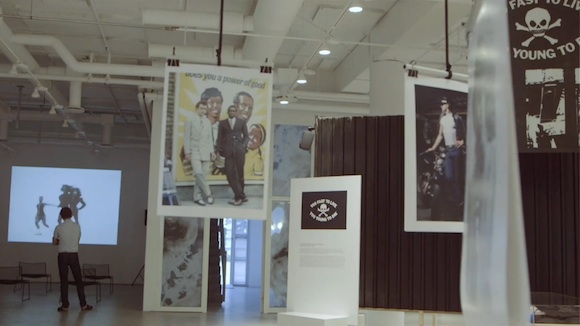
This short film gives a flavour of Let It Rock, the exhibition about Malcolm McLaren’s engagement with fashion in the 70s and 80s curated by Young Kim and I in Copenhagen earlier this month.
We are interviewed along with Kristian Andersen, Copenhagen International Fashion Fair fashion and design director, and our co-exhibitor, US streetwear designer Virgil Abloh.
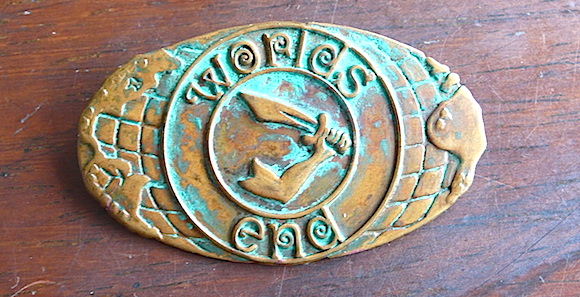
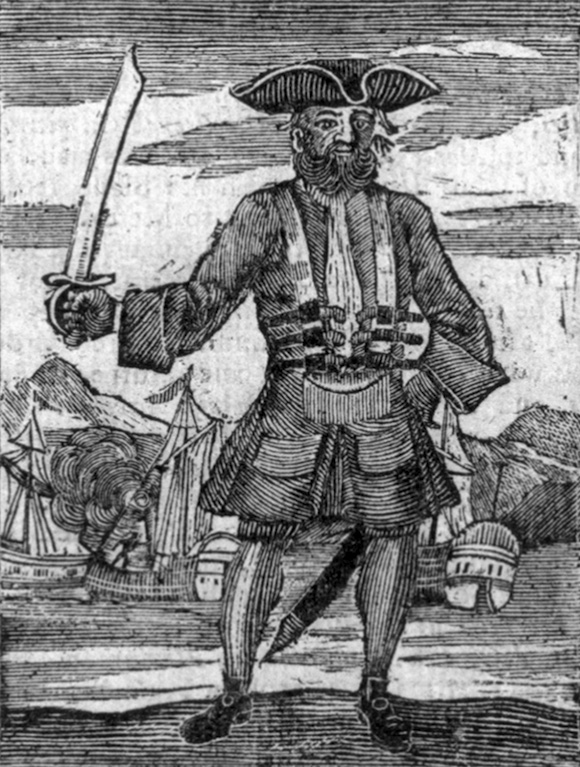
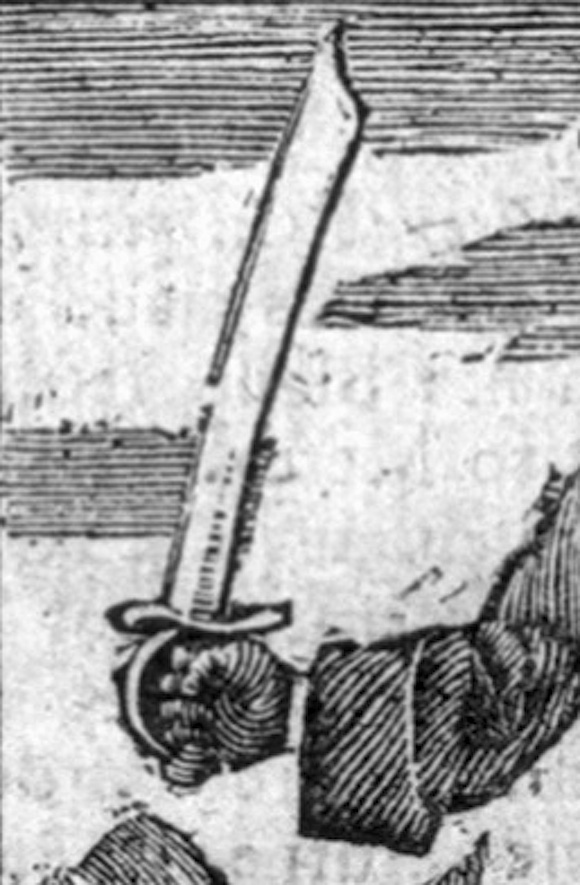
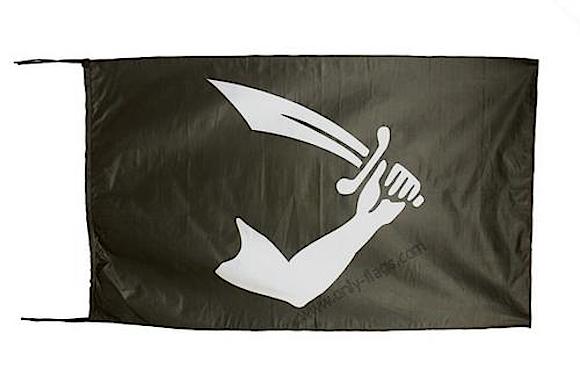
The skull and crossbones was too much of a cliche. In a book from Foyle’s in Charing Cross Road I found the drawing of the pirate Blackbeard, Captain Teach, with his arm holding a Saracen sword. Malcolm McLaren, 2008.
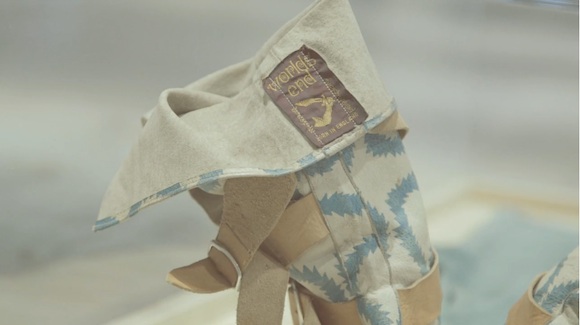
Over the spring and summer of 1980, the late Malcolm McLaren worked with Vivienne Westwood on the themes and theories underpinning the concepts for a new retail environment and fresh fashion direction from their base at 430 King’s Road in west London’s World’s End.
Disillusioned with the pedestrian punks who had started to frequent Seditionaries in the wake of the Sex Pistols split in 1978, the outlet was routinely shuttered. “Apart from a few t-shirts, we didn’t come up with any new designs in four years,” Westwood later said.
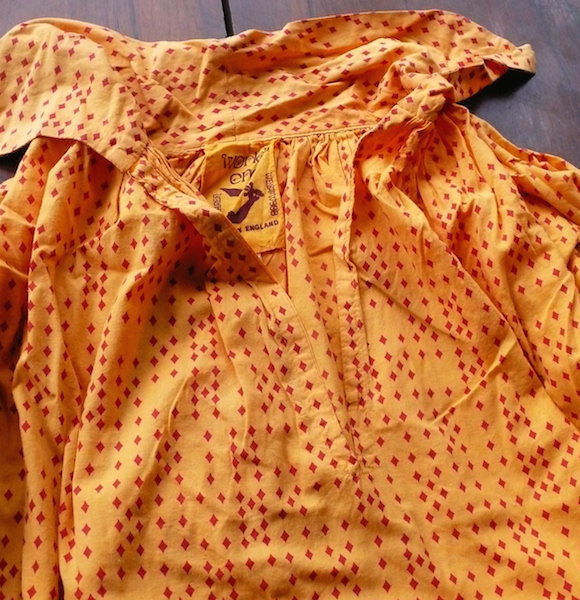
The pair’s investigations in 1979 and 1980 crystallised around Westwood’s production of a billowing garment based on an 18th century shirt pattern from the historian Norah Waugh’s 1964 study The Cut Of Men’s Clothes 1600-1900.
//1981 Pirate dress worn in performance by Anabella Lwin of Bow Wow Wow////Pirate dress collar and neckline detail//
McLaren had already introduced notions of music industry-provoking audio piracy into his work with the newly-formed Bow Wow Wow – who released their cassette-only debut single that summer – and pounced upon the shirt’s promisingly unstructured silhouette.
“I could see it being worn as a dress by the young paramour of a pirate captain, romping around his quarters with his belt, one of his waistcoats and a pair of his sagging buckled boots,” McLaren said in the mid-00s. “I rejected the rest of Vivienne’s ideas but kept the shirt, to which I added the vision of pirates to give a certain look, style and pop panache. We then built the Pirate collection around it.”
The choice of the garment is noteworthy. According to Waugh (who had lectured at London’s Central School Of Art and run the costume department at the dramaturg Michel Saint-Denis’ London Theatre Studio in the 30s), men’s tailoring did not start in Britain until the end of the 18th century; prior to that “men’s clothes had a distinctly dressmaker quality”.
By rejecting two centuries of fashion progress – just as they had rejected the pop culture developments of the 60s with the establishment of Let It Rock in 1971 – and fusing the results with the utterly contemporary, McLaren and Westwood once again moved into unexpected territory with clothing which struck a chord outside of fashion and music.
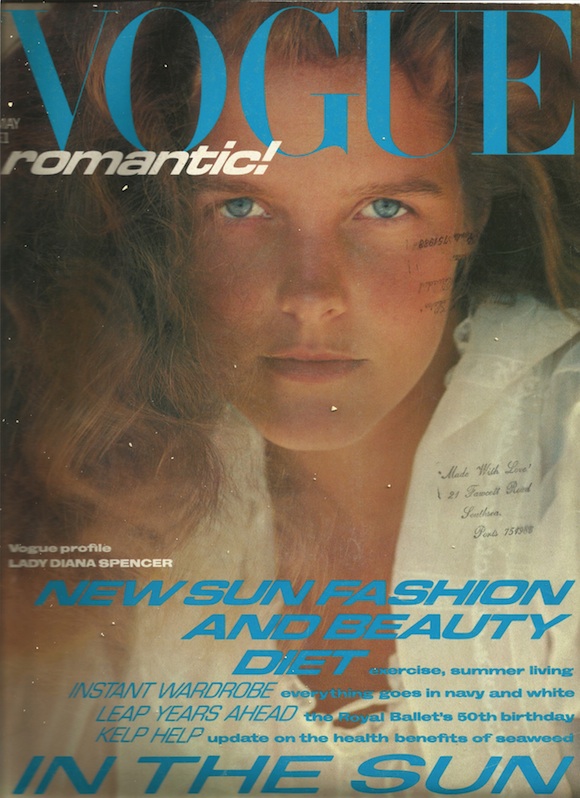
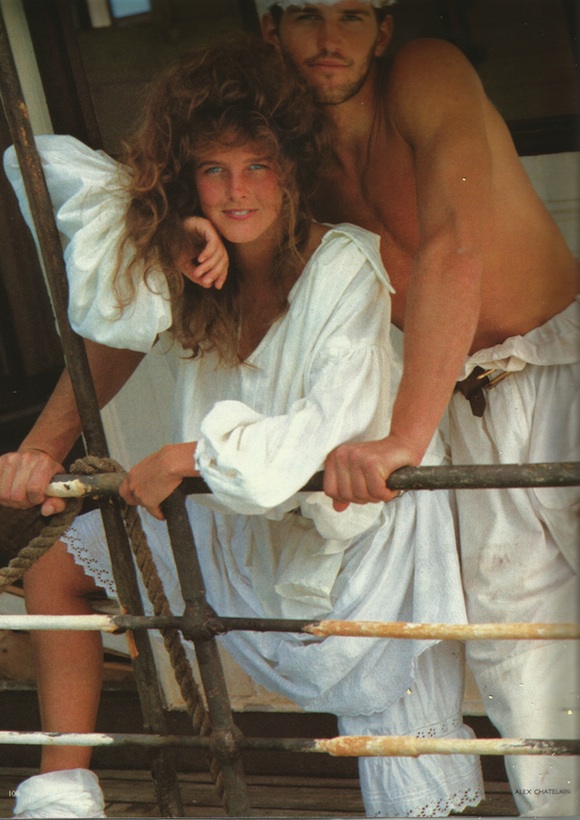
//The Pirate shirt makes the cover of UK Vogue, May 1981, the first issue to celebrate the new spirit of romanticism exemplified by the public fascination for royal bride-to-be Lady Diana Spencer. Photo: Alex Chatelain////Worlds End self-striped Pirate dress matched with petty-drawers and stockings on the female model in this shot from the spread Escape To The Sun, UK Vogue, May 1981. Photo: Alex Chatelain//
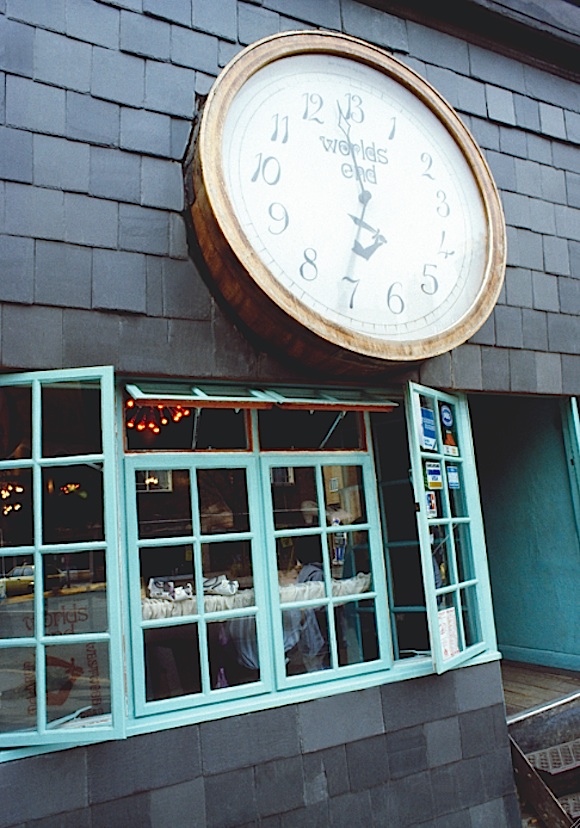
McLaren’s choice of name for the new iteration at 430 King’s Road came from the final destination on the front of the 31 bus; the last stop on the route was Limerston Street, just a few yards west of McLaren and Westwood’s shop.
“The thought of the world ending, the apocalyptic, suggested to me the potential for cultural change,” said McLaren in 2008. “I thought Worlds End (note absence of apostrophe) could do that by having a clock that went backwards around not twelve, but thirteen hours – something impossible to conceive. Something unreal. Something magical.
//Exterior, 430 King’s Road, January 1981. Photo (c) Sheila Rock//
“Worlds End was meant to represent a pirate galleon setting sail out of this muddy hole called England, a place I had learned to loathe by then due to the conditions I had to meet because of the English courts and the music industry generally.
“Vivienne wanted to destroy and not have anything further to do with Punk. She hated it. So, this store became a way of sailing away from the Kings Road. I wanted the store to ‘float’ as on waves. The little windows in the front were to create that part of the galleon where the captain would often have his chambers.”
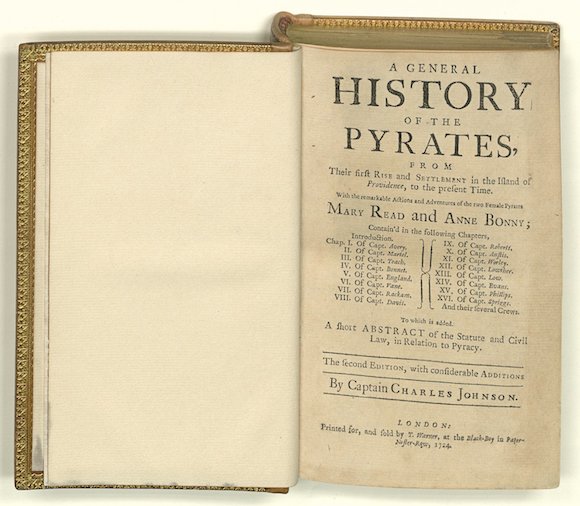
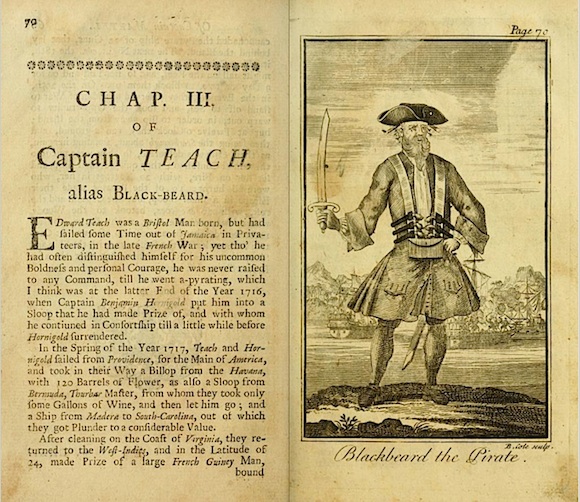
//The 1724 book is attributed to one of McLaren’s heroes, the original Seditionary Daniel Defoe////From A General History Of Pyrates. Illustrations: Benjamin Cole//
When developing a logotype and label ident for the new collection, McLaren resorted as ever to research. At Foyle’s bookshop he came across a copy of A General History Of Pyrates, the highly entertaining 1724 volume by Captain Charles Johnson which is attributed to Daniel Defoe. The author of Robinson Crusoe, one of McLaren’s favourite books, Defoe had lived not far from where McLaren was born in Stoke Newington.
Famously Defoe was pilloried in 1703 for seditious libel over his satirical pamphlet The Shortest Way With Dissenters; it was this archaic charge which inspired the name McLaren gave to 430 King’s Road in 1976.
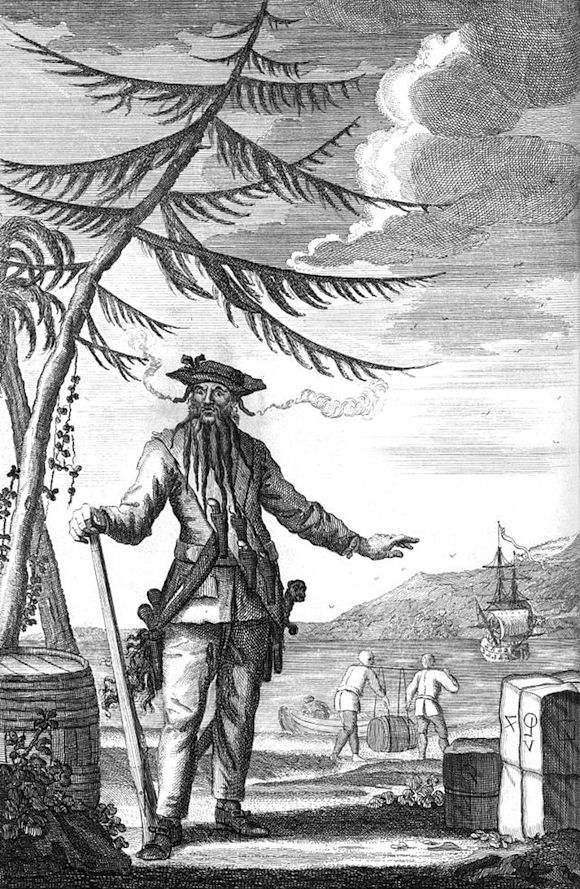
One of the chapters of the Johnson book is dedicated to the exploits of Edward Teach, the notorious Black-Beard The Pyrate whose appearance excited McLaren’s interest: “The beard was black, which he suffered to grow of an extravagant length…and was accustomed to twist it with ribbons, in small tails. In time of action he stuck lighted matches under his hat which burned slowly at the rate of about 12 inches an hour.
“Appearing on each side of his face, his eyes looking naturally fierce and wild, made him altogether such a figure that imagination cannot form an idea of a Fury from Hell to look more frightful. In the commonwealth of Pirates he who goes the greatest length of wickedness is looked upon with a kind of envy amongst them.”
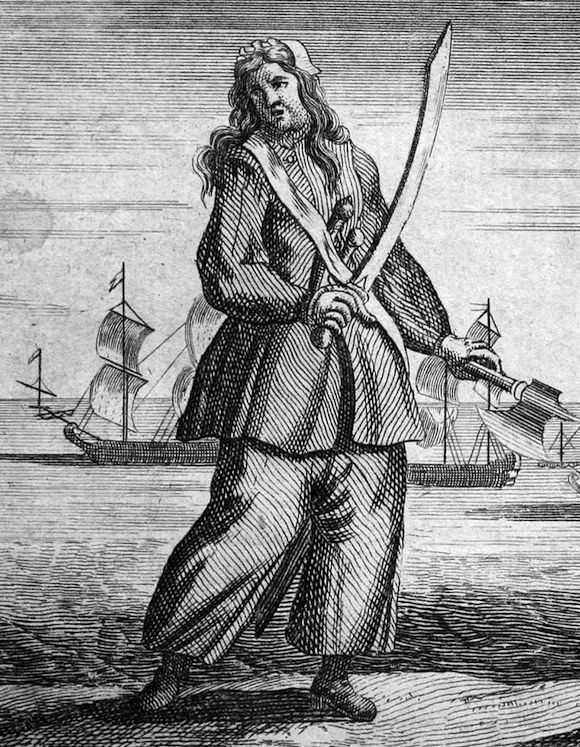
//Another illustration of Teach clutching his Saracen sword////Detail of arm with Saracen sword////Anne Bonny also sported the same weapon//
In the illustrations by Benjamin Cole, the fearsome figure is shown with one muscular arm holding a Saracen sword, a weapon also favoured for its deadly properties by the likes of the infamous Anne Bonny.
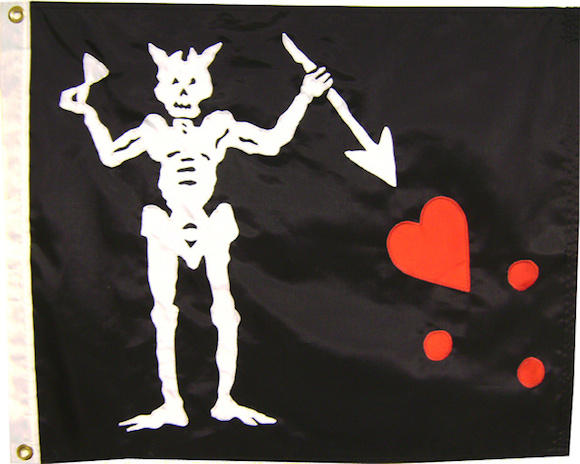
As McLaren/Westwood afficianado Stuart Swift has pointed out, the logo was taken directly from the flag of another subject of A General History Of Pyrates: the privateer-turned-pirate Thomas Tew, who traded in gold, silver, jewels and slaves and is alleged to have founded the Madagascan pirate colony Libertalia (where he appointed himself Admiral). While Blackbeard’s story fascinated McLaren, the pirate’s standard – the skeleton of the devil raising a toast as he pierces a heart – lacked the impact of Tew’s.
//Engraving of Blackbeard showing from A General History Of Pyrates////Blackbeard’s standard, from tattoodonkey.com////Thomas Tew flag from only-flags.com//
This symbol of romantic rebellion was then applied to labels, brooches and even the clock spinning backwards outside 430 King’s Road when Worlds End opened at the end of 1980.
Johnson’s book also produced a name for the first Worlds End collection; a vessel commanded by these desperate men and women is designated “the Pirate”, as in: “I followed their advice and went on board the Pirate…” This is why the clothing produced by McLaren and Westwood in the first part of 1981 is grouped under the singular.
Watch the BBC’s 1985 documentary To The World’s End – about the great lost 31 bus route – here.
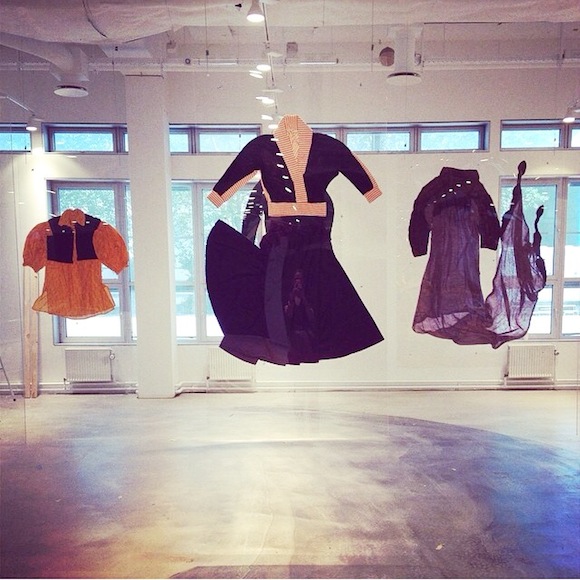
//Foreground: Mobile featuring portrait of Malcolm McLaren in Central Park, NYC, 1975 by Bob Gruen. In the background the 12m-long Let It Rock installation. Photo: Jean Francois Carly (c) Malcolm McLaren Estate////McLaren’s Buffalo sheepskin with Witches multi-tongued shoes contributed by designer Kim Jones. Photo: Jean Francois Carly (c) Malcolm McLaren Estate ////Outfits float in the air, from left: Pirate waistcoat and dress worn by Annabella Lwin of Bow Wow Wow in performance; Let It Rock shawl collared blouse and circle skirt; Nostalgia Of Mud wool toga dress with Folkways print. Malcolm McLaren Estate, Kim Jones Collection, private collection//
The response to this week’s Malcolm McLaren exhibition Let It Rock has been very encouraging; here are some images which hopefully give an idea of the show’s impact.
Running for four days at Copenhagen’s Bella Center as part of the Danish city’s international fashion fair CIFF, the show – curated by me and Young Kim of the MM Estate – focused on the late cultural iconoclast’s engagement with fashion with Vivienne Westwood in the 70s and 80s.
We have received favourable press, with particular praise from the FT’s Charlie Porter, who wrote that the hang of the garments was “exceptional”. Meanwhile style blogger Susie Bubble described the exhibition – full title Let It Rock: The Look Of Music The Sound Of Fashion – as “incredibly detailed and well put together”.
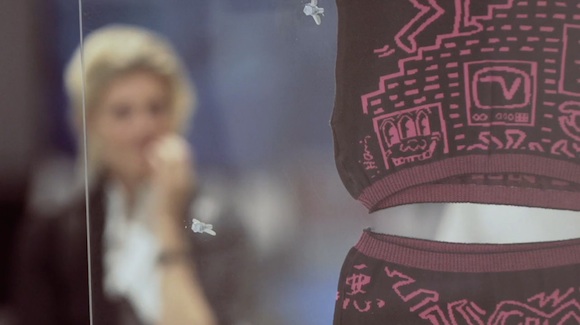
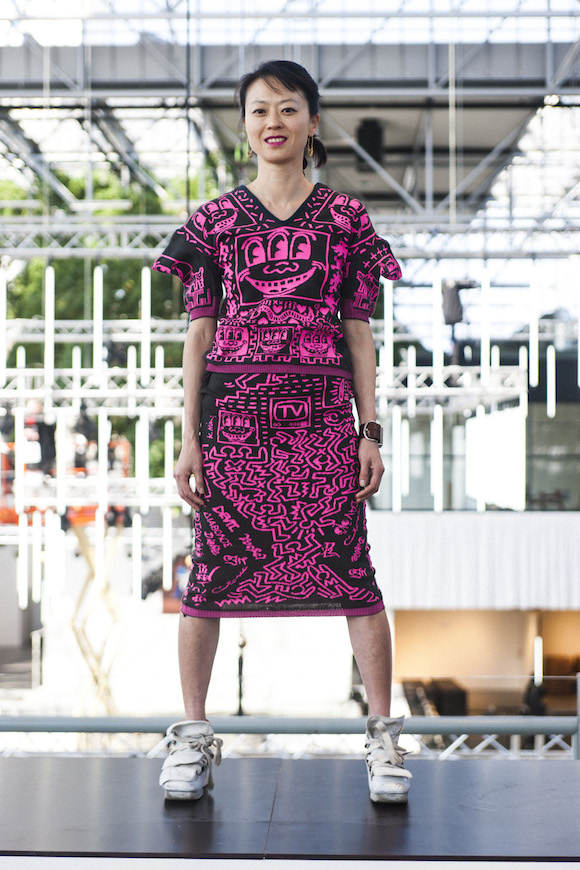
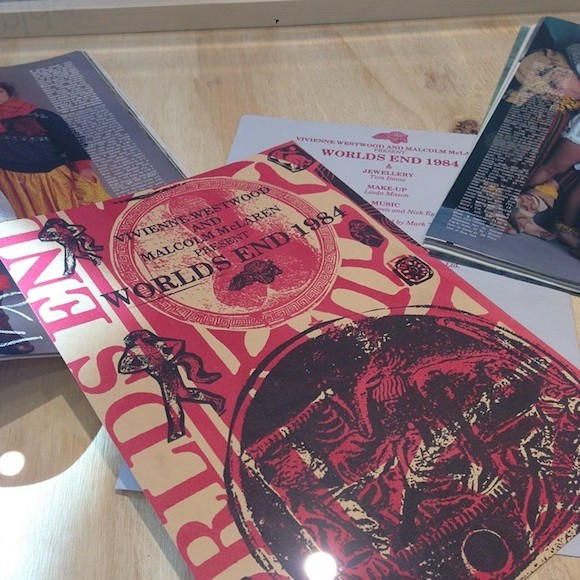
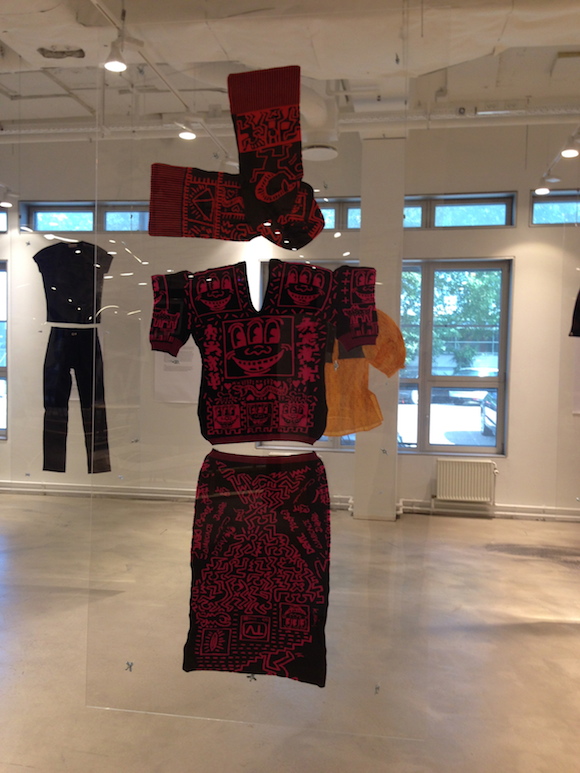
//Young Kim in jacquard Keith Haring print Witches two piece and multi-tongued sneakers. All clothes from Kim Jones coillection. Photo: Jean Francois Carly (c) Malcolm McLaren estate////Fans belt buckles with Fans press statement. Sources: Malcolm McLaren Estate and private collection////Press invite and showcard for the sixth catwalk collection designed by McLaren and Vivienne Westwood: Worlds End 1984, later Hypnos. The partnership was dissolved in March 1984. Malcolm McLaren Archive////ROCK! Marco Pirroni’s Let It Rock ties//
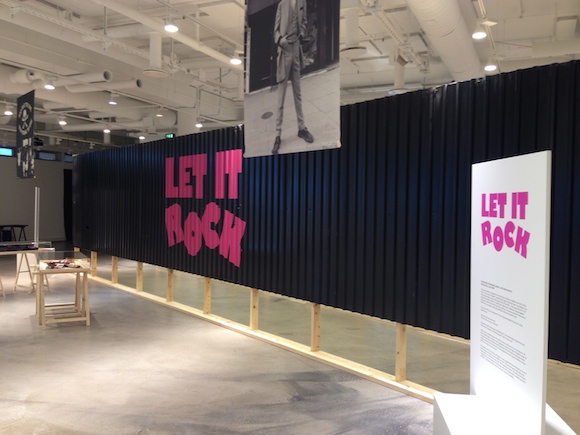
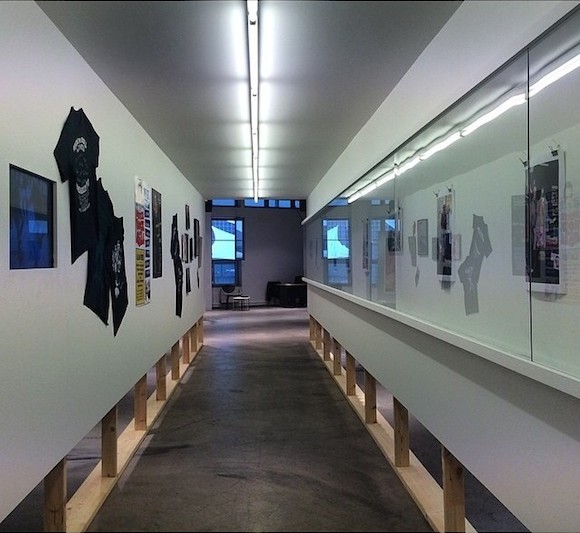
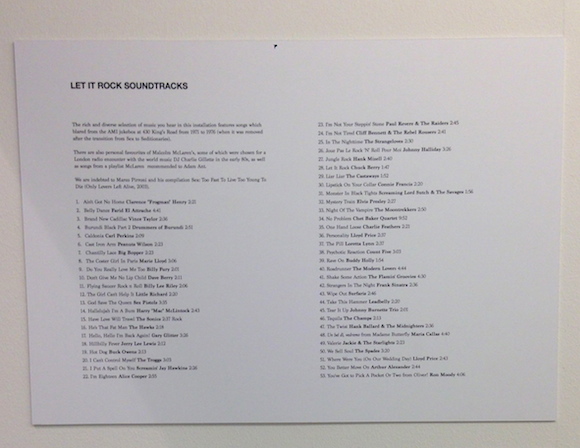
We designed the show centrepiece: an imposing black corrugated iron-clad 12-metre long tunnel installation celebrating McLaren’s first shop, Let It Rock. Among the exhibits inside were previously unpublished photographs of the shop interior taken by the late David Parkinson and an original shop price list owned by McLaren. A bespoke soundtrack blared music as featured on the jukebox at 430 King’s Road as well as personal favourites of McLaren’s, from Burundi Black by the Drummers Of Burundi to Cast Iron Arm by Peanuts Wilson and Hallelujah I’m A Bum by Harry “Mac” McLintock.
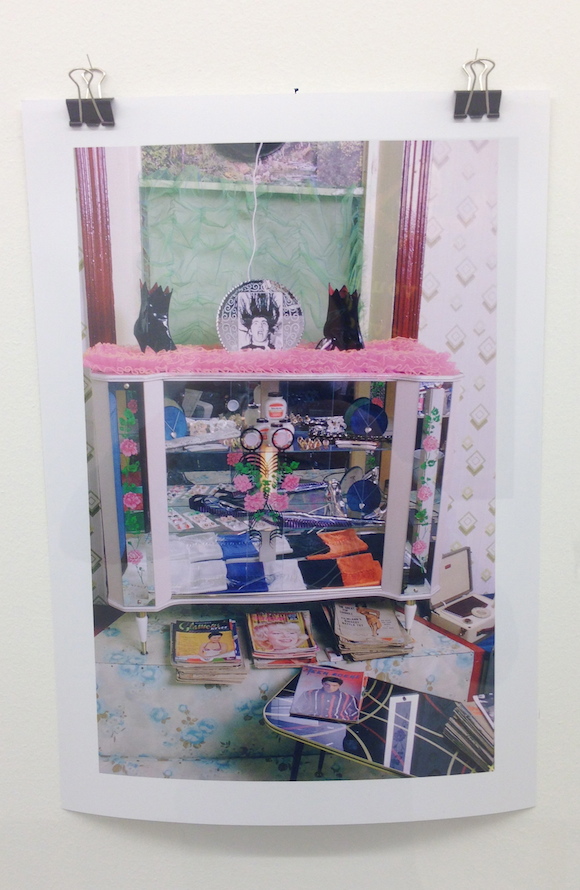
//Installation exterior////Installation interior////Let It Rock display cabinet, January 1972. Photo: David Parkinson////McLaren’s framed copy of the LIR price list he designed in 1972. Malcolm McLaren Estate////January 1972. Photo: David Parkinson/////Tracklisting for songs played in the insatllation//
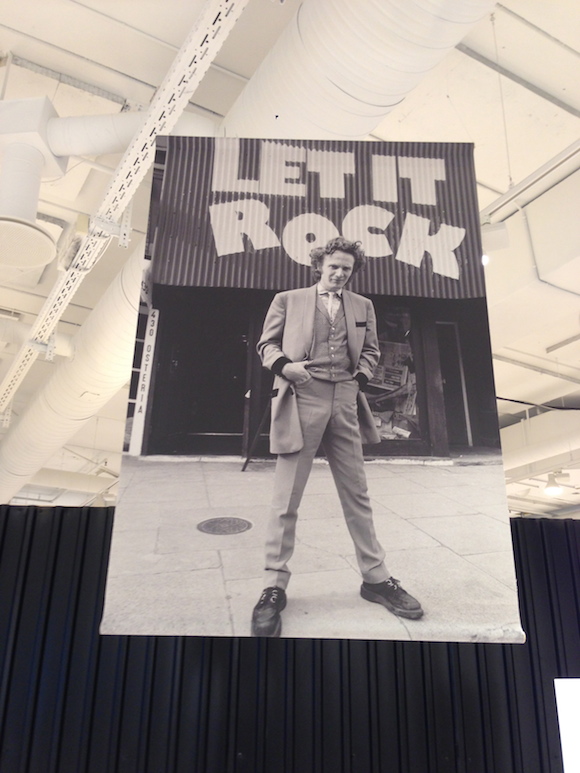
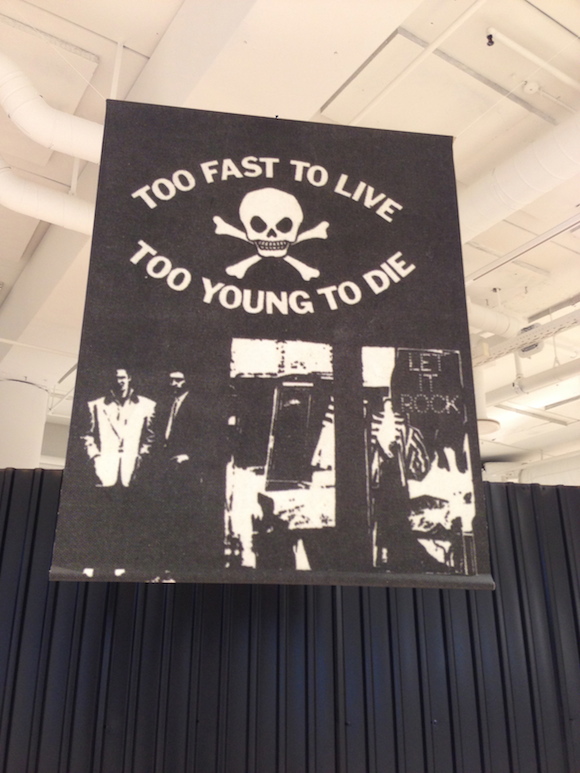
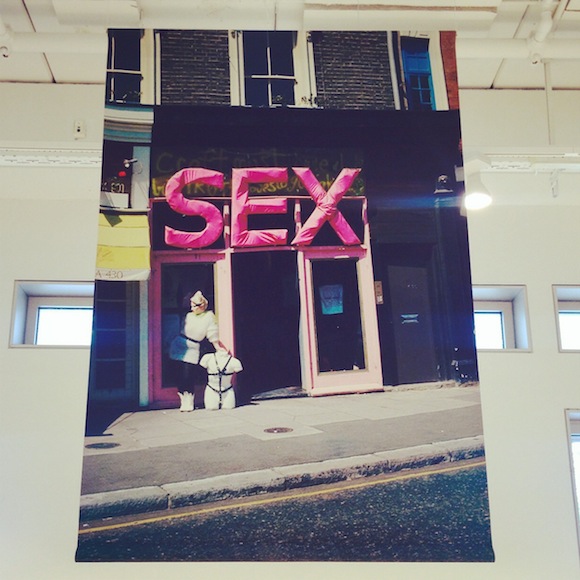
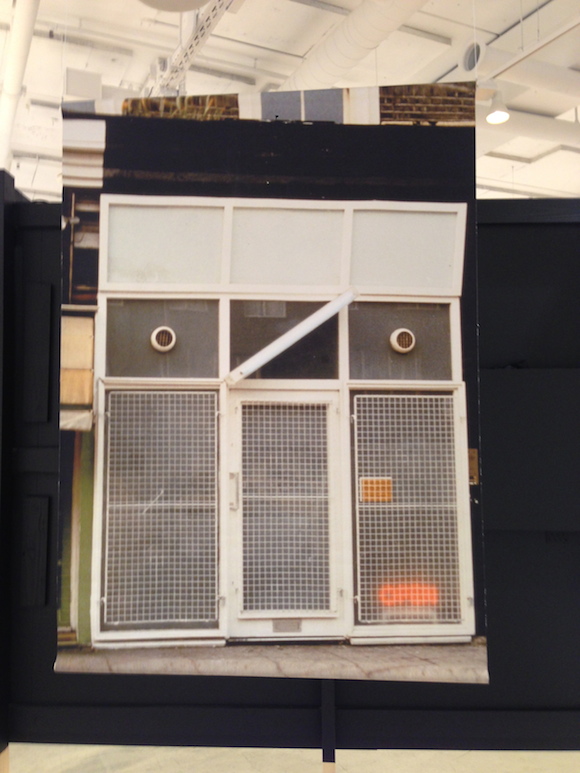
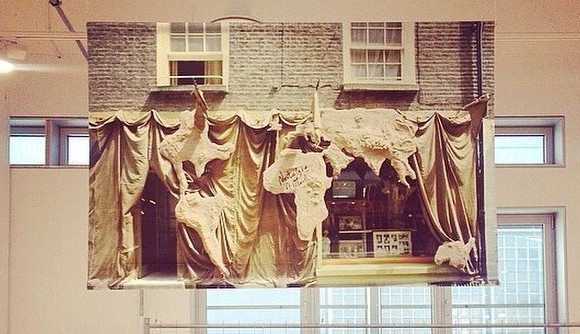
The show was subdivided into six areas each dedicated to a manifestation of the outlets McLaren operated with Westwood. These were signposted by 60 x 40″ photographic blow-ups of the exteriors we commissioned to be printed on canvas to add dimension and presence.
//Let It Rock exterior with McLaren in foreground, 1972. Photo: Mirrorpix. Printed on canvas 60 x 40″////Too Fast To Live Too Young To Die with McLaren and Gerry Goldstein in foreground, 1973. Photo: Malcolm McLaren Estate. Printed on canvas 60 x 40″////Sex with shop assistant Jordan in foreground, 1976. Photo: Sheila Rock. Printed on canvas 60 x 40″////Seditionaries frontage, 1976. Photo: Ben Kelly. Printed on canvas 60 x 40″////Worlds End frontage, 1981, photo: Sheila Rock. Printed on canvas 60 x 40″. Left: Marco Pirroni’s Let It Rock drape suit////Nostalgia Of Mud, 1982. Photo: Sheila Rock. Printed on canvas 40 x 60″//
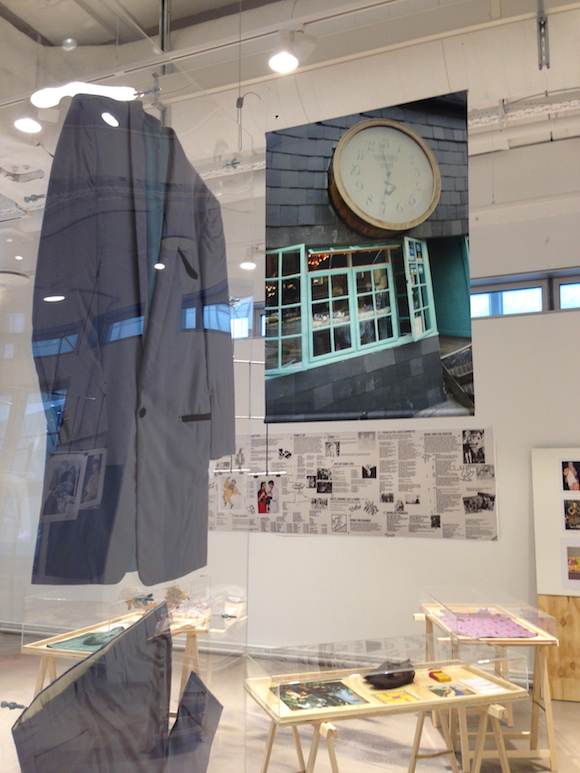
With text panels explaining exhibits in McLaren’s own words, each section also featured photographic mobiles suspended from the ceiling and Perspex-topped vitrines containing original garments, photography, notebooks, sketches and ephemera.
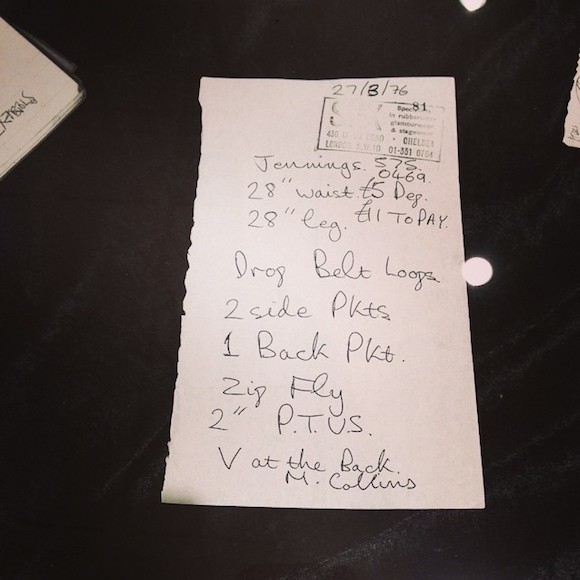
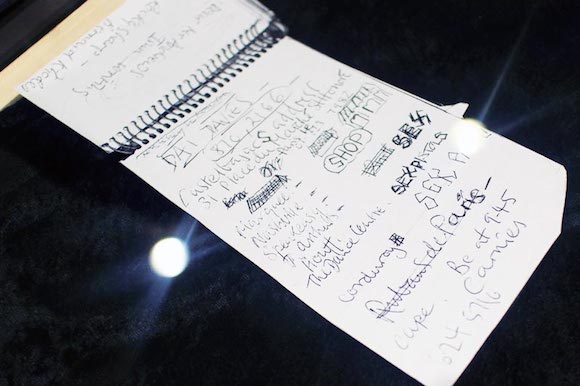
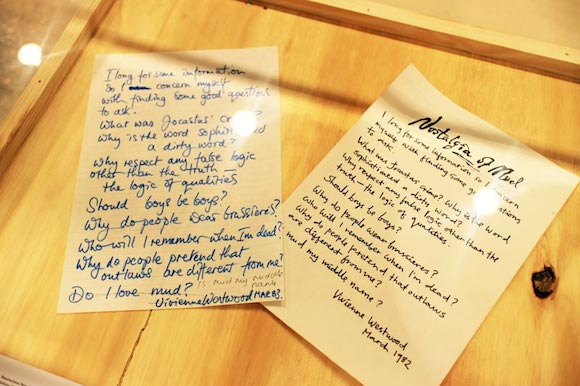
//Customer deposit receipt, Sex, 1976. Signed by shop assistant Michael Collins. Paul Burgess Collection////Pages from McLaren’s 1976 notebook. Paul Burgess Collection////McLaren’s handwritten Nostalgia Of Mud press release for Vivienne Westwood; her version in her own handwriting. Photo: Jean Francois Carly (c) Malcolm McLaren Estate//
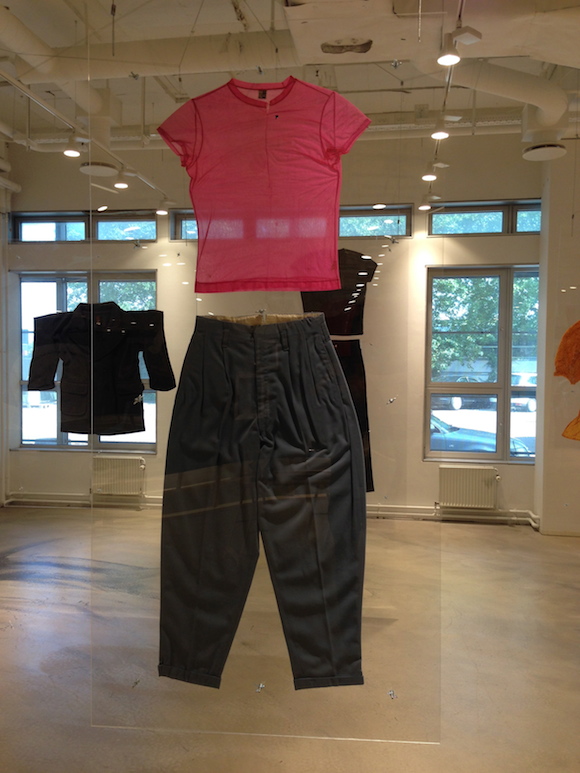
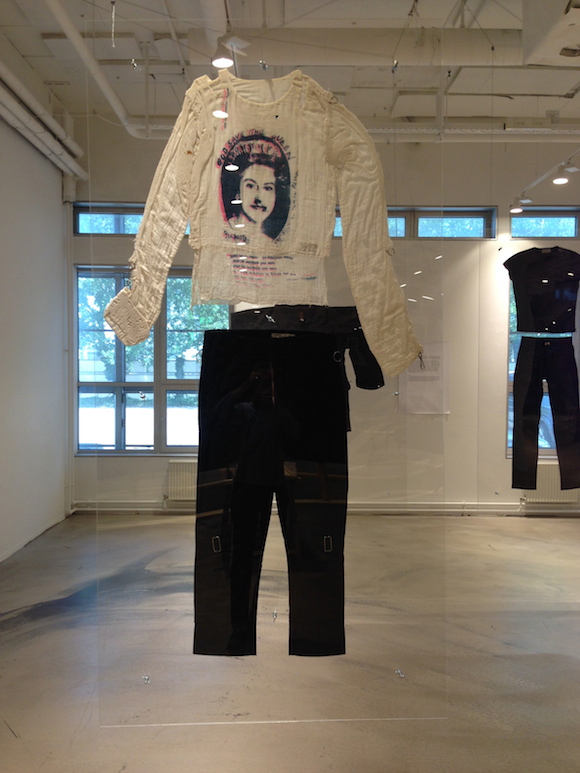
One area of the show was dedicated to 10 outfits reflecting the span of the designs from Let It Rock to Nostalgia Of Mud. Our solution to the ticklish problem of how clothes are presented in exhibitions was to fly these from the ceiling between sheets of Perspex, and we made a selection from the Estate archive as well as contributions by the likes of Louis Vuitton’s style director Kim Jones and guitarist/songwriter Marco Pirroni.
//Nylon top, Sex, 1976. Peg trousers, Let It Rock, 1974. Kim Jones Collection////God Save The Queen Muslin top, Seditionaries, 1977. McLaren’s bondage trousers, Sex, 1976. Malcolm McLaren Estate/private collection////Witches jacquard two piece and scarf with Haring print. Kim Jones Collection//
In the projection room visitors viewed moving images associated with McLaren, from rare film of the catwalk shows he conducted with Westwood in the early 80s to video clips for his hits such as Buffalo Gals and Soweto.
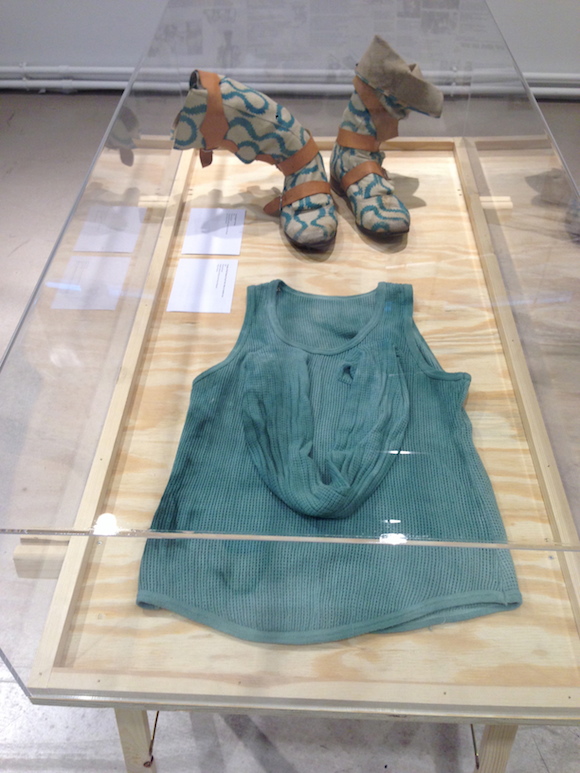
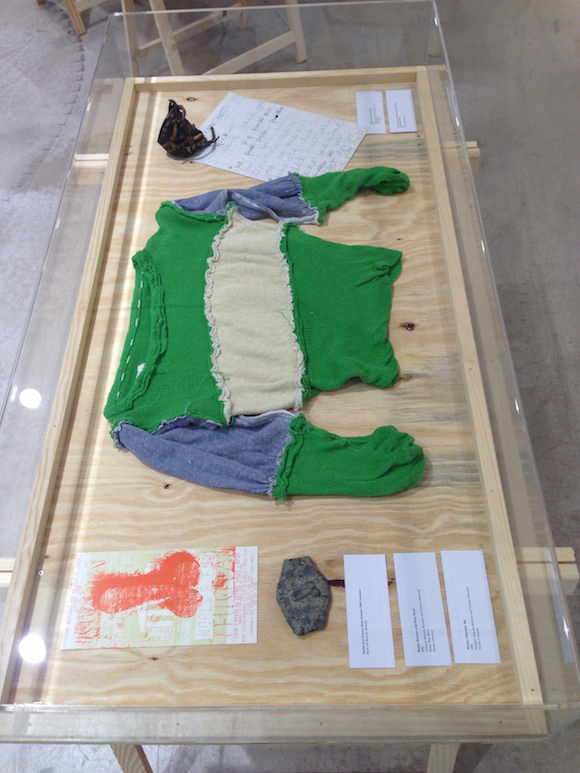
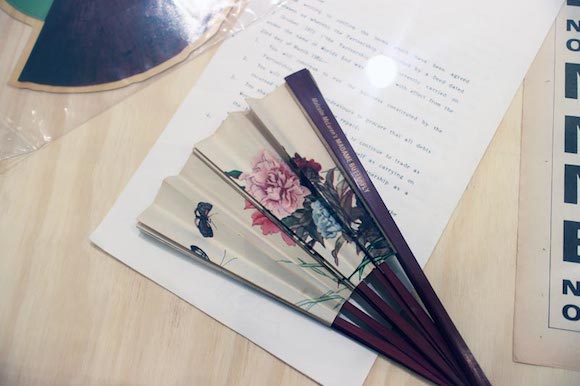
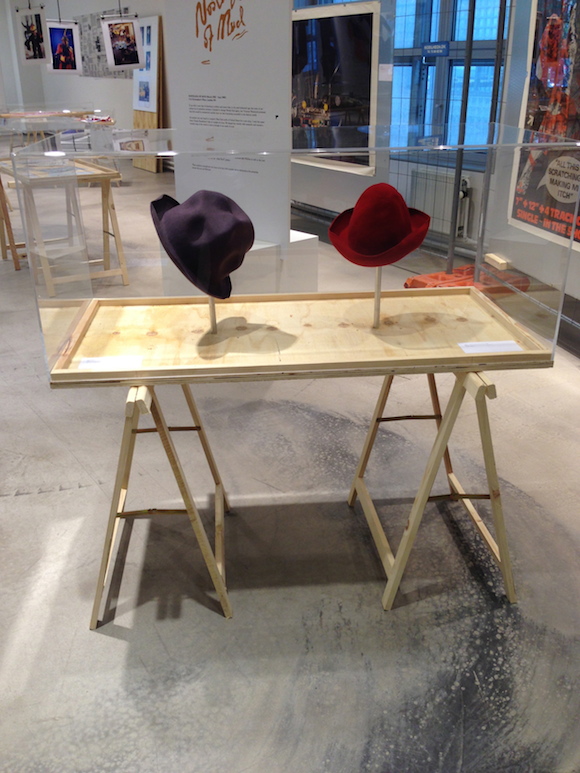
//Marco Pirroni’s print pirate boots, Worlds End, 1981. Top worn by Annabella Lwin of Bow Wow Wow in performance and subsequently dyed. Private collection////Savages Navajo print dress with McLaren’s annotated copy of Indian Rawhide. Both private collection////Invitation to Witches collection show, Folkways top, Dances Of The World’s People. Malcolm McLaren Estate/private collection////Two rubber bracelets deisgned by Tom Binns for Worlds End S/S 1984 with Hobo-Punkature top and Worlds End 1984 invite. Malcolm McLaren Estate/private collection////Document confirming the dissolution of the design partnership between McLaren and Westwood, March 1984. It is important to note that McLaren did not relinquish authorship over the works they produced together////The final exhibit: Buffalo hat and McLaren’s Chico hat. Kim Jones Collection/Malcolm McLaren Estate.//
Many visitors told us they were bowled over by the show; now we are working on another McLaren exhibition as part of Art In Pop at Le Magasin in Grenoble, France, this autumn. This will encompass McLaren’s creative output from his art-school days through his careers in fashion, music and film to his final works as a visual artist. I’ll keep you informed; it runs from October to January next year.
Follow these links for media coverage of Let It Rock:
Thanks go to CIFF fashion/design director Kristian Andersen and creative directors Pierre Tzenkoff + Arnaud Vanraet for their foresight in commissioning this show, and also to the exhibition architect, the talented Jean-Christophe Aumas and his excellent team of builders, particularly Annette, Henning + Stefan.