This morning I am participating in the V&A’s study day From Biba To Topshop with a presentation on the rise and fall of boutique culture in London’s King’s Road, starting with the opening of Bazaar by Archie Nairn, Alexander Plunket-Green and Mary Quant at 138a in 1955 and closing with the establishment of World’s End at 430 by Malcolm McLaren and Vivienne Westwood.
Tomorrow I’m participating in the V&A study day on British design in the 60s with a talk about the development of graphics and poster art during the decade.
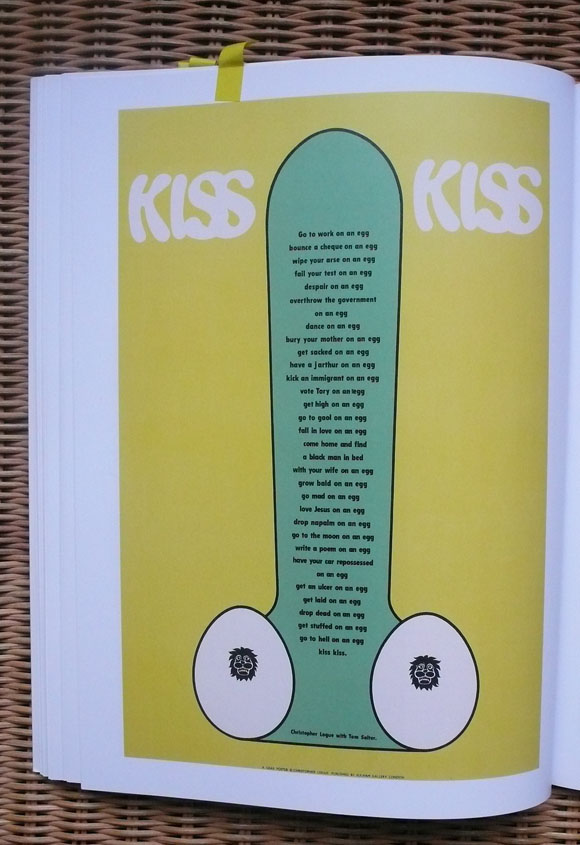
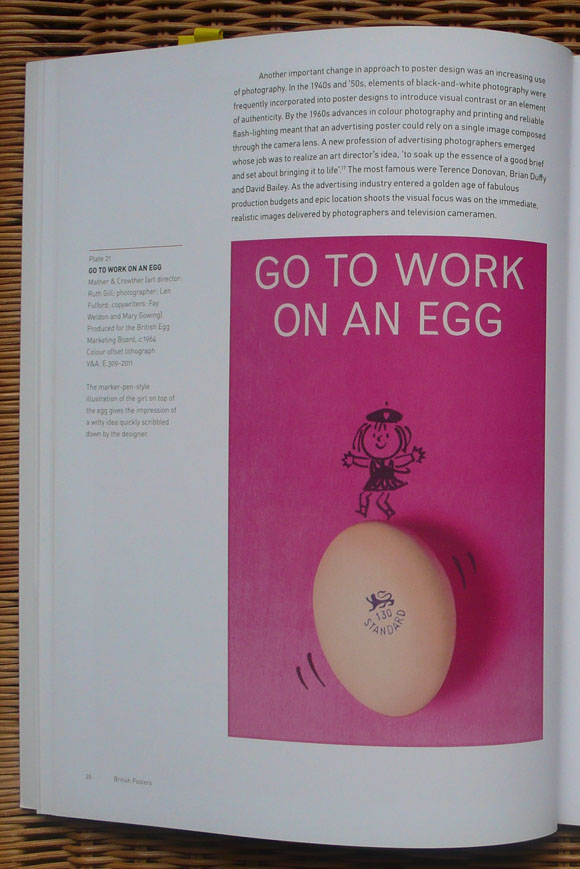
//Kiss Kiss, Go To Work On An Egg, Christopher Logue + Tom Salter, 1968.////Go To Work On An Egg, Mather & Crowther, 1964.//
“People do love huge pieces of paper”.
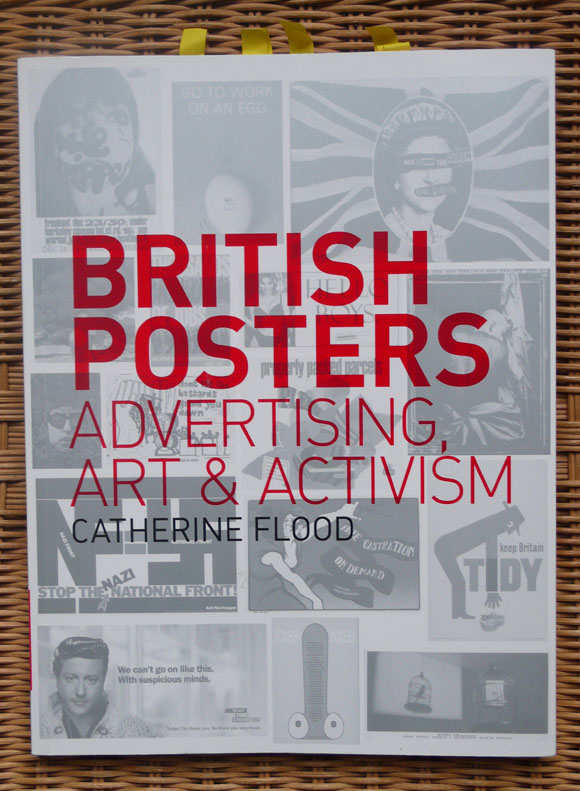
So runs the quote heading up a section in V&A curator Catherine Flood’s excellent overview British Posters: Advertising Art & Activism, published by the museum to coincide with its multifarious design celebrations this Olympic year.
And it’s true. We do.
Or we all did, when this vital form was simultaneously a mass-medium and a highly personal communications device, when huge promotional budgets and lack of urban controls resulted in the accretive papering of our street-scapes. Meanwhile, behind closed doors, we gave posters pride of place on the walls of our bedrooms, bedsits and sitting rooms.
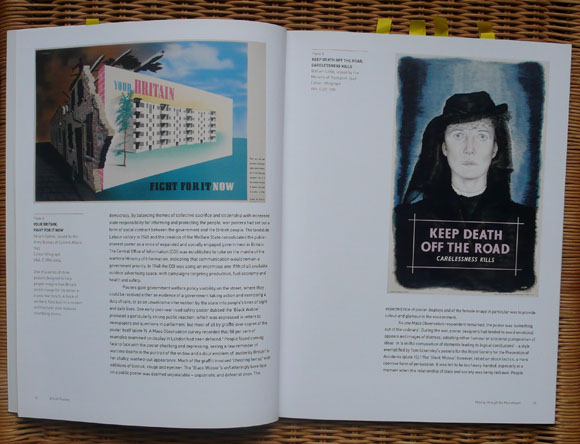
//Top left: Your Britain, Fight For It Now, Abram Games, 1942. Right: Keep Death Off The Road, Carelessness Kills, William Little, 1949.//
I sourced this incredible large-scale Barney Bubbles-designed poster from a private collection for the V&A’s forthcoming exhibition British Design: 1948-2012.
Chris Breward, co-curator with Ghislaine Wood, credits my 2010 exhibition Process (which focused on Bubbles’ working practices) for having persuaded the V&A to foreground the work of the late graphic designer in the new show.
Here is a selection of images from the V&A’s forthcoming exhibition Postmodernism: Style and Subversion 1970-1990. In pursuit of this slippery-to-define movement, curators Glenn Adamson and Jane Pavitt have settled on the defining principles of quotation and bricolage (assemblage from diverse elements).
As a result they have mixed and matched disciplines, categories and scale in their line-up of 250 exhibits, ranging from a reconstruction of Hans Hollein’s 1980 Venice Biennale facade The Presence Of The Past to graphics for record sleeves by Barney Bubbles, Neville Brody and Peter Saville.