“With this book, Gorman convincingly moves away from the ossified image of McLaren as a great rock’n’roll swindler, a morally bankrupt punk Mephistopheles, and closer towards his art-school roots, his love of ideas”
Victoria Segal reviewing The Life & Times of Malcolm McLaren in the Sunday Times, April 5, 202
The first reviews of my Malcolm McLaren biography are carried today by Britain’s Sunday Times Culture section and in The New Review magazine of it’s broadsheet rival The Observer.
I’m really pleased for writer/photography editor Dermot Kavanagh. His tireless championing of the late soulboy footballer Laurie Cunningham is paying off with a major piece in today’s Sunday Times’ Style magazine and news that there is to be a blue plaque marking the sportsman’s North London birthplace.
The publication of Derek Boshier: Rethink/Re-entry and the opening of the companion exhibition next week are marked by an interview with the artist in the the UK’s Sunday Times.
Pointing out that recognition for Boshier’s achievements is long overdue, writer Dan Cairns’ piece covers the 60s Pop years, Boshier’s work with The Clash and David Bowie and his continuing and energetic immersion in all aspects of art and multimedia.
“Nearing 80, Boshier is still engaged, making films on his iPad, collecting ideas, grappling with the world around him,” writes Cairns.
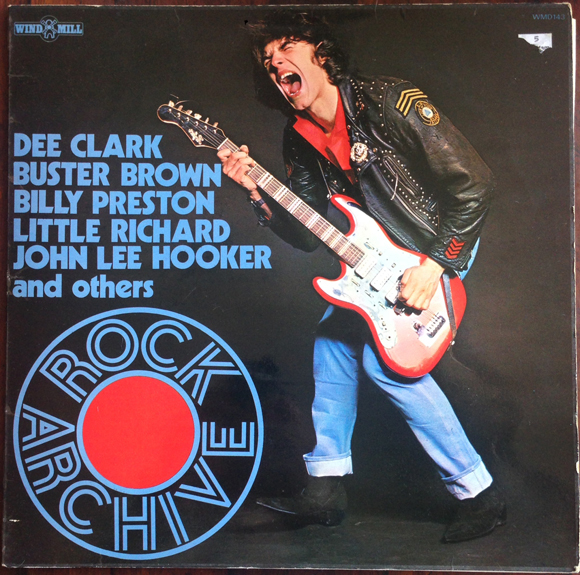
//Front cover, Rock Archive, Various Artists, Windmill Records, 1972//
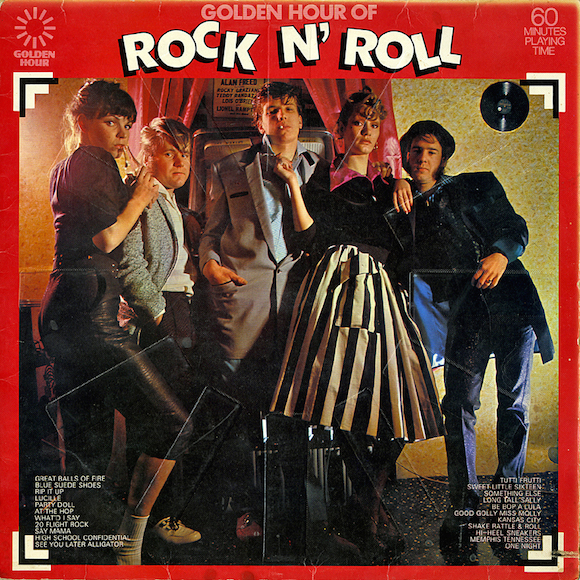
It is relatively common knowledge among those interested in the careers of Malcolm McLaren and Vivienne Westwood and their series of extraordinary shops that they supplied clothes to the 1973 album Golden Hour Of Rock & Roll; Let It Rock at 430 King’s Road was clearly credited on the back of the record sleeve.
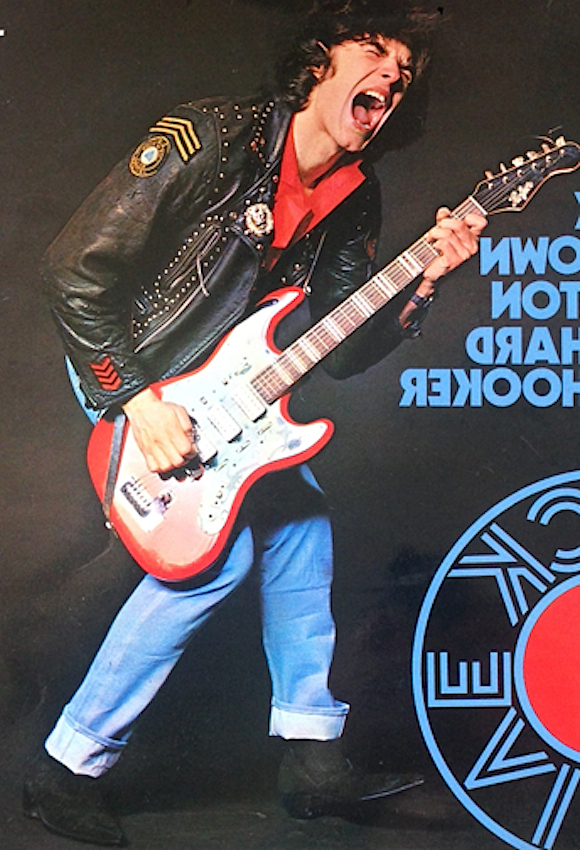
//Front cover, The Golden Hour Of Rock N Roll, Various Artists, Pye/Golden Hour, 1973////The photograph on the Rock Archive cover was flipped to better accommodate the text. Here it is as originally shot//
But I have fresh information which helps towards a greater understanding of McLaren’s project to investigate the detritus of popular culture’s recent past. During a bout of research recently I came across this earlier and hitherto undocumented use of Let It Rock clothing in a music context: the front cover of Rock Archive, a budget LP compilation released by the specialist British independent label Windmill in 1972.
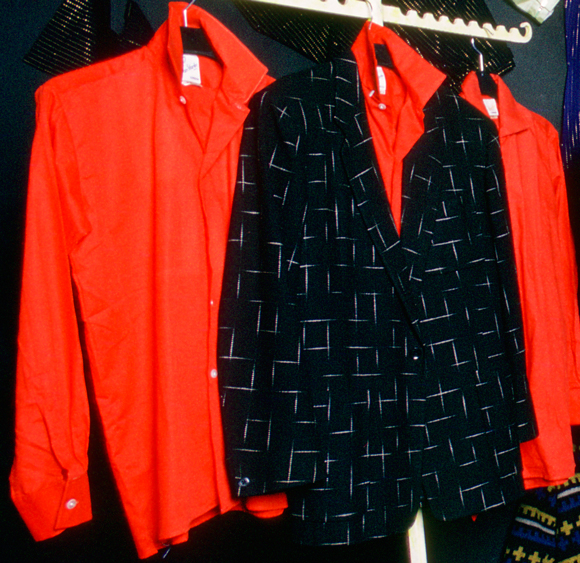
And I am detailing the clothes on the cover with images taken inside Let It Rock which have never been previously published.
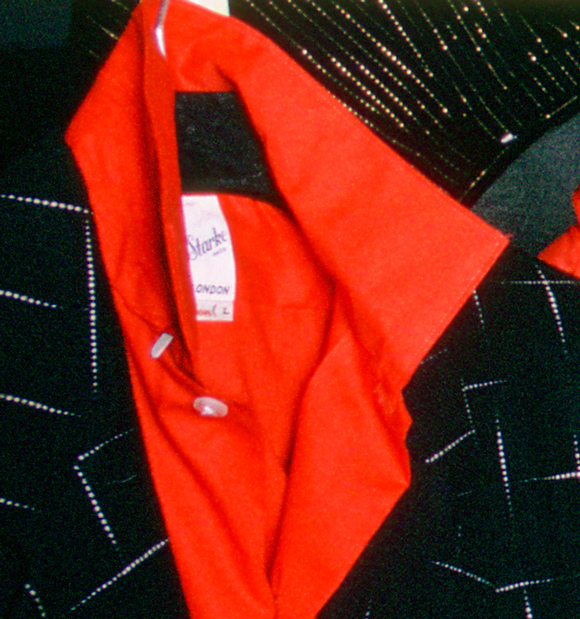
//Starke shirts with 50s sports jacket on Let It Rock wall, January 1972. Photograph: David Parkinson////Starke label detail//
Each garment worn by the model – whose attempts at rocking out resulted in his giving every appearance of suffering considerable pain – comes from the deadstock of British brands assiduously assembled by Malcolm McLaren and his art-school friend Patrick Casey for the opening of the world’s first avowedly post-modern retail outlet in November 1971.
From the ground up, the Rock Archive cover star wore black suede Denson’s Fine Poynts, ice-blue Lybro jeans with 5in cuffs, a Frederick Starke flyaway collar shirt and a studded and decorated Lewis Leathers early 60s Lightning jacket (which featured a highly collectable 6-5 Special patch).
Sad to note the anniversary today of the death of Tommy Roberts, flamboyant design entrepreneur and subject of my book Mr Freedom.
//Dedication (right) with (left on cover-flap) list of abiding interests (courtesy Eve Ferret + Mark Summerfield) and Brian Aris portrait////Roberts opened Kleptomania with Charlie Simpson in Kingly Street, central London, in 1966////Neon arch sales counter display designed by Jeffrey Pine for Mr Freedom, opened with partner Trevor Myles at 430 King’s Road in September 1969//
Here – with a selection of images from Mr Freedom – is an extract from an essay I have written about Roberts’ role in the development of design in Britain for Chris Breward and Ghislaine Wood’s book British Design: Tradition & Modernity, which will be published by Bloomsbury next year.
It is arguable that wider recognition for Tommy Roberts’ audacious innovations in the promotion of street style, furniture, gastronomy, home-wares, interiors and collectables was undercut by his refusal to observe the sensitivities of England’s post-war design world.
Roberts adopted an ebullient public persona to match his stout physique and broad Cockney accent. “I’m the most vulgar man in fashion, darlin’!” Roberts proclaimed to the no-less outrageous Sunday Times fashion editor Molly Parkin in the heyday of his Pop Art fashion and objects emporium Mr Freedom.