Tomorrow night (April 14) I was supposed to be appearing at London’s regular event Word In Your Ear, the live successor of the much-missed The Word magazine founded by publishing titans Mark Ellen and David Hepworth.
//Smash Hits, January 6-19, 1983//
In the era of social distancing Mark and David have come up with the online Word In Your Attic, the results of which are posted on Youtube. For the episode to coincide with the publication of my Malcolm McLaren biography they asked me talk about 10 objects relating to McLaren from my archive.
//Hawkwind’s Space cut-out-and-keep 21-card “Galactic Tarot” pack arranged in the shape of a hawk in IT 117, November 18 – December 2, 1971. Design: Barney Bubbles////The cards arranged in rows of seven as recommended by the instructions//
In November 1971, design legend Barney Bubbles produced a typically audacious promotional item for Hawkwind’s recently released album X In Search Of Space.
//The Dance, from the series News From The Metropolis, Derek Boshier, 2014. Ink and collage on paper////From Best Foot Forward, Derek Boshier, 2014. Film//
To coincide with the publication of the Derek Boshier monograph Rethink/Re-entry, writer/curator Guy Brett and I are putting together an exhibition of the same name which will be held at Flowers Gallery in Cork Street, Central London this autumn.
It is a little known fact that David Bowie was an occasional visitor to 430 King’s Road when it was operating as Too Fast To Live Too Young To Die.
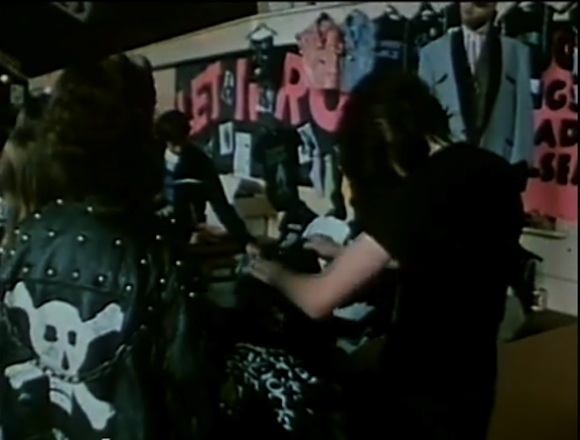
This manifestation of Malcolm McLaren and Vivienne Westwood’s revolutionary boutique – which paid design tribute to the fetishistic studded leather attire of Britain’s early 60s Ton Up Boys and rockers and sold the cult clothing associated with 40s mobsters and Latino zoot suit rioters – succeeded the 50s outlet Let It Rock in the early spring of 1973, as noted at the time by the fashion writer Catherine Tennant in British Vogue.
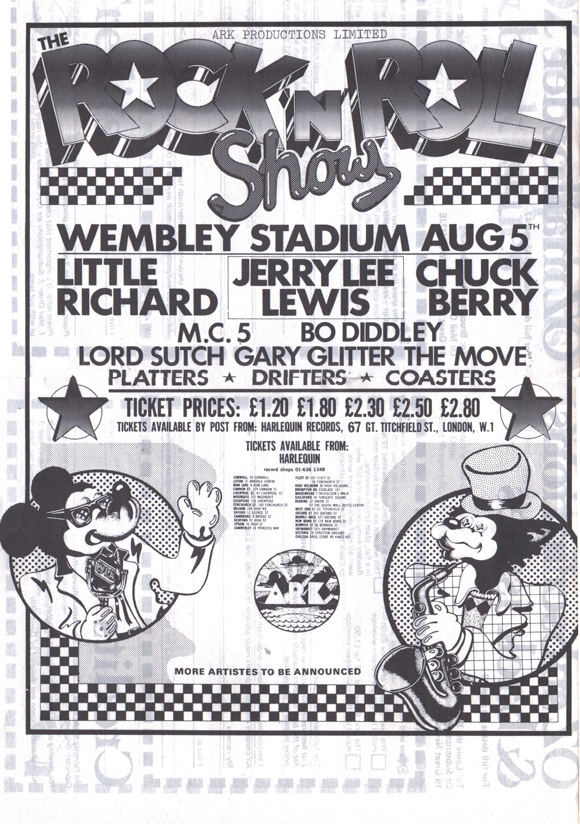
//Flyer for The Rock n Roll Show printed on the back of a subscription form for Oz magazine, July 1972. The Move were replaced by lead member Roy Wood’s new band Wizzard; this was their first gig. Original Brit-rocker Heinz was added to the bill; his backing band would soon become Dr Feelgood//
I acquired my first underground press publications in the summer of 1972, at about the point when the sector was taking the nosedive from which it never recovered.
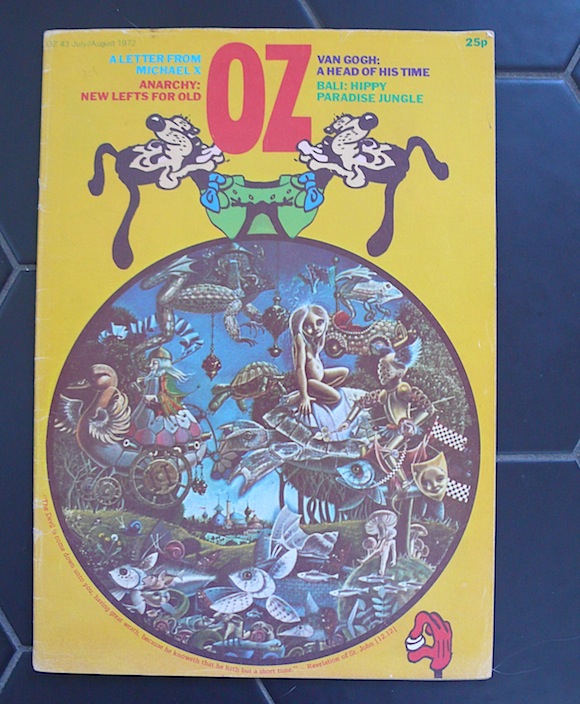
Still, better late than Sharon Tate, as they say. Aged 12, my taste had been whetted by sneak peeks at an older brother’s collection of magazines when a guy called Kevin O’Keefe who lived down the road gave me a few copies of Oz, including number 43, the July issue.
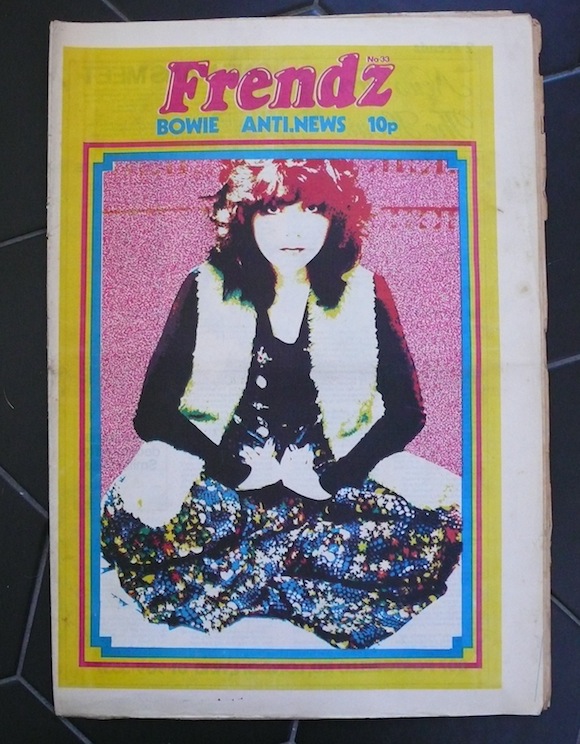
A few weeks later, to my astonishment, the newsagents in Hendon’s Church Road started stocking Frendz. I folded issue 33 between a couple of music papers and pored over it in my bedroom.
//Front cover of OZ 43, the issue which included the Wembley flyer////Front cover, Frendz 33, September 1972////Crowds around the Let It Rock stand. From the 1973 film London Rock N Roll Show directed by Peter Clifton//
Neither of the magazines are shining examples of the genre, but they had something in common: the centre spread of OZ 43 contained a subscription form back-printed with a flyer for the London Rock N Roll Show, a one-day festival of original 50s acts and those who could claim kinship held at Wembley Stadium on August 5 that year.
And for me the most beguiling article in Frendz 33 was a two-page stream-of-consciousness report of the event filed by one Douglas Gordon and illustrated with photographs by Pennie Smith, soon to leave for the NME and carve out her reputation as one of rock photography’s all-time greats.
Yesterday I was visited by a camera crew for an interview about the behind-the-scenes individuals who have made the difference to British popular music over the years.
The team, from Kobalt Productions in Berlin, are producing the documentary for Franco-German arts channel ARTE. The director is Simon Witter, who has a fine pedigree in journalism and broadcasting.