Excerpts from the annual summer music jamboree broadcast as part of UK TV station Channel 4 youth programme The Tube have been posted this week on Youtube.
//Jools Holland interviews McLaren about his “Duck Rocker”, one a number of customised boomboxes McLaren commissioned for promotional appearances//
One clip from the so-called Midsummer Night’s Tube of 1983 features an interview with Malcolm McLaren about his recently released album Duck Rock and single Double Dutch.
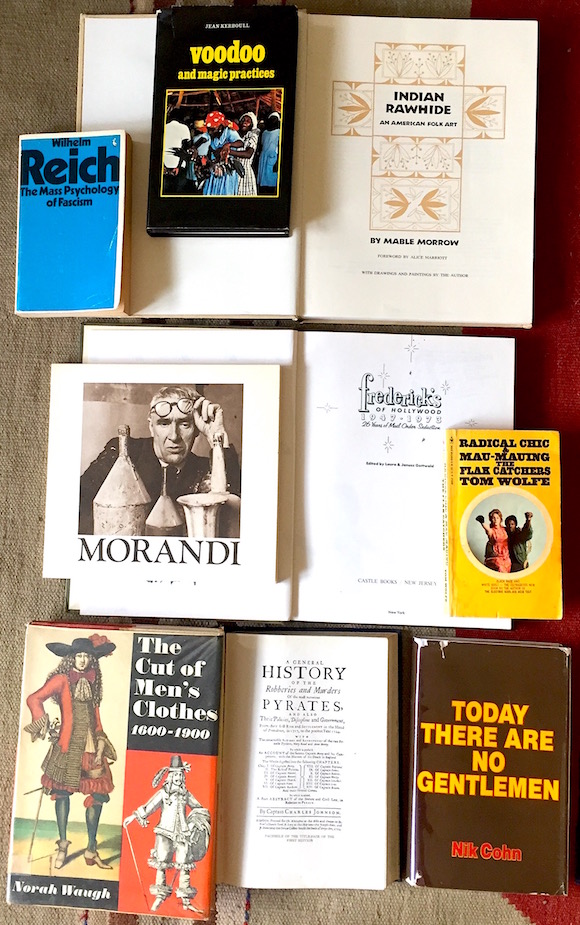
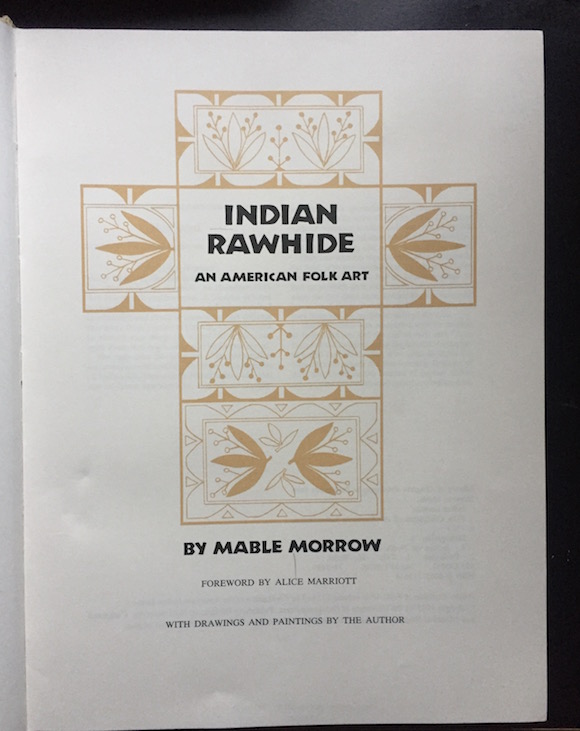
A few years back I came across Malcolm McLaren’s annotated copy of Indian Rawhide, the anthropologist Mable Morrow’s study of the folk art produced by Native American tribes which inspired the late cultural iconoclast in the conceptualising with his partner Vivienne Westwood of their Spring/Summer 1982 fashion collection Savage.
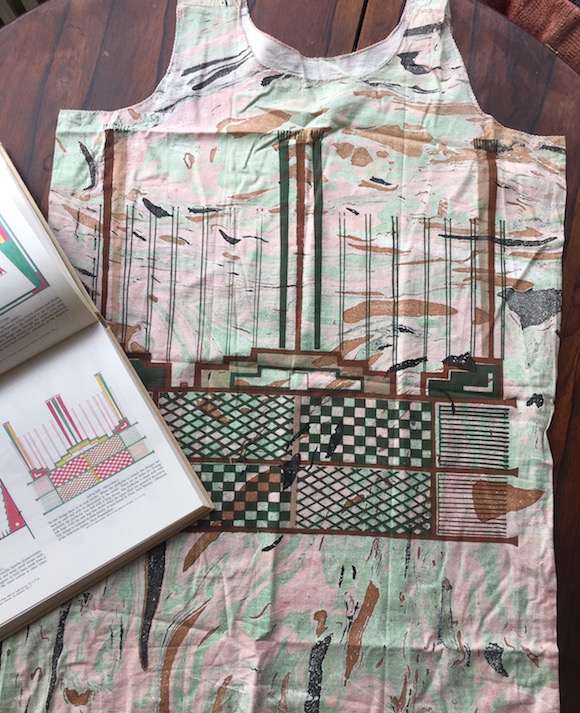
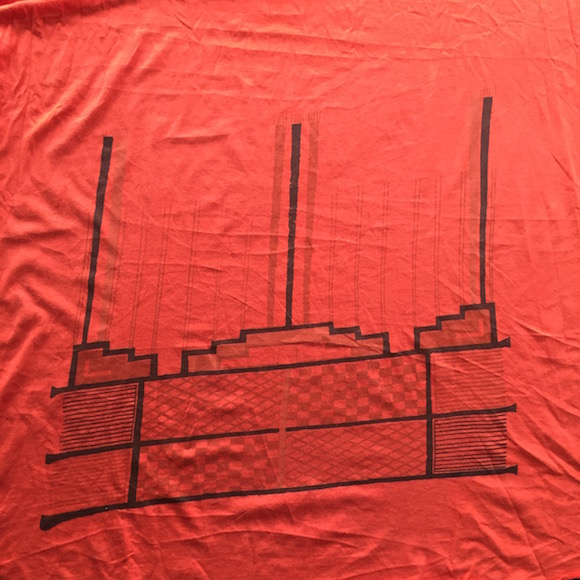
//Frontispiece to Morrow’s book, published by University of Oklahoma Press in the Civilization Of The American Indian Series, 1975////From Indian Rawhide: design produced by the Apache Mescaleros in Taos, New Mexico, matched by McLaren and Westwood with book-end marbling on this Savage slip dress. No reproduction without permission////The Apache design as it appeared printed on the end of the train on a Worlds End jersey toga dress. No reproduction without permission//
McLaren obtained a copy of Morrow’s book during travels recording his debut solo album Duck Rock. Since the Pirate collection of March 1981 had established a post-Punk direction for himself and Westwood and their Worlds End shop and label, McLaren set about investigating the powerful ideas residing in pre-Christian ethnic cultures, selecting Indian Rawhide as the text with which to frame the next group of designs.
My McLaren biography, to be published in spring 2018, will reveal that research – particularly literary – was one of the life-long consistencies in his approach to creative acts.
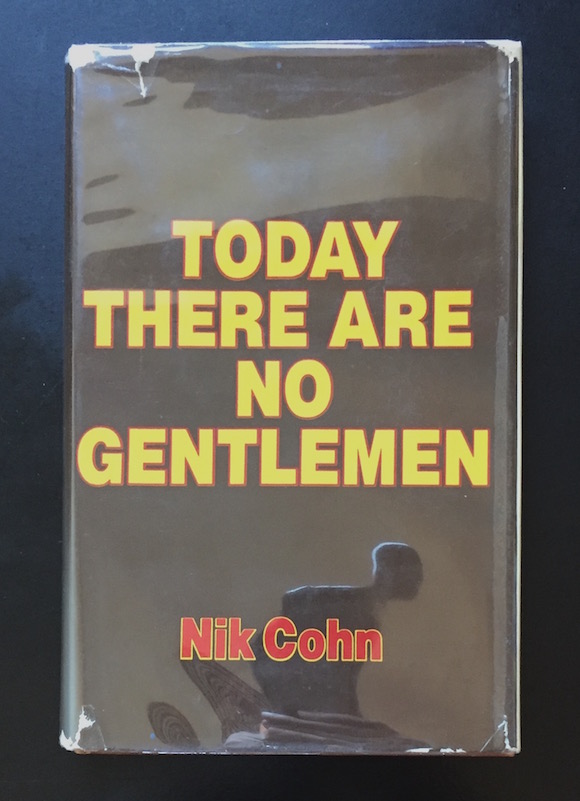
The musician Robin Scott told me that McLaren was an avid attendee of art history lessons during their spell as students at Croydon Art School in the 60s, and a couple of years before his death in 2010 McLaren confirmed that he was inspired in part to open Teddy Boy revival emporium Let It Rock at 430 King’s Road in 1971 after reading Nik Cohn’s peerless post-WW2 youth cult history Today There Are No Gentlemen.
//Voodoo and Magic Practices, Jean Kerboull, Barrie and Jenkins, 1978. Translated from the French by John Shaw//
This is the book which inspired the late Malcolm McLaren to unite the design ideas he developed with Vivienne Westwood for their Autumn/Winter 1983 fashion collection Witches.
At the time McLaren was completing his album Duck Rock, which was conceived as an ethnological travelogue and modelled on the LP series Dances Of the World’s Peoples released on the ethnographic Folkways label; in fact, Duck Rock was originally titled Folk Dances Of The World and the incorporation of an illustrated insert containing track-by-track explanations was taken from the one which appeared in the 1958 albums.
//Ben Reardon, Lou Stoppard + Dean Mayo Davies. Photos: Diane Pernet, Nik Hartley + SHOWstudio////Stills from Savages and Nostalgia Of Mud McLaren/Westwood catwalk collections, staged October 1981 and March 1982 respectively. Courtesy Malcolm McLaren Estate//
The cream of British fashion journalism – Dean Mayo Davies, Ben Reardon and Lou Stoppard – will be discussing the indomitable body of design work produced by Malcolm McLaren and Vivienne Westwood at tomorrow’s event Be Reasonable Demand The Impossible.
This portrait of Malcolm McLaren was captured among the columns outside the entrance to London’s august British Museum by Andy Rosen in 1983.
In the photograph taken during promotion of the Duck Rock album, which was released at the start of 1983, McLaren sported a rare trenchcoat design from the Witches collection he and Vivienne Westwood debuted on the catwalk that spring.
//Front cover, Dances Of The World’s Peoples, Vol 3, Folkways Records, 1958. Design: W. Johnson, printed on paper glued to cardboard sleeve.////Front of four-page song and information sheet utilising W.Johnson’s design, paper, 1958////Invitation card to Paris show of McLaren and Westwood’s Nostalgia Of Mud collection, March 1982. Design: Nick Egan. Courtesy Malcolm McLaren Estate//
The idea is to show in clothes and music that, in the post-industrial age, the roots of our culture lie in primitive societies. Malcolm McLaren on Nostalgia Of Mud and Duck Rock, 1983
Thanks to Hiroshi Fujiwara for tipping the wink over one of the sources of visual inspiration fed by Malcolm McLaren into the concepts unified by his solo album Duck Rock, the central London clothing store Nostalgia Of Mud and the fashion collections he designed with Vivienne Westwood in 1982-3.
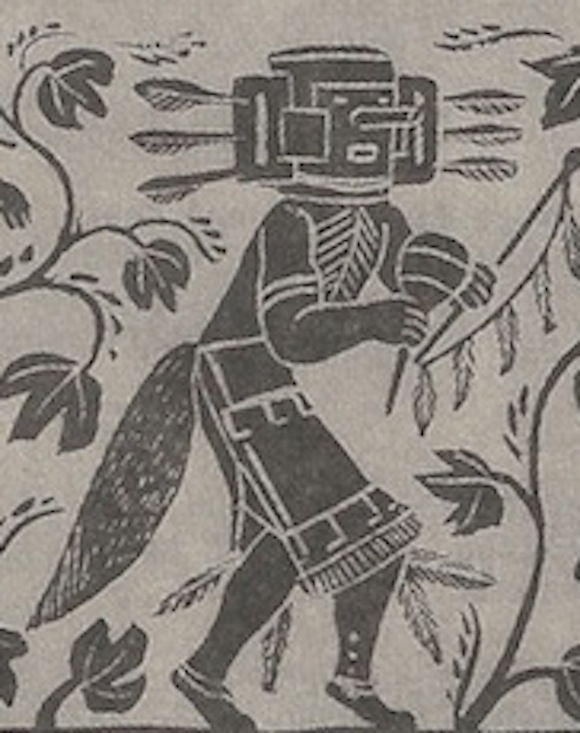
//Witchdoctor figure from W. Johnson’s design////Figure recast by McLaren and Westwood with Keith Haring adornments on cotton top from Witches collection, 1983. From private collection//
One of the cues for Duck Rock’s investigations into music from all over the world was the series of recordings by enthnological music archivists Ronnie and Stu Lipner released on Folkways Records in the late 50s under the banner Dances Of The World’s Peoples. And McLaren’s appropriation of the naive cover art by W. Johnson – in particular the striking witchdoctor figure – found new form in design collaborations with Westwood, graphics supremo Nick Egan and artist Keith Haring.
//Nostalgia Of Mud pattern show card, 1982. Courtesy Malcolm McLaren Estate//
McLaren’s brilliance at fusing disparate elements into culture-defining and dazzling artworks is being celebrated next week with the exhibition Let It Rock: The Look Of Music The Sound Of Fashion at the Crystal Hall in Copenhagen’s Bella Center.
The show – which runs from August 3-6 during Copenhagen Fashion Week – will incorporate hundreds of exhibits, many rare and never previously shown to the public, including clothing and objects featured here such as the Witches top, the show cards and original copies of the Dances Of The World’s Peoples LP and catalogue.
Beat This: A Hip Hop History is an hour-long documentary broadcast by BBC in its Arena strand in 1984 and directed by Dick Fontaine (who I interviewed for my Goldie book back in the early 00s).
In one section Malcolm McLaren talks about his August 1981 introduction to Afrika Bambaataa’s Zulu Nation in the south Bronx.
This was effected by artist/filmmaker/writer Michael Holman; his often overlooked achievements include actually naming the genre “hip hop” in his East Village Eye column, founding the noise group Gray with Jean-Michel Basquiat (Holman also wrote the 1996 Julian Schnabel-directed biopic), running the world’s first hip-hop club (Negril, on 11th Street), creating the New York City Breakers and making the films and TV shows Catch A Beat, Beat Street and Graffiti Rock.
This year’s presentation of the Malcolm McLaren Award at the finale of performance arts biennale Performa will celebrate the 30th anniversary of the iconoclast’s game-changing LP Duck Rock.
Hosted by eminent writer Glenn O’Brien and McLaren’s widow Young Kim, the event on Sunday will culminate in the presentation of the award by sound artist Christian Marclay to the artist under 40 who has demonstrated “the most innovative and thought-provoking performance” during Performa’s three-week run.
Designed by Marc Newson, the Malcolm McLaren Award was inaugurated at the last Performa in 2011, where it was presented by the late Lou Reed.
Malcolm McLaren’s musical brilliance was first showcased on the seamless + timeless Duck Rock; it’s a really jumping record and this is one of the many highlights.
Sure Malcolm would have appreciated this Youtube collagist’s approach; the footage is from David Hoffman’s 1965 film “Bluegrass Roots”, shot in Madison County, North Carolina. There’ll be contributors to online Ivy League forums creaming their chinos to the gear worn in this (I like the Elvis-style bell sleeve shirt worn by one chap).