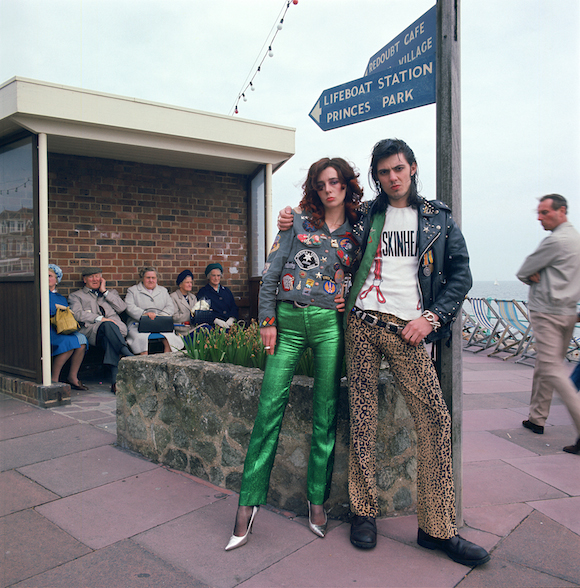
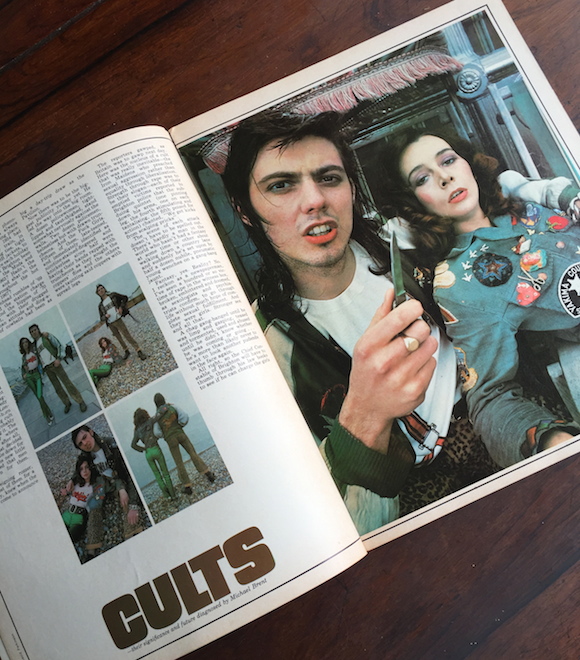
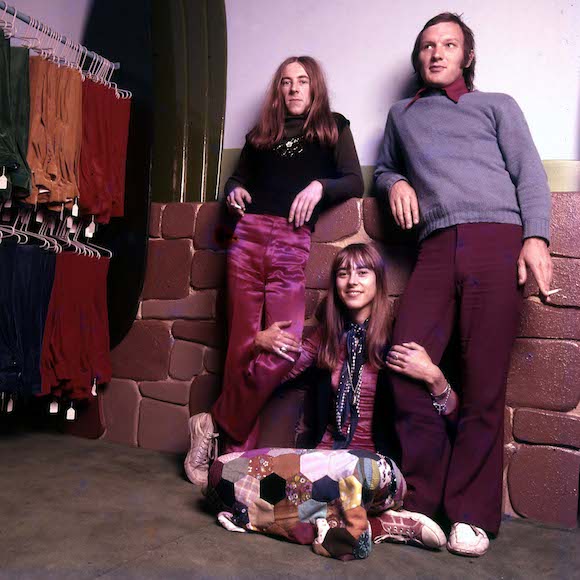
//Dinah Adams and friend, Eastbourne, Sussex, summer 1971. Photo: David Parkinson. No reproduction without permission////From Men Only, Vol 36, No 8, 1971//
Thanks to artist Paul Kindersley for alerting me to the fact that images from an audacious photo-shoot by the late photographer David Parkinson were featured in an early 70s issue of Paul Raymond’s adult magazine Men Only.
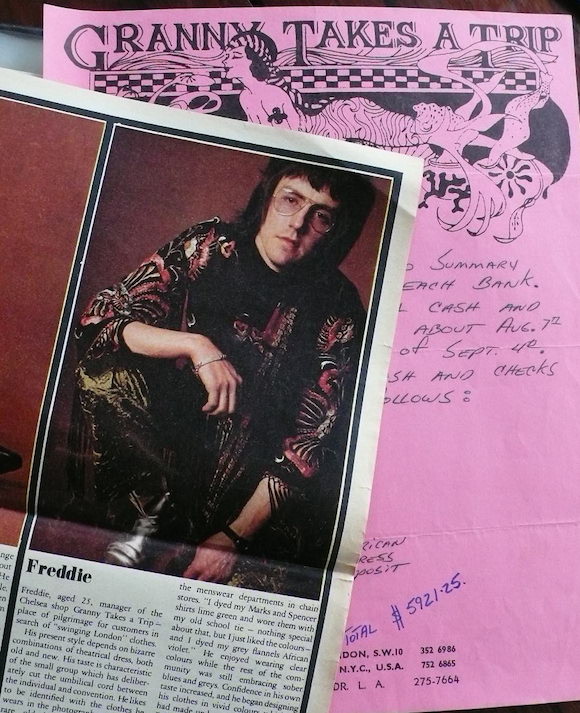
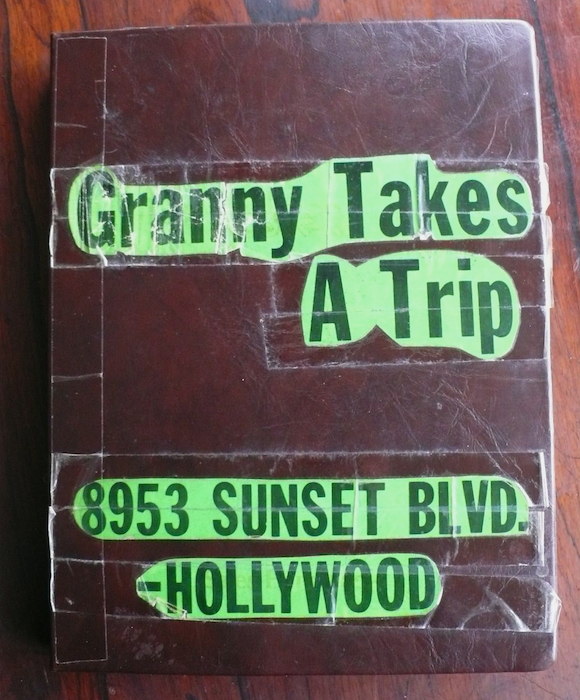
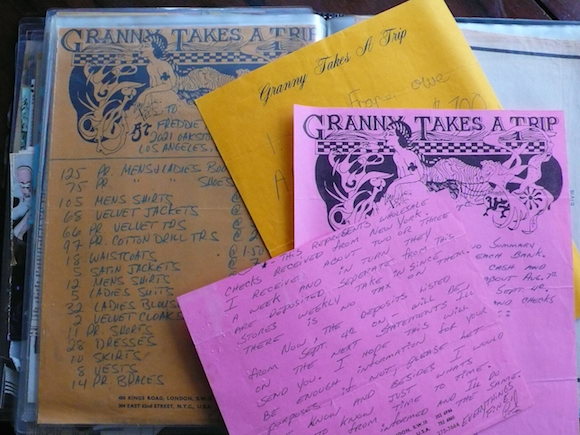
//Hornik featured in the Telegraph magazine in 1969 and GTAT paperwork dating from 1972. The livery was taken from a design by Granny’s founder Nigel Waymouth////Hornik maintained his scrapbook from the 60s to his death in 2009//
I have just filed a piece for GQ about Granny Takes A Trip and the branches of the King’s Road boutique which opened in the 70s in Manhattan and Hollywood under the stewardship of the late Freddie Hornik.
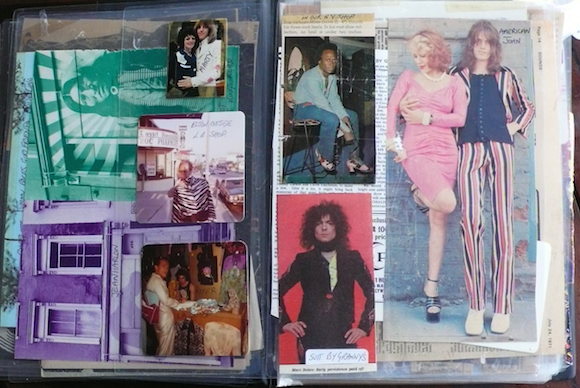
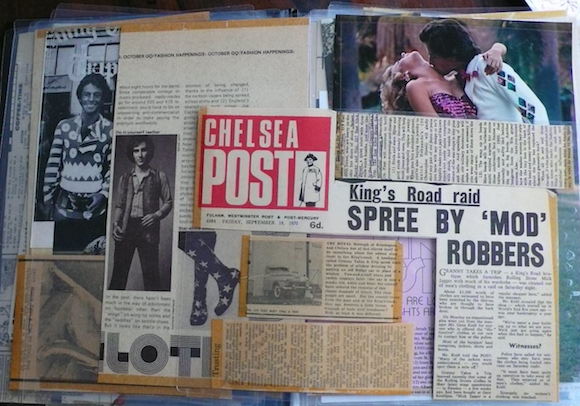
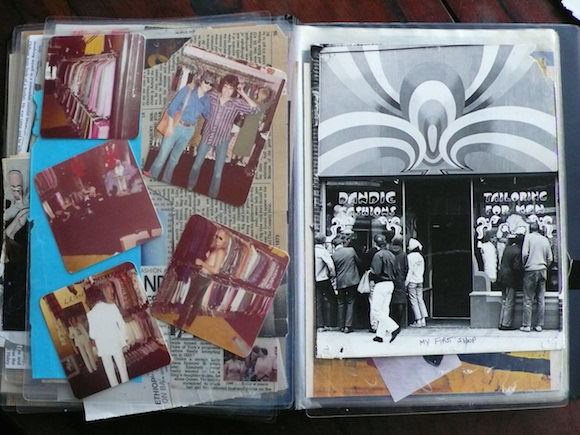
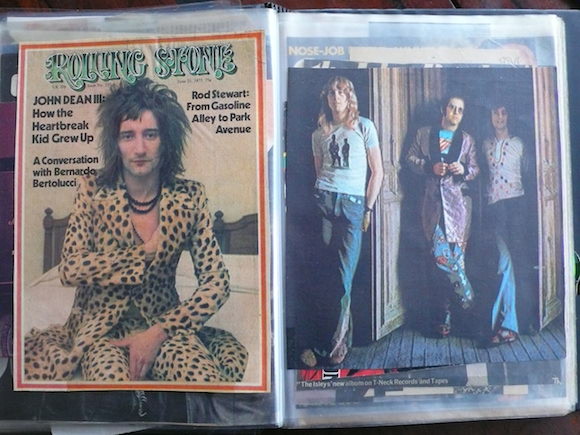
The feature also scrutinises the scrapbook Hornik maintained from the mid-60s, when he worked at the rival Dandie Fashions at 161 King’s Road, through his acquisition of Granny’s at 488 King’s Road in 1969 from founders Sheila Cohen, John Pearse and Nigel Waymouth.
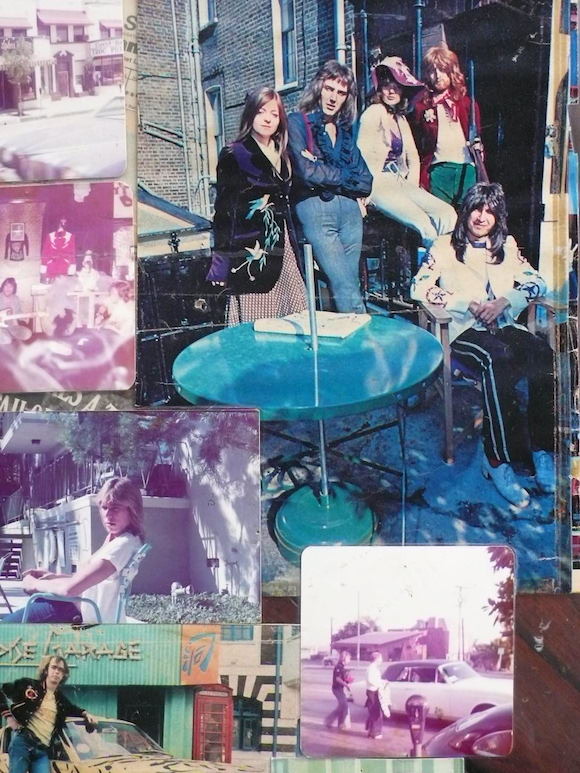
It charts in snapshots, magazine clippings, company paperwork and notes Hornik’s ambitious expansion plan which resulted in partners being brought on board at the Chelsea shop – in the form of co-owners Marty Breslau and Gene Krell – and for the launch of the New York outlet at 304 E.62nd Street, which was owned by John LiDonni and Richie Onigbene.
This strategy proved successful, and was capped by Hornik’s launch with Jenny Dugan-Chapman of an LA branch, first on Doheny in Beverly Hills and then on Sunset Strip.
By this time the Granny’s international operation had hit the moment when rock turned to glam. Existing customers such as Paul McCartney, John Lennon, Mick Jagger and Keith Richards were joined by the new raft of dandy peacock performers making the moves in the early-to-mid 70s, including Marc Bolan, Alice Cooper, Bryan Ferry, Elton John, Lou Reed, Todd Rundgren, Rod Stewart and Ronnie Wood.
Hornik’s scrapbook – which was updated for him for a time by LA store manager Roger Klein – makes for a pop culture treasure trove, one which offers rare insights into this exciting era of rock and roll fashion.
Having returned to the UK to live a quiet life in the late 70s, it is poignant to note that Hornik, who died in 2009, kept an eagle eye out for any mention of his outlets and his associates, adding to the scrapbook as the revival of interest in the clothes and characters of the period really started to roll.
I’ll keep you informed as to when the piece is due to appear. Access to the scrapbook courtesy Alex Jarrett.
//Electric Colour Company’s Roderic Stokes and David Smith with Carol Davey at Blueberry Hill, 91 King’s Road, London, 1970//
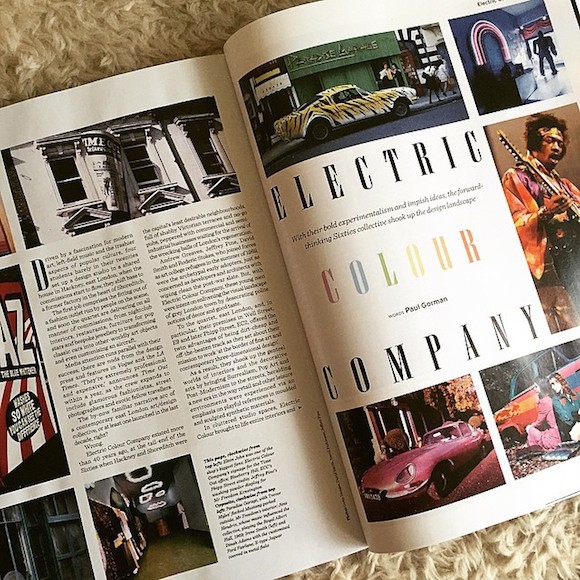
Here are a couple of images relating to late 60s/early 70s British design studio Electric Colour Company; I’m writing a magazine feature about their exceptional body of work which ran from signage, custom-built furniture and shop designs (notably Mr Freedom, Paradise Garage and City Lights Studio) to lighting modules, display objects, interior decoration, murals, custom cars and fashion accessories.
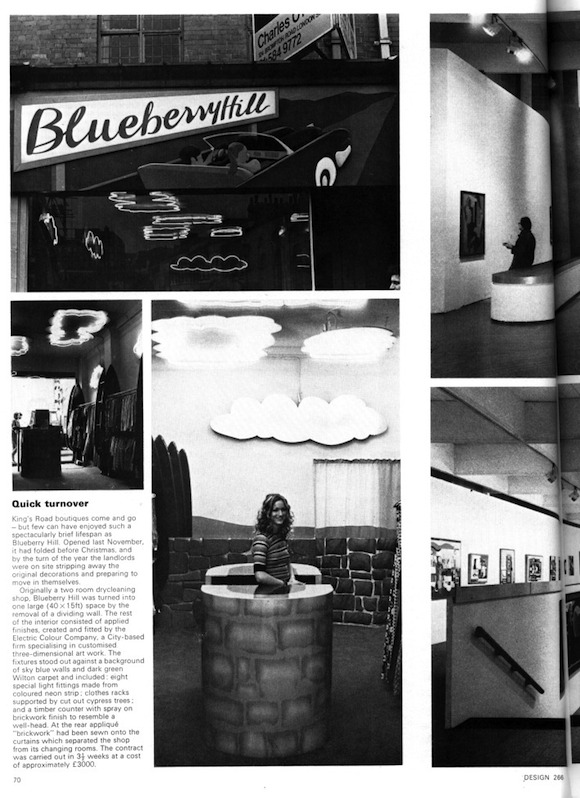
In November 1970 the King’s Road boutique Blueberry Hill was launched with a comprehensive fit-out – reported at a substantial-for-those-days £3,000 – by the ECC team of Andrew Greaves, Jeffrey Pine, David Smith and Roderic Stokes.
//By the time this coverage appeared in the February 1971 issue of Design magazine, Blueberry Hill had been closed for several weeks//
Despite the extraordinary nature of the shop design – which included cloud-form light fittings in neon strip and a timber counter with spray-on brickwork finish resembling a well-head – Blueberry Hill closed after just six weeks when the landlords opted to replace it with a more bankable betting shop.
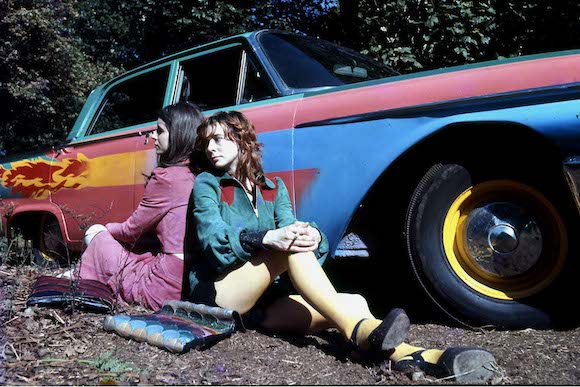
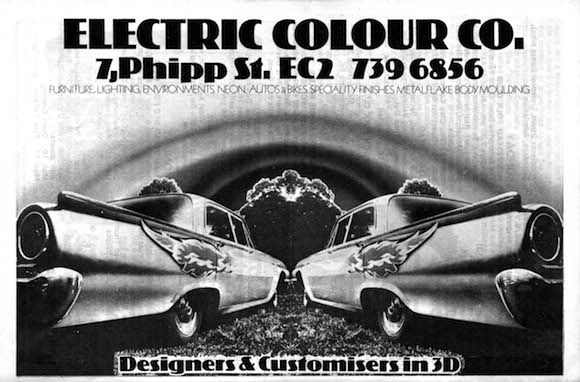
//Irene Smith and Dinah Adams with the ECC-customised Ford Fairlane 500, 1970////Advert, Time Out, 1970//
The other photograph shows ECC fellow travellers Dinah Adams – who designed clothes for Mr Freedom, Paradise Garage and Granny Takes A Trip – and Irene Smith with the customised Ford Fairlane which also appeared in the East End company’s advertising.
I’ll give the nod when my piece on Electric Colour Company is nearing publication.
“There is a moment when ‘good taste’ becomes dead; what has been considered ‘bad’ is suddenly found to be invigorating. Fashion today has little to do with la mode and the tacky is often accepted as an essential part of the necessary ‘total’ look. It can be fun.”
Cecil Beaton, introduction to the catalogue for the 1971 V&A exhibition Fashion: An Anthology
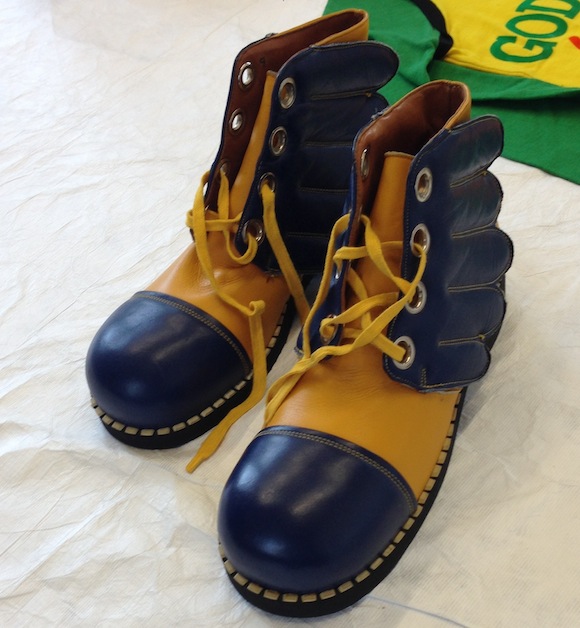
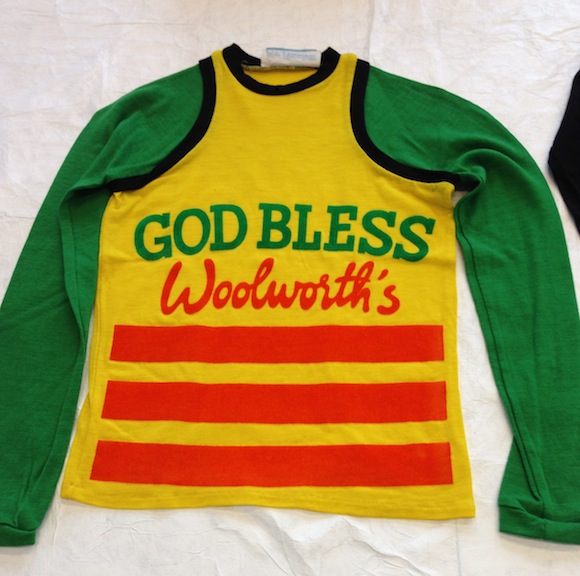
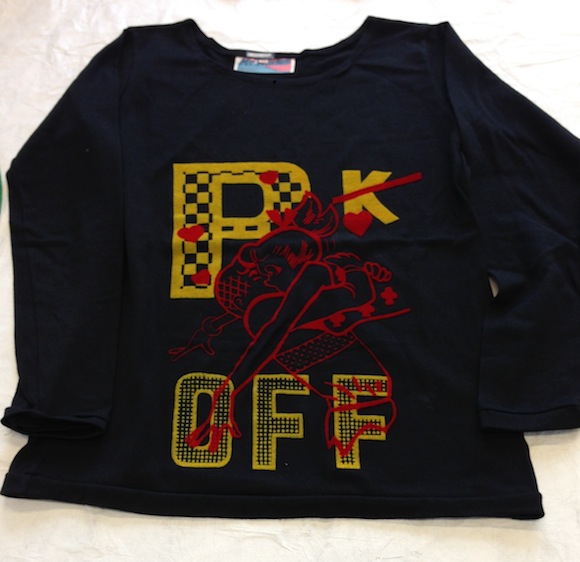
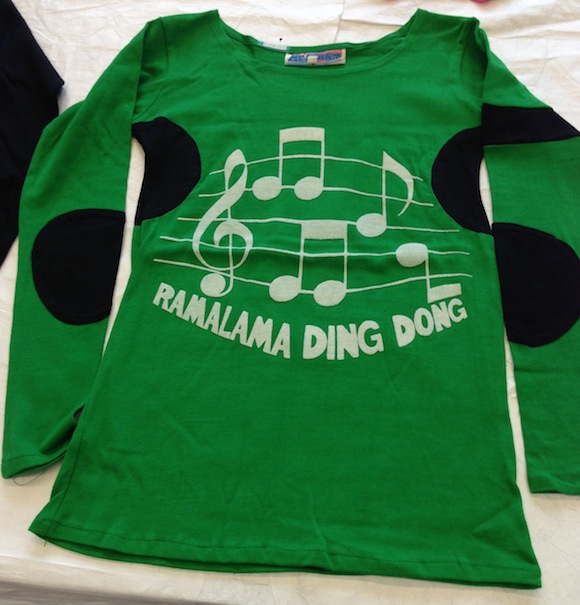
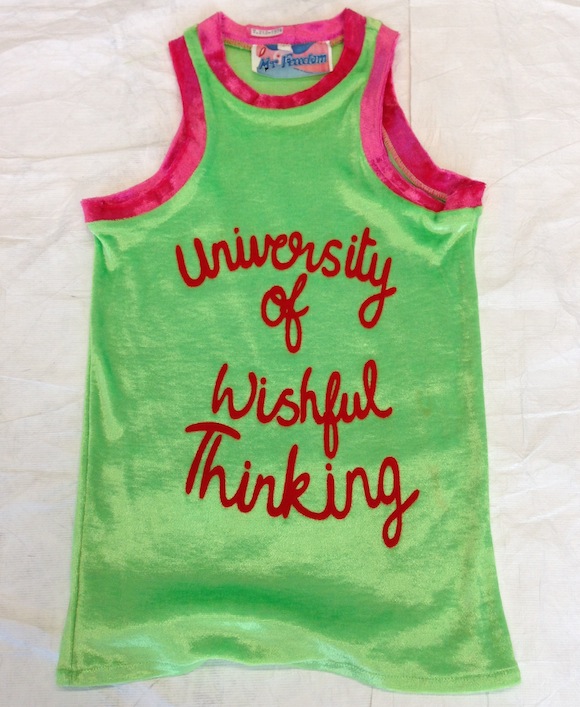
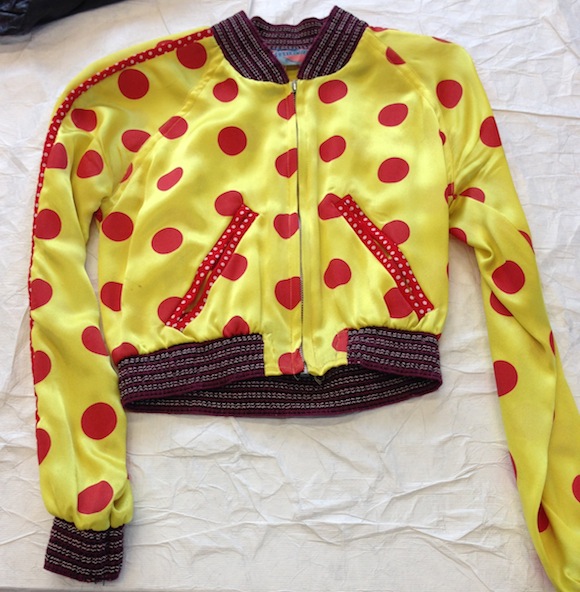
Recent visits to the V&A’s Archive of Art & Design have proved fruitful, particularly a viewing earlier this week of the collection of Pop Art clothing sold through London boutique Mr Freedom in the late 60s and early 70s.
//Design: Diana Crawshaw, 1971////Kiss Off t-shirt, Jim O’Connor, 1971////Design Christopher Snow/Trevor Myles, body design: Diana Crawshaw, 1971////Design: Pamla Motown, 1971//