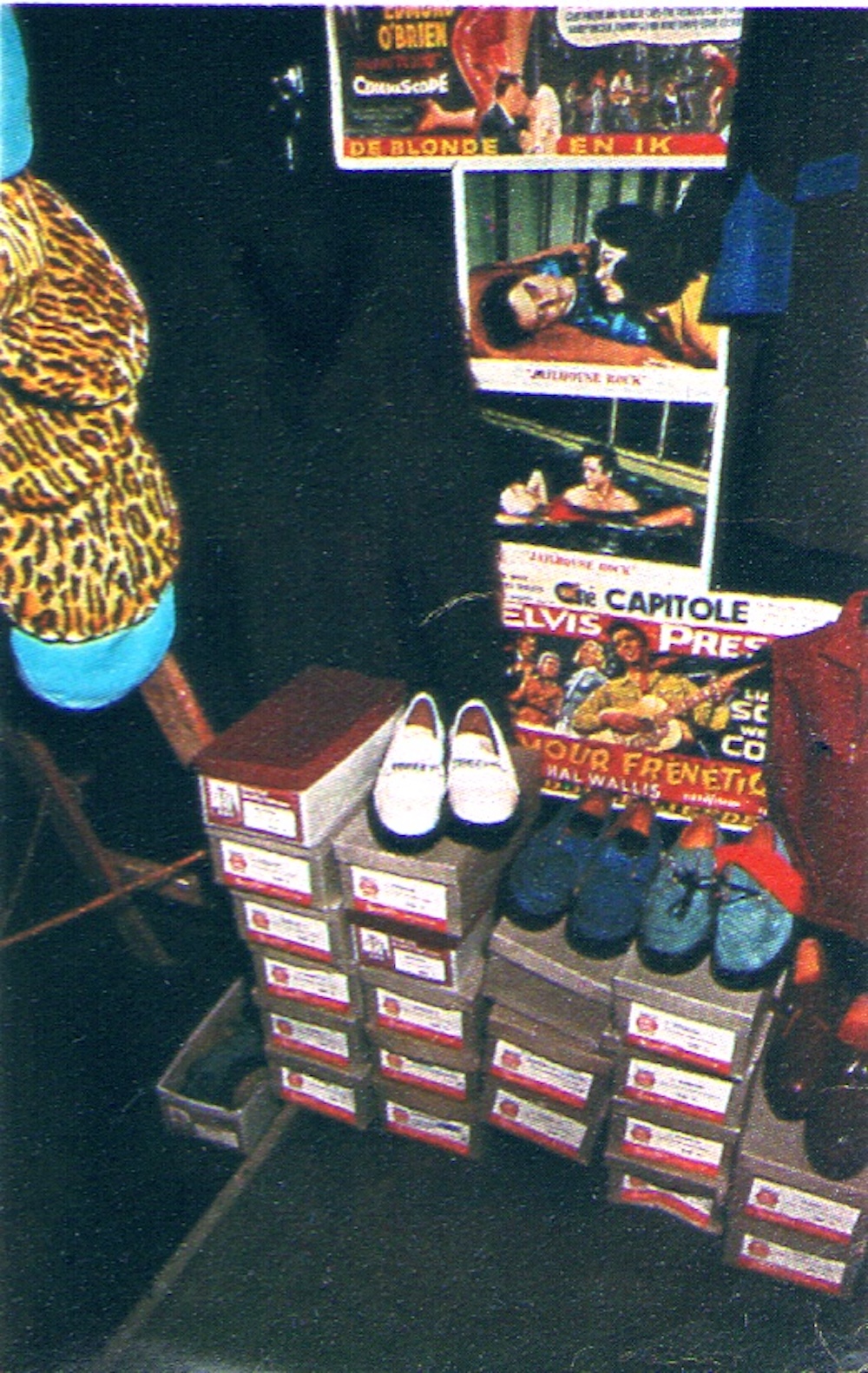
This image, which appeared in the August 1972 issue of Japanese lifestyle magazine AnAn, provides a fascinating insight into Malcolm McLaren’s meticulously created neo-50s environment at Let It Rock, the art installation-cum-boutique he set up at 430 King’s Road in Chelsea’s World’s End, west London eight months previously.
Given that McLaren didn’t order footwear direct from George Cox until the autumn of the following year, it’s likely that the Cox creepers in this photo were acquired along with other LIR stock items from the East End wholesaler Kornbluth’s, which carried strong lines in Ted gear.
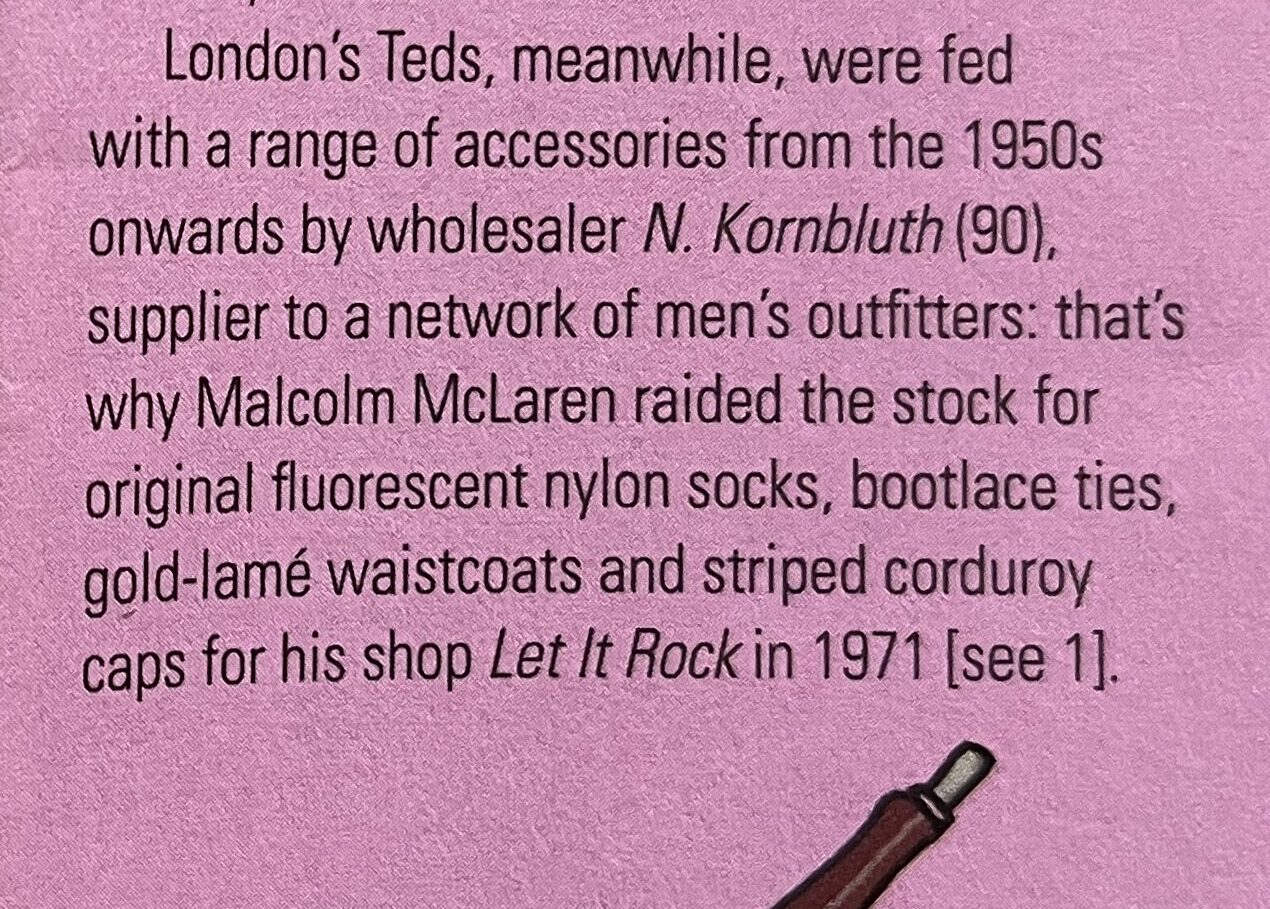
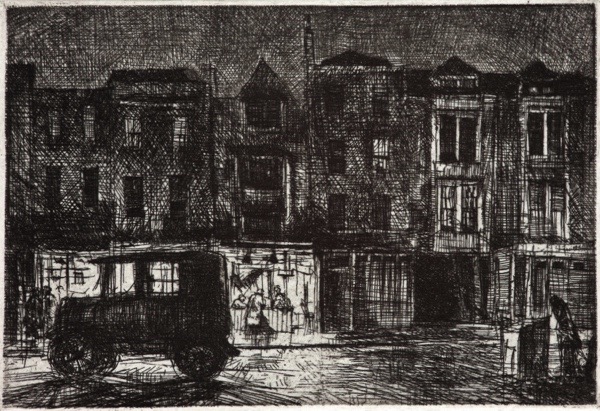
It’s interesting to note that Nathaniel Kornbluth, who ran the family business from 56 Whitechapel High Street, sprang like McLaren from the Jewish diaspora, and was also a visual artist and product of the British art school system, having studied at Hackney Technical School and regularly exhibited his etchings of London life.
And so the creepers on display here atop towers of boxes would have been selling for £6.50 and £7 and are such Cox staples as the linked-chain Buxtons (in white far left) and the quilt-topped suede Skiptons (light blue, second right).
The shoes are surrounded by a barely discernible black drape jacket on the left and, right, another black drape with blue velvet cuffs – both would have been £25 – and lower down a sleeveless scarlet blouse (£2.40).
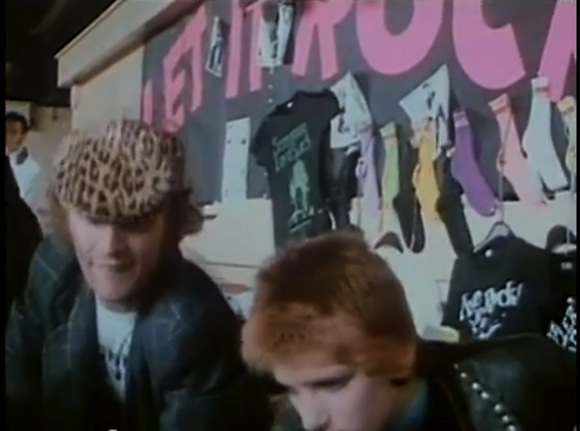
To the left of the image are a stack of the bop caps (£1.50 each) in blue (a tribute to Gene Vincent’s group the Blue Caps) and leopard print – McLaren wore one while working one of the LIR stalls at the London Rock ‘n’ Roll Show the following month.
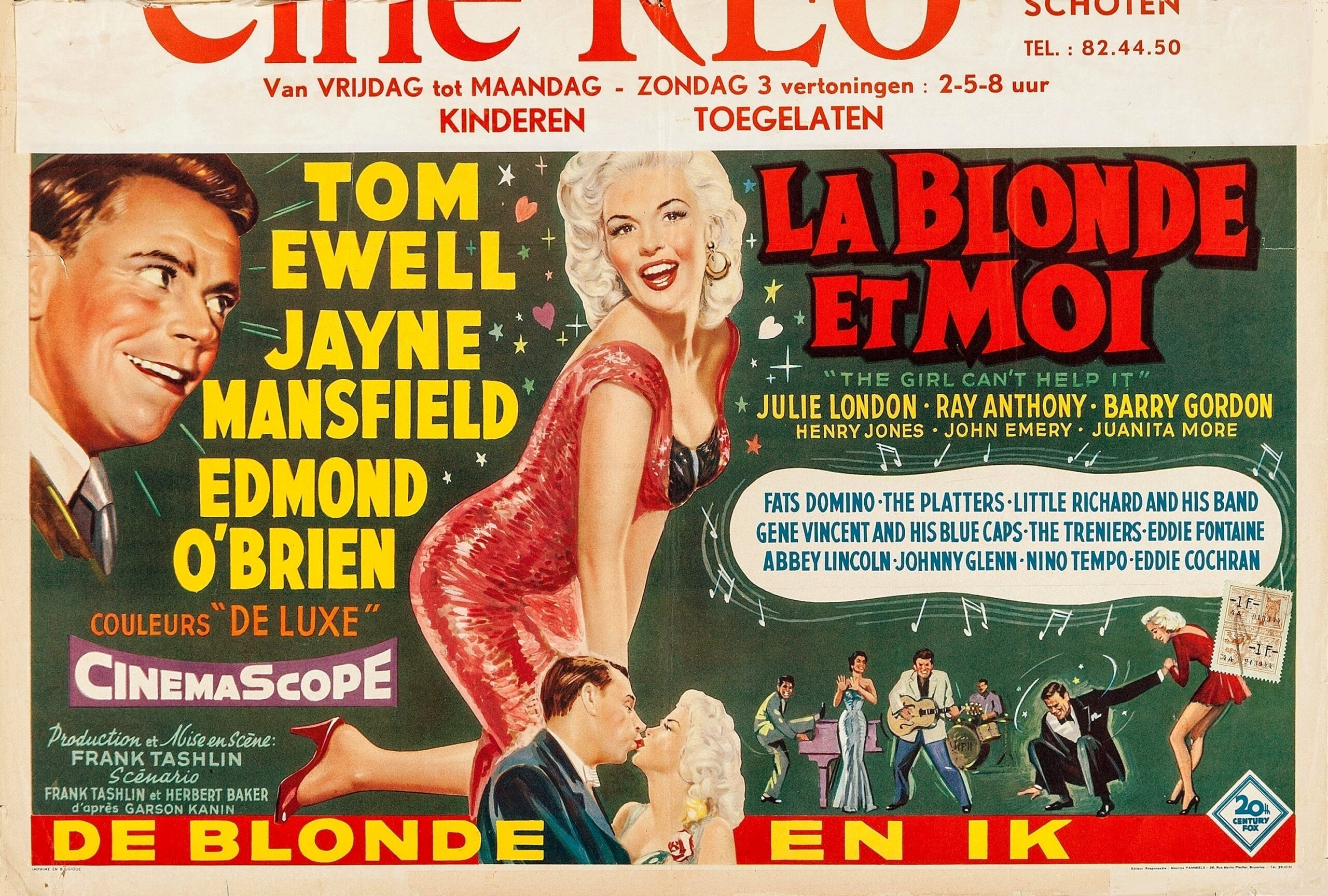
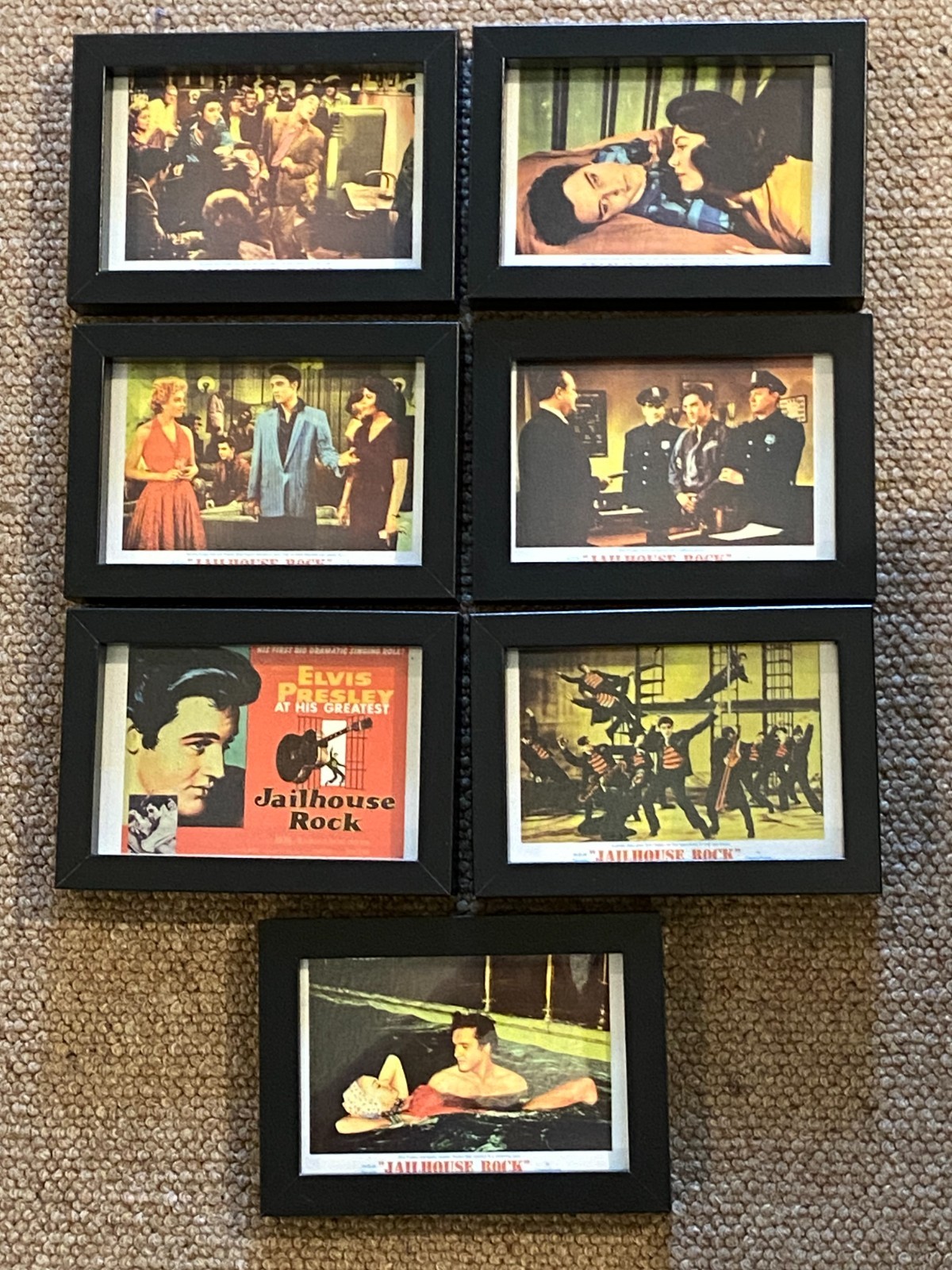
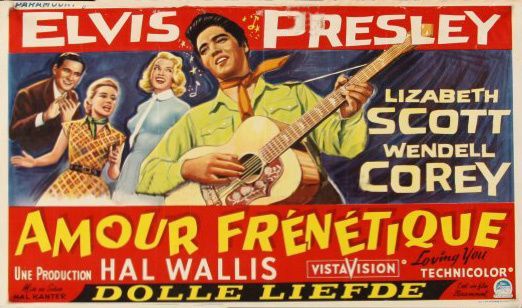
The black painted walls are decorated with examples of the ephemera collected by McLaren and his original Let It Rock partner Patrick Casey for their experiment in 50s retailing with Vivienne Westwood: two lobby cards for Elvis Presley’s Jailhouse Rock and posters for the Belgian and Dutch release of Jayne Mansfield-starrer The Girl Can’t Help It (La Blonde Et Moi/De Blonde En Ik) and the French release of the soundtrack of another Elvis movie, Hal Wallis’s Loving You (Amour Frénétique).
This was all of a piece with McLaren’s project to sift through and celebrate the long-rejected artefacts of a near-forgotten subculture.
‘Somebody’s got to keep track of these things,’ McLaren told Rolling Stone a few months later. The journalist Jerry Hopkins responded by telling Mclaren he sounded like ‘a proper historian’.
The Look of London is available from Herb Lester.
Check out George Cox’s Instagram feed.
Read Nathaniel Kornbluth’s story here. Several of his works are in the British Museum collections.
Buy the revised and updated paperback of The Life & Times of Malcolm McLaren at all good booksellers. Avoid amazon, obviously. I recommend bookshop.org.