‘Pop culture’s one-man production line’ – Tommy Roberts book in new issue of GQ

Tommy Roberts book in GQ Sept 2012

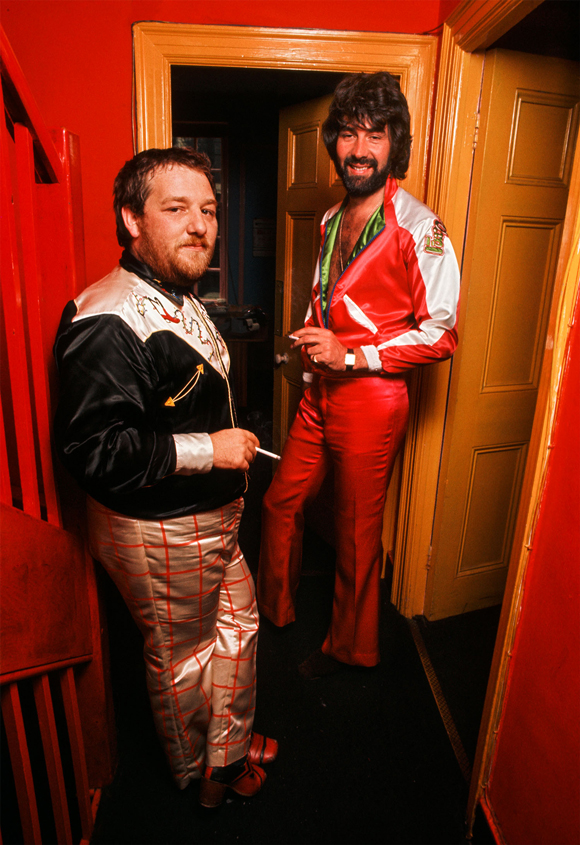
The September 2012 issue of GQ features this David Parkinson photograph of the interior of Tommy Roberts and Trevor Myles’ Mr Freedom at 430 King’s Road.

One of a number of previously-unpublished photographs in Mr Freedom – Tommy Roberts: British Design Hero, this shot captures the extraordinary fit-out Myles and Roberts’ commissioned from pioneering East End design team Electric Colour Company.

Read my post about ECC’s achievements  – with interviews and many illustrations, still the only piece to be published anywhere about this important but sorely neglected group of British artist/designers – here.

Keith Allen’s Breakfast Pirate Radio featuring ‘Northern Industrial Gay’ Jerry Arkwright + Boots Sex Dread

Plus ca change…

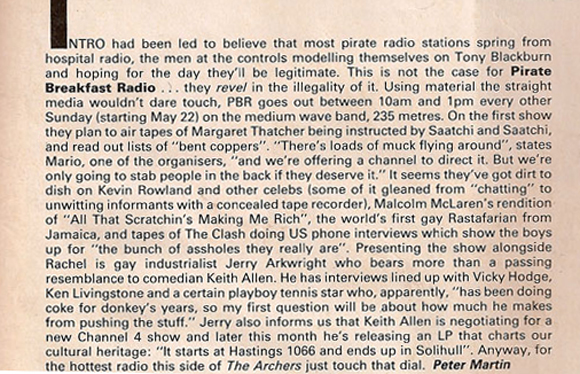
Tucked away in the June 1983 edition of The Face was this news story about a brave broadcasting venture, the scabrous and short-lived Breakfast Pirate Radio.

//Proof of front cover of Programme 1 by Station BPR, Utility, 1983. Design: Barney Bubbles.//

Continue reading Keith Allen’s Breakfast Pirate Radio featuring ‘Northern Industrial Gay’ Jerry Arkwright + Boots Sex Dread

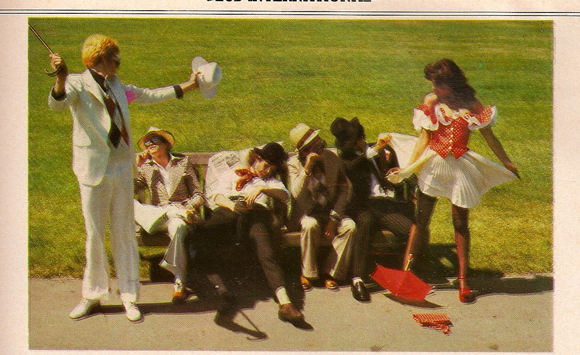
Glam comes into focus: Karl Stoecker’s fashion shoot for Club International October 1972


Tucked away at the back of an issue of British soft-porn magazine Club International was a fashion shoot featuring clothing elements which denoted the crystallisation of the new art-directed glam aesthetic inaugurated by the release of Roxy Music’s first album a couple of months previously.

The photographer was Karl Stoecker, the New Yorker who had been resident in the UK since the mid-60s and was coming into his own with important contributions to Roxy’s visual identity across that LP and its successors For Your Pleasure and Stranded.

Continue reading Glam comes into focus: Karl Stoecker’s fashion shoot for Club International October 1972

Vinyl: Love It To Death + Killer + School’s Out + Billion Dollar Babies = Alice Cooper’s quadruple whammy

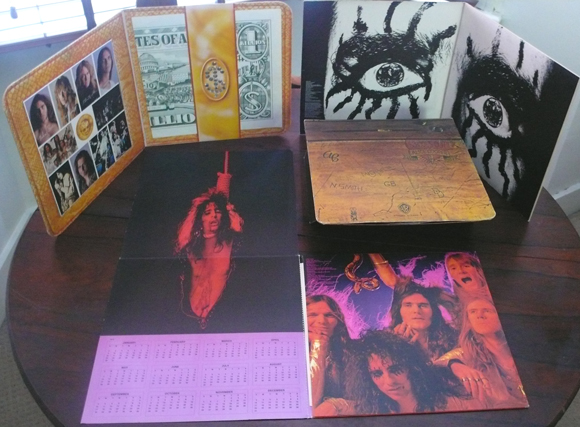
The four albums released by Alice Cooper between 1971 and 1973 propelled the band’s international ascendance and the frontman into enduring superstardom.

Cooper and his bandmates never again attained the quality level of the dumb-but-delicious Detroit garage-glam they punched out with such aplomb on these records, enhanced as they were by the crystal-hard production of wunderkind Bob Ezrin.

What is it about the excellence of LP quartets by major artists in this period?

In my vinyl pantheon, the Cooper releases align with those comprising largely original material issued by Rod Stewart (in consecutive years from 1969: An Old Raincoat Won’t Let You Down; Gasoline Alley; Every Picture Tells A Story; and Never A Dull Moment), David Bowie (from 1971: Hunky Dory; The Rise & Fall Of Ziggy Stardust And The Spiders From Mars; Aladdin Sane; and Diamond Dogs), Roxy Music (from 1972: Roxy Music; For Your Pleasure…; Stranded; and Country Life), Stevie Wonder (from 1972: Music Of My Mind; Talking Book; Innervisions; and Fulfillingness First Finale) and The Wailers (from 1972: Catch A Fire; Burnin’; Natty Dread; Live At The Lyceum).

Continue reading Vinyl: Love It To Death + Killer + School’s Out + Billion Dollar Babies = Alice Cooper’s quadruple whammy

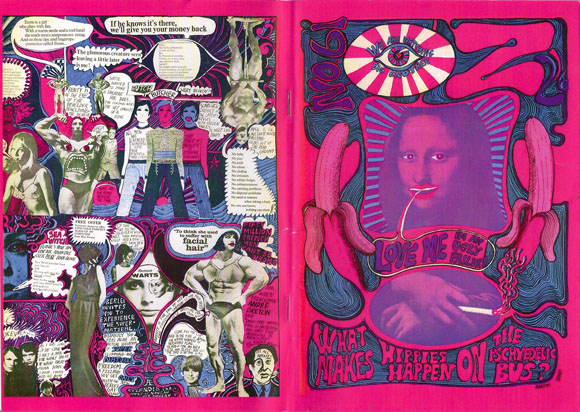
Beatbooks 61: Communal, alternative and psychedelic living; Peyote; Hippies; Music; Psychedelic & Underground Art; Sixties London; Underground Press

//Cover, Beatbooks 61, from Martin Sharp's design for Oz no. 3 (May 1967).//

The new Beatbooks catalogue lines up the seminal alongside the obscure, from complete sets of Oz, Ink, Gandalf’s Garden and Suck magazines and Time’s “Swinging London” cover story to Robert E. Brown’s The Psychedelic Guide To Preparation Of The Eucharist, LIFE’s July 1969 study of US communes and a rare poster for the Psycho Circus at the Roundhouse in 1967 in support of the Vietnam Solidarity Campaign.
Continue reading Beatbooks 61: Communal, alternative and psychedelic living; Peyote; Hippies; Music; Psychedelic & Underground Art; Sixties London; Underground Press