//Hawkwind’s Space cut-out-and-keep 21-card “Galactic Tarot” pack arranged in the shape of a hawk in IT 117, November 18 – December 2, 1971. Design: Barney Bubbles////The cards arranged in rows of seven as recommended by the instructions//
In November 1971, design legend Barney Bubbles produced a typically audacious promotional item for Hawkwind’s recently released album X In Search Of Space.
//Front cover of the Rev-Ola reissue of I Am The Greatest. Scan courtesy Joe Foster//
I was commissioned to write these sleeve-notes by Joe Foster for his label Rev-Ola’s 1998 reissue of I Am The Greatest, the Cassius Clay album pulled from the shelves by Columbia Records amid his championing of civil rights and name change to Muhammad Ali.
To those of us who grew up with Ali, whatever our persuasion or interest in boxing, he was – as I wrote nearly 20 years ago – King Of The World.
//From Champion As Long As He Wants, Gilbert Rogin, Sports Illustrated, November 29, 1965//
In the mid-60s, the writer Gilbert Rogin, one of those hard-asses equally at home publishing fiction in The New Yorker as filing sports coverage in the dailies, expressed the perplexing prospect presented to the world by Cassius Marcellus Clay’s complex personality.
Insisting on using Ali’s despised “slave-name”, Rogin was attempting to assess this giant’s world-beating activities inside the ring, but his remarks refer equally to this collection of bragadoccio raps, bar-room poems and verbal whuppings delivered to the likes of vanquished rivals such as Sonny Liston.
Also present and correct is the rare version of Ben E. King’s Stand By Me, a finely delivered performance which rivals those of the greatest vocalists who have also covered the song.
At the time of recording Clay’s cachet was pretty damn high. His charisma, stunning physical abilities and spitfire mouth had combined to turn around the fortunes of the US boxing industry; annual receipts rose from $7.8m in 1963 to £26.5m two years later.
//Clockwise from top left: Poster for album launch party at Hamburg club Golem in March; A-side label; postcard; album cover//
One of the most joyous releases of the year so far is the compilation Early Pakistani Dance Music from Germany’s Ovular. I found out about it via Instagram friend and DJ Martin “Soul Stew” Geise.
It sums up everything that was wonderful about this unique space, where Pete established a hub for like-minded souls. With staff including Edwin Pouncey (aka Savage Pencil), Pete also released otherwise hard-to-find records via his own independent imprints. These included Heartland, 5 Hours Back and MoFoCo for Julian Cope’s towering LP Droolian.
//Droolian’s back cover////Zippo’s distinctive price label (this from The Many Faces Of Gale Garnett, an obscure 1965 release on RCA)//
I bought a lot of music and also an example of every one of the short-run t-shirts Zippo sold, including my favourite, this MC5 number (other owners, and there can’t be many because they were printed in very limited numbers, include Bobby Gillespie).
As a local I was a Zippo regular with our Battersea hound Tom. Pete christened him “The Conqueroo Dog” after the four-legged friend on the cover of his reissue of the Austin band’s 1968 release From The Vulcan Gas Company.
//Front cover, From The Vulcan Gas Company, The Conqueroo, 1968/reissued 1987 on 5 Hours Back//
When Zippo closed I bought a whole load of stock and had a few happy years trading in vinyl as a sideline, until my back gave out.
Pete’s still at it, running Soho Music which is now on eBay – see here.
I bumped into Edwin P a couple of years back; he was in the company of another great person who was also a former Zippo staffer. Can’t for the life of me recall his name but hopefully he’ll see this and get in touch.
“What’s to say, save that his contempt was not reserved solely for the music business? Or the art business. Or the business of being human. There were times when he saw with his own dead eyes. But he had the sight to see through them.”
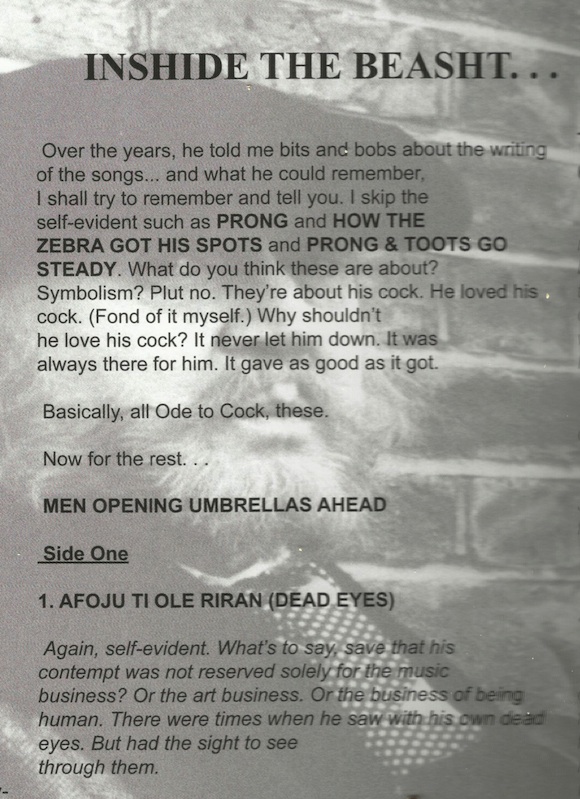
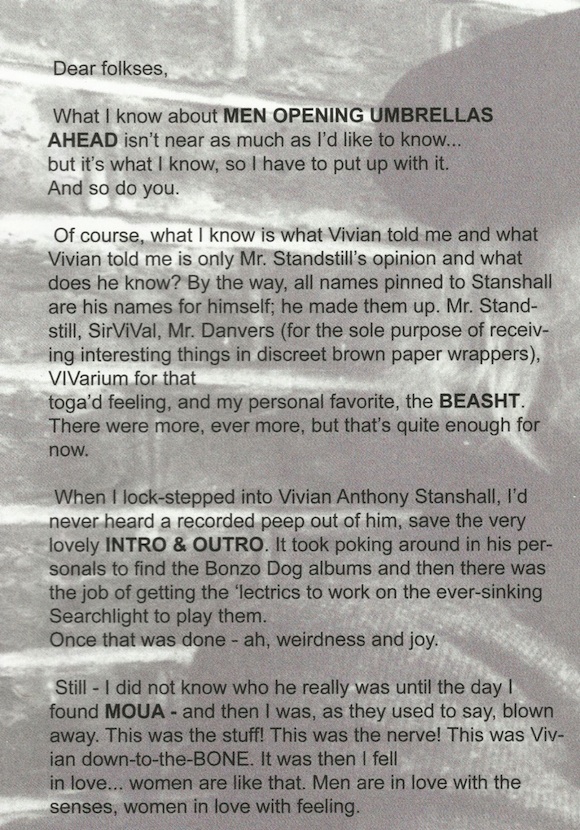
K-LS on the album’s opening track Afoju Ti Ole Riran (Dead Eyes)
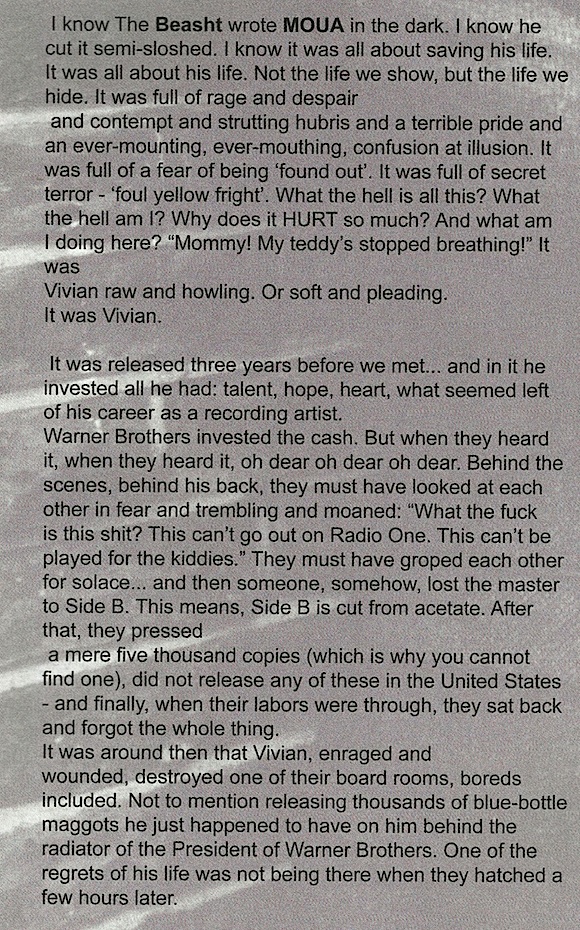
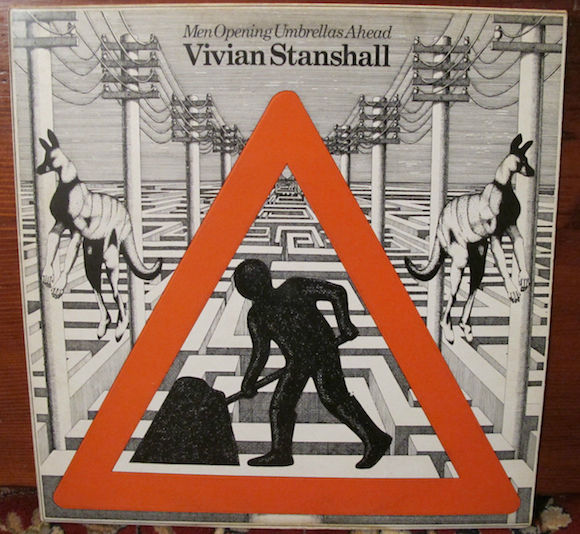
Ki-Longfellow Stanshall’s sleevenotes for the 2012 reissue of the lost classic Men Opening Umbrellas Ahead are stunning, filled with anguish and joy, rather like the life and work of the LP’s creator, her much-missed partner Vivian Stanshall.
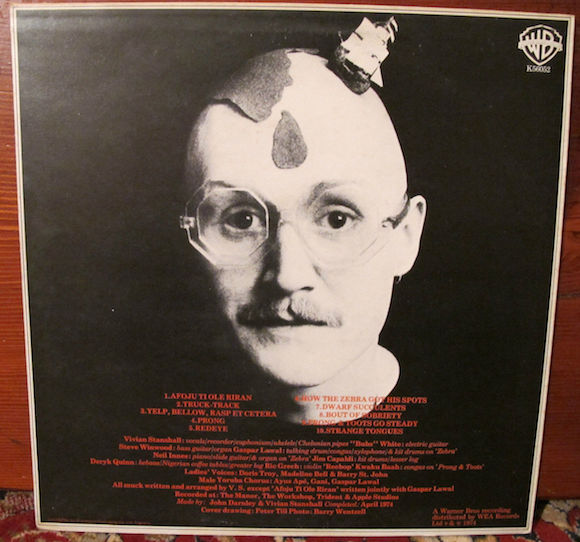
I treasure my vinyl copy, put out with much love by my old mucker Joe Foster, and heartily recommend the Afro-flavoured grooves Stanshall brewed up back in 1974 with such fellow legends as Reebop Kwaku Baah, Jim Capaldi, Neil Innes, Gaspar Lawal and Steve Winwood.
//The PoppyDisc reissue recreates the sleeve artwork of the Warner 1974 release: Cover drawing by Peter Till////Back cover of original release. Photo: Barrie Wentzell//
Buy a copy of PoppyDisc’s vinyl reissue of Men Opening Umbrellas Ahead here.
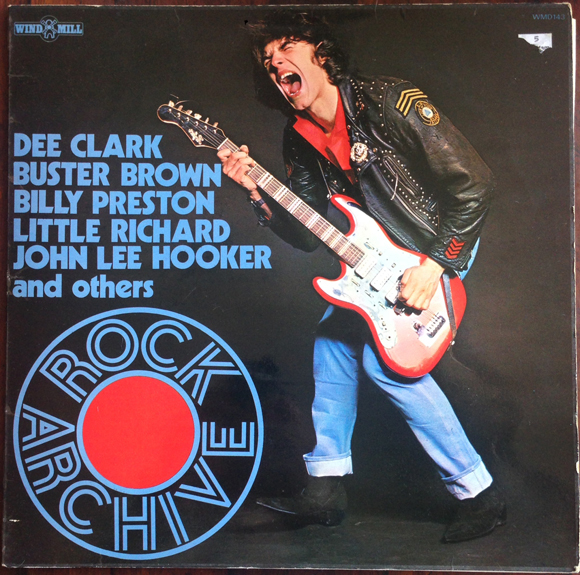
//Front cover, Rock Archive, Various Artists, Windmill Records, 1972//
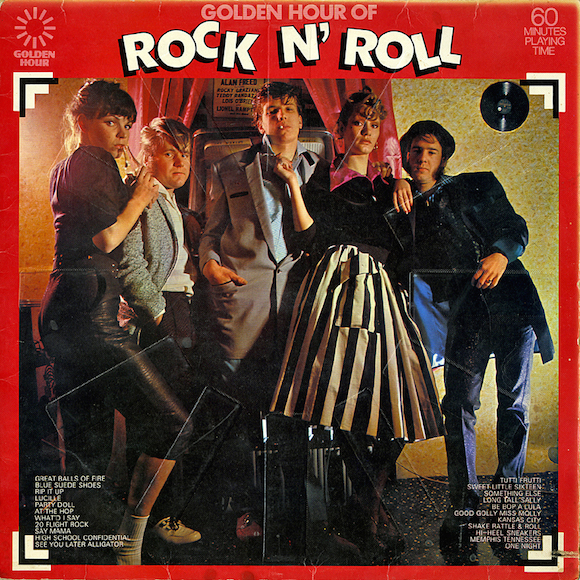
It is relatively common knowledge among those interested in the careers of Malcolm McLaren and Vivienne Westwood and their series of extraordinary shops that they supplied clothes to the 1973 album Golden Hour Of Rock & Roll; Let It Rock at 430 King’s Road was clearly credited on the back of the record sleeve.
//Front cover, The Golden Hour Of Rock N Roll, Various Artists, Pye/Golden Hour, 1973////The photograph on the Rock Archive cover was flipped to better accommodate the text. Here it is as originally shot//
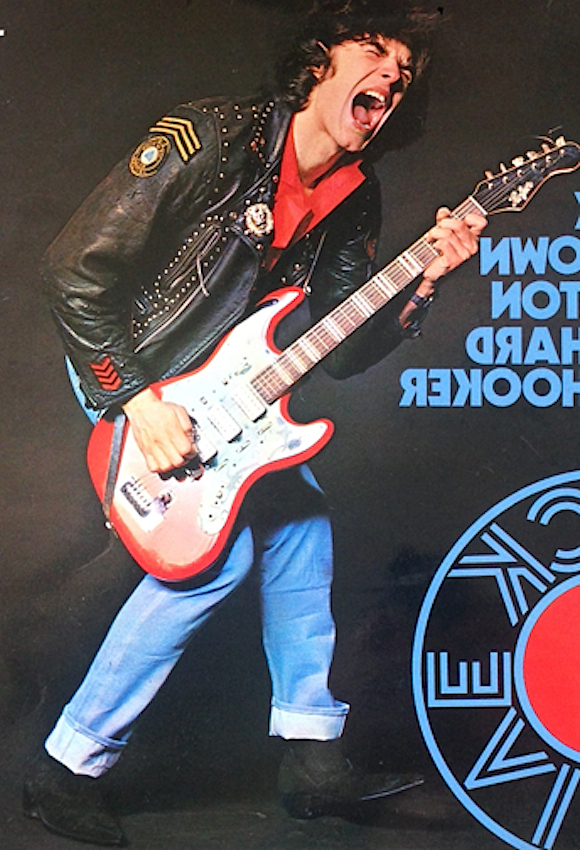
But I have fresh information which helps towards a greater understanding of McLaren’s project to investigate the detritus of popular culture’s recent past. During a bout of research recently I came across this earlier and hitherto undocumented use of Let It Rock clothing in a music context: the front cover of Rock Archive, a budget LP compilation released by the specialist British independent label Windmill in 1972.
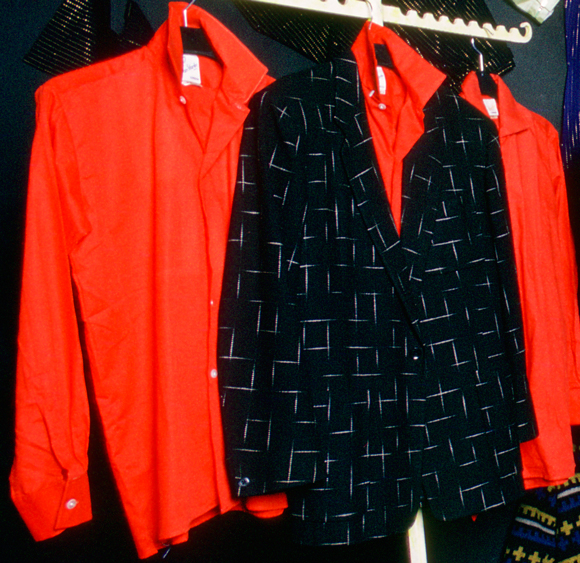
And I am detailing the clothes on the cover with images taken inside Let It Rock which have never been previously published.
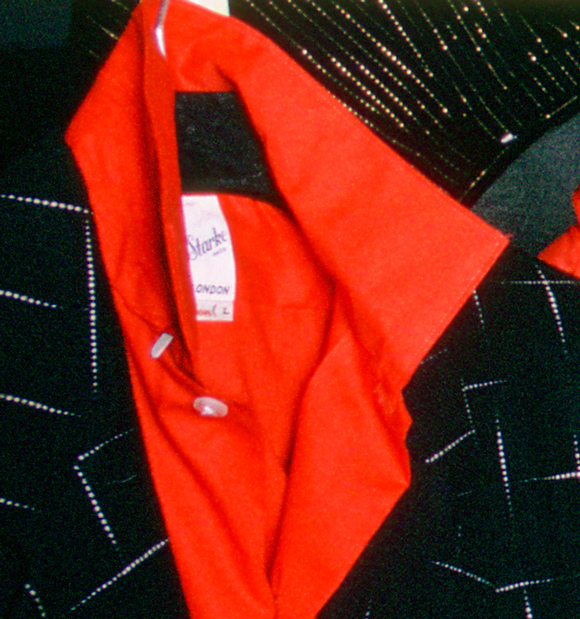
//Starke shirts with 50s sports jacket on Let It Rock wall, January 1972. Photograph: David Parkinson////Starke label detail//
Each garment worn by the model – whose attempts at rocking out resulted in his giving every appearance of suffering considerable pain – comes from the deadstock of British brands assiduously assembled by Malcolm McLaren and his art-school friend Patrick Casey for the opening of the world’s first avowedly post-modern retail outlet in November 1971.
From the ground up, the Rock Archive cover star wore black suede Denson’s Fine Poynts, ice-blue Lybro jeans with 5in cuffs, a Frederick Starke flyaway collar shirt and a studded and decorated Lewis Leathers early 60s Lightning jacket (which featured a highly collectable 6-5 Special patch).
Here’s an old and new Christmas favourite; hope they spread holiday cheer.
Feliz Navidad’s blending of the Mexican Christmas carol as popularised by José Feliciano with PiL’s Public Image never fails to please, bringing back happy memories of the UK leg of the Merry Mex-Mas dates in 2000 I helped organise for my dear friend Robert Lopez, aka El Vez, who wowed audiences with his Elvettes and the Memphis Mariachis. This footage is from that tour.
Alan McGee’s Poptones released the accompanying album and the song on a limited edition 7in.
Meanwhile I’m adding Nick Lowe’s Christmas At The Airport to my list of hardy perennials; the video’s great and it was fabulous to see Nick at our Christmas drinks a couple of weeks back, fresh from yet another hit American tour.
It’s from his new album Quality Street which is as off-the-wall as you like.
Hope you enjoy both songs. Thanks for following my blog and Happy Holidays to you.
//Le Gun’s Planet Frottage, one of the group works featured in Space Is Deep//
Tomorrow sees the opening of Space Is Deep, the latest exhibition from art collective Le Gun.
The show, at London’s Daniel Blau gallery and featuring contributions from fellow travellers such as Wildcat Will Blanchard, Andrzej Klimowski and Will Sweeney, marks a departure for the group; for the first time work in colour is included alongside Le Gun’s trademark monochrome representations.
“We felt the time was right to introduce some colour and started off by making two technicolour free-form ‘nightmare paintings’, says Robert Rubbish, who founded Le Gun in 2004 with fellow artist/illustrators Bill Bragg, Chris Bianchi, Neal Fox and Stephanie von Reiswitz and designers Alex Wright and Matt Appleton.
“Then we reassessed our approach, fine-tuned our colour pallet and made three space-inspired paintings, taking references from the likes of (horror/scifi comic artist) LB Cole and Tintin’s adventure Explorers On The Moon.”
This year’s presentation of the Malcolm McLaren Award at the finale of performance arts biennale Performa will celebrate the 30th anniversary of the iconoclast’s game-changing LP Duck Rock.
Hosted by eminent writer Glenn O’Brien and McLaren’s widow Young Kim, the event on Sunday will culminate in the presentation of the award by sound artist Christian Marclay to the artist under 40 who has demonstrated “the most innovative and thought-provoking performance” during Performa’s three-week run.
Designed by Marc Newson, the Malcolm McLaren Award was inaugurated at the last Performa in 2011, where it was presented by the late Lou Reed.
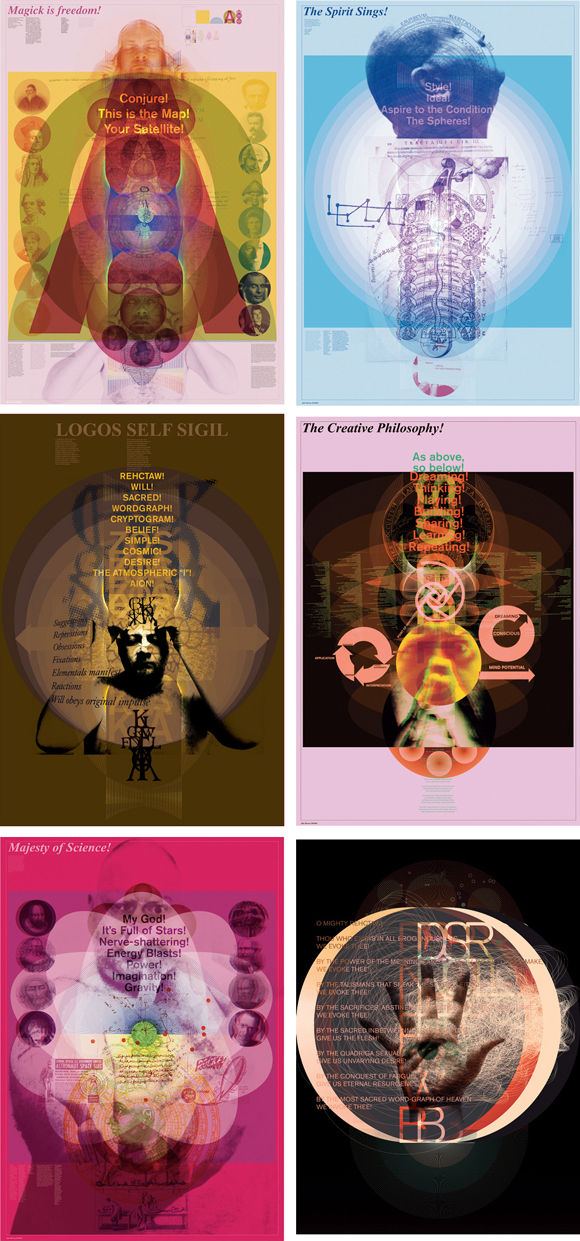
//Selection of poster prints Graham Wood made for Magick Is Freedom! (After Barney Bubbles)//
Best known as one of the founders of British design collective Tomato, Graham Wood chose a 1968 poster for underground magazine Oz as the wellspring for a series of 24 poster prints.
I corresponded with Wood about the ways in which the original artwork- made by Barney Bubbles and his 60s design partner David Wills with a team of contributors – sparked inspiration for the two dozen A0-size posters, which were exhibited in Stockholm in November 2012.