// In George Cox creepers: Malcolm McLaren, 430 King’s Road, January 1972. Photo: David Parkinson / Slowthai, Northampton, 2018. Photo: Ewen Spencer for Arena Homme + //
“Those blue suede shoes had a magical association that seemed authentic. They represented an age of desperate romantic revolt to change your life.”
Malcolm McLaren, notes on his life in fashion, 1997
I’m celebrating the 70th anniversary of the introduction of George Cox & Co’s first creeper at the Port Eliot Festival next week with Adam Waterfield, the fourth generation owner of the great independent British brand, and his son Alistair, a Central Saint Martins student and model who is very much involved in the family business.
//Warnett in his element. Photo: Hypebeast, to which he was a regular contributor//
This is a terrible week for those of us interested in the accumulation of knowledge and expertise surrounding design, music and popular culture.
I was settling in to write an obituary for New York design hero Jim Walrod when news came through last night that British sneaker guru Gary Warnett – a similarly irreplaceable figure – had also unexpectedly died.
Warnett was 39; the cause was attributed to complications arising from pneumonia.
The former content editor for label Crooked Tongues, Warnett was a streetwear obsessive who worked with the world’s biggest brands. Still he found the time to pursue a wide array of interests as evinced by his excellent Gwarizm/Still Lameaphobic site.
//Above and below: Screen grabs from the all-new George Cox website//
To mark the relaunch of the fifth-generation British rock’n’roll footwear brand George Cox, I have written an essay tracing the history of the company from the establishment by brewery worker George James Cox in 1906 to its welter of activities in the 21st century.
I’m particularly taken with these blue camo numbers, which are the result of a fresh collaboration between cruelty free fashion shoe brand Good Guys Don’t Wear Leather and Paris’s vegetarian food bike Le Tricycle.
//Malcolm McLaren in a previously unpublished shot wearing original 50s George Cox Bingley D-ring brothel creepers to match his detail-perfect Teddy Boy garb. Photo taken inside Let It Rock, 430 King’s Road, January 1972. (c) David Parkinson//
//Left, Saint Laurent point-toed patent brothel creepers, A/W 2014. Right: George Cox Buckle Diano made to the 1950s last//
Last season’s foregrounding by Saint Laurent of the pointed brothel creeper is just one of a run of examples of fashion brands plugging into the purity of this quintessentially British rock & roll style minted in 1949 by the UK independent footwear company George Cox.
Among the first stylistic innovators to take the design out of Teddy Boy revivalism and apply it to contemporary fashion was Malcolm McLaren, who had been selling creepers for a couple of years at Let It Rock, the boutique he operated with Vivienne Westwood, by the time he visited the Cox factory in Northampton in November 1973. Here he ordered samples for six styles, some of which went into production for sale at 430 King’s Road.
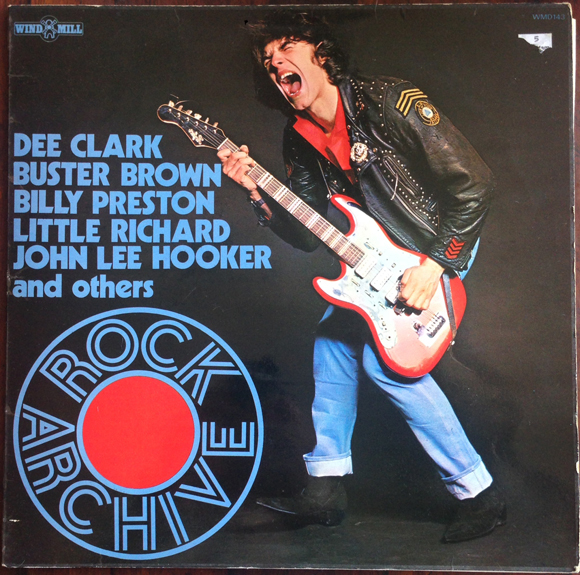
//Front cover, Rock Archive, Various Artists, Windmill Records, 1972//
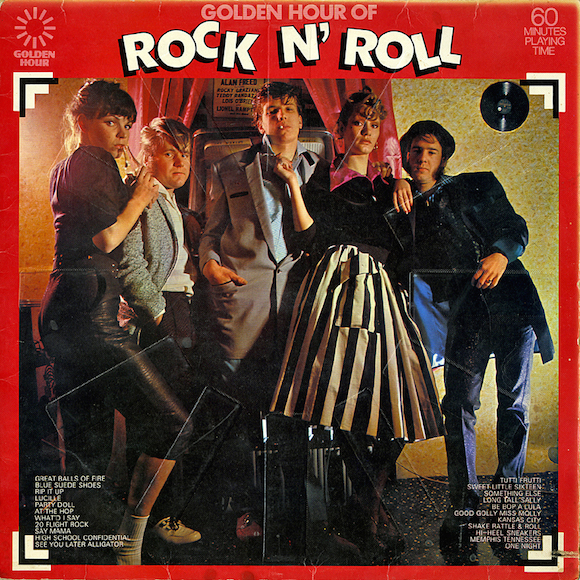
It is relatively common knowledge among those interested in the careers of Malcolm McLaren and Vivienne Westwood and their series of extraordinary shops that they supplied clothes to the 1973 album Golden Hour Of Rock & Roll; Let It Rock at 430 King’s Road was clearly credited on the back of the record sleeve.
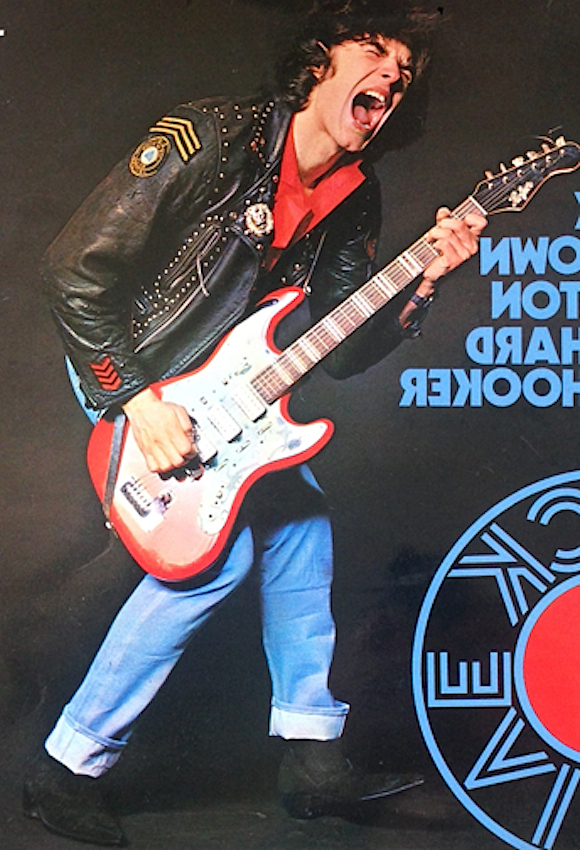
//Front cover, The Golden Hour Of Rock N Roll, Various Artists, Pye/Golden Hour, 1973////The photograph on the Rock Archive cover was flipped to better accommodate the text. Here it is as originally shot//
But I have fresh information which helps towards a greater understanding of McLaren’s project to investigate the detritus of popular culture’s recent past. During a bout of research recently I came across this earlier and hitherto undocumented use of Let It Rock clothing in a music context: the front cover of Rock Archive, a budget LP compilation released by the specialist British independent label Windmill in 1972.
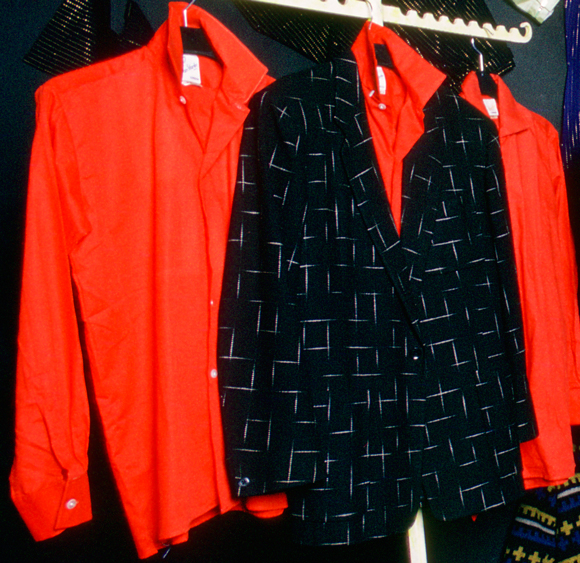
And I am detailing the clothes on the cover with images taken inside Let It Rock which have never been previously published.
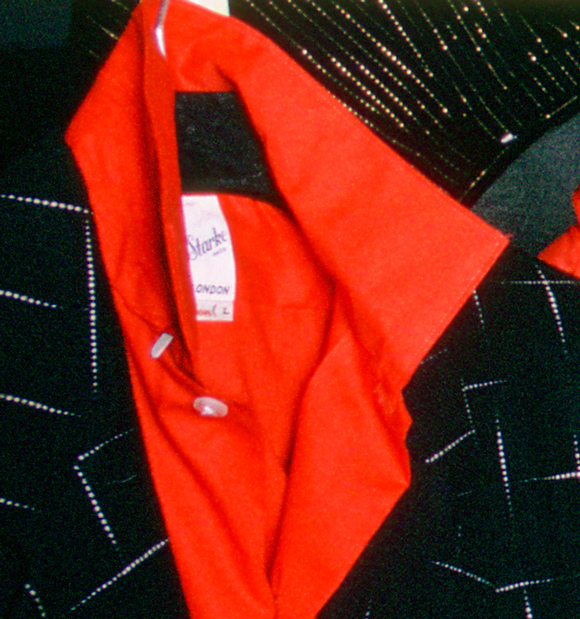
//Starke shirts with 50s sports jacket on Let It Rock wall, January 1972. Photograph: David Parkinson////Starke label detail//
Each garment worn by the model – whose attempts at rocking out resulted in his giving every appearance of suffering considerable pain – comes from the deadstock of British brands assiduously assembled by Malcolm McLaren and his art-school friend Patrick Casey for the opening of the world’s first avowedly post-modern retail outlet in November 1971.
From the ground up, the Rock Archive cover star wore black suede Denson’s Fine Poynts, ice-blue Lybro jeans with 5in cuffs, a Frederick Starke flyaway collar shirt and a studded and decorated Lewis Leathers early 60s Lightning jacket (which featured a highly collectable 6-5 Special patch).
Tucked away at the back of an issue of British soft-porn magazine Club International was a fashion shoot featuring clothing elements which denoted the crystallisation of the new art-directed glam aesthetic inaugurated by the release of Roxy Music’s first album a couple of months previously.
The photographer was Karl Stoecker, the New Yorker who had been resident in the UK since the mid-60s and was coming into his own with important contributions to Roxy’s visual identity across that LP and its successors For Your Pleasure and Stranded.
These are the only pair of Bongos, a crepe-soled, corduroy sample shoe manufactured by George Cox for Lloyd Johnson in the late 90s.
These unusual elastic-vented slip-ons were intended for Johnson’s Beatnik range, sold through his three London shops, at 406 King’s Road, in Kensington Market and at 293 Portobello Road.
In the event the design didn’t make it into production.