//Students modelling the McLaren tour t-shirt. Photo: Matthew Cornford//
Art schools are places of possibilities, which is one of the reasons we chose the title Be Reasonable Demand The Impossible for the celebration of the 40th anniversary of the first Sex Pistols gig at Central Saint Martins in London’s King’s Cross this Friday (November 6).
On November 6 1975, the Sex Pistols made their live debut in the refectory of Saint Martin’s School Of Art in London’s Charing Cross Road before an audience of around 20 people.
My recent post about David Bowie’s visits in 1974 to 430 King’s Road when it was in its Too Fast To Live Too Young To Die incarnation prompted Facebook friend and DJ Graham “Sugarlump” Evans to alert me to Polaroid photographs of David Bowie trying out make-up, hair and styling options in preparation for his Diamond Dogs tour of the US that year.
// Polaroid taken by Dana Gillespie in New York in 1974//
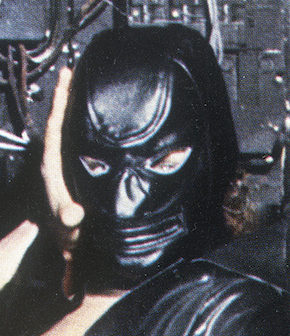
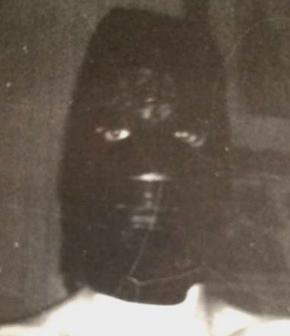
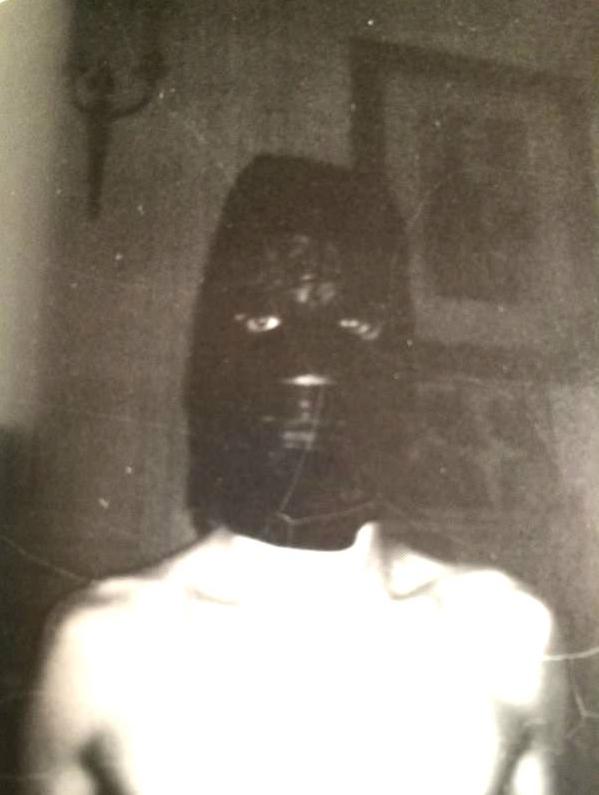
In one, as Evans points out, Bowie posed in a leather hood of similar style to the model sold at 430 as it was transformed over a period of six months from TFTL to fetish emporium Sex.
//Nicholas de Jongh’s front-page report, The Guardian, August 2, 1975////Sex Original-labelled Cowboys t-shirt courtesy Hiroshi Fujiwara Collection//
This month – specifically July 26 – marks the 40th anniversary of the introduction for sale of Malcolm McLaren’s notorious Cowboys t-shirt in Sex, the revolutionary boutique he operated at 430 King’s Road with Vivienne Westwood.
The shirt’s status as the most provocative of all punk designs is enhanced by the fact that it made waves immediately: the same day the shirt went on sale, the first customer to wear it in public was arrested. Within 24 hours, the store itself was raided for indecency.
//From Print’s 75th anniversary issue, illustrations (clockwise from top left): A section of Bubbles’ design for the sleeve of 1979 LP Armed Forces lines up with work by Ruth Ansel, Andrew Loomis, Ladislaw Sutnar, Cipe Pineles and Paul Bacon//
For its 75th anniversary issue, US visual culture publication Print has selected Barney Bubbles as one of six “unsung heroes of design”.
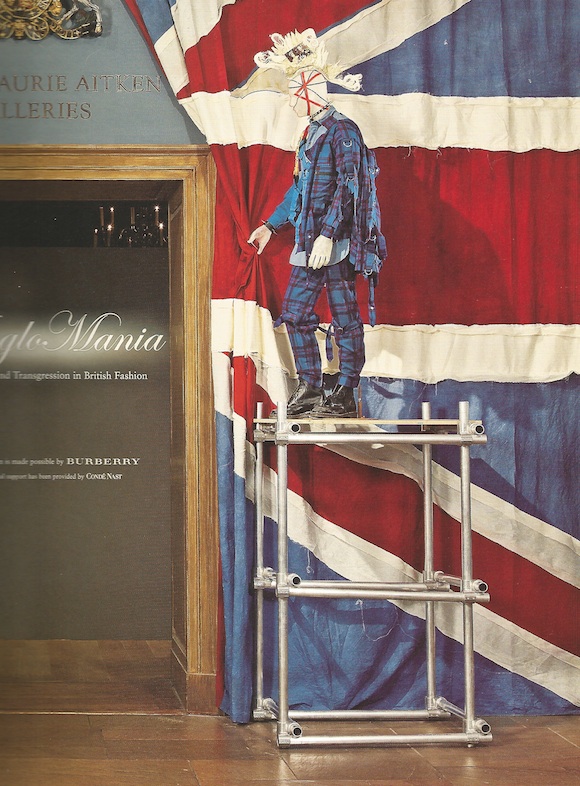
//One of the two bondage suits which have been removed from the Met collection. They were previously granted prominence in the museum’s 2006 exhibition Anglomania. This image is from the frontispiece of the show’s lavish catalogue//
Years after concerns were raised about the authenticity of around half of the punk fashion pieces in the Metropolitan Museum Of Art Costume Institute collection, cleaning house has finally begun at the New York institution with the expulsion of two bondage suits purporting to have been original 70s designs by Malcolm McLaren and Vivienne Westwood.
A museum spokesperson has confirmed that the suits have been “formally de-accessioned”. A relatively rare process in international-standard curatorial circles, de-accessioning occurs when information undermining the provenance and authenticity of a museum object comes to light.
//A US vintage company is unwittingly featuring this forgery as an original t-shirt from Seditionaries on its Instagram feed. The unpleasant item is an example of the accelerating trade in McLaren/Westwood fakes, where previously non-existent designs – often with repellent overtones – are touted as ultra-rare one-offs//
//Banal content: More examples of previously non-existent designs marketed as McLaren/Westwood originals – complete with Seditionaries-style labels – from a Chinese retailer’s site last year. Note the design at bottom left has a fake label whereas the one at the top of this post does not//
//Above: A selection of more of the crude new designs touted as original garments on Japanese auction site Seditionaries Shop, which claimed more than 300 sales at prices averaging £150//
Since Malcolm McLaren’s death nearly five years ago there has been a palpable rise in the plundering of the designs – in particular the graphics produced for t-shirts – he created with Vivienne Westwood in the 1970s.
These jaunty photographs were taken by Barry Plummer in the spring of 1979 for a Melody Maker interview with Malcolm McLaren about the just-released soundtrack for the Sex Pistols’ biopic The Great Rock N Roll Swindle (beset by financial and creative difficulties, the film wasn’t released for another year).
McLaren was accompanied by Vivienne Westwood; they made a striking pair in mixed and matched one-off and traditional pieces with a selection of clothing from their King’s Road shop Seditionaries. By now the transition away from punk – left behind when the Sex Pistols split a year earlier – was becoming evident.
//Malcolm McLaren in a previously unpublished shot wearing original 50s George Cox Bingley D-ring brothel creepers to match his detail-perfect Teddy Boy garb. Photo taken inside Let It Rock, 430 King’s Road, January 1972. (c) David Parkinson//
//Left, Saint Laurent point-toed patent brothel creepers, A/W 2014. Right: George Cox Buckle Diano made to the 1950s last//
Last season’s foregrounding by Saint Laurent of the pointed brothel creeper is just one of a run of examples of fashion brands plugging into the purity of this quintessentially British rock & roll style minted in 1949 by the UK independent footwear company George Cox.
Among the first stylistic innovators to take the design out of Teddy Boy revivalism and apply it to contemporary fashion was Malcolm McLaren, who had been selling creepers for a couple of years at Let It Rock, the boutique he operated with Vivienne Westwood, by the time he visited the Cox factory in Northampton in November 1973. Here he ordered samples for six styles, some of which went into production for sale at 430 King’s Road.