The new interiors magazine TON – the first issue is out now – has two pieces by me on very different but equally extraordinary homes.
TON’s founder and editor-in-chief Jermaine Gallacher – who works with art director Rory Gleeson and editorial director Ted Stansfield – commissioned me to write about Dave Baby’s apartment close to where we both live, in south London’s Stockwell.
As I write, ‘this otherworldly space represents a bewitching realm of desires, sexuality and esoterica with Dave at the maelstrom’s centre, a still figure dispensing wily wit and charm’.
As punk expert/collector and design academic Paul Burgess notes, references to 430 King’s Road turn up in the most surprising places.
So thanks to him for notifying me about this photograph of the coolest address in pop culture – and in particular the tiger stripe-flocked Ford Mustang which adorned the street outside during the Paradise Garage phase – in a 1976 light educational book for young children.
//Warhol poses for photographer Jon Naar on the famous red couch in his studio on E. 47th Street in midtown Manhattan, 1965//
Designer Ben Kelly, chair of interior and spatial design at University of the Arts London, has chosen this photograph of Andy Warhol’s Silver Factory for his exhibition 111 Inspirational Interiors.
Kelly has curated the show – which opens tomorrow at Windows Gallery 1 at Central Saint Martins in Kings Cross, North London – after inviting 111 creatives to each select an image of an interior which is important to them.
//Ben Kelly underneath the Sex sign, 1975. Photo courtesy Ben Kelly//
I’m featuring this image of designer Ben Kelly in his persona of The Photo Kid in my presentation about the design history of 430 at the symposium Dead Or Alive: Popular Culture & The Interior, which takes place today at London’s ICA.
//The simulation of the Seditionaries facade in industrial materials provided the entry and exit point for models on the runway today////With rings representing the positions where designer Ben Kelly exposed air conditioning vents to view, Kim Jones replaced the diagonal bar which occupied the central square over the door with the trademark Vuitton ‘V’////Ben Kelly’s portfolio shot of the facade he designed and installed at 430 King’s Road in December 1976//
Amid the references to the late Christopher Nemeth in today’s Paris show of the Louis Vuitton A/W 15 menswear collection (see my last post), artistic director Kim Jones used the staging to pay subtle homage to the two great maverick figures of London street culture – namely Malcolm McLaren and Vivienne Westwood and specifically their 70s punk store Seditionaries.
It sums up everything that was wonderful about this unique space, where Pete established a hub for like-minded souls. With staff including Edwin Pouncey (aka Savage Pencil), Pete also released otherwise hard-to-find records via his own independent imprints. These included Heartland, 5 Hours Back and MoFoCo for Julian Cope’s towering LP Droolian.
//Droolian’s back cover////Zippo’s distinctive price label (this from The Many Faces Of Gale Garnett, an obscure 1965 release on RCA)//
I bought a lot of music and also an example of every one of the short-run t-shirts Zippo sold, including my favourite, this MC5 number (other owners, and there can’t be many because they were printed in very limited numbers, include Bobby Gillespie).
As a local I was a Zippo regular with our Battersea hound Tom. Pete christened him “The Conqueroo Dog” after the four-legged friend on the cover of his reissue of the Austin band’s 1968 release From The Vulcan Gas Company.
//Front cover, From The Vulcan Gas Company, The Conqueroo, 1968/reissued 1987 on 5 Hours Back//
When Zippo closed I bought a whole load of stock and had a few happy years trading in vinyl as a sideline, until my back gave out.
Pete’s still at it, running Soho Music which is now on eBay – see here.
I bumped into Edwin P a couple of years back; he was in the company of another great person who was also a former Zippo staffer. Can’t for the life of me recall his name but hopefully he’ll see this and get in touch.
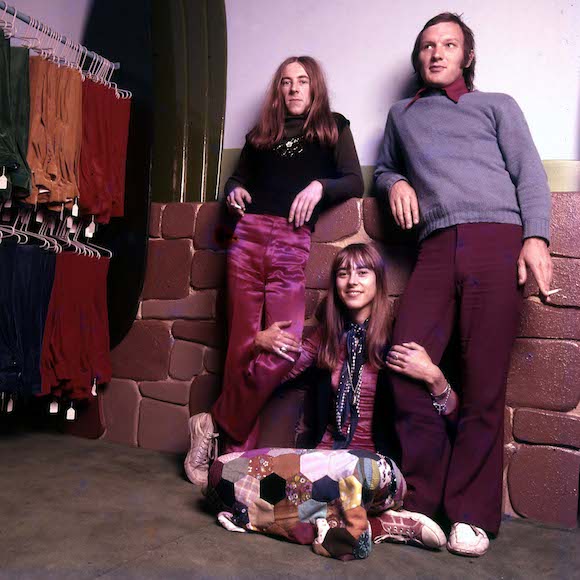
//Electric Colour Company’s Roderic Stokes and David Smith with Carol Davey at Blueberry Hill, 91 King’s Road, London, 1970//
Here are a couple of images relating to late 60s/early 70s British design studio Electric Colour Company; I’m writing a magazine feature about their exceptional body of work which ran from signage, custom-built furniture and shop designs (notably Mr Freedom, Paradise Garage and City Lights Studio) to lighting modules, display objects, interior decoration, murals, custom cars and fashion accessories.
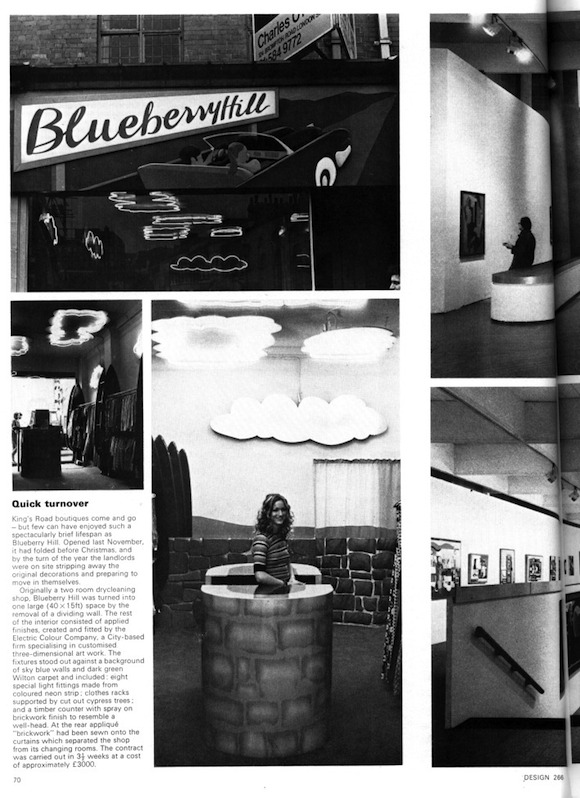
In November 1970 the King’s Road boutique Blueberry Hill was launched with a comprehensive fit-out – reported at a substantial-for-those-days £3,000 – by the ECC team of Andrew Greaves, Jeffrey Pine, David Smith and Roderic Stokes.
//By the time this coverage appeared in the February 1971 issue of Design magazine, Blueberry Hill had been closed for several weeks//
Despite the extraordinary nature of the shop design – which included cloud-form light fittings in neon strip and a timber counter with spray-on brickwork finish resembling a well-head – Blueberry Hill closed after just six weeks when the landlords opted to replace it with a more bankable betting shop.
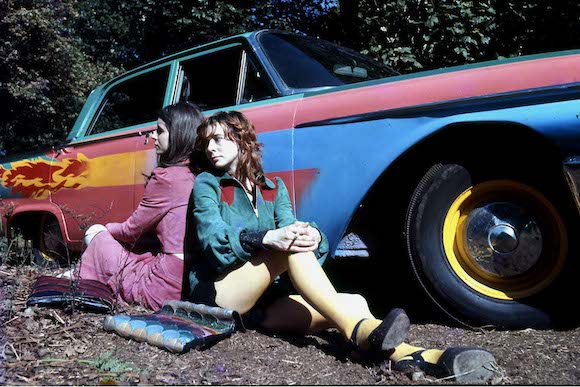
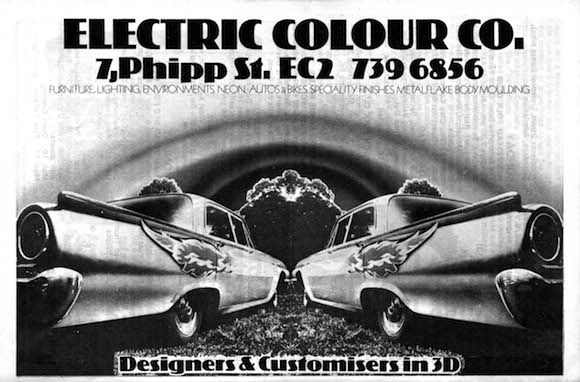
//Irene Smith and Dinah Adams with the ECC-customised Ford Fairlane 500, 1970////Advert, Time Out, 1970//
The other photograph shows ECC fellow travellers Dinah Adams – who designed clothes for Mr Freedom, Paradise Garage and Granny Takes A Trip – and Irene Smith with the customised Ford Fairlane which also appeared in the East End company’s advertising.
I’ll give the nod when my piece on Electric Colour Company is nearing publication.
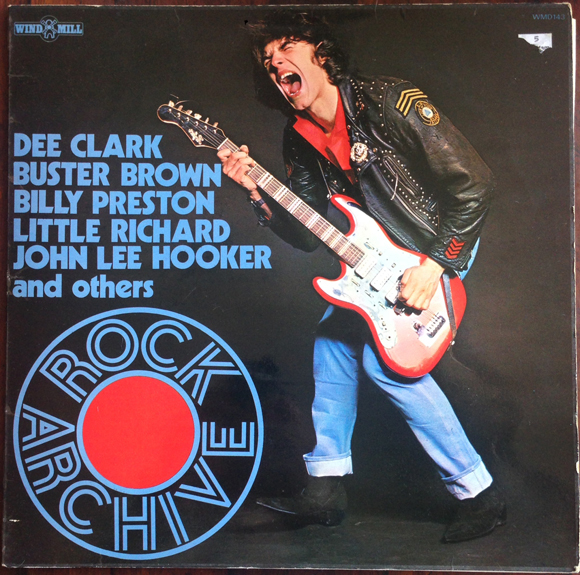
//Front cover, Rock Archive, Various Artists, Windmill Records, 1972//
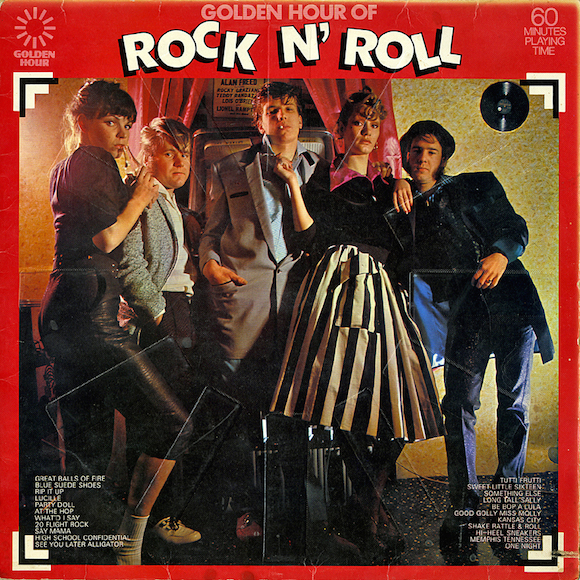
It is relatively common knowledge among those interested in the careers of Malcolm McLaren and Vivienne Westwood and their series of extraordinary shops that they supplied clothes to the 1973 album Golden Hour Of Rock & Roll; Let It Rock at 430 King’s Road was clearly credited on the back of the record sleeve.
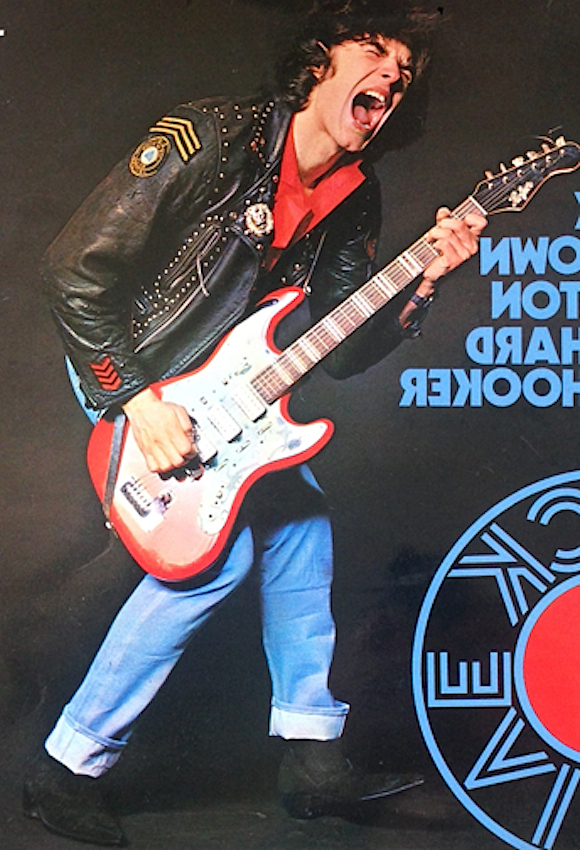
//Front cover, The Golden Hour Of Rock N Roll, Various Artists, Pye/Golden Hour, 1973////The photograph on the Rock Archive cover was flipped to better accommodate the text. Here it is as originally shot//
But I have fresh information which helps towards a greater understanding of McLaren’s project to investigate the detritus of popular culture’s recent past. During a bout of research recently I came across this earlier and hitherto undocumented use of Let It Rock clothing in a music context: the front cover of Rock Archive, a budget LP compilation released by the specialist British independent label Windmill in 1972.
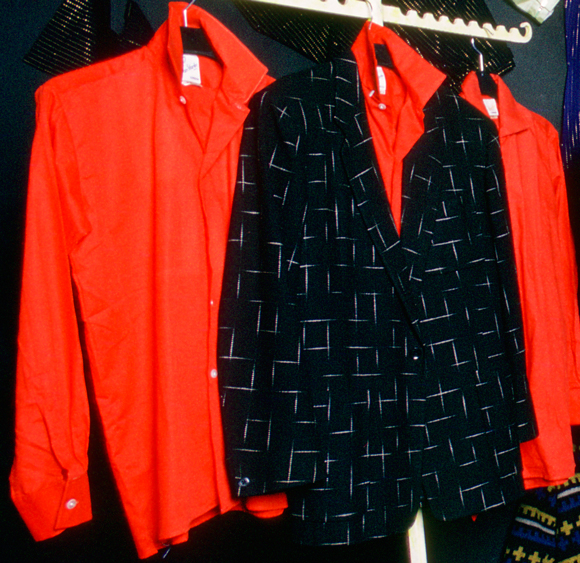
And I am detailing the clothes on the cover with images taken inside Let It Rock which have never been previously published.
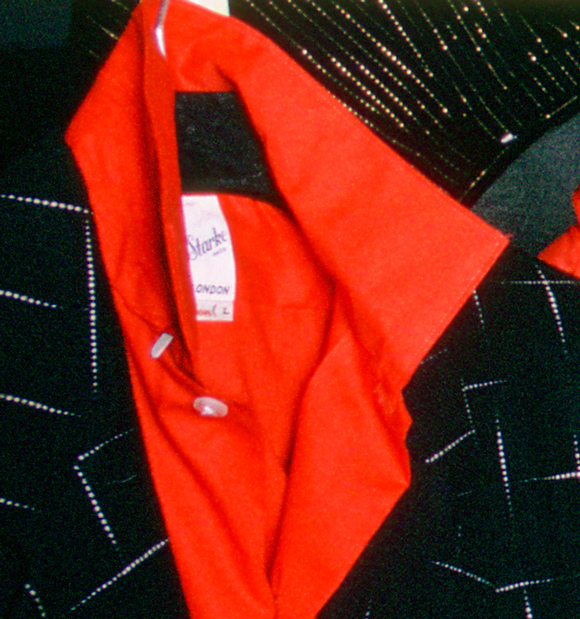
//Starke shirts with 50s sports jacket on Let It Rock wall, January 1972. Photograph: David Parkinson////Starke label detail//
Each garment worn by the model – whose attempts at rocking out resulted in his giving every appearance of suffering considerable pain – comes from the deadstock of British brands assiduously assembled by Malcolm McLaren and his art-school friend Patrick Casey for the opening of the world’s first avowedly post-modern retail outlet in November 1971.
From the ground up, the Rock Archive cover star wore black suede Denson’s Fine Poynts, ice-blue Lybro jeans with 5in cuffs, a Frederick Starke flyaway collar shirt and a studded and decorated Lewis Leathers early 60s Lightning jacket (which featured a highly collectable 6-5 Special patch).
This is designer Ben Kelly at his 1974 degree show at London’s Royal College Of Art.
Kelly adopted the alter-ego The Photo Kid, who is portrayed in the work by which he is standing. The Photo Kid wore clothes – in particular brothel creepers – from Malcolm McLaren and Vivienne Westwood’s shop Let It Rock, as did Kelly; the shoes, pink socks and belt in this photograph all came from there, while the Hopalong Cassidy & Topper top (see Ian Harris’s comment below) was picked up at a Paris flea market.