

Here’s a couple of pieces of recently published journalism, one filed for the Netherlands-based biannual MacGuffin, the other for the second issue of Fred Perry Quarterly.
Here’s a couple of pieces of recently published journalism, one filed for the Netherlands-based biannual MacGuffin, the other for the second issue of Fred Perry Quarterly.


“It’s like reconstructing the debris of old pop paraphernalia… what’s exciting about it is that you no longer need to buy guitars. You can choose a friend up the road, put your decks together with a beatbox and make your own records, demoralising [sic] the pop myth and beginning to find a way of using material yourself .”
On November 19 1982, the UK’s national weekly youth music programme The Tube included a segment marking the occasion when the terms (and concepts of) “scratching”, “break-dancing” and “hip-hop” were introduced to a mass British audience for the first time.
Continue reading Malcolm McLaren introducing scratching to the UK, November 1982

This is the book which inspired the late Malcolm McLaren to unite the design ideas he developed with Vivienne Westwood for their Autumn/Winter 1983 fashion collection Witches.
At the time McLaren was completing his album Duck Rock, which was conceived as an ethnological travelogue and modelled on the LP series Dances Of the World’s Peoples released on the ethnographic Folkways label; in fact, Duck Rock was originally titled Folk Dances Of The World and the incorporation of an illustrated insert containing track-by-track explanations was taken from the one which appeared in the 1958 albums.


Tomorrow (November 2) I am introducing a Malcolm McLaren film night at Southampton’s The Stage Door as part of the city’s Film Week.
Continue reading Rare footage to be revealed at Malcolm McLaren Night in Southampton tomorrow




//Stills from unedited interview with Malcolm McLaren by Ariel Van Straten, London 1996//
The establishment still aren’t quite able to understand interactive; it’s the street which understands it and is able to use it in a simplistic but very real way. They will be the people who break through; they will make it the most sexy. It won’t be as cerebral as the likes of Peter Gabriel or Eno and that lot.
[Handed underground dance CD]: See look, they’re already emailing, connected to the web, and that’s where it’s all happening.
Web TV, downloading music, graphics and so on is definitely the future, definitely where it is going to go. These guys are on the verge of suggesting in the years to come you won’t purchase your music from shops. Your cultural information is going to come through the Net.
Now it’s about buying the technology so that you can broadcast from your goddamn bedroom across the planet. I think the reason why the industry is holding back is because they know that it is only a question of the technology being affordable and that’s when it will happen.
Malcolm McLaren, London 1996
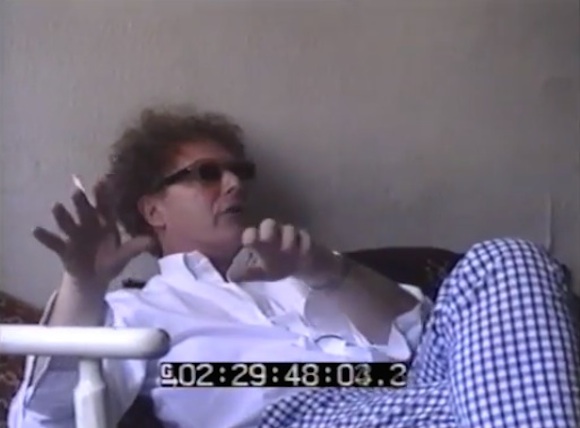
In the mid-90s photographer Ariel Van Straten interviewed Malcolm McLaren for a film about graffiti art. Entitled Getting Your Name Up, the short was made for a video-only issue of Don’t Tell It magazine, to raise awareness of the plight of Simon Sunderland, who had been jailed for five years for committing criminal damage on the rail network in South Yorkshire using the tag ‘Fista’.


The idea is to show in clothes and music that, in the post-industrial age, the roots of our culture lie in primitive societies.
Malcolm McLaren on Nostalgia Of Mud and Duck Rock, 1983
Thanks to Hiroshi Fujiwara for tipping the wink over one of the sources of visual inspiration fed by Malcolm McLaren into the concepts unified by his solo album Duck Rock, the central London clothing store Nostalgia Of Mud and the fashion collections he designed with Vivienne Westwood in 1982-3.
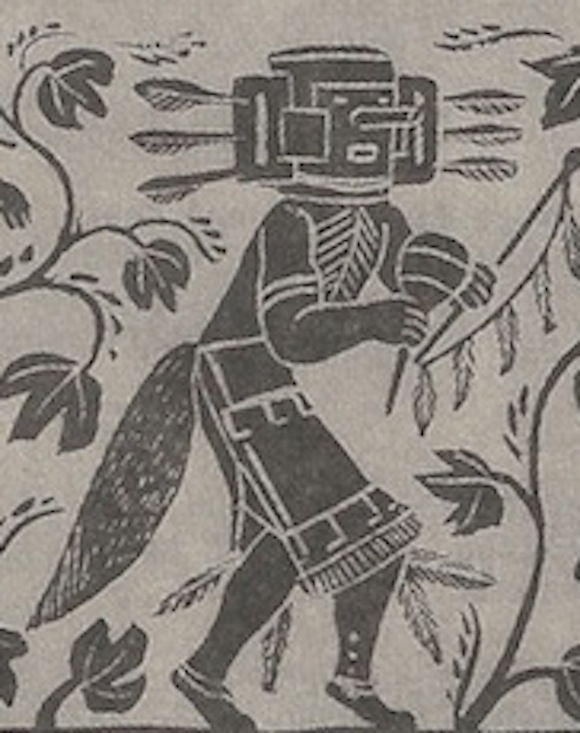

One of the cues for Duck Rock’s investigations into music from all over the world was the series of recordings by enthnological music archivists Ronnie and Stu Lipner released on Folkways Records in the late 50s under the banner Dances Of The World’s Peoples. And McLaren’s appropriation of the naive cover art by W. Johnson – in particular the striking witchdoctor figure – found new form in design collaborations with Westwood, graphics supremo Nick Egan and artist Keith Haring.

McLaren’s brilliance at fusing disparate elements into culture-defining and dazzling artworks is being celebrated next week with the exhibition Let It Rock: The Look Of Music The Sound Of Fashion at the Crystal Hall in Copenhagen’s Bella Center.
The show – which runs from August 3-6 during Copenhagen Fashion Week – will incorporate hundreds of exhibits, many rare and never previously shown to the public, including clothing and objects featured here such as the Witches top, the show cards and original copies of the Dances Of The World’s Peoples LP and catalogue.
Read more here.
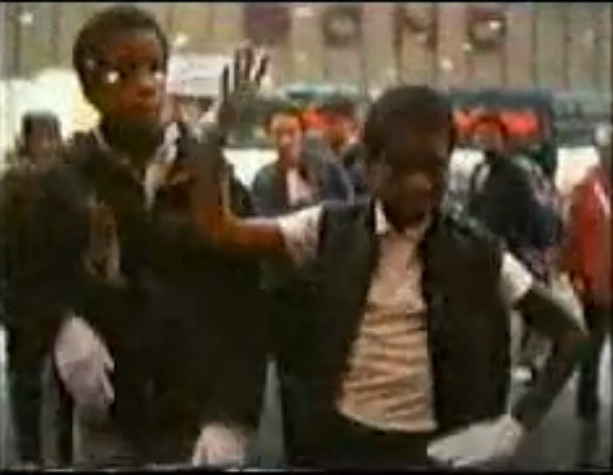


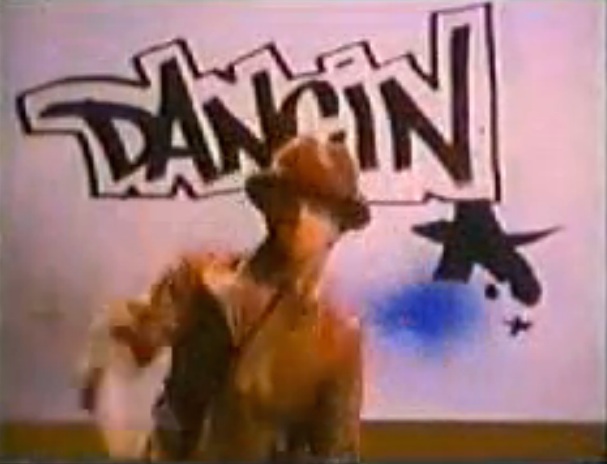
Beat This: A Hip Hop History is an hour-long documentary broadcast by BBC in its Arena strand in 1984 and directed by Dick Fontaine (who I interviewed for my Goldie book back in the early 00s).
In one section Malcolm McLaren talks about his August 1981 introduction to Afrika Bambaataa’s Zulu Nation in the south Bronx.
This was effected by artist/filmmaker/writer Michael Holman; his often overlooked achievements include actually naming the genre “hip hop” in his East Village Eye column, founding the noise group Gray with Jean-Michel Basquiat (Holman also wrote the 1996 Julian Schnabel-directed biopic), running the world’s first hip-hop club (Negril, on 11th Street), creating the New York City Breakers and making the films and TV shows Catch A Beat, Beat Street and Graffiti Rock.

These captivating 70s images stem from the amazing photographic archive of New York DJ legend Bobby Busnach.
Many feature Busnach’s friend and muse, the fabulous writer/photographer/performer Gerry Visco, as well as the circles they moved in at NYC’s Park Royal Hotel, Boston disco/bar The Other Side and the nascent hip-hop scene in the South Bronx.


Excerpt from 1983 BBC documentary Beat This: A Hip Hop History.