//But Is It… ART, t-shirt design, Ian Harris for Jasper, 1979//
I’ve dug into collector and graphic artist Ian Harris’s rich archive again and turned up a brace of t-shirts he designed in the late 70s for Jasper, the eponymous London-based fashion label operated by entrepreneur Jasper Hamilton Holmes from showrooms in central London.
Tonight I will join academic and arts writer Dr Ian Massey and filmmaker John Maybury in conversation with photographer David Gwinnutt for an event to coincide with his exhibition Before We Were Men at the National Portrait Gallery.
//I’ll be in conversation with Soho tailor Mark Powell at 2pm. Photo: Mark Powell////And talking about The Face from 3pm. This issue: Clinton McKenzie by Jamie Morgan/Ray Petri (Buffalo), June 1985 //
Sartorial Style is on this Saturday at the V&A and looks to be a humdinger.
The day of talks, q&as and presentations considers centuries of male style and elegance and also explores contemporary men’s fashion, bringing together curators, academics, photographers, writers and designers.
Sartorial Style kicks off with Real Men DO Wear Pink!, an investigation into masculine style up until 1800 by Susan North, the V&A’s curator of 17th & 18th Century fashion.
//Sir Roy Strong at the V&A, May 20, 1987. Photo: Peter Dazeley/Getty//
On the collapse of their design partnership in October 1983 after showcasing of the collection Worlds End 1984 in Paris and London, Malcolm McLaren and Vivienne Westwood went their separate ways.
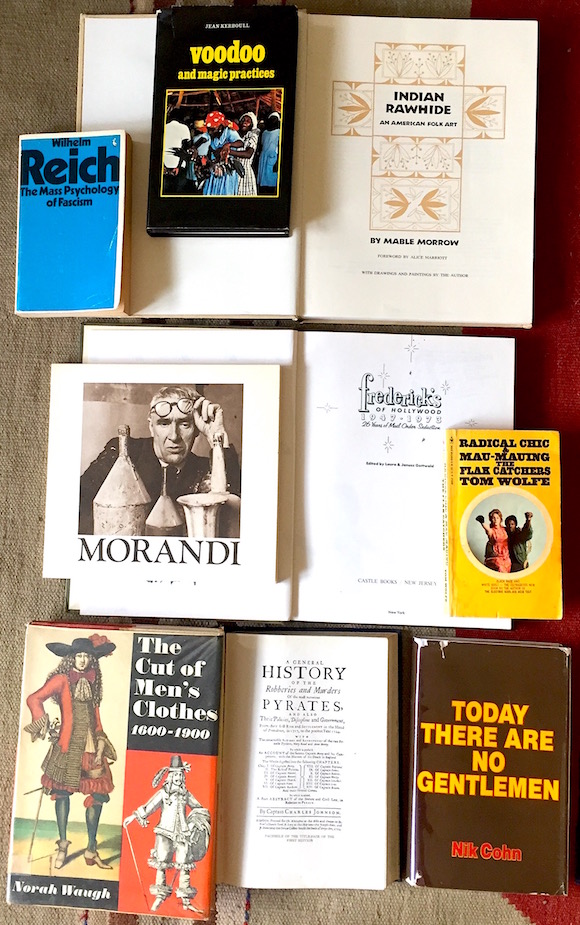
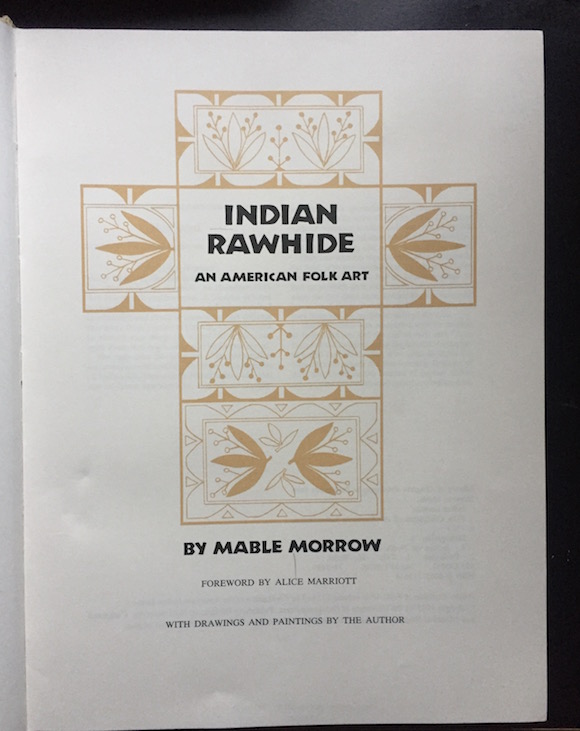
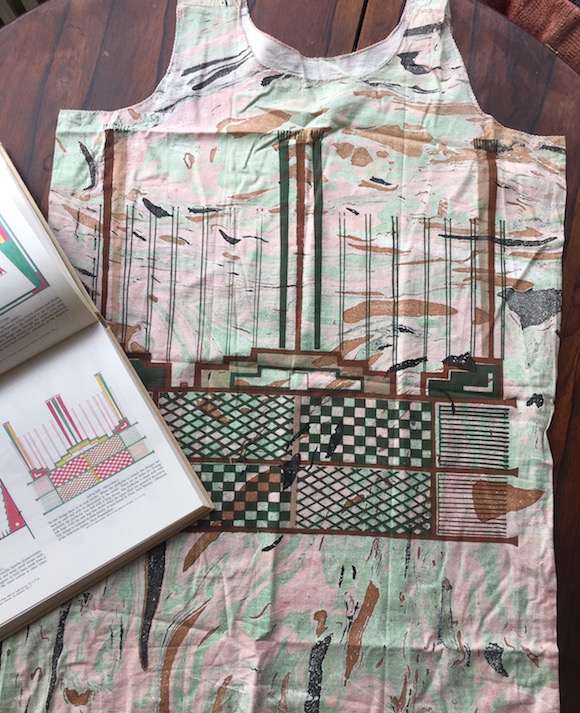
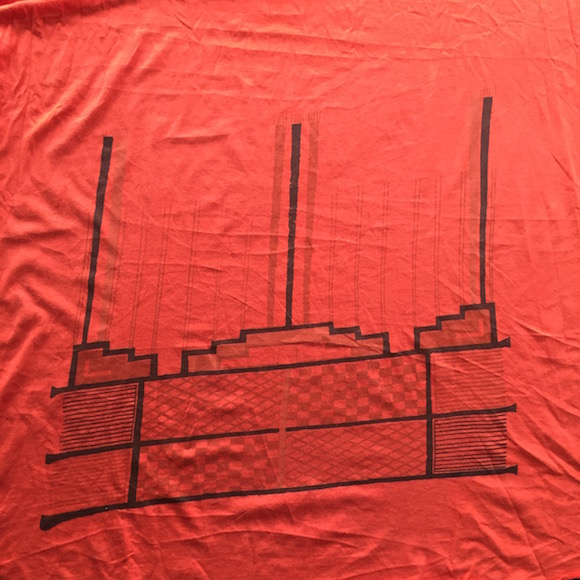
A few years back I came across Malcolm McLaren’s annotated copy of Indian Rawhide, the anthropologist Mable Morrow’s study of the folk art produced by Native American tribes which inspired the late cultural iconoclast in the conceptualising with his partner Vivienne Westwood of their Spring/Summer 1982 fashion collection Savage.
//Frontispiece to Morrow’s book, published by University of Oklahoma Press in the Civilization Of The American Indian Series, 1975////From Indian Rawhide: design produced by the Apache Mescaleros in Taos, New Mexico, matched by McLaren and Westwood with book-end marbling on this Savage slip dress. No reproduction without permission////The Apache design as it appeared printed on the end of the train on a Worlds End jersey toga dress. No reproduction without permission//
McLaren obtained a copy of Morrow’s book during travels recording his debut solo album Duck Rock. Since the Pirate collection of March 1981 had established a post-Punk direction for himself and Westwood and their Worlds End shop and label, McLaren set about investigating the powerful ideas residing in pre-Christian ethnic cultures, selecting Indian Rawhide as the text with which to frame the next group of designs.
My McLaren biography, to be published in spring 2018, will reveal that research – particularly literary – was one of the life-long consistencies in his approach to creative acts.
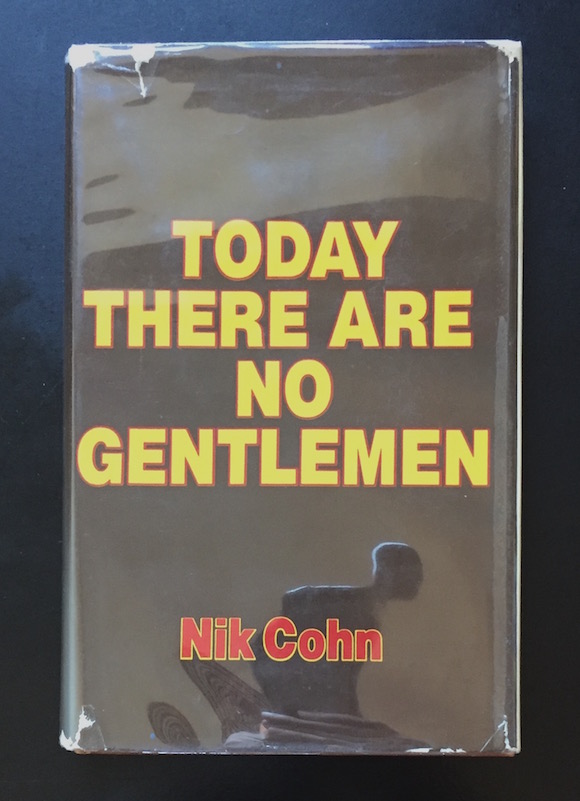
The musician Robin Scott told me that McLaren was an avid attendee of art history lessons during their spell as students at Croydon Art School in the 60s, and a couple of years before his death in 2010 McLaren confirmed that he was inspired in part to open Teddy Boy revival emporium Let It Rock at 430 King’s Road in 1971 after reading Nik Cohn’s peerless post-WW2 youth cult history Today There Are No Gentlemen.
//Voodoo and Magic Practices, Jean Kerboull, Barrie and Jenkins, 1978. Translated from the French by John Shaw//
This is the book which inspired the late Malcolm McLaren to unite the design ideas he developed with Vivienne Westwood for their Autumn/Winter 1983 fashion collection Witches.
At the time McLaren was completing his album Duck Rock, which was conceived as an ethnological travelogue and modelled on the LP series Dances Of the World’s Peoples released on the ethnographic Folkways label; in fact, Duck Rock was originally titled Folk Dances Of The World and the incorporation of an illustrated insert containing track-by-track explanations was taken from the one which appeared in the 1958 albums.
//The plaque at 73 Lancaster Road. Photo: Peter Tarry//
Great news about the English heritage blue plaque dedicated yesterday at 73 Lancaster Road in north London’s Finsbury Park, one-time home of the late great footballer Laurie Cunningham.
//Dermot Kavanagh speaks at the unveiling. Among those in attendance were Cunningham’s friend Cyrille Regis, his former girlfriend Nikki Brown and members of his family. Photo: Peter Tarry//
As I’ve written here before, Cunningham’s significance extends outside of his considerable achievements as a sportsman; the first black player to represent England and be signed to an overseas club (Spain’s Real Madrid), he lived his tragically short life off the field at the cutting edge of street style and club culture.
//Phil Lynott, styling Sheila Rock, photography Mick Rock, Club International, October 1973////The Gentlemen At Number Ten, styling Sheila Rock, photography David Parkinson, Club International, December 1973//
To celebrate the opening next week of a new exhibition of work by photographer Sheila Rock, here is a selection of her early fashion styling.
Apologies for not posting for a while; I am currently focusing energies on my book Legacy: The story of The Face, which is published by Thames & Hudson in autumn 2017.
Launched in 1980 by print publishing pioneer Nick Logan – the editor of the NME during its ’70s glory years, the man who also founded Smash Hits, Arena, Arena Homme Plus, Frank and Deluxe – The Face magazine brought the news on the dizzying developments of popular culture for two decades.