
Here’s another treasure from the trove of Design magazines given to me by the designer Paul Walters; the invitation for the opening of Paul Reeves’ west London boutique Universal Witness in November 1970.
Here’s another treasure from the trove of Design magazines given to me by the designer Paul Walters; the invitation for the opening of Paul Reeves’ west London boutique Universal Witness in November 1970.


Beginning in the early 1970s—as under-represented groups were demanding new forms of visibility following the emergence of political movements such as Black Power and the Stonewall Rebellion—a handful of British and American photo-driven alternative magazines came on the scene.
The Face, i-D, Rags, Out/Look, and other new publications amplified marginalized voices, especially those of queer makers and makers of colour, and made room for those makers to question who and what was accepted as mainstream. These publications introduced a hybrid model within the magazine industry: combining the high production standards and engagement with fashion of “powerhouse” publications such as Vogue and Life with the use of collage in zines and the text/image provocations of underground newspapers. In the end, these alternative magazines transformed their industry.
From the introduction to Subscribe.
Two years ago, just as the enormity of the pandemic was emerging, I met American curators Solveig Nelson and Michal Raz-Russo in London to discuss making a contribution to an exhibition at the Art Institute of Chicago about the significance of alternative magazines to Western culture.

London antique dealer James Jackson is currently presenting an Instagram exhibition of a folio of new works by the British artist Robert Rubbish.
Farfouiller dans Les Archives (Rummaging in the archives) consists of 10 original A3 artworks; James is posting one work daily on his IG account.

“In the summer of 2019, I started making a collection of works inspired by stills from the French New Wave films I was watching,” explains Rubbish. “They are mostly of couples in cafes; I liked the idea of juxtaposing words onto them like subtitles, using 1980s pop song lyrics.

“The text was translated from English to French using Googletranslate. The results became profound, existential (or profoundly existential?) and sometimes absurd.”
Jackson has exhibited Rubbish’s work previously at his premises in Fulham, west London. “Robert will return with an old school gallery type exhibition of new and inspired works at James Jackson in Lillie Rd as and when circumstances allow,” adds Jackson.
Enjoy the show here.


Small is beautiful when it comes to the inventive mini-edition of The Gentlewoman, a greatest hits package celebrating the exemplary British magazine’s “10 years of fabulousness”.
During that time (after all print had been roundly declared as “dead” in 2010), editor Penny Martin and her team have consistently confounded expectations around independent print publishing and the traditional editorial stances of periodicals aimed at female readers.
Continue reading The Gentlewoman celebrates a decade of fabulousness with special mini-edition


The late British abstract artist Robyn Denny is best known for his large-scale works, such as Great Big Biggest Wide London, the giant 1959 mural for menswear company Austin Reed’s Regent Street store.

“No fool can be silent at a feast” Solon, Greek lawmaker and philosopher 630-560 BC
West London antiques dealer James Jackson is inaugurating his newly refurbished premises with Fête des Imbéciles, an exhibition of works by the British artist Robert Rubbish.

Continue reading James Jackson presents Fête des Imbéciles: An exhibition of works by Robert Rubbish
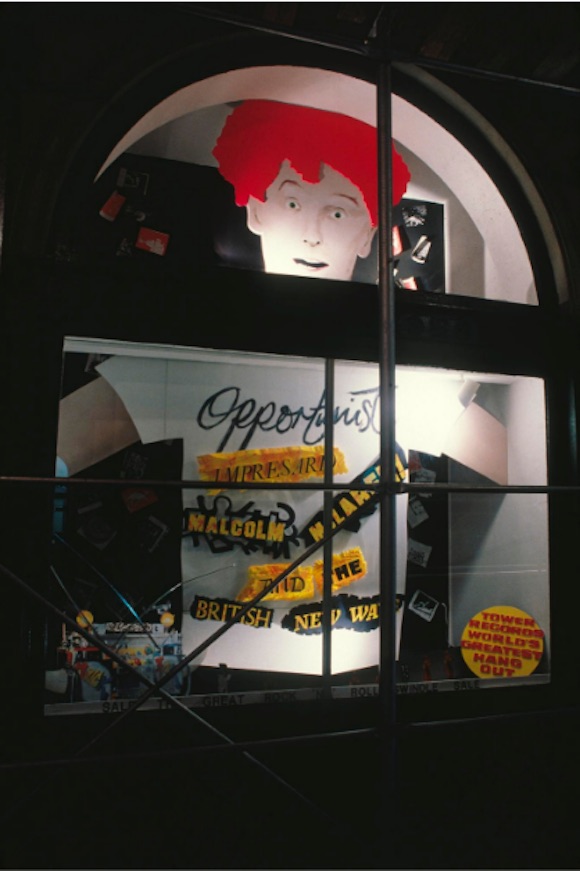

My biography of the late Malcolm McLaren will now be published in April 2020, exactly 10 years after his premature death at the age of 64.

There were more 150 art schools in this country in the mid-1960s. Most of them are now closed or absorbed into other institutions and the buildings repurposed, remodelled or demolished. What did it mean to have an art school in every town and what can we learn by discovering their fate?
Exhibition notes for The Art Schools Of North West England, 2018
I’m playing catch-up, having been distracted by a big project, but wanted to plug this great exhibition which is on at Liverpool’s prestigious gallery Bluecoat until March next year.

The third edition of Scott King and Matt Worley’s CRASH! has arrived. Entitled Nostalgia For The Jet Age, it is an “exhibition in a box” which coincides with an actual exhibition of the same name currently being held at Scotland’s Timespan.

Continue reading KRAŜO! 3: Nostalgio Por La Jeto-Aĝo estas skatolo de lertaĵoj *

PRINT! Tearing It Up – the exhibition I co-curated at London’s Somerset House this summer – ended with a bang with a talk by journalist Kieran Yates about her magazine British Values (one of my highlights of the show).
Continue reading PRINT! Tearing It Up ends with a British Values bang