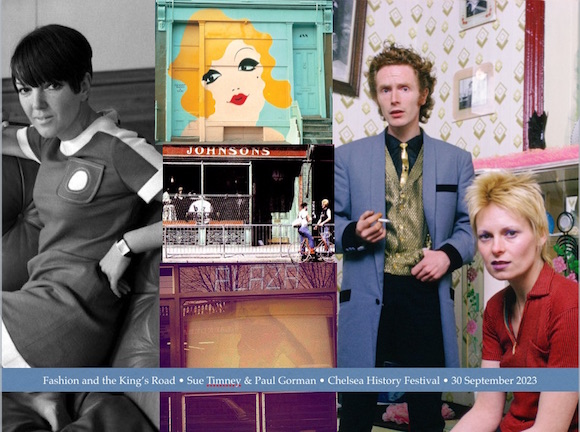
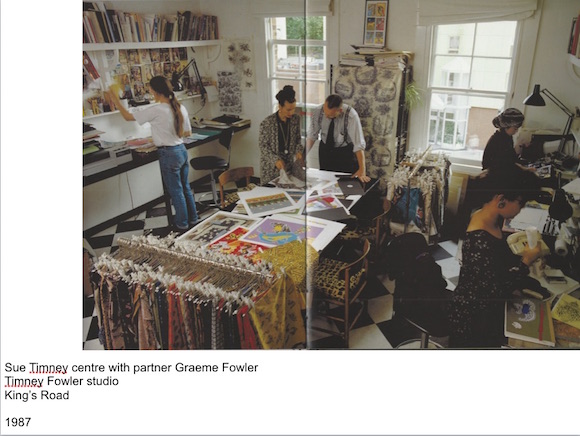
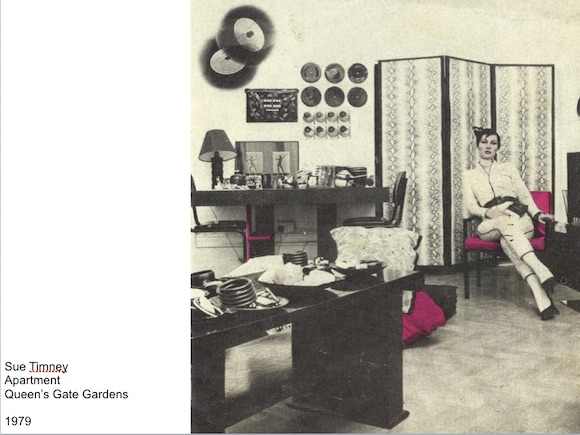
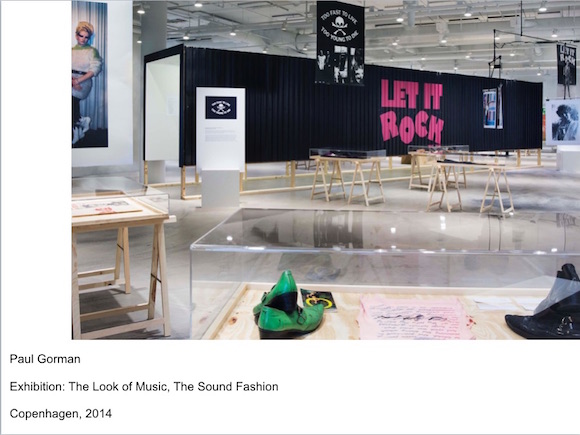
Tomorrow I’ll be talking to interiors, homewares and textile designer Sue Timney about the fashion legacy of the King’s Road, the two-and-a-half mile thoroughfare in west London’s Chelsea where the late Mary Quant kicked off the boutique boom by opening her clothes shop Bazaar at 135a in 1955.
The new issue of international interiors magazine apartamento includes my feature about British artist Duggie Fields and his extraordinary mansion flat in inner west London neighbourhood Earl’s Court.
//Catalogue cover featuring detail of Tête Cultivée, Nicola L, 1970//
As befits a sorely-missed man of singular style and taste, the catalogue for the forthcoming sale Furniture Pimp: The Collection Of Jim Walrod is an absolute treat.
//Right: Walrod at home photographed by Collin Hughes; Left: works featured in the forthcoming sale//
I said many times to Jim – and have reflected on this over the last few days – that not many people get to pursue their passion every day of their adult lives. Jim did that. He never went to ‘work’. He did not care if he made money doing it, he just wanted to be able to have you understand what he saw and to have your opinion on it. Kathy Walrod
Jim Walrod, who has died aged 56, occupied a unique position in the world of international design.
A collector, curator, writer and sometime retailer, as well as an interior designer and locator of unusual and one-off furniture and lighting pieces for a diverse selection of celebrity and private clients, the rangy, sandy-haired Walrod cut a singular figure.
Enthusiastic, informed and slyly humorous, Walrod was founder with Jack Feldman and Fred Schneider of the B-52s of New York’s important 90s/00s store Form & Function and described as “the ultimate design raconteur” by hotelier André Balazs.
To Mike D of the Beastie Boys he was “the furniture pimp”, an accolade won in part for having sourced Memphis designs for David Bowie (Jim revealed to me just a few weeks ago that some of these Italian PoMo pieces came via Tommy Roberts, subject of my book Mr Freedom).
As punk expert/collector and design academic Paul Burgess notes, references to 430 King’s Road turn up in the most surprising places.
So thanks to him for notifying me about this photograph of the coolest address in pop culture – and in particular the tiger stripe-flocked Ford Mustang which adorned the street outside during the Paradise Garage phase – in a 1976 light educational book for young children.
//Warhol poses for photographer Jon Naar on the famous red couch in his studio on E. 47th Street in midtown Manhattan, 1965//
Designer Ben Kelly, chair of interior and spatial design at University of the Arts London, has chosen this photograph of Andy Warhol’s Silver Factory for his exhibition 111 Inspirational Interiors.
Kelly has curated the show – which opens tomorrow at Windows Gallery 1 at Central Saint Martins in Kings Cross, North London – after inviting 111 creatives to each select an image of an interior which is important to them.
“Anyone who has wondered how the Britain of utility furniture and wartime rationing managed to evolve into Cool Britannia will find this a remarkable book.”
Elizabeth Guffey, State University of New York at Purchase
My case study Tommy Roberts: From Kleptomania To Two Columbia Road forms a chapter in new book British Design: Tradition And Modernity After 1948, which is published by Bloomsbury Academic tomorrow (October 22).
//Nicholas de Jongh’s front-page report, The Guardian, August 2, 1975////Sex Original-labelled Cowboys t-shirt courtesy Hiroshi Fujiwara Collection//
This month – specifically July 26 – marks the 40th anniversary of the introduction for sale of Malcolm McLaren’s notorious Cowboys t-shirt in Sex, the revolutionary boutique he operated at 430 King’s Road with Vivienne Westwood.
The shirt’s status as the most provocative of all punk designs is enhanced by the fact that it made waves immediately: the same day the shirt went on sale, the first customer to wear it in public was arrested. Within 24 hours, the store itself was raided for indecency.
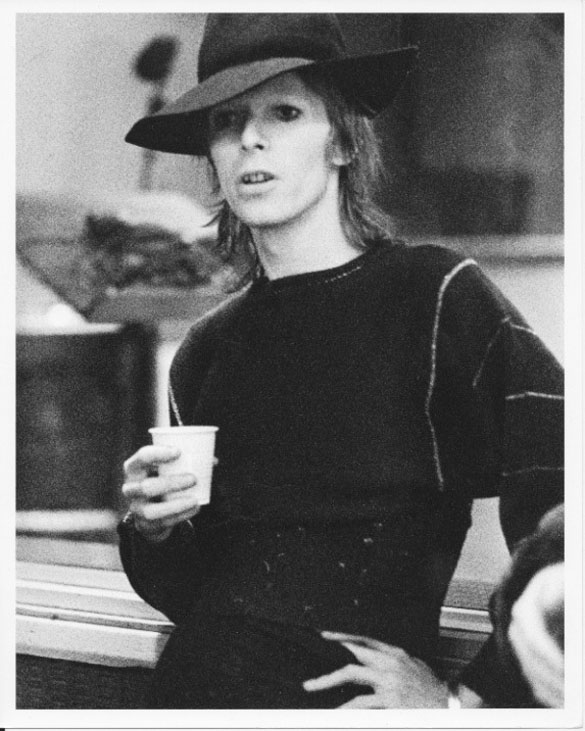
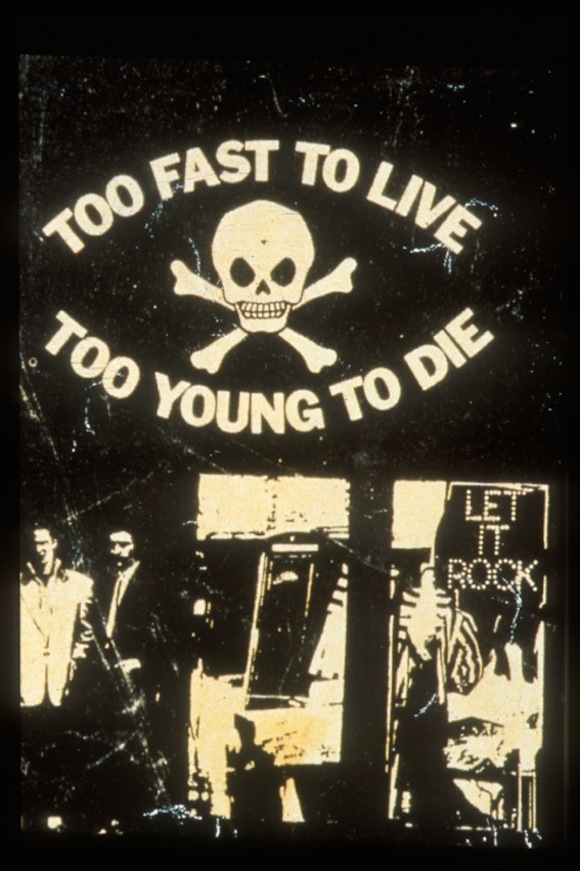
It is a little known fact that David Bowie was an occasional visitor to 430 King’s Road when it was operating as Too Fast To Live Too Young To Die.
This manifestation of Malcolm McLaren and Vivienne Westwood’s revolutionary boutique – which paid design tribute to the fetishistic studded leather attire of Britain’s early 60s Ton Up Boys and rockers and sold the cult clothing associated with 40s mobsters and Latino zoot suit rioters – succeeded the 50s outlet Let It Rock in the early spring of 1973, as noted at the time by the fashion writer Catherine Tennant in British Vogue.