//Annie Frost Nicholson with the Fandangoe Discoteca. Pic courtesy of anniefrostnicholson.com//
Next week sees the opening at London’s Canary Wharf of artist Annie Frost Nicholson’s Fandangoe Discoteca, the mini-disco installation where we can shake out our grief and help maintain daily mental health – the programme covers all intersections of grief from bereavement to climate angst to political rage to break-ups.
The design of the kiosk was inspired by De Stijl and Ettore Sottsass and holds up to eight dancers at a time.
//Subscribe exhibition ident////Artist and filmmaker Steve McQueen (right) featured in The Uniform Backlash, The i-D Bible Part 2, 1989. Photography Daniel Kohlbacher, styling Simon Foxton. Paul Gorman Archive//
Beginning in the early 1970s—as under-represented groups were demanding new forms of visibility following the emergence of political movements such as Black Power and the Stonewall Rebellion—a handful of British and American photo-driven alternative magazines came on the scene.
The Face, i-D, Rags, Out/Look, and other new publications amplified marginalized voices, especially those of queer makers and makers of colour, and made room for those makers to question who and what was accepted as mainstream. These publications introduced a hybrid model within the magazine industry: combining the high production standards and engagement with fashion of “powerhouse” publications such as Vogue and Life with the use of collage in zines and the text/image provocations of underground newspapers. In the end, these alternative magazines transformed their industry.
From the introduction to Subscribe.
Two years ago, just as the enormity of the pandemic was emerging, I met American curators Solveig Nelson and Michal Raz-Russo in London to discuss making a contribution to an exhibition at the Art Institute of Chicago about the significance of alternative magazines to Western culture.
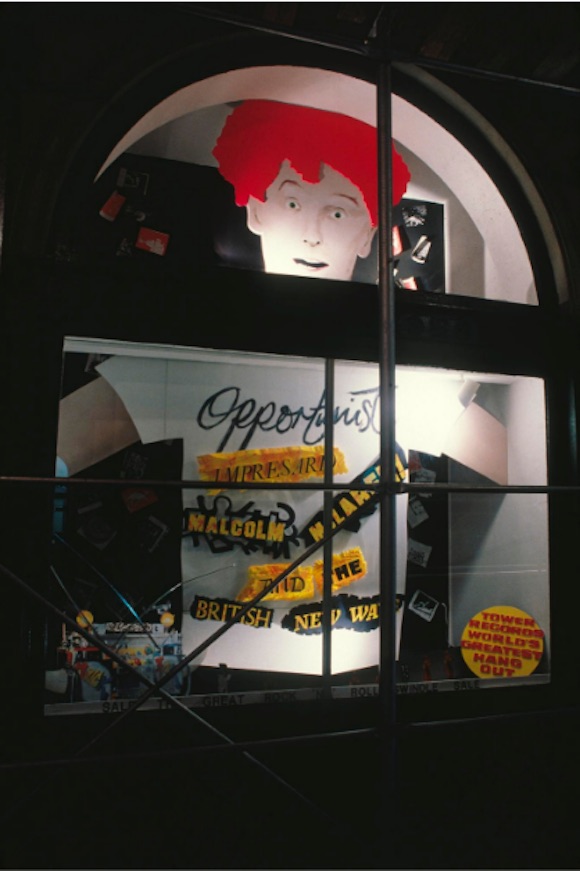
//Window display for Impresario at the New Museum, Sept 16 – Nov 20, 1988. Image from the New Museum Digital Archive////Introduction to the show. Image from the New Museum Digital Archive//
My biography of the late Malcolm McLaren will now be published in April 2020, exactly 10 years after his premature death at the age of 64.
//Large renditions of photographs from the 1977 session in Tokyo with Masayoshi Sukita for the “Heroes” sleeve. Photo courtesy Sonos//
To mark the opening earlier this month of the new Sonos store in Berlin – the home leisure company’s first retail presence in continental Europe – I was invited to organise a display of photography relevant to David Bowie’s creative connections to the city.
//Song Stories: Bowie at Sonos New York City. Photo: Mary Kang////Song Stories: Bowie at Sonos New York City. Photo: Mary Kang//
Song Stories: Bowie, the display of photographs I selected to track the late superstar’s relationship with the city of his adoption, is at the Sonos store in New York’s Soho until January 7.
I am among the participants in The Conformist, a group exhibition being organised for the New Year by artist Paul Kindersley at the gallery of Julia Muggenburg’s extraordinary London art/jewellery establishment Belmacz.
The catalogue for exhibition Eyes For Blowing Up Bridges: Joining The Dots From The Situationist International To Malcolm McLaren is published on Friday (November 13).
//The Dance, from the series News From The Metropolis, Derek Boshier, 2014. Ink and collage on paper////From Best Foot Forward, Derek Boshier, 2014. Film//
To coincide with the publication of the Derek Boshier monograph Rethink/Re-entry, writer/curator Guy Brett and I are putting together an exhibition of the same name which will be held at Flowers Gallery in Cork Street, Central London this autumn.






 ‘


