//Cover, Curious issue 19, 1971. Photography: Brian Ward. No reproduction without permission.This copy: Paul Gorman Archive////Opening spread The Queen Of Clapham. Photography: Edward Bell. No reproduction without permission////From The Cool Kilt vs The Hot Pant. Photographer not credited. No reproduction without permission////Opening spread I Was A TV. Photographer not credited. No reproduction without permission//
Next week I will be taking part in a panel discussion on the fashion legacy of the late cultural iconoclast Malcolm McLaren at London’s Institute of Contemporary Arts.
The other participants in the chat – chaired by Young Kim of the Malcolm McLaren Estate – are Louis Vuitton menswear artistic director and McLaren/Westwood collector and expert Kim Jones and Ben Reardon, editor of Man About Town; the new issue of his magazine contains a huge section dedicated to McLaren’s stylistic forays with and without Vivienne Westwood, including a fashion story photographed by Alasdair McLellan and styled by Olivier Rizzo and my essay Been There Done That Going Back.
The panel will be followed by the launch of Man About Town S/S 16 in the ICA Bar in partnership with specialist dealer Idea Books.
//Top: Anarchy Shirt designed by Malcolm McLaren + Vivienne Westwood, 1976. Worn by Sex Pistols acolytes Jordan (Pamela Rooke) and Simon Barker for performances and TV appearances by the group. Private collection. Above left: screening room for Paris Capital Of The XXIst Century, Malcolm McLaren, 2010; right: vitrines and monitors in gallery 2. Photos: Steve Shrimpton//
Hope you enjoy this selection of installation shots from the exhibition Eyes For Blowing Up Bridges: Joining The Dots From The Situationist International To Malcolm McLaren, currently wowing visitors to Southampton’s John Hansard Gallery.
Read my piece on the stylistic changes rung by David Bowie during the early 70s on The Guardian’s men’s fashion pages here.
I discuss his fashion collaborations with Freddie Burretti, Daniella Parmar and Kansai Yamamoto and talk about the Pin-Ups suit from City Lights Studio designed by Derek Morton. Hope you enjoy.
Two of Malcolm McLaren’s t-shirts from the very first production run of I Groaned With Pain – the notorious text design produced with Vivienne Westwood in 1974 – will be featured in Eyes For Blowing Up Bridges, the exhibition I am co-curating with David Thorp at Southampton’s John Hansard Gallery this autumn.
I Groaned With Pain is named after the first four words of the paragraph of text McLaren lifted from beat writer Alexander Trocchi’s erotic novel Helen And Desire (published in 1954 by Olympia Press under the pseudonym Francis Lengel).
An under-acknowledged art world connection forged by Malcolm McLaren during his fashion design partnership with Vivienne Westwood was to the godfather of street art, conceptual artist Richard Hambleton.
During his forays in New York in the early 80s, McLaren was struck by Hambleton’s eerie representations of The Shadow Man figure; there was one on a wall in Bethune Street in the West Village, near the studio of McLaren’s photographer friend and ally Bob Gruen.
//A US vintage company is unwittingly featuring this forgery as an original t-shirt from Seditionaries on its Instagram feed. The unpleasant item is an example of the accelerating trade in McLaren/Westwood fakes, where previously non-existent designs – often with repellent overtones – are touted as ultra-rare one-offs//
//Banal content: More examples of previously non-existent designs marketed as McLaren/Westwood originals – complete with Seditionaries-style labels – from a Chinese retailer’s site last year. Note the design at bottom left has a fake label whereas the one at the top of this post does not//
//Above: A selection of more of the crude new designs touted as original garments on Japanese auction site Seditionaries Shop, which claimed more than 300 sales at prices averaging £150//
Since Malcolm McLaren’s death nearly five years ago there has been a palpable rise in the plundering of the designs – in particular the graphics produced for t-shirts – he created with Vivienne Westwood in the 1970s.
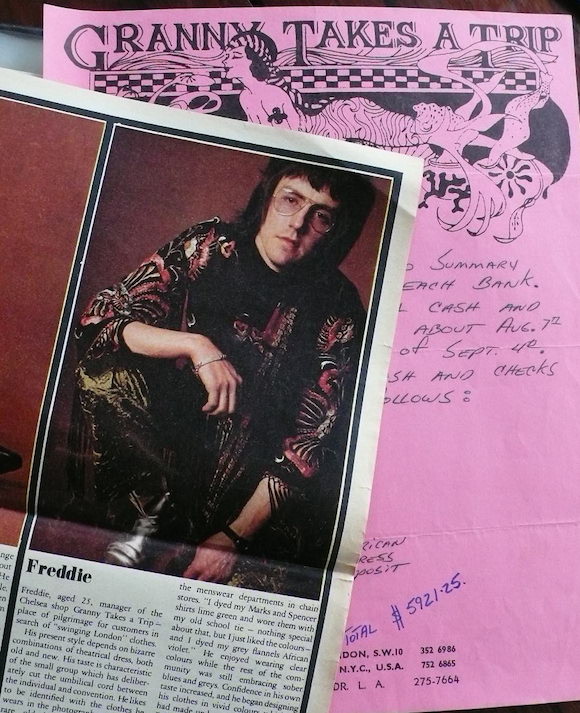
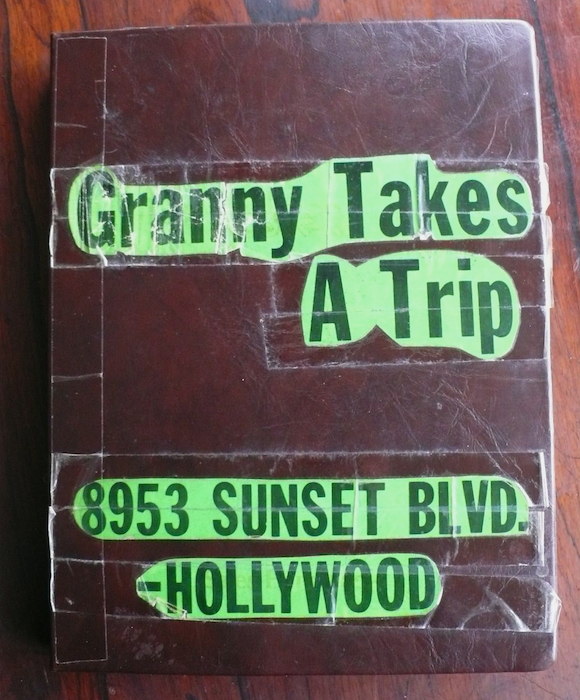
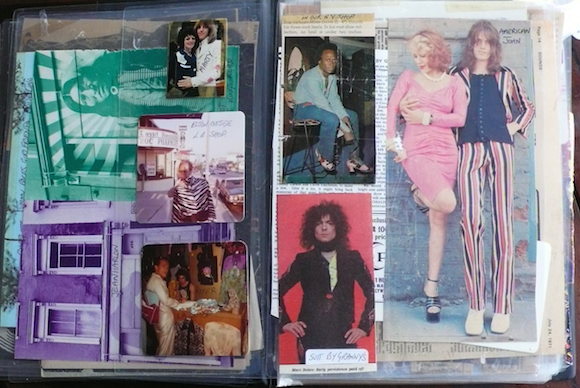
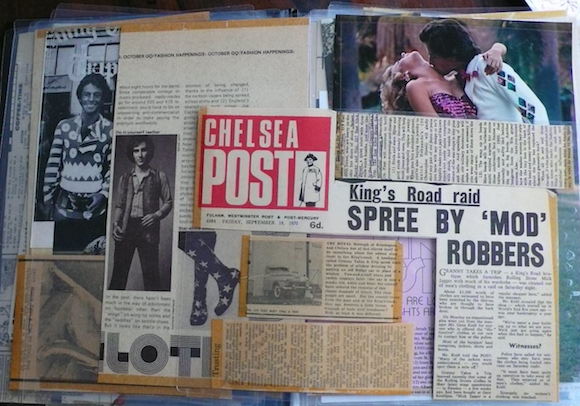
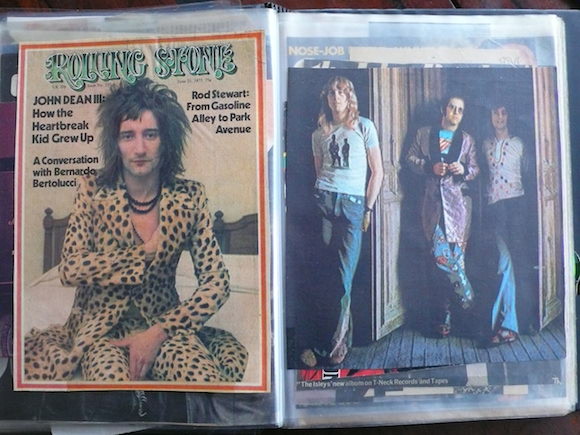
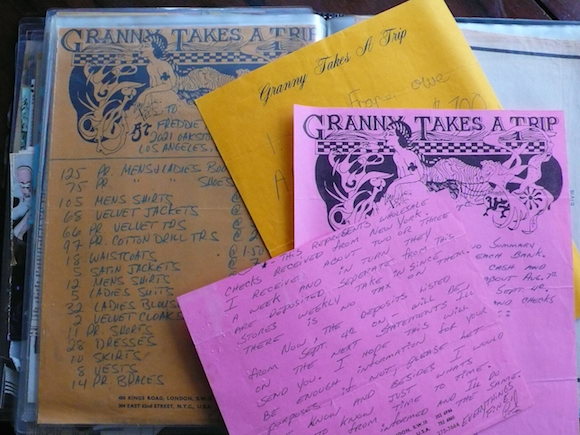
//Hornik featured in the Telegraph magazine in 1969 and GTAT paperwork dating from 1972. The livery was taken from a design by Granny’s founder Nigel Waymouth////Hornik maintained his scrapbook from the 60s to his death in 2009//
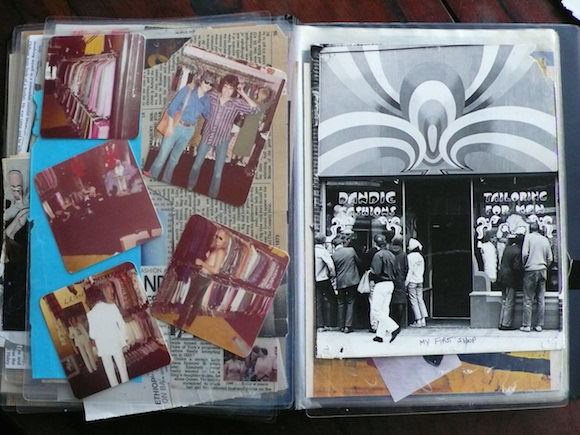
I have just filed a piece for GQ about Granny Takes A Trip and the branches of the King’s Road boutique which opened in the 70s in Manhattan and Hollywood under the stewardship of the late Freddie Hornik.
The feature also scrutinises the scrapbook Hornik maintained from the mid-60s, when he worked at the rival Dandie Fashions at 161 King’s Road, through his acquisition of Granny’s at 488 King’s Road in 1969 from founders Sheila Cohen, John Pearse and Nigel Waymouth.
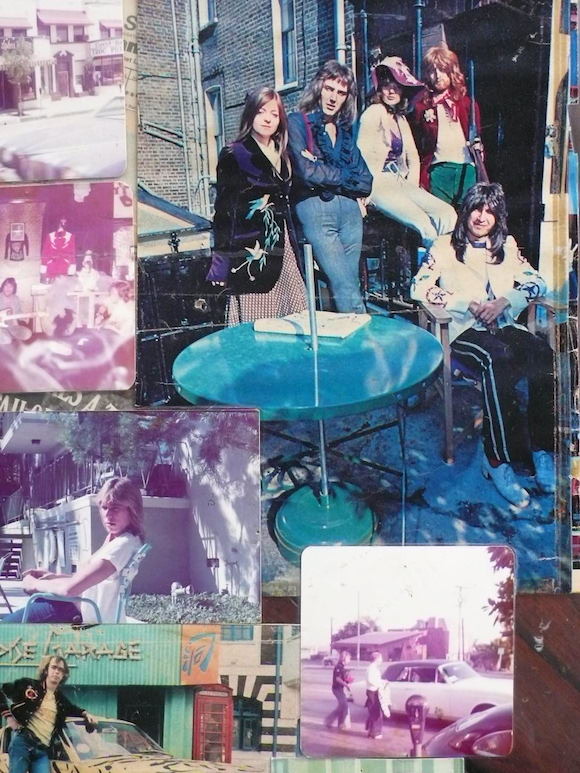
It charts in snapshots, magazine clippings, company paperwork and notes Hornik’s ambitious expansion plan which resulted in partners being brought on board at the Chelsea shop – in the form of co-owners Marty Breslau and Gene Krell – and for the launch of the New York outlet at 304 E.62nd Street, which was owned by John LiDonni and Richie Onigbene.
This strategy proved successful, and was capped by Hornik’s launch with Jenny Dugan-Chapman of an LA branch, first on Doheny in Beverly Hills and then on Sunset Strip.
By this time the Granny’s international operation had hit the moment when rock turned to glam. Existing customers such as Paul McCartney, John Lennon, Mick Jagger and Keith Richards were joined by the new raft of dandy peacock performers making the moves in the early-to-mid 70s, including Marc Bolan, Alice Cooper, Bryan Ferry, Elton John, Lou Reed, Todd Rundgren, Rod Stewart and Ronnie Wood.
Hornik’s scrapbook – which was updated for him for a time by LA store manager Roger Klein – makes for a pop culture treasure trove, one which offers rare insights into this exciting era of rock and roll fashion.
Having returned to the UK to live a quiet life in the late 70s, it is poignant to note that Hornik, who died in 2009, kept an eagle eye out for any mention of his outlets and his associates, adding to the scrapbook as the revival of interest in the clothes and characters of the period really started to roll.
I’ll keep you informed as to when the piece is due to appear. Access to the scrapbook courtesy Alex Jarrett.
//Westside Sharpies Mick Emery and Steve M sporting Connies outside Flinders Street Station, Melbourne, 1978. Photo: Jacques Kosky, courtesy Stef Egan//
The ‘Connie’ cardigan was an essential element of dress for Sharpies, the tough and stylish Australian music/fashion youth subculture active in Melbourne’s blue collar suburbs from the 60s to the early 80s.
Designed by a Mr Conti, a Greek clothier in the Thornbury neighbourhood to the north of the city, Connies were picked up on by Sharpies for their tight fit.
I first met artist/curator Robert Gordon McHarg III two decades ago, when he was developing a sadly unrealised television project based around the annual Christmas extravaganza conducted by our mutual friend, Robert Lopez, aka El Vez The Mexican Elvis.