What with Pistol and all, it seems timely to discuss Malcolm McLaren’s place in the scheme of things so tonight journalist Helen Barrett and I will be in conversation at a London Society event about the late cultural iconoclast’s relationship with the city of his birth. Here is a selection of visuals from this evening’s presentation.
In the evening June 9 I’ll be in Soho for a London Society event about the London life of the late cultural provocateur Malcolm McLaren.
At workplace venue Fora in Broadwick Street writer Helen Barrett and I will be discussing the ways in which the man born in Stoke Newington and buried in Highgate Cemetery used the city as the springboard for his dizzying range of creative and subversive activities.
//Visitors to the show browse Newsstand magazines this week. Photo: Somerset House Trust////The kiosk on which our Newsstand is based was built for the news vendor at Sloane Square station 30-odd years ago//
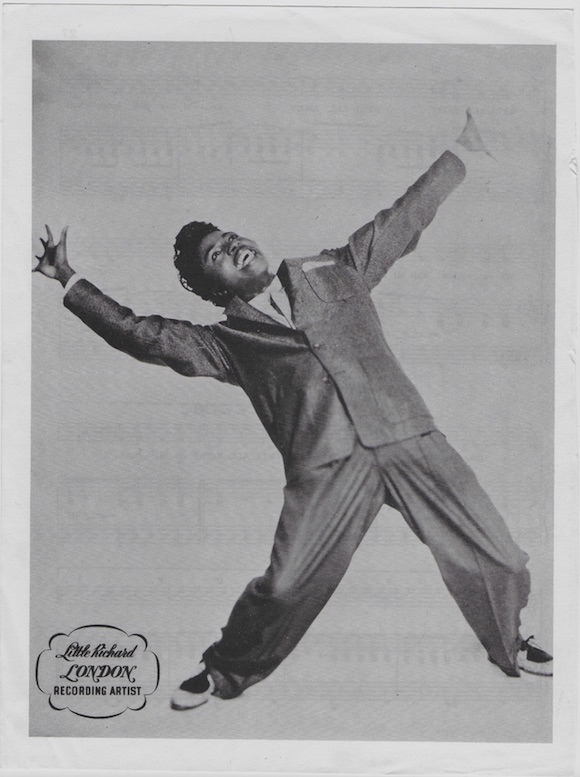
In 1956 the Hollywood photographer John E. Reed took a series of promotional shots of the stars of DJ Alan Freed’s rocksploitation flick Don’t Knock The Rock.
I’m delighted to announce that my map The Look Of London – which teases out the intertwining of popular music and street style in our capital over five decades – has been reissued by groovy guide makers Herb Lester Associates.
It is a great honour to feature this guest post by the artist and thinker Judy Nylon about her friend David “Piggy” Worth and their life and milieu in London at the turn of the 70s (brought up in Boston, Nylon had arrived in the UK capital at the start of the decade). The photographs, like those posted here at the weekend, were taken by Tony Hall as he set out on his career in photography, and have not been previously published…
THERE was a time when I smoked and owned skirts.
I lived at 14 Edith Grove, just south of Fulham Road, in a house owned by Donald and David Cammell just after they’d done Performance.
Piggy lived further down Edith Grove below the King’s Road, in a basement flat that was like stepping into his imagination. He had collections of clothes, props and small objects.
//Detail, clad signage for Georg Jensen, 601 Madison Avenue, late 60s. From Herb Lubalin: Typographer, Unit Editions, 2016////Detail, shop signage designed by Malcolm McLaren, made by Vick Mead, 430 King’s Road, London, 1975. From a photograph by Peter Schlesinger//
Was the late Malcolm McLaren inspired by one of the greats of 20th century graphics in his creation of the astonishing signage for Sex, the fetishistic fashion boutique and incubator of punk rock he operated with Vivienne Westwood at 430 King’s Road in west London between October 1974 and November 1976?
As part of west London’s recent INTransit festival, artist Emma Alonze staged a series of chaotic public interventions in and around Chelsea’s King’s Road under the title I’m Waving.
//Cakewalking: Alonze with Alexander James Turner, Andy Becker, James Batley and Mandi Goodier. This and other cake parade photos: Claire Poulter//
The two-and-a-half mile thoroughfare has all but lost its reputation as the wellspring for creative activity so Alonze’s acts – by turn absurd, impulsive and surprising – were most welcome in the neighbourhood where property values rather than artistic considerations top the agenda.
And I’m Waving was achieved against resistance from the local council, which deemed six of Alonze’s 10 planned acts “not suitable”.
Two of Malcolm McLaren’s t-shirts from the very first production run of I Groaned With Pain – the notorious text design produced with Vivienne Westwood in 1974 – will be featured in Eyes For Blowing Up Bridges, the exhibition I am co-curating with David Thorp at Southampton’s John Hansard Gallery this autumn.
I Groaned With Pain is named after the first four words of the paragraph of text McLaren lifted from beat writer Alexander Trocchi’s erotic novel Helen And Desire (published in 1954 by Olympia Press under the pseudonym Francis Lengel).