Perfect Binding: A psychogeographic portrait of counter-cultural Leicester from the late 50s to the early 70s

//The premises of Jack English Snr’s lighting shop in Leicester’s Granby Street provide the book’s cover image//
//Will English (right) with Helen Robinson and Steph Raynor in a transport cafe c.1970. Photo by Rose Kendall//
//David Parkinson and his Messerschmitt bubble car, 1974. Photography: Will English//

Perfect Binding, the recently published book by British experimental filmmaker/broadcaster/bookseller William English, is a psychogeographic portrait of a particular strain of cultural activity in a particular place at a particular time: the Midlands city of Leicester from the 1950s to the 70s.

Continue reading Perfect Binding: A psychogeographic portrait of counter-cultural Leicester from the late 50s to the early 70s

A matter of scale: New exhibition casts an intriguing and intimate light on Robyn Denny’s working practices

//Maquette for Great Big Biggest Wide London, 1958. 5.6 x 61cm//
//Robyn Denny, 1961. Photo: Bernard Jacobson Gallery//

The late British abstract artist Robyn Denny is best known for his large-scale works, such as Great Big Biggest Wide London, the giant 1959 mural for menswear company Austin Reed’s Regent Street store.

Continue reading A matter of scale: New exhibition casts an intriguing and intimate light on Robyn Denny’s working practices

Rarely seen images from the 1988 Malcolm McLaren exhibition Impresario with news that my MM bio will be published in April 2020

//Window display for Impresario at the New Museum, Sept 16 – Nov 20, 1988. Image from the New Museum Digital Archive//
//Introduction to the show. Image from the New Museum Digital Archive//

My biography of the late Malcolm McLaren will now be published in April 2020, exactly 10 years after his premature death at the age of 64.

Continue reading Rarely seen images from the 1988 Malcolm McLaren exhibition Impresario with news that my MM bio will be published in April 2020

An unblinking look inside the squirrel cage: Duncan Hannah’s 20th Century Boy

When he was growing up in Minneapolis in the 1950s, the painter Duncan Hannah’s father advised him: “You never know what kind of squirrel cage a man goes home to at the end of the day.”

Hannah’s book 20th Century Boy allows the reader full access to the squirrel cage inhabited by this charming man in 1970s New York.

Continue reading An unblinking look inside the squirrel cage: Duncan Hannah’s 20th Century Boy

Malcolm McLaren introducing scratching to the UK, November 1982

“It’s like reconstructing the debris of old pop paraphernalia… what’s exciting about it is that you no longer need to buy guitars. You can choose a friend up the road, put your decks together with a beatbox and make your own records, demoralising [sic] the pop myth and beginning to find a way of using material yourself .”

On November 19 1982, the UK’s national weekly youth music programme The Tube included a segment marking the occasion when the terms (and concepts of) “scratching”, “break-dancing” and “hip-hop” were introduced to a mass British audience for the first time.

Continue reading Malcolm McLaren introducing scratching to the UK, November 1982

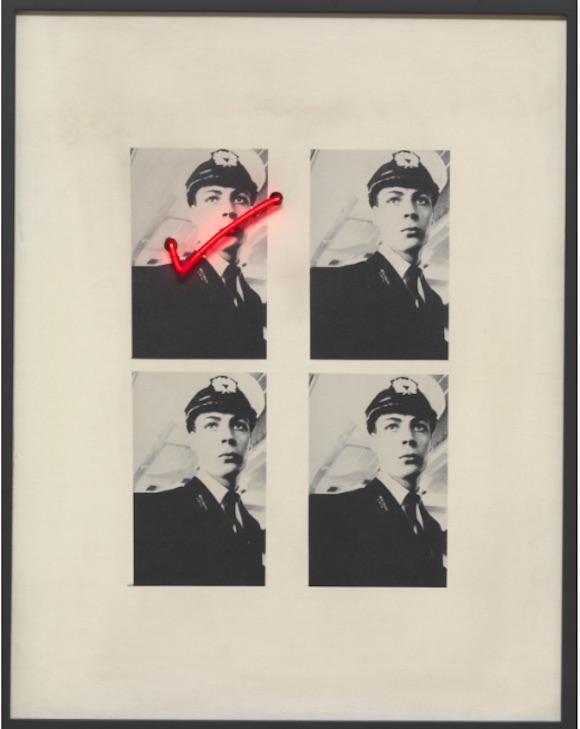
Relation of Aesthetic Choice to Life Activity (Function) of the Subject: Billy Apple’s act of appropriation from ARK 33

//Relation of Aesthetic Choice to Life Activity (Function) of the Subject, Billy Apple, 1961-2. From Tate Britain//

I’m indebted to Tate Liverpool curator Darren Pih for the connection between a photograph which appeared in ARK 33 – the edition of the Royal College Of Art magazine which was the subject of my last post – and a contemporaneous work by the artist Billy Apple.

Continue reading Relation of Aesthetic Choice to Life Activity (Function) of the Subject: Billy Apple’s act of appropriation from ARK 33

‘A somewhat oblique exposée of the Young Ones’: How Ark 33 hit the moment in the turbo-charging of 60s youth culture

//Wild youth: Scenes of abandon from Twist Drunk/Drunk Twist in Ark 33. Photos: Keith Branscombe//

//Cover, Ark 33, Autumn 1962. Photography: Keith Branscombe//

The publication of issue 33 of the Royal College of Art’s magazine ARK in the autumn of 1962 hit the moment in terms of the turbo-charging of contemporary youth culture.

Continue reading ‘A somewhat oblique exposée of the Young Ones’: How Ark 33 hit the moment in the turbo-charging of 60s youth culture

PRINT! Tearing It Up opens at Somerset House

//PRINT! is staged in Somerset House’s Terrace Rooms; the exhibition’s graphic identity was created by Scott King. His distinctive fluoro pink logo is on the lightbox at the far end of room 1. Photo: Doug Peters//
//With my wife and PRINT! contributor Caz Facey, rock legend Jimmy Page and poet Scarlett Sabet at the private view this week//
//Each room has wall grids divided into subjects – this, the main wall in room 1, presents magazines expressing dissent and protest. Photo: Doug Peters//
//In the courtyard at Somerset House; socks courtesy Pavement Licker//
//Private view attendees Duggie Fields and Jarvis Cocker. Photo: Martin Green//

PRINT! Tearing It Up – the exhibition at central London’s Somerset House I have organised with the SH Trust’s senior curator Claire Catterall – is now open.

Continue reading PRINT! Tearing It Up opens at Somerset House