//Drift: New t-shirt from Japanese streetwear company Peel + Lift//
My 2011 post unraveling the threads running through the notorious Naked Cowboys punk t-shirt has itself inspired a new shirt.
The Cowboys t-shirt was designed by Malcolm McLaren in 1975 for sale in SEX, the shop he ran with Vivienne Westwood at 430 King’s Road in London’s World’s End.
Popular with punks and worn by members of the Sex Pistols and their coterie, it was initially known as the Saturday Night Dance shirt because of the presence of the dancehall sign in the appropriated homoerotic cowboy illustration by Jim French.
//Cowboys t-shirt sold at auction in London last year//
The new t-shirt has been produced by Japanese streetwear company Peel + Lift, which reproduces many McLaren and Westwood designs. It is entitled Drift, making overt the presence of 60s radical thinking in McLaren’s artwork: the drift, or the dérive, was a major theme of the Situationist International, which believed individuals should allow themselves to wander urban landscapes and become either repelled or enchanted by what they found (in the manner of the archetypal French urban explorer the flâneur).
//Panel, p3, Le Retour de la Colonne Durutti, 1966//
“There is a moment when ‘good taste’ becomes dead; what has been considered ‘bad’ is suddenly found to be invigorating. Fashion today has little to do with la mode and the tacky is often accepted as an essential part of the necessary ‘total’ look. It can be fun.”
Cecil Beaton, introduction to the catalogue for the 1971 V&A exhibition Fashion: An Anthology
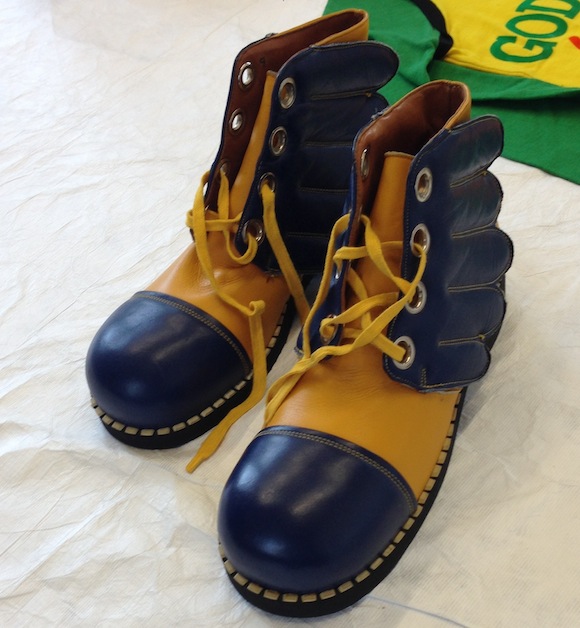
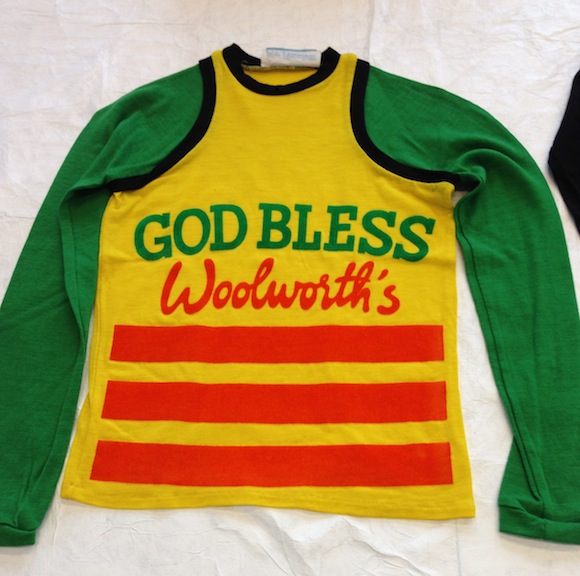
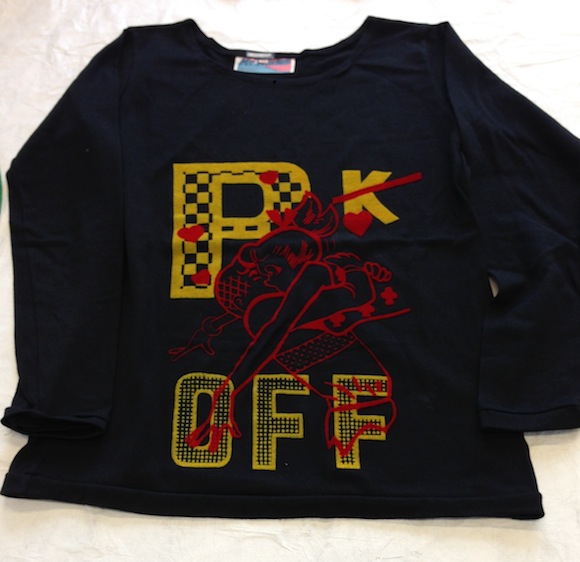
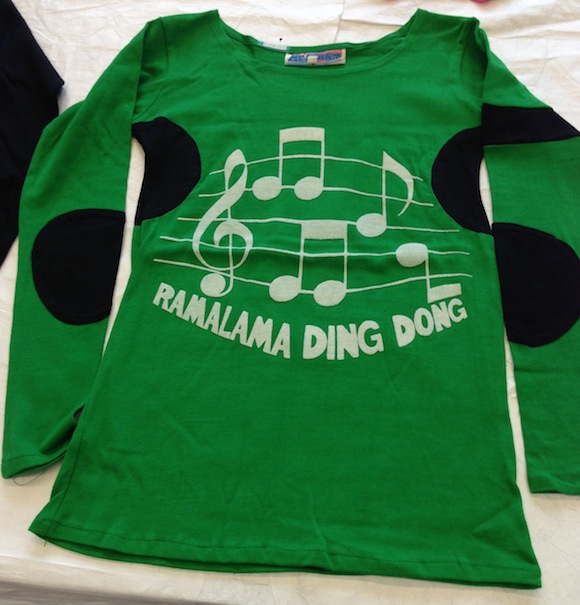
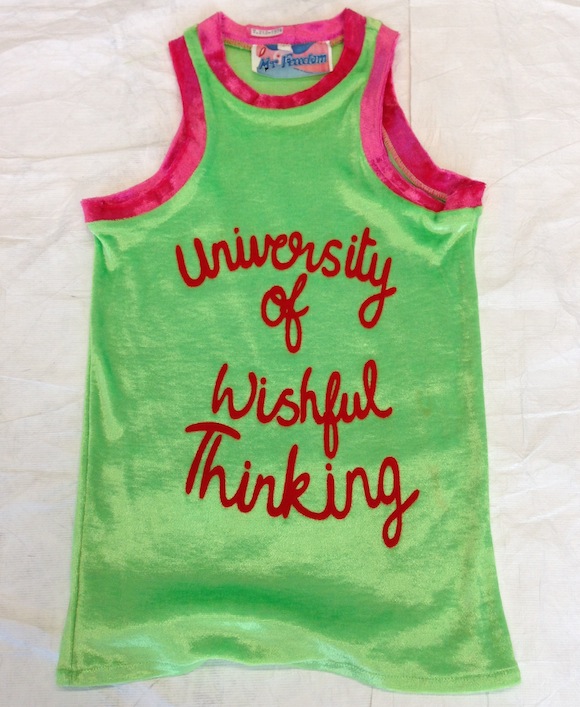
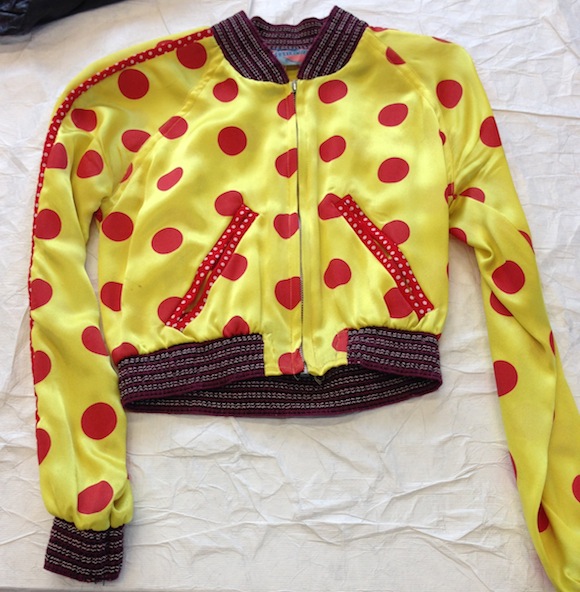
Recent visits to the V&A’s Archive of Art & Design have proved fruitful, particularly a viewing earlier this week of the collection of Pop Art clothing sold through London boutique Mr Freedom in the late 60s and early 70s.
//Design: Diana Crawshaw, 1971////Kiss Off t-shirt, Jim O’Connor, 1971////Design Christopher Snow/Trevor Myles, body design: Diana Crawshaw, 1971////Design: Pamla Motown, 1971//
//Vivienne Westwood in felt Inside Out Jacket with assistants Debbie Wilson and Michael Collins in Seditionaries, 1977//
While updating his rich and varied archive, photographer Homer Sykes came across these superb photographs taken inside Malcolm McLaren and Vivienne Westwood’s boutique Seditionaries at 430 King’s Road in the spring of 1977.
The images capture the air of raw uncertainty surrounding the shop and the McLaren/Westwood coterie in this period. McLaren’s charges the Sex Pistols had recently been signed to their third record company in six months – Virgin Records – after being publicly excoriated for their behaviour and bounced out of EMI and A&M. The national media had seized upon punk as a source of sensationalism and the release of the Pistols’ explosive God Save The Queen was a matter of weeks away.
//Debbie Wilson (aka Debbie Juvenile) sports Hangman Jumper, Seditionaries, 1977. Note the studded Venus Top and leather jacket on the wall behind the counter////Westwood expounding against the photographic mural of Dresden after WW2 air-raids, Seditionaries, 1977. Note Collins’ Cambridge Rapist design produced by Westwood’s partner Malcolm McLaren a couple of years earlier////Behind the customer in black bondage jacket is the wall-size inverted photographic mural of Piccadilly Circus, Seditionaries, 1977//
On Saturday August 20 1977 Sykes again took to the King’s Road to document the atmosphere of unrest embodied by the outbreaks of violence caused by marauding Teddy Boys targeting punks and such boutiques as Seditionaries and Boy.
//Young Ted bops while another’s jacket mourns Elvis Presley’s recent death, King’s Road, 1977////Musician/actor Gary Holton and girlfriend Tracy Boyle lead a demonstration against violence between Teds and Punks along the King’s Road. Far left is punk Mick Bladder//
Some of his photographs feature the punk Mick Bladder, whose arrest on that day in August 1977 was featured in Wolfgang Büld’s Punk In London. This documentary shows how the movement’s initial creative burst swiftly dissipated, while Sykes’ images capture the ways in which a cult movement had entered the mainstream, infiltrating the media, music, fashion and the wider culture.
Sykes’ archive covers the waterfront, from social unrest including the Notting Hill Carnival riot of 1976 and the riots in Toxteth and Brixton in the early 80s, to the on-the-road antics of Paul McCartney & Wings and Sigue Sigue Sputnik, the New Romantic haven the Blitz club, Andrew Logan’s Alternative Miss World and Quentin Crisp . Visit www.homersykes.com.
Sad to note the anniversary today of the death of Tommy Roberts, flamboyant design entrepreneur and subject of my book Mr Freedom.
//Dedication (right) with (left on cover-flap) list of abiding interests (courtesy Eve Ferret + Mark Summerfield) and Brian Aris portrait////Roberts opened Kleptomania with Charlie Simpson in Kingly Street, central London, in 1966////Neon arch sales counter display designed by Jeffrey Pine for Mr Freedom, opened with partner Trevor Myles at 430 King’s Road in September 1969//
Here – with a selection of images from Mr Freedom – is an extract from an essay I have written about Roberts’ role in the development of design in Britain for Chris Breward and Ghislaine Wood’s book British Design: Tradition & Modernity, which will be published by Bloomsbury next year.
It is arguable that wider recognition for Tommy Roberts’ audacious innovations in the promotion of street style, furniture, gastronomy, home-wares, interiors and collectables was undercut by his refusal to observe the sensitivities of England’s post-war design world.
Roberts adopted an ebullient public persona to match his stout physique and broad Cockney accent. “I’m the most vulgar man in fashion, darlin’!” Roberts proclaimed to the no-less outrageous Sunday Times fashion editor Molly Parkin in the heyday of his Pop Art fashion and objects emporium Mr Freedom.
These captivating 70s images stem from the amazing photographic archive of New York DJ legend Bobby Busnach.
Many feature Busnach’s friend and muse, the fabulous writer/photographer/performer Gerry Visco, as well as the circles they moved in at NYC’s Park Royal Hotel, Boston disco/bar The Other Side and the nascent hip-hop scene in the South Bronx.
Tinker, Tailor, Soldier, Sailor is an exhibition of Polaroids taken by artist, illustrator and print-maker Jim French which opens tonight at New York’s ClampArt gallery.
These include studies for French’s 1969 Colt Studio print Longhorns Dance, incorporated by Malcolm McLaren in 1975 in his notorious Cowboys t-shirt design, as sold in Sex and Seditionaries at 430 King’s Road and worn by the Sex Pistols and others.
//Longhorns Dance by Colt (Jim French) from Manpower! issue 7, 1974////Wearing their Cowboys (clockwise from top left): McLaren 1975, Sid Vicious 1977, Siouxsie 1976, Steve Jones 1975. Photographs: Bob Gruen; Dennis Morris; Ray Stevenson; Mick Rock.//
In the period 1972-78 when the body of the partnership’s punk fashions were created, Malcolm McLaren’s art education and development as a largely conceptual visual artist was applied with Vivienne Westwood’s intuitive and sophisticated technical skills.
The resultant potency of the work was achieved by such factors as: balance in the proportions; deft use of juxtaposition; confidence in realisation; jarring harmony in the use of colour; wit in the application of motifs; and astute sense of framing, particularly of text and visual imagery.
Excerpt from introduction to my review of the McLaren/Westwood designs in the Costume Institute collection of the Metropolitan Museum of Art, summer 2013.
Precision, deftness, balance, harmony, these are terms unjustly omitted from the standard critical lexicon applied to punk’s central design aesthetics as conceived and realised by Malcolm McLaren and Vivienne Westwood and their coterie.
Which is why Punk @ ShowStudio, the elegant exhibition which is now moving into its final week at photographer Nick Knight’s Belgravia gallery, is to be applauded, since it avoids the run-of-the-mill in favour of recognition of the importance of these qualities.
“I was very impressed. It was inspiring to see what I like to call ‘the origins of Punk’ as opposed to the usual well documented ‘greatest hits of Punk’,” the collector/archivist/author Paul Burgess wrote to me recently.
//Part of Judy Blame's contribution to the exhibition//
//Clockwise from top left: Cover, Helen And Desire, 1970; George O'Dowd, photo: Richard Bevan, 2013; Carnaby Street book and Palisades swing tag, 1970 and 1966; front cover, Anarchy In The UK newsprint fanzine, 1976//
I’m involved in a couple of events which open in London this week: artist Lucy Harrison’s multi-layered project Carnaby Echoes in the West End and photographer Nick Knight’s exhibition Punk at his Showstudio space in SW1.
//Clockwise from top left: Sissy Spacek and Martin Sheen, Badlands, 1973; Arnella Goes Rodeo, West One, 1974; Malcolm McLaren, January 1972; clothes from The Emperor Of Wyoming, 1973//
A fashion shoot styled by Pru Walters and photographed by Karl Stoecker for a 1974 issue of Janet Street-Porter’s secretarial magazine West One foregrounds the importance of Westernwear to London street style in the early to mid-70s.
//West One, May 14, 1974, p14: Fringed blouse from Kweens, 109 King's Road; shorts Stirling Cooper; boots + hat The Emperor of Wyoming, 404 King's Road//
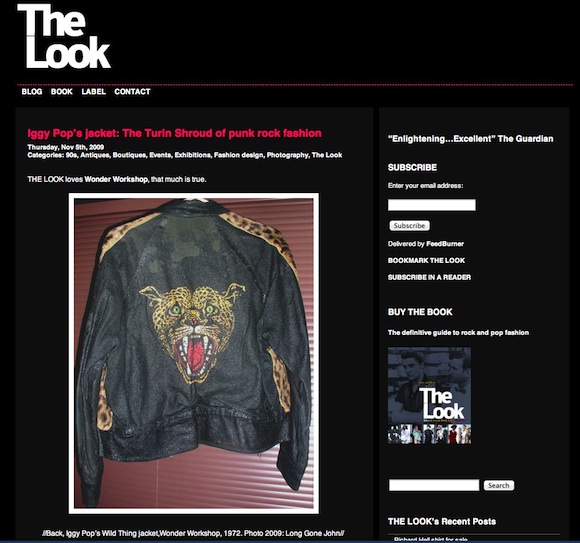
A few years back I wrote a series of blogs about the so-called “Wild Thing” jacket worn by Iggy Pop on the cover of his and The Stooges’ album Raw Power; in 2008 I had brokered a deal for the jacket designers John and Molly Dove to reissue a t-shirt range – including a version bearing the Wild Thing’s panther head – via Topman.
Around that time I also hooked them up with the current owner of the jacket, US maverick pop culture entrepreneur and collector “Long Gone” John Mermis (who I’d met as far back as the mid-90s at his extraordinary Long Beach mansion).