As punk expert/collector and design academic Paul Burgess notes, references to 430 King’s Road turn up in the most surprising places.
So thanks to him for notifying me about this photograph of the coolest address in pop culture – and in particular the tiger stripe-flocked Ford Mustang which adorned the street outside during the Paradise Garage phase – in a 1976 light educational book for young children.
//The Stiff Records clock. Concept: Jake Riviera, design: Barney Bubbles, lettering: Caramel Crunch, 1977. No reproduction without permission//
Stiff Records was on fire in 1977.
The British independent record label, with owners Jake Riviera and Dave Robinson snapping up acts and art director Barney Bubbles applying his unsurpassable skills to the visualising of their music, came straight out of the traps 40 years ago this month with the release of the first ‘punk’ LP Damned Damned Damned by – who else? – The Damned.
I am fortunate enough to be able to state that the first live music concert I attended was the midnight double bill of Frank Sinatra and The Count Basie Orchestra at London’s Royal Festival Hall in May 1970.
//The headliners at the RFH, May 1970. Photo: Getty////At The RFH, May 1970. Photo: Getty//
I was 10 years old. My resourceful mother wangled tickets for the entire family, with one of my sisters selling programmes. That gained her access to the artists’ area; she gave me the backstage pass which I duly placed in the school project autobiography I wrote the following year.
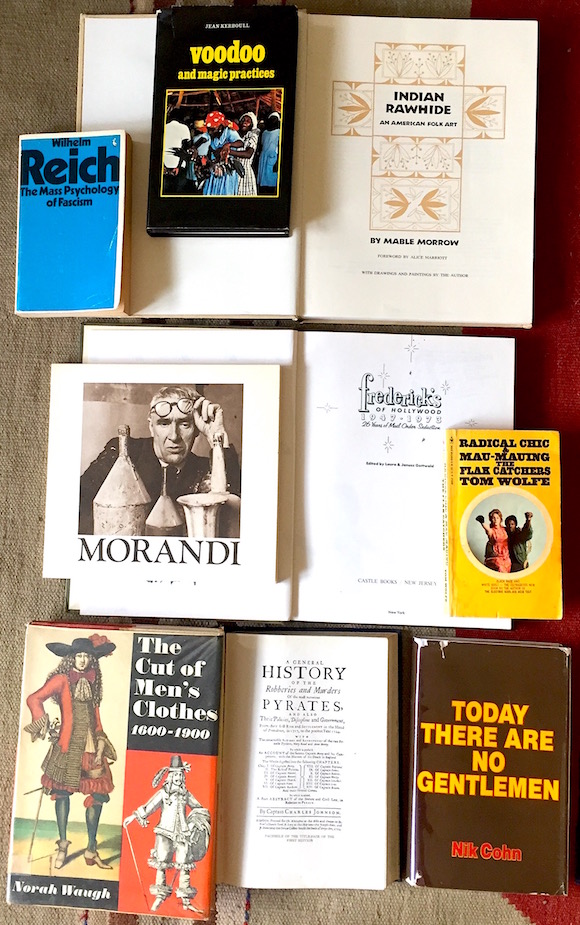
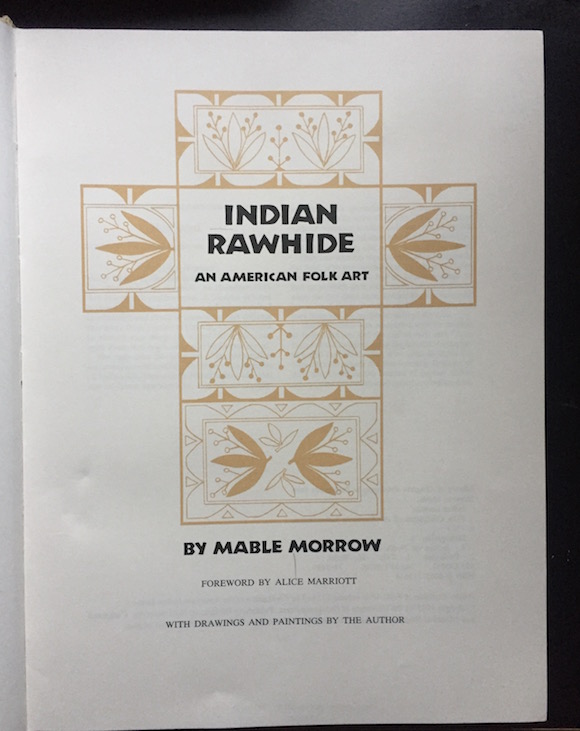
A few years back I came across Malcolm McLaren’s annotated copy of Indian Rawhide, the anthropologist Mable Morrow’s study of the folk art produced by Native American tribes which inspired the late cultural iconoclast in the conceptualising with his partner Vivienne Westwood of their Spring/Summer 1982 fashion collection Savage.
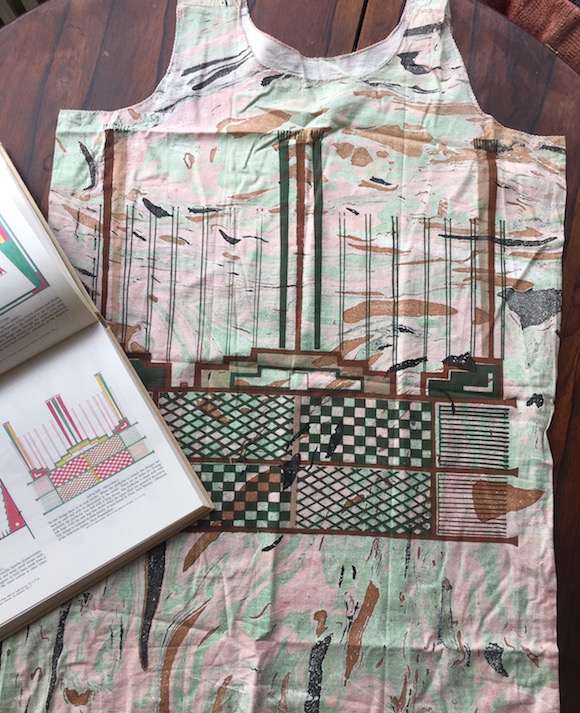
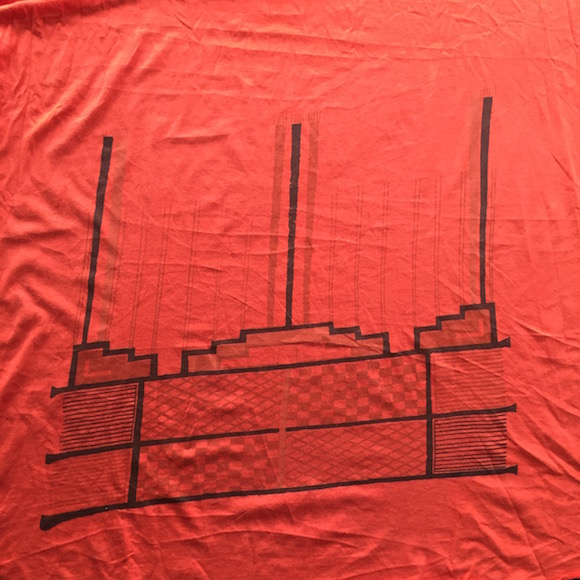
//Frontispiece to Morrow’s book, published by University of Oklahoma Press in the Civilization Of The American Indian Series, 1975////From Indian Rawhide: design produced by the Apache Mescaleros in Taos, New Mexico, matched by McLaren and Westwood with book-end marbling on this Savage slip dress. No reproduction without permission////The Apache design as it appeared printed on the end of the train on a Worlds End jersey toga dress. No reproduction without permission//
McLaren obtained a copy of Morrow’s book during travels recording his debut solo album Duck Rock. Since the Pirate collection of March 1981 had established a post-Punk direction for himself and Westwood and their Worlds End shop and label, McLaren set about investigating the powerful ideas residing in pre-Christian ethnic cultures, selecting Indian Rawhide as the text with which to frame the next group of designs.
My McLaren biography, to be published in spring 2018, will reveal that research – particularly literary – was one of the life-long consistencies in his approach to creative acts.
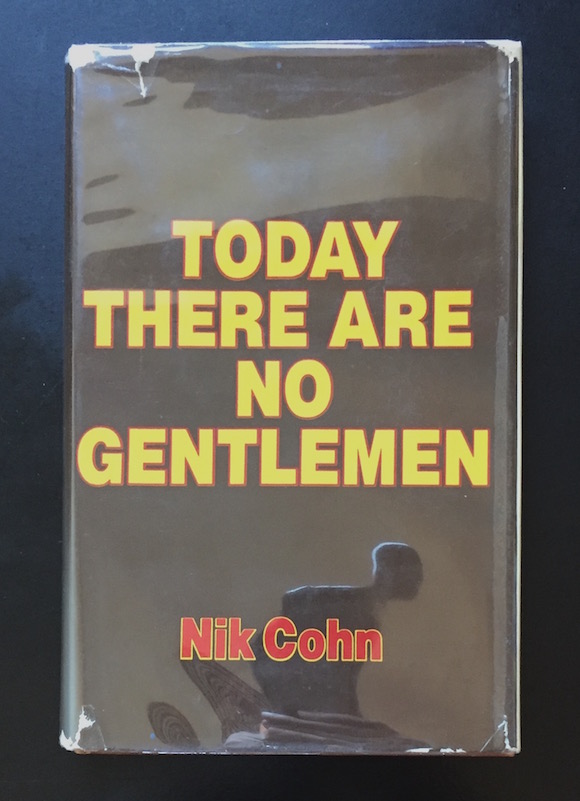
The musician Robin Scott told me that McLaren was an avid attendee of art history lessons during their spell as students at Croydon Art School in the 60s, and a couple of years before his death in 2010 McLaren confirmed that he was inspired in part to open Teddy Boy revival emporium Let It Rock at 430 King’s Road in 1971 after reading Nik Cohn’s peerless post-WW2 youth cult history Today There Are No Gentlemen.
//The image of the elongated photographers was created by Tim Stephens, one of the exhibition participants. Courtesy Mark Trompeteler. No reproduction without permission//
As a follow-up to my last post, here is the stunning poster for Eight Young Photographers, the third exhibition to be held at the Photographers Gallery (which opened at its original premises in central London’s Great Newport Street at the beginning of 1971).
The image has been provided by Mark Trompeteler, who was one of the participants along with talents such as the late David Parkinson then on the rise during the period when appreciation of photography as a form of artistic expression was beginning to take hold.
Says Trompeteler: “The silhouette of the photographers with the elongated legs was created by Tim Stephens, one of the exhibitors and one of my classmates back then at the London College of Printing (now the London College of Communications).
“He tilted the back of a 5×4 camera in order to create the image. The Photographers Gallery organised the finished poster with the typography on top.”
//David Parkinson in the Eight Young Photographers catalogue, 1971. Image courtesy Mark Trompeteler////Front, catalogue/fold-out poster, for the show which ran at the Photographers Gallery in Great Newport Street from April 6 to May 2, 1971. Courtesy Mark Trompeteler. No reproduction without permission//
Eight Young Photographers was the third exhibition to be held at the newly-opened Photographers Gallery at its original premises in Great Newport Street in London’s West End.
The gallery opened in January 1971 with a group show entitled The Concerned Photographer featuring, among others, Robert Capa, and followed that by simultaneously staging three exhibits, including a display of Polaroids taken by Andy Warhol.
Visitors to Eight Young Photographers, which ran during April and into early May that year, recall it as being an important staging post in the acceptance of photography as a subject worthy of artistic appreciation. Among the contributors was the late David Parkinson, about whom I have written often. He showed work alongside Mark Edwards, Meira Hand, Roger Birt, Sylvester Jacobs, Tim Stevens, Bob Mazzer and Mark Trompeteler (who has kindly retrieved the catalogue/poster for me from his archive).
//From the Photographers Gallery listings. The show was preceded by an exhibition of Andy Warhol’s Polaroids//
//The Michael Joseph image which was to be central to the 1971 Fernet-Branca campaign was featured in Dave Saunders’ survey Sex In Advertising, published by Batsford Books in 1996////Front, Funk Spectrum, BBE Records, 1999. Photo: Michael Joseph////Back, Funk Spectrum, BBE, 1999. Photo: Michael Joseph//
In 1971 the great advertising director and photographer Michael Joseph was commissioned to shoot a billboard campaign for the Italian digestif Fernet-Branca.
Martin Stone hopped, pre-dawn, through the Cheshire street market, scavenging books. Winklepickers, tourniquet trousers, mildewed beret, bulging swagbag: Blind Pew impersonated by Max Wall. Cigarette grafted to trembling, prehensile fingers, he was an anthology of retro fashion. And in his wake there shimmered a vortex of gossip and, amazingly, goodwill… Iain Sinclair, The Independent, February 18, 1995
Sad to note the passing of Martin Stone, dapper devil and rock and rolling rare book dealer par excellence.
Hendley is best known for the photos he took of the Jamaican music scene in the 70s, but he holds a special place for me as the man responsible for one of my favourite compilations, the double-LP Rebel Music, released by Trojan at the end of that decade.
//Jordan Mooney and David “Piggy” Worth. From photo by Patrick Lichfield, 1976////As they appeared in the Parlophone full-page advert for The Beatles compilation Rock “n”Roll Muisc, New Musical Express, June 26, 1976//
“He was a man full of wit and charm who always had an eye for new and exciting things. His special characteristics were kindness and forethought”
Jordan Mooney, 2016
Following my recent blogs on the life of the late fashion model David “Piggy” Worth, here is a gem: Sex and Seditionaries superstar Jordan Mooney recalls her friend and in particular the time Worth urged her to join him in a 50s photoshoot by royal photographer Patrick Lichfield.
This was used for an advert and poster promoting Rock ‘N’ Roll Music, a compilation of previously released cover versions recorded by The Beatles between 1962 and 1970.